Ierapetra & Chrissi Island: The Honest Guide
The southernmost town in Europe and the golden islet offshore — what Ierapetra actually offers, how the Chrissi boats work.
Ierapetra wears its title — southernmost town in Europe — lightly: a working agricultural hub with a long promenade, a small Venetian fort, a proper local beach and almost no tourist theatre. The headline act sits offshore: Chrissi, the low golden islet of cedar trees and Caribbean shallows that the excursion boats serve in season. Together they make an honest, unglamorous, quietly excellent southern day.
The honest facts
- The town
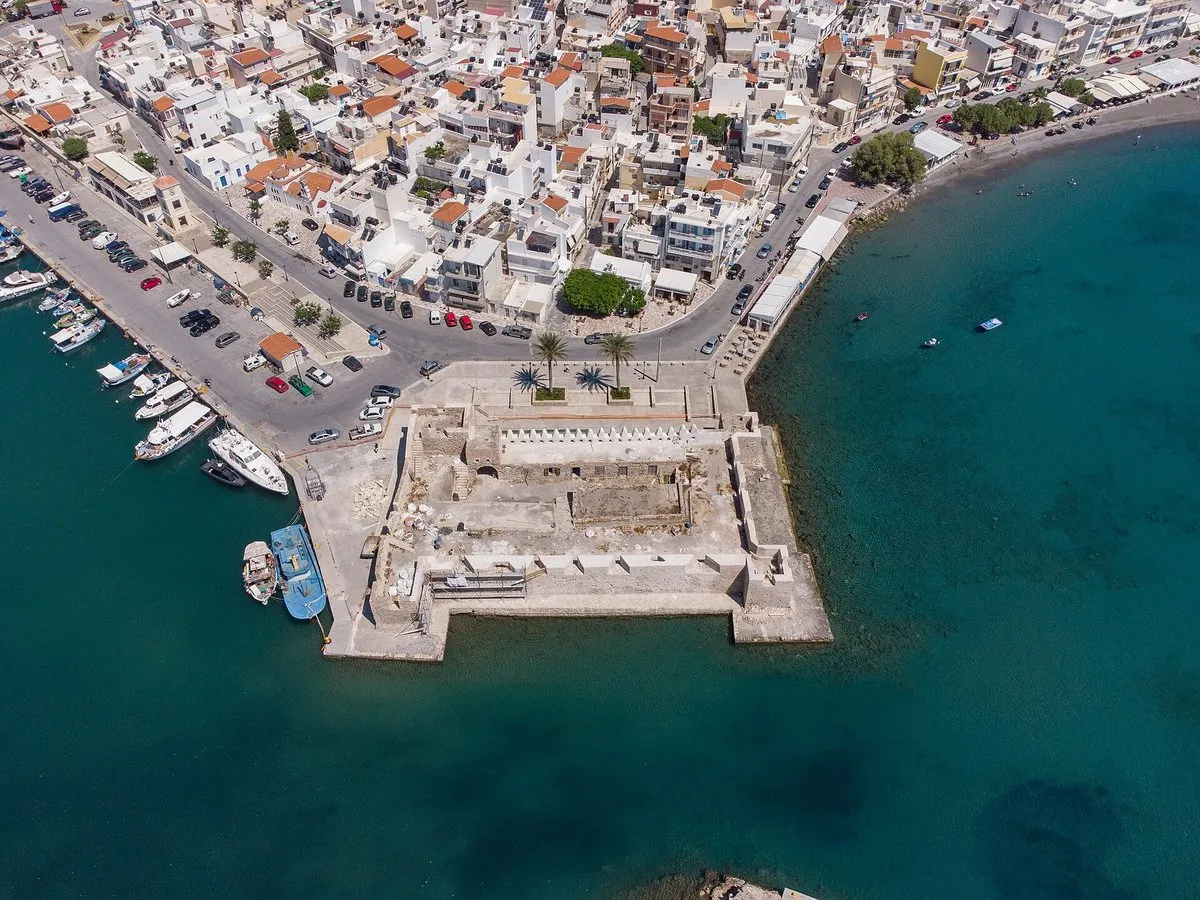
- promenade tavernas priced for locals, the Kales fortress at the harbour mouth (free or nominal, ten minutes), a long grey-sand town beach with sunbeds around €6–10. Real life everywhere — greenhouses fund this town, not tourism.
- Chrissi boats
- roughly 50–60 minutes each way from the harbour in season; combined ticket historically in the €25–35 zone — verify current operators and prices.
- THE CAVEAT
- Chrissi is a fragile protected habitat and access rules have tightened in recent years — visitor caps, restricted zones, at times full closures to protect the cedars and dunes. Check the current status locally before promising anyone the trip; if landings are limited, some boats offer swim-stops instead.
- On the islet, when open
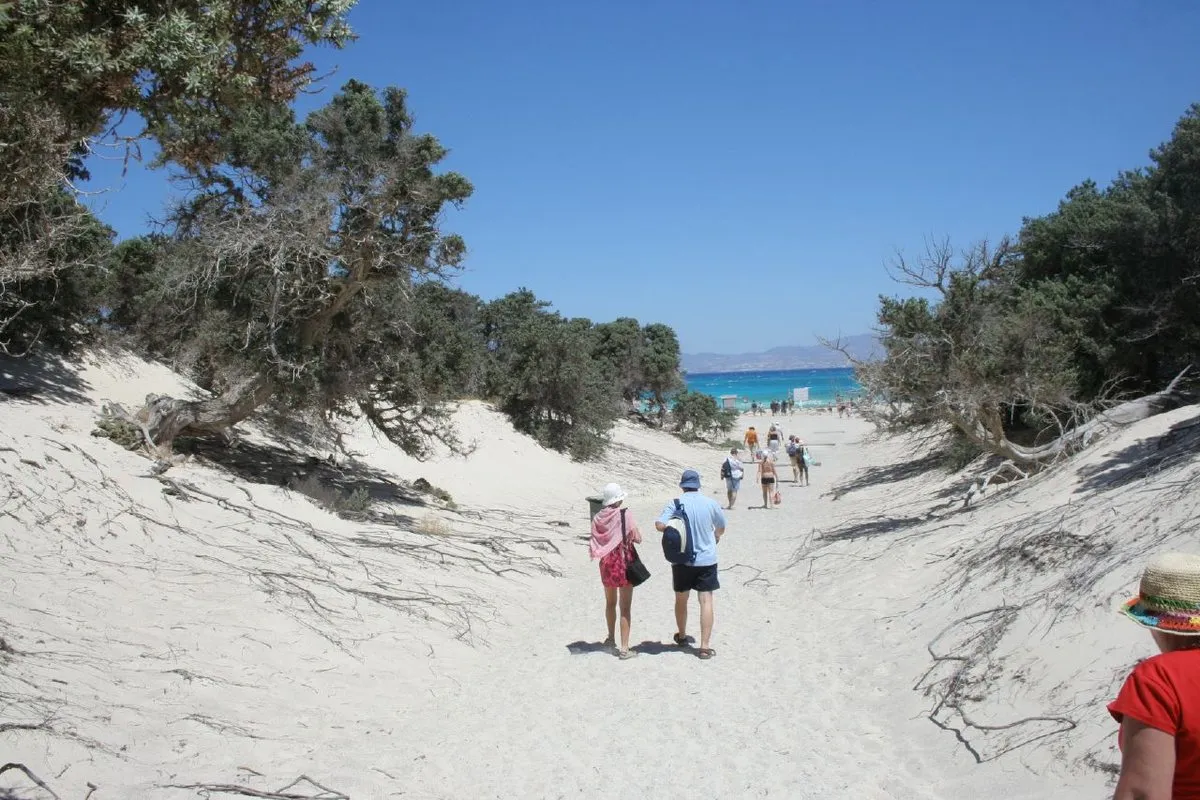
- no permanent shade beyond the cedars (which are protected — do not touch, hang, or camp), minimal facilities; carry water, hat, reef-safe sunscreen.
The Ierapetra day
Morning boat out if Chrissi access allows — the shallows on its north side are the postcard — back by late afternoon, then the promenade at local pace: ouzo, grilled fish, the fortress at sunset. If Chrissi is closed, Ierapetra still earns a relaxed half-day paired with Makrigialos beaches east or the mountain village of Anatoli above.
Fifteen minutes up the mountain behind the town, Kalamafka has a cave chapel on top of a limestone tower, with both seas visible from the courtyard — the best short climb in this corner of the island.
Why bother with the south side
The Libyan coast runs calmer when the meltemi hammers the north, several degrees warmer in the shoulder months, and structurally less touristic. Ierapetra is its capital of normality — worth experiencing precisely because nothing performs for you.
Getting there
Ierapetra sits on the south coast below Agios Nikolaos, across the narrowest part of the island; from the Malia end of the resort coast it is roughly an hour and a half via Agios Nikolaos and the cross-island road, and a little over that from Heraklion. The bus chain works — KTEL to Agios Nikolaos, roughly €7.70 from Heraklion, then the local connection south — but the Chrissi boat leaves in the morning, so a same-day bus-and-boat plan is tight. Sleep in Ierapetra or Makrigialos the night before if the islet is the point.
The Chrissi question, before you promise anyone
Treat the islet as a bonus, not a certainty. It is a fragile protected habitat — cedars, dunes, shell sand — and the rules have tightened: visitor caps, restricted zones, and at times full closures, with some boats running swim-stops instead of landings. Check the status the same week, in town, not in a guidebook or an old listing. When it is open, the boats take roughly 50–60 minutes each way and the combined ticket has historically been in the €25–35 band; carry water, a hat and reef-safe sunscreen, stay off the cedars, and keep to the marked paths. The north-side shallows are the postcard and the reason to go.
Ierapetra on its own
If Chrissi is closed you still have a good half-day. The Kales fortress at the harbour mouth is ten minutes and free or nominal; the promenade tavernas are priced for the people who live here; the long grey-sand town beach has sunbeds around €6–10 and nobody performing. Pair it with the Makrigialos beaches half an hour east, or go up: Kalamafka, fifteen minutes into the mountains, has a cave chapel on top of a limestone tower with both seas visible from the courtyard, and the village of Anatoli above the town is the cooler evening. The south side runs calmer when the meltemi hammers the north and several degrees warmer in the shoulder months, which is the quiet argument for this whole corner.
The honest downside
The greenhouse plains around town are the least photogenic landscape in Crete, the town beach is serviceable rather than special, and the Chrissi uncertainty means the star attraction needs a same-week check, not a guidebook promise.
Worth your time if: you are based east or south and want the anti-resort day. Skip it if: you are west of Agios Nikolaos with limited days — the drive outweighs the offer unless Chrissi is confirmed open.
Photos on this page: the Kales aerial by C messier (CC BY-SA 4.0) and the Chrissi path by Marek Bakajsa (CC BY-SA 2.0), via Wikimedia Commons, resized for the web. Everything above was checked for the date shown at the top of this guide. Nobody pays to be featured in a guide — no business, no sponsor, no paid mention, ever. Adverts, where they appear, are labelled as adverts.
Tap a name to open it in your map app. These are options, not an order — pick by the day you have.
Can you still visit Chrissi island?
Access rules have tightened significantly in recent years - visitor caps, restricted zones, and at times full closures to protect the cedars and dunes. Check the current status locally in the same week you plan to go rather than trusting any guidebook promise. If landings are limited, some boats offer swim-stops instead.
How long is the boat to Chrissi from Ierapetra?
Roughly 50 to 60 minutes each way in season, with combined tickets historically in the EUR25-35 zone. Verify current operators and prices - both change with the access rules.
What should you take to Chrissi?
Water, a hat and reef-safe sunscreen. There is no permanent shade beyond the cedars, which are protected - do not touch them, hang anything from them, or camp under them. Facilities are minimal by design.
Is Ierapetra worth visiting?
As the anti-resort day, yes. It is a working agricultural town with a promenade priced for locals, a small Venetian fortress at the harbour mouth, and almost no tourist theatre. Greenhouses fund this town, not tourism, and that is precisely the appeal.
Why go to the south coast rather than the north?
The Libyan coast runs calmer when the meltemi hammers the north, several degrees warmer in the shoulder months, and structurally less touristic. Ierapetra is its capital of normality.
One email a month — only when something on this island actually changes. No spam, no partners, one-click unsubscribe. Read past issues before you decide.