Ideon Andron & the Nida Plateau: The Honest Guide
The cave where Zeus was raised, at 1,500 metres on the shoulder of Psiloritis, reached by 21km of empty mountain road.
There are two caves in Crete where Zeus was allegedly hidden from his father, and the tourist coaches go to the other one. The Ideon Andron sits at around 1,500 metres on the flank of Psiloritis, above a bare upland plain called Nida, at the end of 21 kilometres of road that climbs out of Anogia and does not pass anything. It is one of the most important sanctuaries of the ancient Greek world and, as a visit, it is mostly about the getting there.
The one-minute version. From Anogia, roughly 21km and 40 minutes of climbing to the Nida plateau at about 1,400m; short walk up to the cave. Roughly 1h30 from Rethymno or Heraklion to Anogia first. Free or a token fee, but access has been intermittent for conservation work — verify. Season roughly May to October. Take a jacket, water and fuel. One seasonal taverna on the plateau.
What you actually find
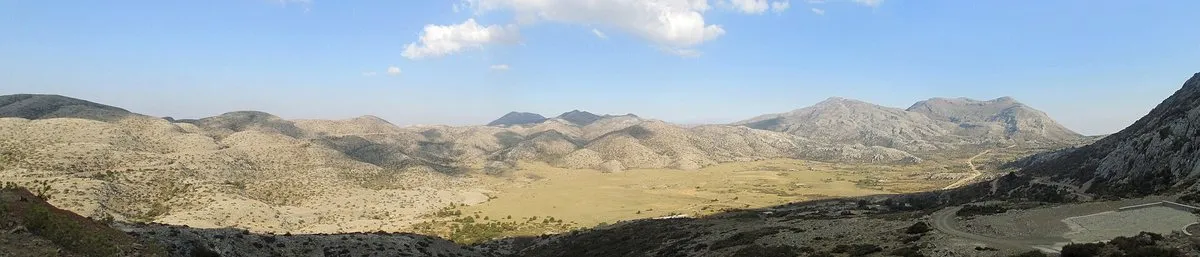
The road out of Anogia climbs through stone and scrub, past shepherds’ mitata — round dry-stone huts, some centuries old, still used in summer for cheesemaking — and empties onto Nida: a flat, treeless plain, green in May and straw-coloured by August, ringed by the bulk of Psiloritis. There is a taverna that opens seasonally, a car park, and very little else.
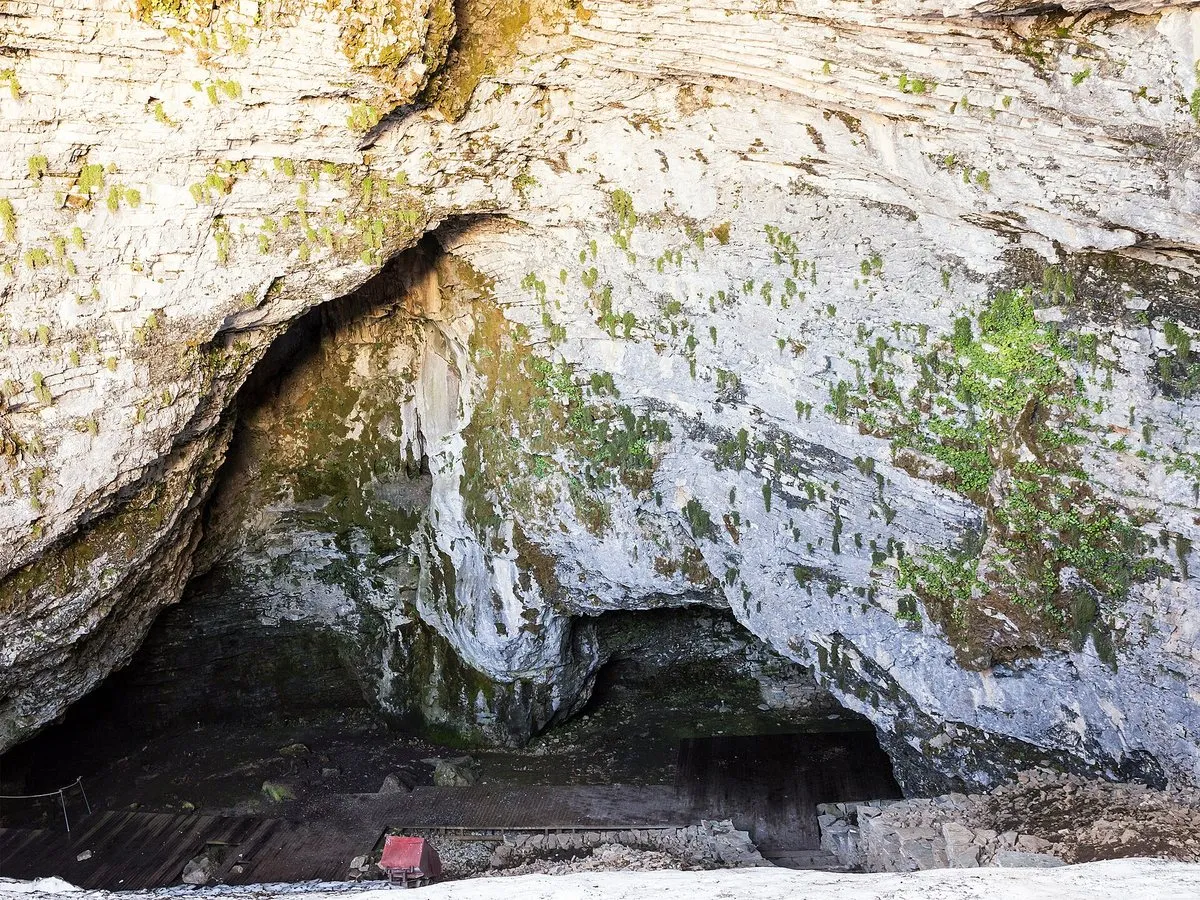
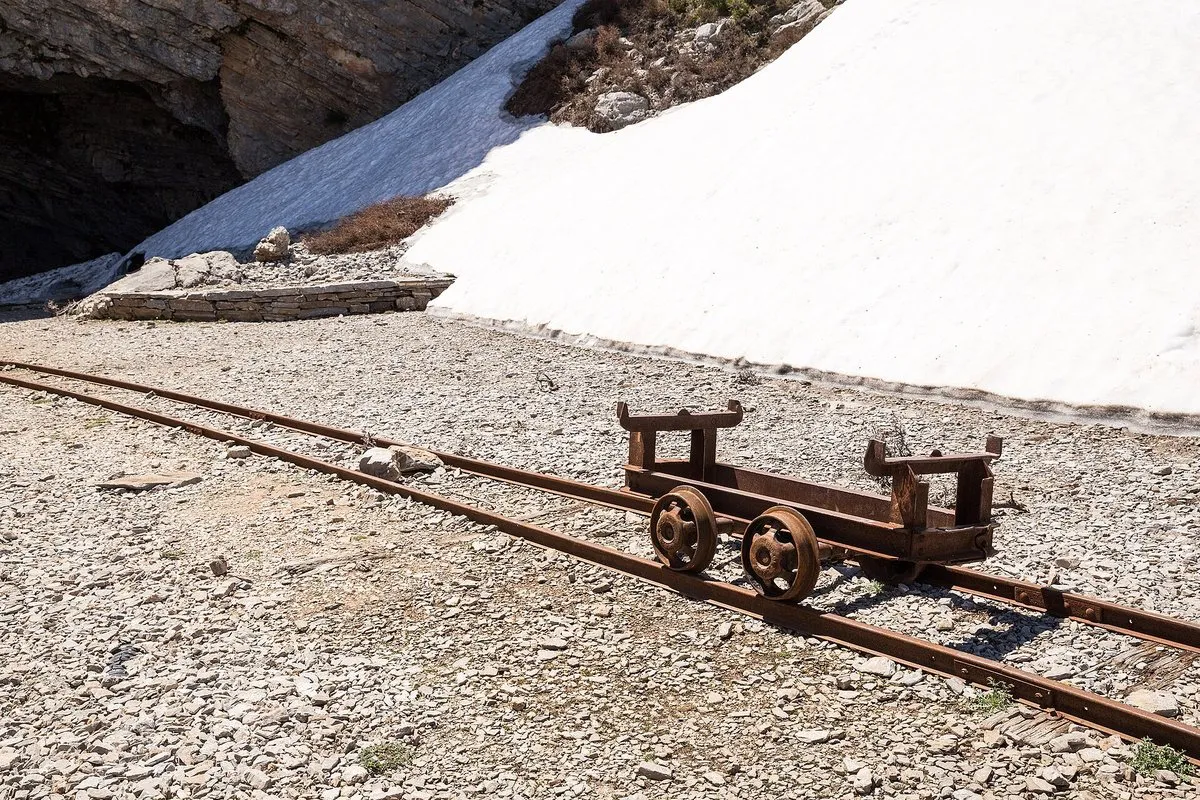
A path climbs about fifteen minutes to the cave mouth. Inside is a single large chamber, partly excavated, with scaffolding and rails and not much interpretation. The finds — bronze shields with Near Eastern designs, votive offerings spanning a thousand years — are in the Heraklion museum, and the archaeology matters far more than the room does. This was a pan-Cretan sanctuary; Pythagoras is said to have come here.
If you were hoping for the Dikteon experience of stalactites and drama, this is not it. The Ideon is bare and cold and slightly disappointing as a chamber. The mountain around it is not.
Why go anyway
The road. It is one of the great drives in Crete — empty, high, and completely unlike the coast an hour below. In May the plateau has wildflowers and residual snow in the hollows at the same time.
The mitata. These stone huts are a living tradition rather than a museum piece. If you pass one with a vehicle outside, that is a shepherd making cheese, not a display.
The starting point for Psiloritis. The main summit path to Timios Stavros, the highest point in Crete at 2,456m, begins from Nida. That is a serious six to eight hour return walk and needs an early start, proper kit and a check of conditions — but this is where it starts.
The emptiness. Crete does not have many places where you can stand and see nothing man-made in any direction. This is one.
Practical honesty
Access to the cave has been on and off for conservation work in recent years, and there is no reliable way to check from the coast other than asking in Anogia on the way up. Treat the cave as a bonus and the plateau as the destination and you cannot be disappointed.
There is no fuel after Anogia and no shops. Phone signal is patchy. The taverna on the plateau keeps seasonal hours that are not published anywhere useful — carry food.
And the temperature is not a detail. Thirty-two degrees in Rethymno can be seventeen and windy on Nida. Every summer people drive up in shorts and turn round after ten minutes.
Pair it with Anogia for lunch on the way down, or with Axos and the Rethymno interior. Zaros is on the southern side of the same massif if you want to see how differently the mountain behaves from the other direction.
Worth it for the drive, the plateau and the altitude — this is the emptiest, highest, least touristed place you can reach on a paved road in Crete, and standing on Nida with the wind going is worth more than most paid attractions on the island. Take a jacket and a full tank. Skip it if the cave is the reason you are going: it is a bare chamber with scaffolding, it may well be closed, and the Dikteon Cave above Lasithi is the better cave and the worse mountain.
Photos on this page: Nida plateau by Tomisti (CC BY-SA 4.0); cave entrance and excavation rails by Unukorno (CC BY 4.0), via Wikimedia Commons, resized for the web. Nobody pays to be featured on this site.
Is the Ideon Andron the same as the Dikteon Cave?
No, and both claim Zeus. The Dikteon Cave above the Lasithi plateau is where he was born; the Ideon Andron on Psiloritis is where he was raised. They are different caves on different mountains, roughly two hours apart, and the Ideon is the emptier and colder of the two.
How do you get to the Ideon Andron?
From Anogia, a single mountain road climbs roughly 21km to the Nida plateau at around 1,400m, then a short walk up to the cave mouth at about 1,500m. The road is paved but narrow and exposed, with no fuel, no shops and often no phone signal after Anogia.
Is the Ideon Andron worth visiting?
Honestly, the cave itself is a large bare chamber with excavation scaffolding and very little to look at. What is worth the trip is everything around it — the drive, the Nida plateau, the shepherds' mitata, and the sense of altitude and emptiness. Go for the mountain and treat the cave as the excuse.
When can you visit the Nida plateau?
Roughly late spring to late autumn. Snow closes the road and lingers in the hollows into May, and the cave has been closed for conservation work at various points. Verify before driving up — it is a long way to find a barrier.
What should you take to the Nida plateau?
A jacket, whatever the coast is doing. At 1,400m it can be fifteen degrees cooler than Rethymno and the wind is constant. Also water, food and a full tank — there is one seasonal taverna on the plateau and nothing else after Anogia.
One email a month — only when something on this island actually changes. No spam, no partners, one-click unsubscribe. Read past issues before you decide.