Topolia Gorge & the Agia Sofia Cave: The Honest Guide
A short, steep-walled gorge and a cave church on the road to Elafonisi — a one-lane tunnel, a stepped path up to a chapel among stalagmites, and a riverbed walk that needs dry weather.
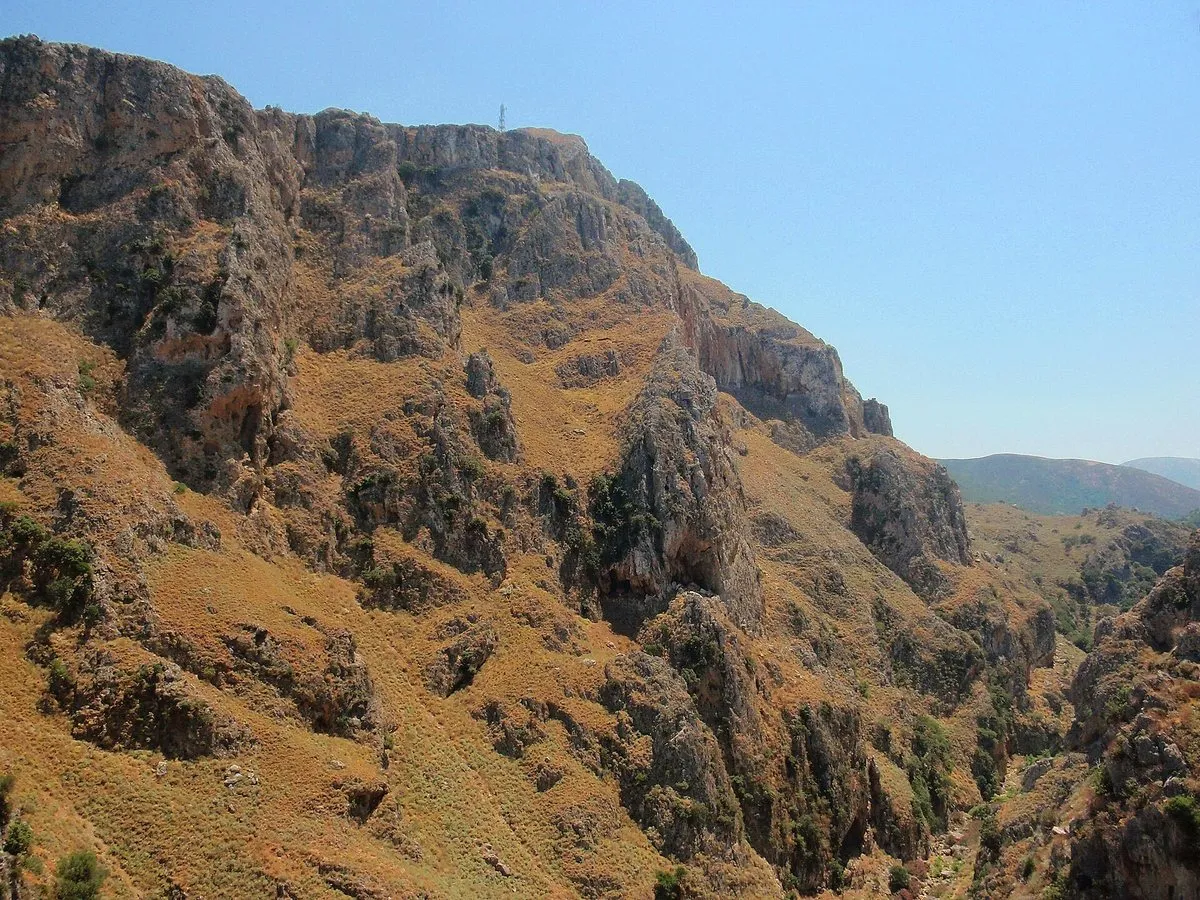
Topolia is the stretch of the road from Kissamos to Elafonisi that everyone drives through and almost nobody stops at: a short, deep gorge with a single-lane tunnel cut through its rock, and, high on its western wall, a cave with a chapel inside it among the stalagmites. The cave takes half an hour; the walk along the gorge floor takes an hour or so, if the weather is dry. Figures come from the Region of Crete’s tourism and civil-protection pages and local walking sources, checked in September 2026; the gorge and the cave are described from our own visits.
The honest facts
- Where
- on the Kissamos–Elafonisi road, about 12 km (20 minutes) south of Kissamos and roughly 47 km from Chania.
- The cave
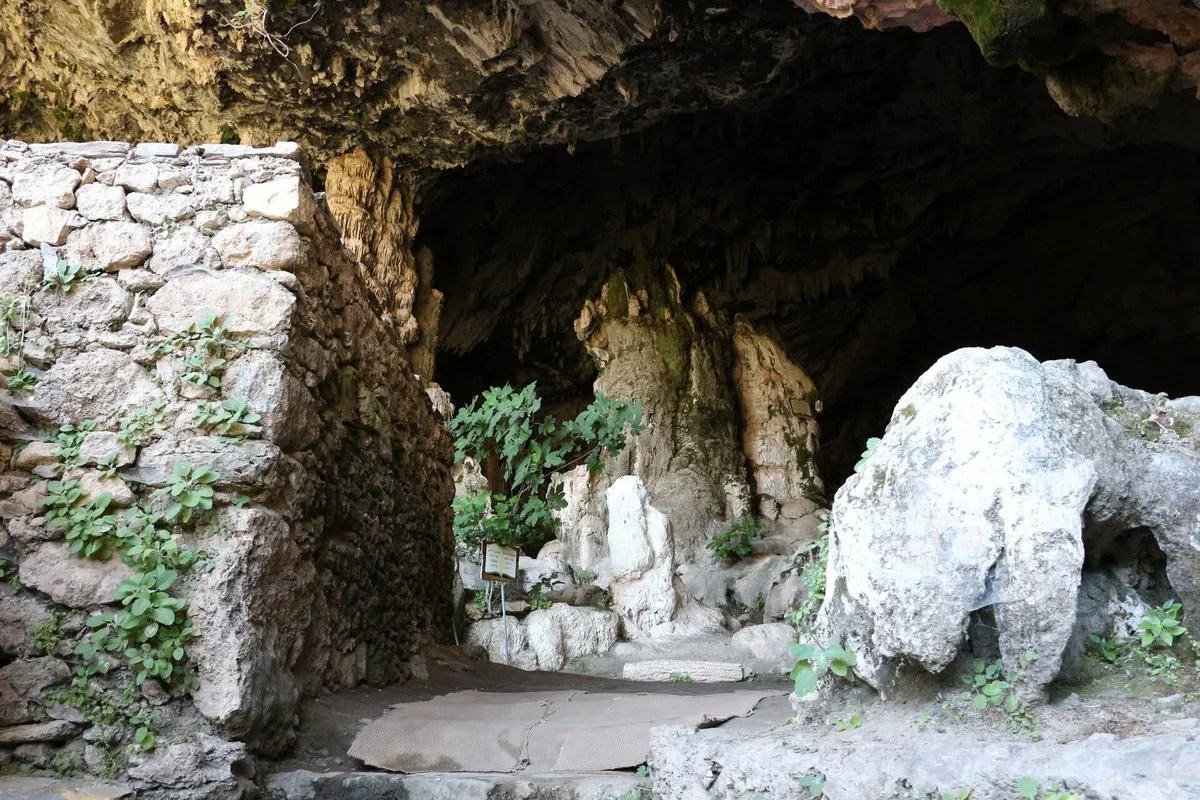
- Agia Sofia, about 50 m across and up to 20 m high, with a small chapel and stalagmites, reached by a stepped path from the road (100 or 257 steps, depending on the source).
- The gorge
- about 1.5 km, walls up to around 300 m, roughly 1–1.5 hours on foot along the riverbed.
- The tunnel
- single lane, about 100–110 m, unlit, traffic lights at both ends.
- Cost
- no ticket reported for the cave or the gorge.
- Closures
- the gorge is closed on category 5 fire-risk days (1 May–31 October); avoid it when rain is forecast.
The cave church
The Agia Sofia cave opens in the gorge’s western wall. From the road, a stepped path climbs to the entrance — how many steps depends on whom you ask, and it feels like more on a hot afternoon. Inside, the Region of Crete describes an almost circular chamber about 50 metres across and up to 20 metres high, on two levels, with a small chapel built into it. Stalagmites rise around the chapel, and finds from the cave span the Neolithic to Roman times. It is a church first: dress with respect, keep voices down, and leave the candles to those who came to light them.
The gorge floor
The walk runs along the dry riverbed between Topolia and Katsomatados — sources disagree about which end to start from, so pick the one where you can leave or collect a car. Expect rocks, boulders and loose gravel rather than a made path, with yellow-and-black painted markings that thin out in the upper section. Local sources rate it easy in dry conditions and say it is open all year, but do not go in if rain is forecast: a gorge floor is a watercourse. The protected cypress woodland on the walls is part of the Natura 2000 network.
Fitting it into the day
Most people meet Topolia on the way to Elafonisi, and the cave makes an easy break on that long drive: stop, climb, look, carry on. The gorge walk needs its own morning, and pairs well with the chestnut villages further up the road, covered in Elos and the chestnut villages. If you are based around Kissamos, the whole western end is laid out in Kissamos and the far west. On any hot day, check the fire-risk map before a gorge walk.
The honest downside
The gorge walk is short but rough underfoot, poorly marked in its upper part, and off-limits in rain or on red fire-risk days. The cave climb is steep for anyone with limited mobility, and the one-lane tunnel means waiting at the lights.
Worth it if: you are driving to Elafonisi and want a half-hour cave stop, or you like a short, rough gorge walk on a dry day. Skip it if: stairs are a problem, rain is forecast, or you expect a marked, maintained trail.
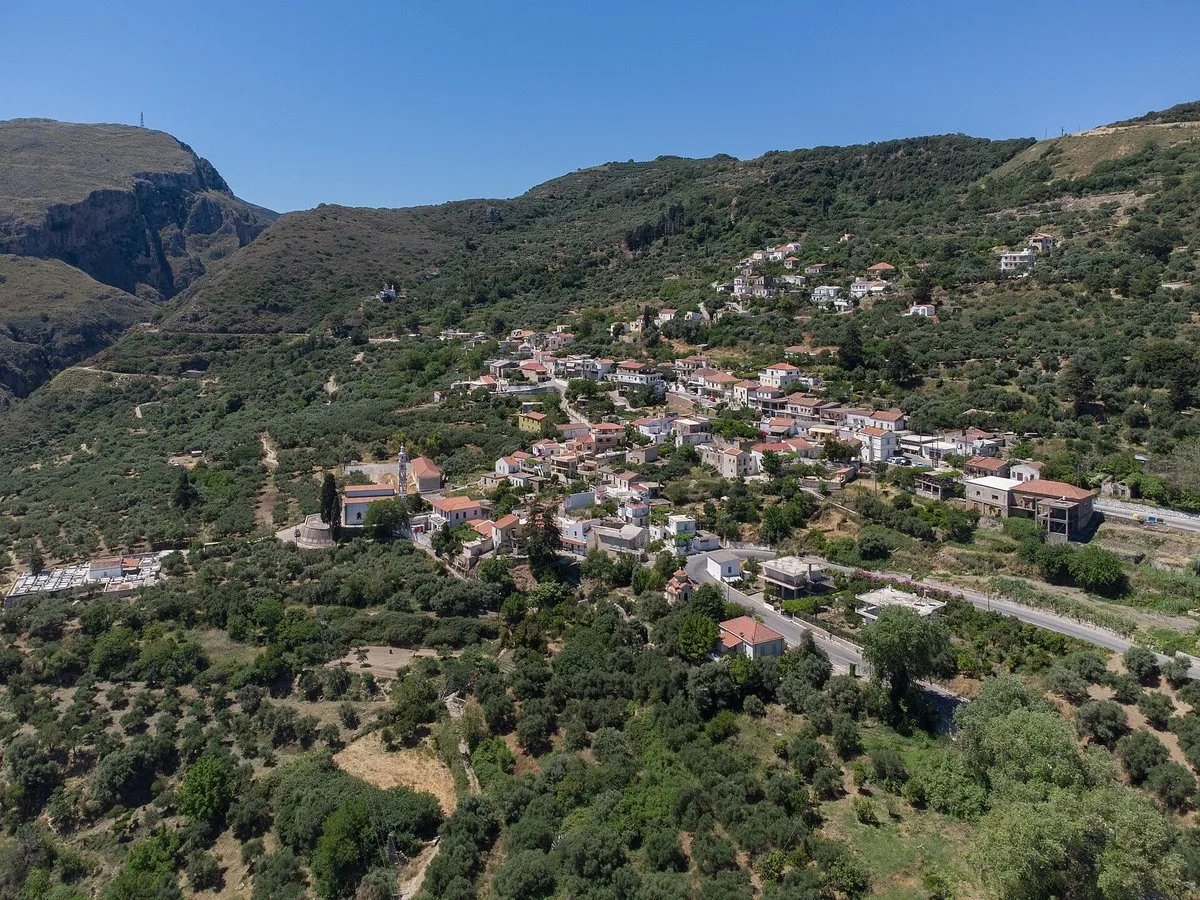
Photos on this page: the gorge by Jimzoun (CC BY-SA 4.0), the Agia Sofia cave by Przemek Pietrak (CC BY-SA 3.0) and Topolia village by C messier (CC BY-SA 4.0), via Wikimedia Commons, resized for the web. The gorge and the cave are described from our own visits; distances, dimensions and closures were checked against the Region of Crete’s tourism and civil-protection pages, the national NatureBank biotope register and local walking sources for the date shown at the top of this guide. Nobody pays to be featured in a guide — no business, no sponsor, no paid mention, ever. Adverts, where they appear, are labelled as adverts.
-
The gorge — Down the road through the tunnel to the cave, then the gorge floor towards Katsomatados.
1 Topolia village → 2 Agia Sofia cave → 3 Katsomatados
Driving times are Google's own, without traffic, checked September 2026 — the shape of the day, not a promise. Allow more on mountain roads, and more again in August.
How long is the Topolia gorge walk?
About 1.5 km, and roughly an hour to an hour and a half on foot, according to local and walking sources. The path follows the riverbed between walls up to around 300 metres high, over rocks, boulders and loose gravel, with sparse painted markings in places.
How many steps are there up to the Agia Sofia cave?
Sources disagree — one says about 100 stone steps, another about 257. Either way it is a steady climb from the road on a stepped path, fine for most walkers but hard for anyone with limited mobility.
Is there an entrance fee for the Agia Sofia cave or the Topolia gorge?
No ticket is reported for either; one local source describes both as free, with donations welcome at the chapel. There are no official opening hours for the cave, which is a place of worship.
Can Topolia gorge be closed?
Yes. The Region of Crete's 2026 fire-season order closes the Topolia gorge to walkers on days rated category 5 on the national fire-risk map, between 1 May and 31 October. Local sources also advise against entering the gorge when rain is forecast.
Is the Topolia tunnel difficult to drive?
It is short but single-lane: roughly 100–110 metres long and about 4 metres wide, unlit, with traffic lights at each end controlling alternate directions. Wait for the green and drive through slowly with headlights on.
One email a month — only when something on this island actually changes. No spam, no partners, one-click unsubscribe. Read past issues before you decide.