Ancient Polyrinia: The Honest Guide to the Hilltop City Above Kissamos
Seven kilometres inland from Kissamos, a village climbs towards the acropolis of one of Crete's most important Hellenistic city-states: walls, a rock-cut aqueduct that still runs, a church built of ancient blocks and a view over the whole bay. Unfenced, unticketed and a steep climb in the heat.
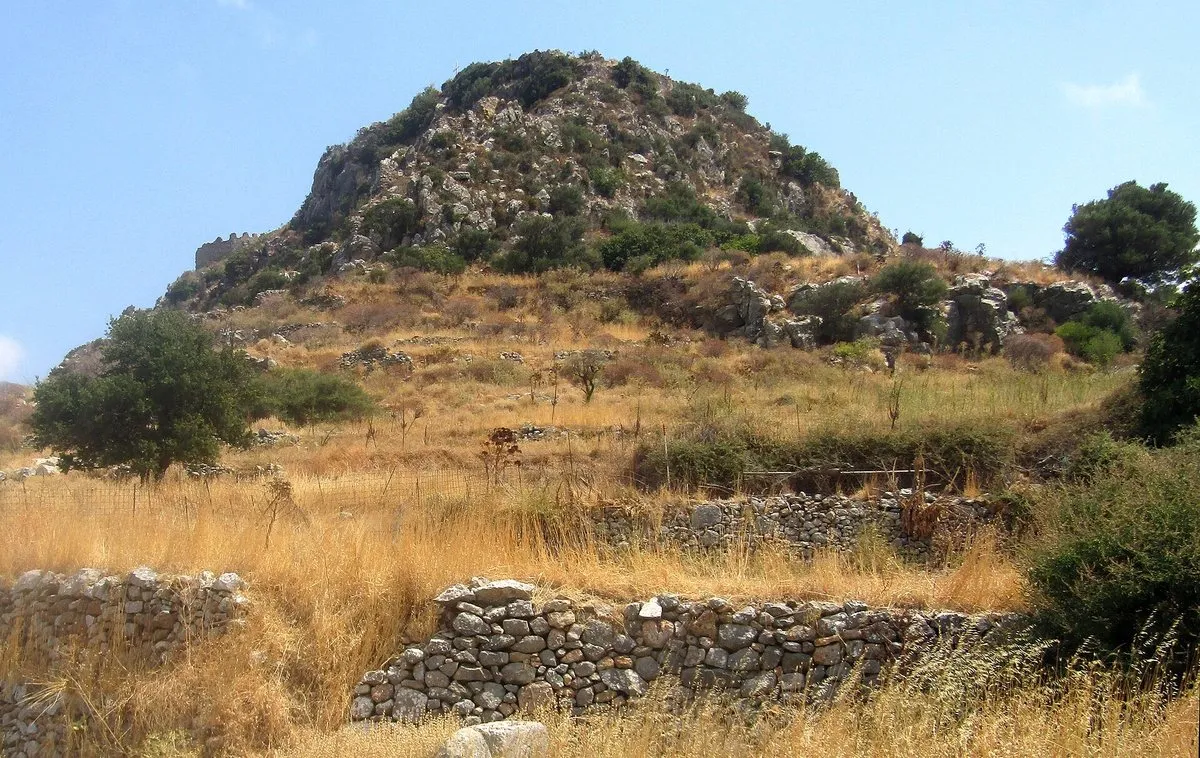
Polyrinia is the ancient city that most visitors to Kissamos drive straight past. It sits on a bare hill seven kilometres inland, above a small village built partly on its ruins, and it was — according to the Ministry of Culture — one of the most important city-states on Crete in the Hellenistic age, controlling the port of Kissamos and competing with Phalasarna for the sea. What survives is scattered rather than grand: walls and towers, a water system that still feeds the village, a church put together from ancient blocks, and at the top a view across the whole bay to the White Mountains. There is no ticket office and no timetable, and in July the climb is hard work. History and features come from the Ministry of Culture’s page on the site and walking sources, checked in September 2026; the site is described from our own visits.
The honest facts
- Where
- about 6–7 km south of Kissamos, above the village of Polyrrinia; the acropolis is at about 418 m.
- When
- inhabited from the 5th century BC to the 7th century AD (Ministry of Culture).
- Why it mattered
- controlled the port of Kissamos, rivalled Phalasarna, minted coins from the 4th century BC, and prospered under Rome.
- What survives
- walls with semicircular and polygonal towers, an arched gate, a rock-cut water system still working, an early Christian basilica, chamber tombs.
- The church
- the 99 Holy Fathers, built in 1894 from ancient material.
- The climb
- about 15–20 minutes to the church and another 20 to the top; steep, unshaded.
- Access
- no published hours or fee; visitor sources describe it as open and free.
A city that chose its side
The Ministry of Culture’s account is the clearest. Polyrinia was formed by the merging of neighbouring settlements, and the Ministry credits its foundation to Achaeans; other sources offer different founders and dates, so treat the origins as unsettled. What is not in doubt is its reach: it controlled the harbour at Kissamos, fought Phalasarna for the sea lanes of the west, and minted its own coins. When Rome came, it stayed out of the Cretan resistance, escaped the plundering that followed and prospered as a Roman city.
What you see
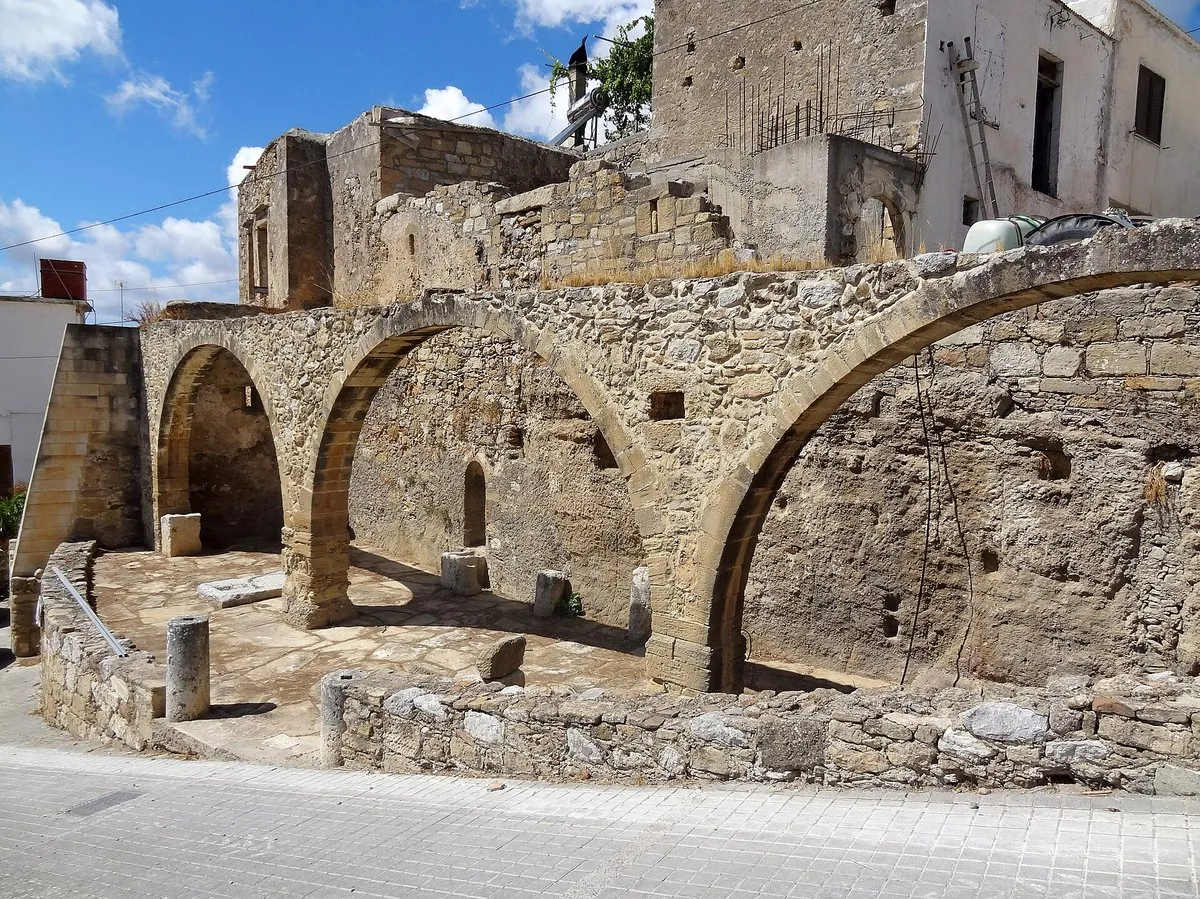
The village below the acropolis is built among and partly out of the ancient city. Its most remarkable survival is the water system: rock-cut channels and underground galleries, still working today in the village’s central square. Some sources credit the aqueduct to the emperor Hadrian; the Ministry does not, so neither do we.
Above the village, the church of the 99 Holy Fathers was built in 1894 from ancient blocks over what the Ministry describes as an ancient sanctuary, possibly of Artemis, from the 4th century BC; inscriptions from the last centuries BC are set into its walls. From there the path climbs on to the acropolis, past stretches of the walls with their towers and the eastern gate. Much of the fortification visible today is later Byzantine and Venetian work on ancient foundations, according to one long-standing guide; the early Christian basilica on the summit and the Hellenistic chamber tombs north of the village complete the picture.
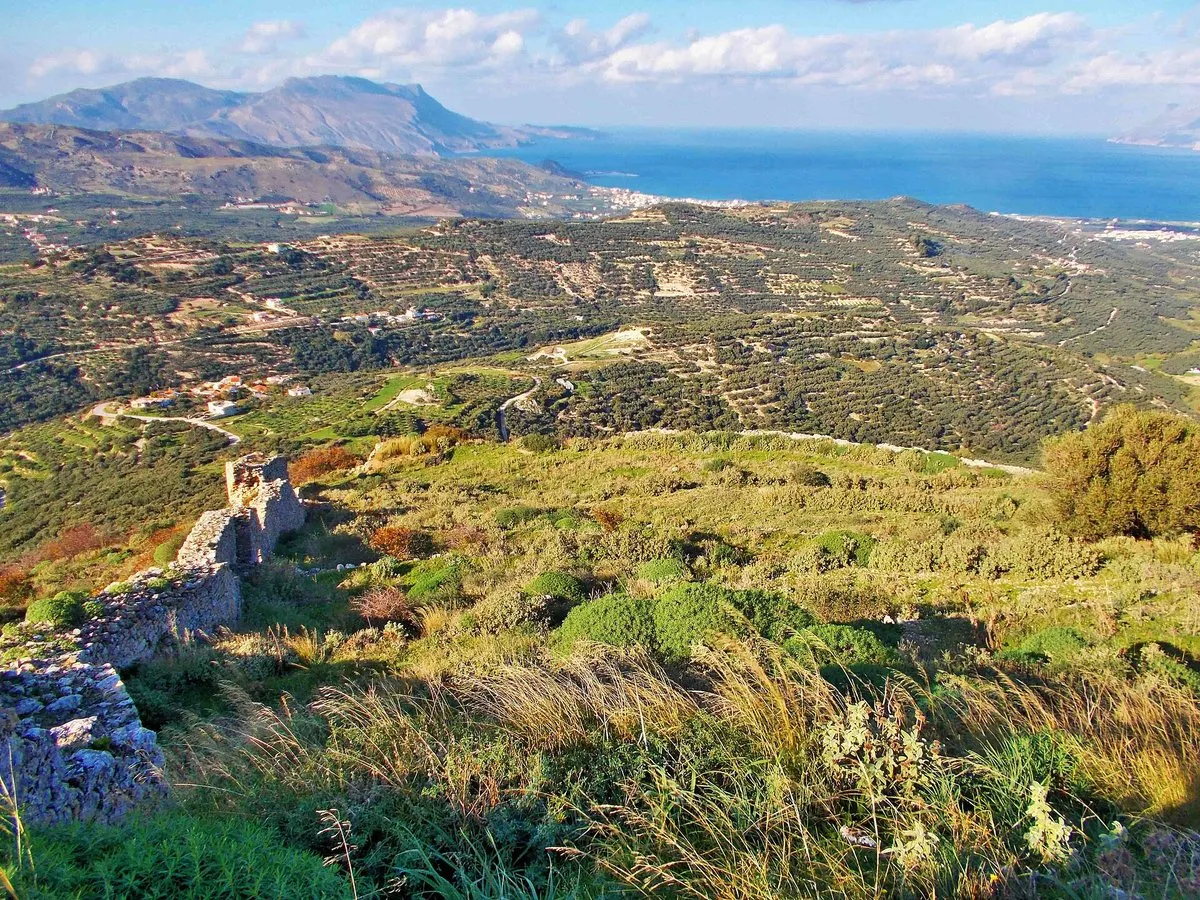
The reward at the top is the view: the whole Gulf of Kissamos, the Gramvousa and Rodopou peninsulas on either side, and the White Mountains to the east.
Making it work
Drive up from Kissamos on the signposted road, park in the village and walk. Go early in the morning or in the last two hours before sunset: there is almost no shade on the climb. Wear proper shoes, bring water, and stay off walls and loose stones. Polyrinia fits neatly into a day around Kissamos and the far west, with a swim at Falassarna — the city’s old rival — in the afternoon. For a comparable site with more excavation and a museum, try Aptera or Eleftherna.
The honest downside
There have been no extended excavations since the 1930s, according to one regional guide, and what survives is fragmentary: no theatre, no mosaics, nothing restored for visitors. The climb is steep, rough and exposed, and in high summer it is punishing at midday. With no published hours or visitor facilities, you are on your own — which is part of its charm and all of its difficulty.
Worth it if: you like your archaeology quiet and unfenced, want one of the best views in West Crete, and can go early or late. Skip it if: you want a curated site with labels and a museum, cannot manage a steep, rough path, or it is midday in August.
Photos on this page: the acropolis hill by Pampuco (CC BY-SA 4.0), the village arches by Olaf Tausch (CC BY 3.0) and the view over the Gulf of Kissamos by Γιώργος Καμπουράκης (CC BY-SA 4.0), via Wikimedia Commons, resized for the web. The site is described from our own visits; its history, features, altitude and the absence of published hours were checked against the Ministry of Culture’s page on Polyrinia and walking sources for the date shown at the top of this guide. Nobody pays to be featured in a guide — no business, no sponsor, no paid mention, ever. Adverts, where they appear, are labelled as adverts.
-
The drive and the climb — About 7 km by road from Kissamos to the village; the acropolis is a steep walk above it.
1 Kissamos → 2 Polyrrinia village → 3 Acropolis of ancient Polyrinia
Driving times are Google's own, without traffic, checked September 2026 — the shape of the day, not a promise. Allow more on mountain roads, and more again in August.
Where is ancient Polyrinia?
Ancient Polyrinia (Polyrrhenia) stands on a hill at about 418 metres above the village of Polyrrinia, roughly 6–7 km south of Kissamos in West Crete. From Kissamos, follow the signposted road inland through Kato Paleokastro; the village sits below the acropolis.
How long does the climb to the Polyrinia acropolis take?
Walking sources give about 15–20 minutes from the village up to the church, and roughly another 20 minutes to the top of the acropolis. It is a steep, rough path with no shade to speak of, so in summer go early or late.
Is there an entrance fee at ancient Polyrinia?
No fee or opening hours are published. The Ministry of Culture's page on the site gives none, and visitor sources describe it as open and free. We could not confirm any fencing, so treat it as an open archaeological site and behave accordingly.
What is there to see at Polyrinia?
Stretches of the city walls with semicircular and polygonal towers, an arched gate on the east side, a rock-cut water system with underground galleries that still works in the village square, an early Christian basilica on the acropolis, and the church of the 99 Holy Fathers, built in 1894 of ancient blocks, some carrying inscriptions.
Why was Polyrinia important?
According to the Ministry of Culture, it was one of the most important city-states of Crete in the Hellenistic period, inhabited from the 5th century BC to the 7th century AD. It controlled the port of Kissamos, rivalled Phalasarna at sea, minted its own coins, kept out of the Cretan resistance to Rome and prospered under Roman rule.
One email a month — only when something on this island actually changes. No spam, no partners, one-click unsubscribe. Read past issues before you decide.