Triopetra & Agios Pavlos: The Empty-South Beaches, Honestly
Three rocks, a huge dune, and two of the most peaceful serious beaches in Crete — yoga-retreat quiet, minimal facilities, maximal horizon.
Southwest of Akoumia the road corkscrews down to a coast that still feels early: Triopetra, named for its three offshore rock towers, and Agios Pavlos over the headland with its sculpted sandstone and its infamous, magnificent dune. No resorts, a scatter of rooms and tavernas, and the Libyan Sea doing colours the north coast cannot. This is where yoga retreats hide and where phone signal takes tactful breaks.
The honest facts
- Getting there
- about 50–60 minutes from Rethymno; the final descents are steep, hairpinned and paved. Nothing a normal car and calm hands cannot do.
- Triopetra layout
- the small cove by the rocks and tavernas (“little” Triopetra), then a vast open stretch (“big”) eastward — walk two minutes for solitude.
- Agios Pavlos
- the sheltered main cove has a couple of tavernas and rooms; over the western saddle drops the great dune to a wilder beach below. The dune descent is joy; the climb back is cardio with scenery.
- Facilities
- a few sunbeds by the tavernas (roughly €8–12), otherwise self-sufficient territory — water, shade, everything.
- Sea
- crystalline, quickly deep in places, occasionally with south-swell waves; no lifeguards.
Which of the two, and which end
They are ten minutes apart by road and they are not interchangeable.
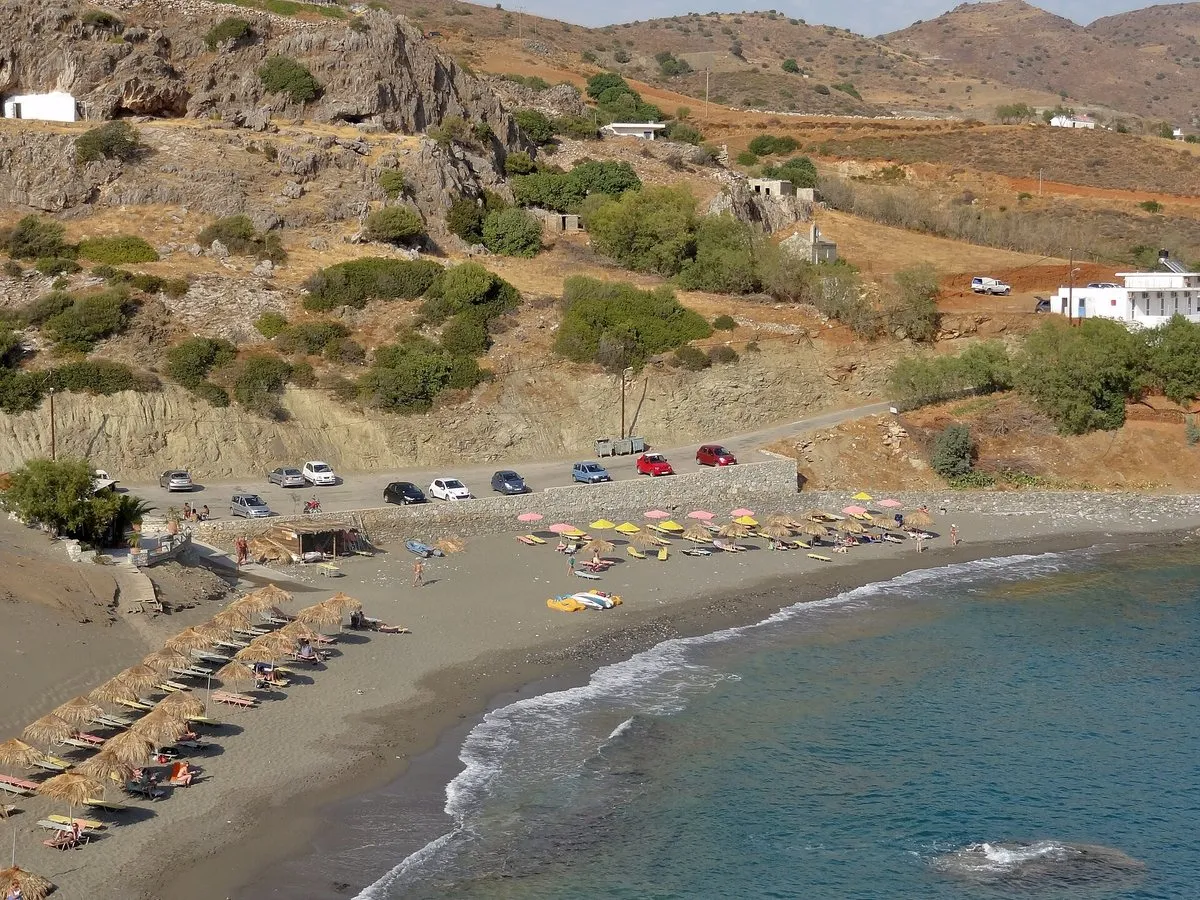
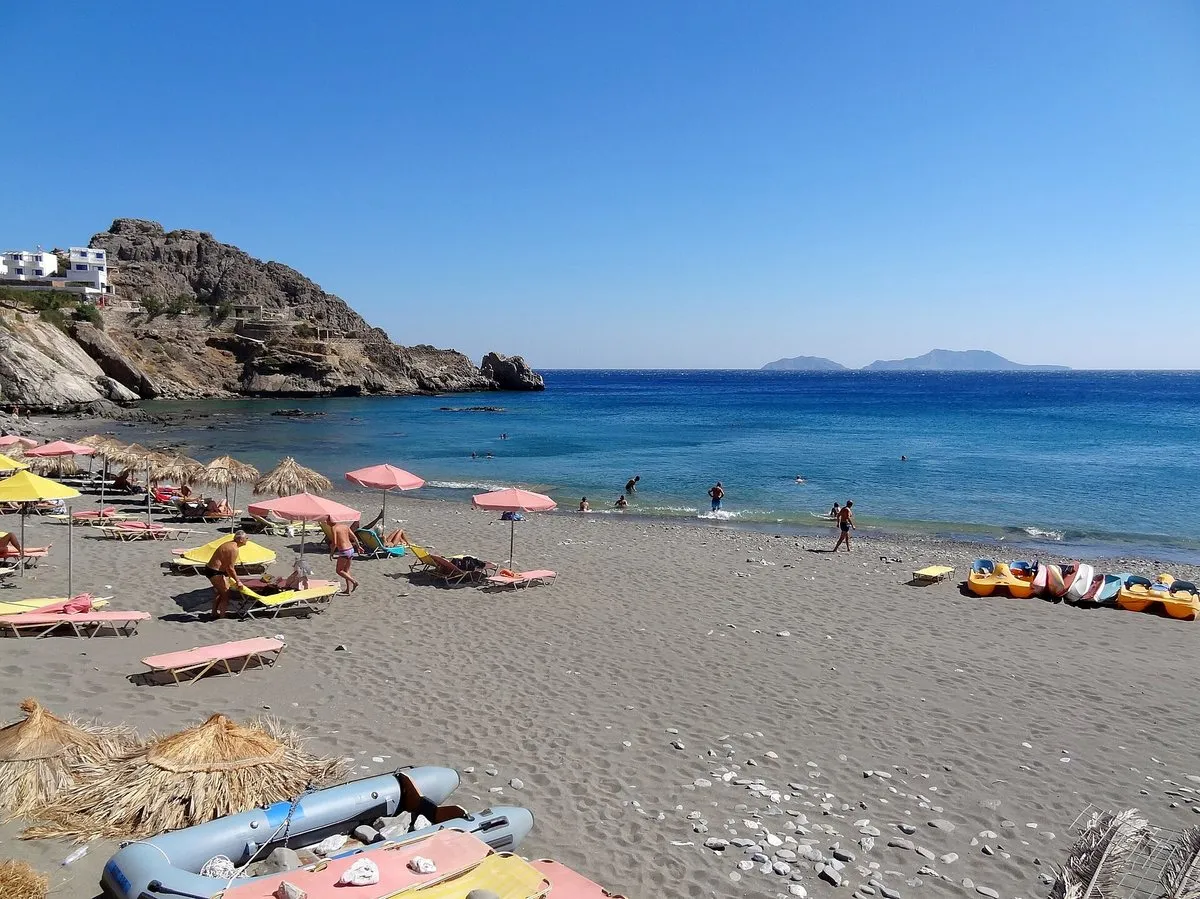
Triopetra splits into two. “Little” Triopetra is the small cove beside the three rocks, with the tavernas, the handful of sunbeds and the easiest parking — this is the sociable end. “Big” Triopetra runs east from it as a long open sweep where two minutes of walking buys genuine solitude and nothing else at all. Families and anyone who wants lunch within sight of the towel stay little; readers and swimmers go big.
Agios Pavlos is the sheltered main cove over the headland — smaller, rockier, more dramatic, with a couple of tavernas and rooms above it. Then, over the western saddle, the dune drops to the wilder beach below. That descent is the reason people come, and the climb back is a genuine effort in heat.
The practical version: Triopetra for a whole beach day, Agios Pavlos for a half-day with a walk in it.
The sunset question
This coast faces south-west, and the sunset behind the three rocks is why a certain kind of traveller books rooms here rather than day-tripping. It is worth staying for — but it commits you to driving the hairpins back in the dark, which is fine at a sober and unhurried pace and unpleasant at any other.
If you would rather not, the compromise most people settle on is a late lunch, the long afternoon swim, and leaving while the light is still on the road.
The day done right
Arrive mid-morning, claim taverna-adjacent comfort or hermit distance to taste, swim until salted, long fish-or-greens lunch above the water, siesta, then stay for the sunset behind the three rocks — the whole reason the retreat crowd chose this coast. Driving the hairpins back in the dark is fine; sober and unhurried is the setting.
The honest downside
There is nothing to do here except everything the place is for; families needing infrastructure, shade and shallow entries will work harder than at the organised beaches. And the dune at Agios Pavlos punishes midsummer midday attempts — morning or evening it.
Worth your time if: empty horizon and water quality outrank amenities on your list. Skip it if: the beach day must include loungers, wifi and a snack bar every fifty metres — Plakias, 35 minutes west, does serviced-south better.
Photos on this page: both by Olaf Tausch (CC BY 3.0), via Wikimedia Commons, resized for the web. Everything above was checked for the date shown at the top of this guide. Nobody pays to be featured in a guide — no business, no sponsor, no paid mention, ever. Adverts, where they appear, are labelled as adverts.
-
Rocks and dune
Tap a name to open it in your map app. These are options, not an order — pick by the day you have.
How do you get to Triopetra?
About 50 to 60 minutes from Rethymno, with final descents that are steep, hairpinned and paved. Nothing a normal car and calm hands cannot handle, but driving them back in the dark wants sober and unhurried.
What is the dune at Agios Pavlos?
A great sandstone dune dropping over the western saddle from the sheltered main cove to a wilder beach below. The descent is a joy and the climb back is cardio with scenery. Do it morning or evening - midsummer midday punishes attempts.
Are there facilities at Triopetra?
Minimal. A few sunbeds by the tavernas at roughly EUR8-12, and otherwise self-sufficient territory - bring water, bring shade. There are no lifeguards, and the water goes deep quickly in places.
What is the difference between little and big Triopetra?
Little Triopetra is the small cove by the three rocks with the tavernas. Big Triopetra is the vast open stretch running eastward. Walk two minutes from the cove and you have solitude.
Is Triopetra good for families?
Less so than the organised beaches. There is nothing here except everything the place is for, and families needing infrastructure, shade and shallow entries will work harder. Plakias, 35 minutes west, does serviced-south considerably better.
One email a month — only when something on this island actually changes. No spam, no partners, one-click unsubscribe. Read past issues before you decide.