Plakias: The Honest Guide to the Easy South
A wide bay, a low-rise village, mountains behind and gorges beside — the south coast with training wheels.
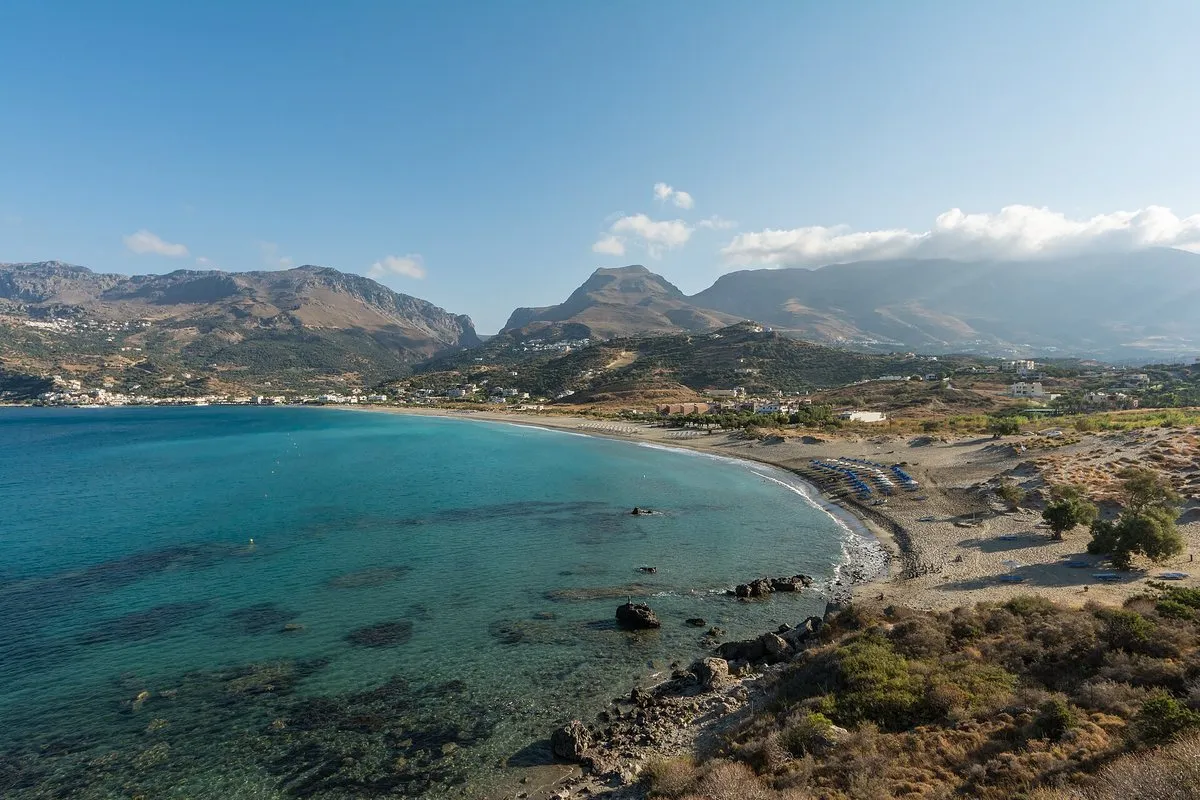
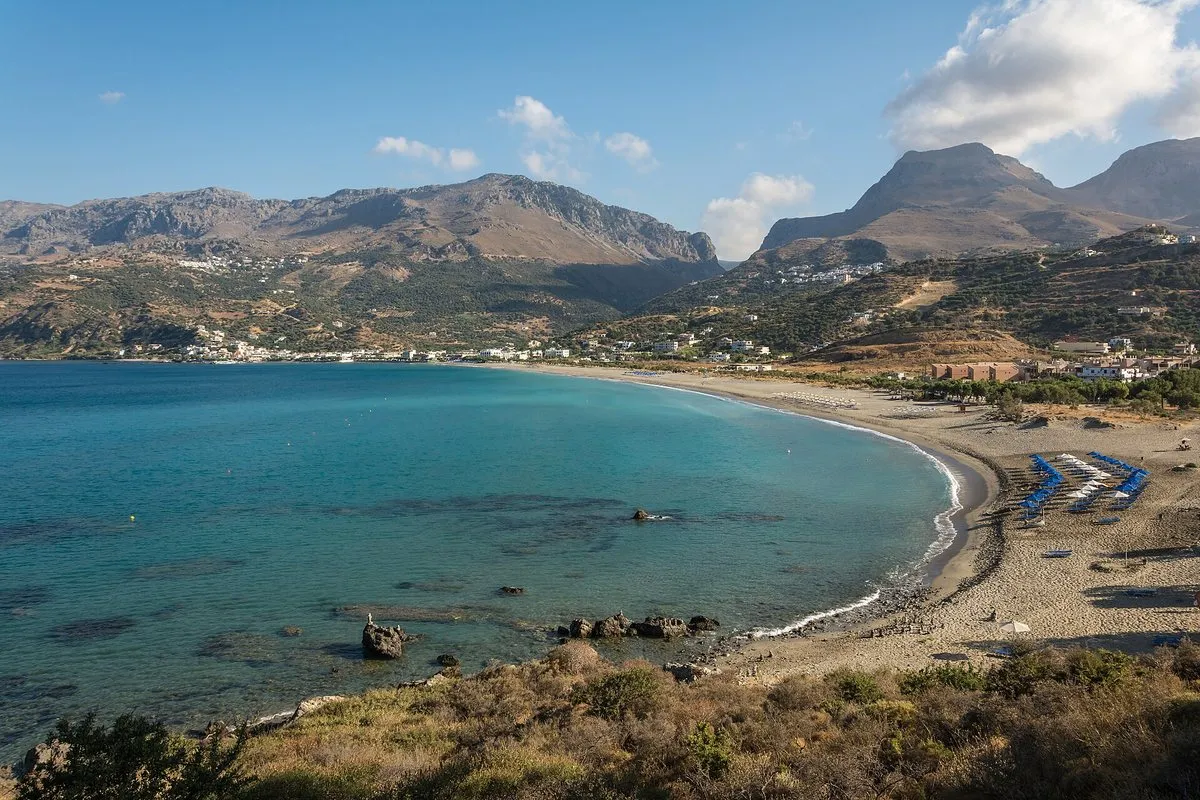
Plakias is the friendliest door to the south coast: a kilometre of sandy bay, a village that stayed low-rise, mountains close enough to touch, and gorge mouths on both sides. It has none of the roadless romance of Loutro and none of its logistics either — you drive in on decent tarmac, park, and start living slower within the hour.
The honest facts
- Getting there
- roughly 35–40 minutes from Rethymno over the Kourtaliotiko gorge road — itself a highlight, eagles included.
- The bay
- long, sandy, gently shelving at the village end; organised sections with sunbeds around €8–12, wilder sand toward the eastern end.
- The wind
- Plakias has a personal breeze that arrives most afternoons and keeps summer civil — and occasionally graduates into full flag-snapping wind. Morning swims are the calm ones.
- Around it
- Damnoni, Ammoudi and snorkel-famous Skinaria beaches within ten minutes; Preveli twenty; the Kotsifou and Kourtaliotiko gorges as scenic exits.
- The vibe
- couples, walkers, long-stay northern Europeans, and one of the longest-running youth hostels in Greece keeping the budget end alive. Nightlife means bar, not club.
The wind, which decides everything
Plakias sits in a wide south-facing bay with a valley behind it, and that valley funnels wind onto the beach with unusual reliability. Locals call the afternoon blow predictable enough to plan around.
Practically: mornings are calm, afternoons are often not, and the sand moves. For swimming and lying still, be on the beach before one. For anyone who sails, windsurfs or simply hates still heat, the afternoon is the reason to come.
The bay also means the sea is cooler than the sheltered coves either side, and there is a shore break on windy days that catches people who assumed a Libyan Sea beach means a flat one.
The coves either side
The main beach is long and functional. The good swimming is around the corners.
East — Damnoni, Ammoudi and Skinaria are five to ten minutes by car and are the reason many people who stay here never swim in the town bay at all.
West — the road climbs to Souda beach, smaller and quieter, with tamarisk shade at the back and a couple of tavernas that have not changed in a decade.
What sort of place it is
Plakias grew as a backpacker and walker base rather than a package resort, and the mix is still visible: a youth hostel, dive operators, walkers coming off the gorges, and families who found it and came back. It is low-rise and there is no strip.
That also means the evening is quiet. Tavernas, a couple of bars, and people who got up early. Anyone wanting nightlife should be somewhere else entirely.
Out of season it closes hard — by November most things are shut and the population drops to a few hundred.
A Plakias day
Swim before the breeze, drive or boat somewhere small for the middle — Preveli early, or simply the next cove — long taverna lunch, siesta like you mean it, then the evening walk along the front where everyone reappears at once. Repeat until your shoulders drop.
Base or day trip
As a base, Plakias comfortably holds four to seven nights: enough beaches, walks and drives within twenty minutes to never repeat a day. As a day trip from Rethymno it works too — but you will meet its best self, the quiet evening bay, only if you sleep there.
The honest downside
The afternoon wind is not a rumour; the village architecture is functional rather than photogenic; and if you need shopping or nightlife you will exhaust Plakias by day two — which is exactly why the people who love it love it.
Worth your time if: you want the south coast softened to an easy grade. West along the increasingly cinematic Sfakia road, Rodakino and Korakas empty out entirely.
Skip it if: windless-millpond afternoons are non-negotiable — look at Makrigialos further east.
Photos on this page by C messier (CC BY-SA 4.0), via Wikimedia Commons, resized for the web. Nobody pays to be featured on this site.
The quick scores
- Crowds
- 3 out of 5you will exhaust it by day two
- Nightlife
- 2 out of 5bar, not club
- Organised beach
- 3 out of 5organised at the village end, wild to the east
- Car needed
- 3 out of 5Preveli and the gorges are the reason
- Dinner on foot
- 3 out of 5enough for a week, not for a fortnight
- Prices
- 2 out of 5hostel to apartment, sunbeds EUR 8-12
More dots means more of the thing named, never “better”. What each level means. Scored August 2026 from the reporting on this page.
Is Plakias windy?
Often, yes. Plakias has a personal afternoon breeze that keeps summer civil and occasionally graduates into full flag-snapping wind. Morning swims are the calm ones. If windless afternoons are non-negotiable, look at Makrigialos further east instead.
How far is Plakias from Rethymno?
Roughly 35 to 40 minutes over the Kourtaliotiko gorge road, which is itself one of the better drives in the region - eagles included.
Is Plakias a good base for a week?
It comfortably holds four to seven nights. Damnoni, Ammoudi and Skinaria are within ten minutes, Preveli twenty, and there are enough gorges and drives nearby to never repeat a day. What it does not hold is anyone who needs shopping or nightlife.
What are sunbeds like at Plakias?
Organised sections of the bay run around EUR8-12 for a set, with wilder unorganised sand toward the eastern end. The bay is long and sandy and shelves gently at the village end, which makes it unusually good for families on this coast.
Is Plakias better than Loutro?
Different. Plakias gives you the south coast with a road, a car park and easy logistics; Loutro gives you roadless quiet and a ferry timetable that runs your day. Plakias is the easier grade, and that is the whole appeal.
One email a month — only when something on this island actually changes. No spam, no partners, one-click unsubscribe. Read past issues before you decide.