Vai Palm Beach: Europe's Palm Forest, Honestly
The famous palm-backed beach at the island's eastern tip — how real it is, how organised it gets, and the two-minute walk that fixes the crowd problem.
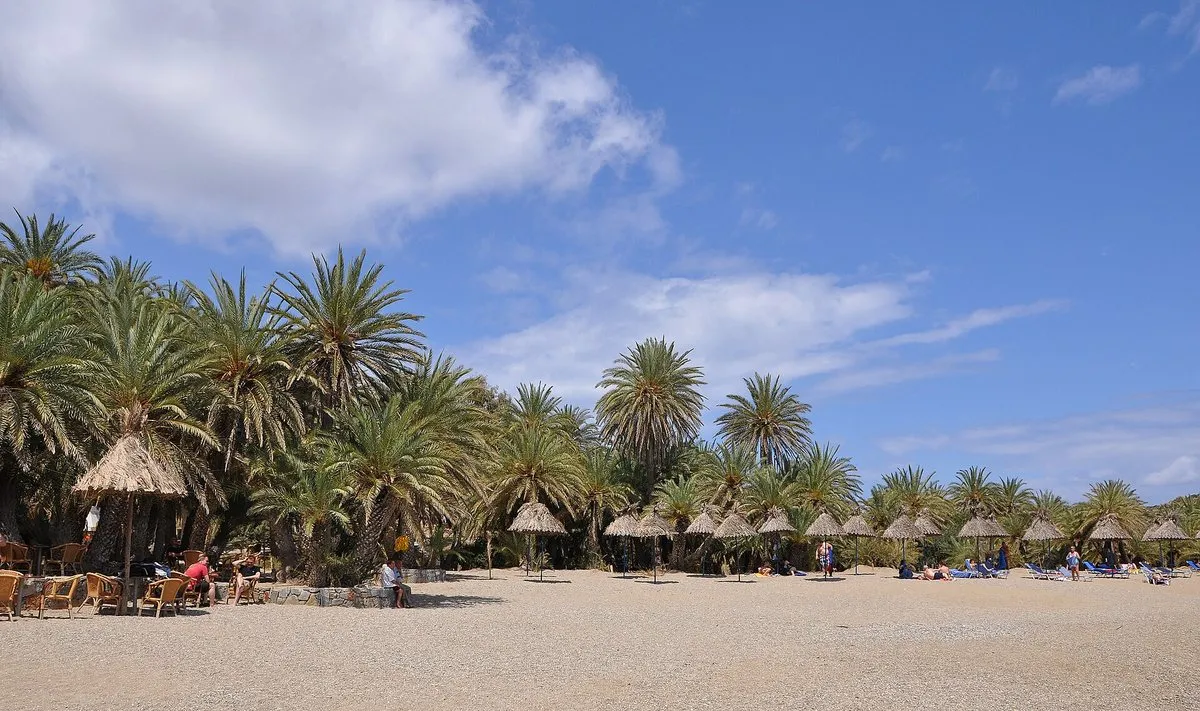
Vai is the postcard the east coast leads with: a crescent of golden sand backed by the largest natural palm grove in Europe — thousands of native Cretan date palms, not planted decoration. It photographs like the Caribbean and operates, in season, like the organised attraction it has had to become. Both facts are true; your experience depends on which one you plan around.
The honest facts
- Getting there
- roughly 25 minutes east of Sitia past Toplou; long, mostly good road, ending at a paid parking area (a few euros).
- The grove
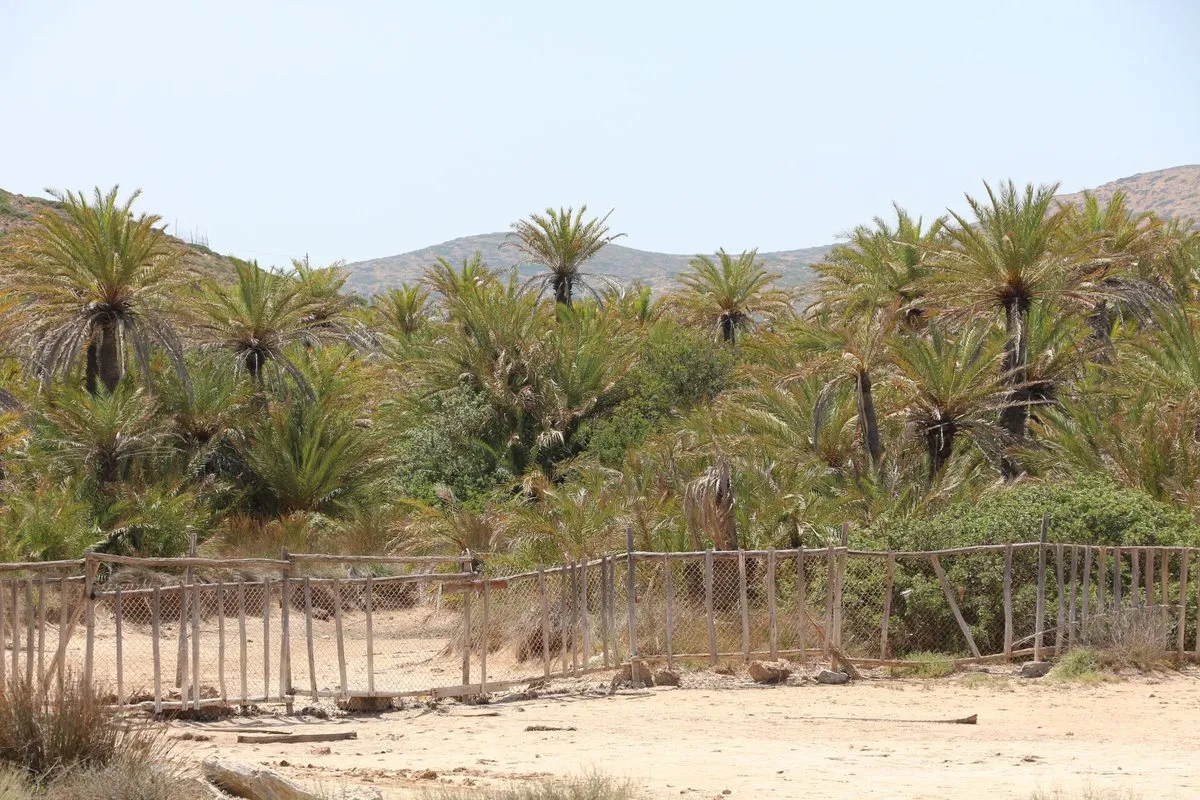
- protected — fenced walkways only, no wandering among the trunks, no picnicking under them. The famous 1970s hippie era ended precisely to save the palms.
- Organisation
- rows of sunbeds (roughly €10–15 the set), one big canteen-restaurant, showers, pedalos. High-season middays are full.
- The viewpoint
- stairs at the south end climb to the classic over-the-palms panorama — five minutes, mandatory.
- The escape
- paths over the headlands reach small quieter coves north and south (the southern one traditionally naturist). Two minutes of walking deletes most of the crowd.
Timing beats everything
Vai at 09:00: palms rustling, water glass, thirty people. Vai at 13:00 in August: a well-run beach club with a botanical backdrop. Both are legitimate; only one feels like the photograph. Coming from Sitia, be first through the gate, do the viewpoint while the light is low, swim, and surrender the sand as the coaches arrive.
The palms, and what they actually are
This is not a planted resort feature. It is a native stand of Phoenix theophrasti, the Cretan date palm, and at somewhere over five thousand trees it is the largest natural palm forest in Europe.
The trees are protected and fenced. You walk beside the grove, not through it, and that fence is the reason there is still a grove — the beach was a free-camping site through the seventies and the damage from that era took decades to recover.
The dates are small, fibrous and not worth eating. Every visitor tries one anyway.
Facilities, and the trade
Vai is fully organised: a car park with a fee, a canteen, showers, and dense sunbed rows at around €8–12 the set. That is unusual for the far east and it is the reason coaches come.
It also means the beach in front of the palms is the busiest sand in eastern Crete between eleven and four. The sunbeds fill first, then the free sand at the edges.
If you want the image without the crowd, walk. Ten minutes north over the headland is a smaller cove with nothing on it, and the palms are still in the frame.
Timing, in numbers
The coaches arrive from roughly 10:30 and leave by 16:00. Before and after those hours the beach is a different place.
From Sitia it is 35 minutes, which makes an eight-o’clock arrival genuinely easy. From the Hersonissos coast it is 2h30 each way, which is why doing Vai as a day trip from there is the single most common mistake in eastern Crete planning.
Pair it properly
Toplou monastery sits on the approach road — fortress-like, historically heavyweight, its label producing some of Crete’s best organic oil and wine. Itanos, five minutes north of Vai, offers Minoan-to-Byzantine ruins scattered over two empty swimming coves: the archaeology-with-snorkel double that the east does uniquely well.
The honest downside
Vai is a managed monument, and feels it: fences, fees, rules, one food outlet with captive-audience pricing. The wildness the palms imply was loved to death decades ago; what remains is beautiful, protected and organised — order accordingly.
Worth your time if: you are east anyway — it is the region’s signature image and earns its fame at the right hour. Skip it if: you would be driving 2h30 each way from the Heraklion coast just for it; the east deserves nights, not a raid.
Photos on this page: the beach by Marc Ryckaert (CC BY 3.0) and the grove by Przemek Pietrak (CC BY-SA 3.0), via Wikimedia Commons, resized for the web. Nobody pays to be featured on this site.
Is the palm forest at Vai natural?
Yes — the largest natural palm grove in Europe, thousands of native Cretan date palms rather than planted decoration. It is protected: fenced walkways only, no wandering among the trunks and no picnicking under them.
When should you visit Vai?
Early. At 09:00 it is rustling palms, glass water and thirty people; at 13:00 in August it is a well-run beach club with a botanical backdrop. Be first through the gate, climb the viewpoint stairs while the light is low, swim, and surrender the sand as the coaches arrive.
What does Vai cost?
Paid parking for a few euros, sunbed sets at roughly €10–15, and one big canteen-restaurant with captive-audience pricing. Order accordingly.
How do you escape the crowds at Vai?
Paths over the headlands reach small quieter coves north and south — the southern one traditionally naturist — and two minutes of walking deletes most of the crowd. Itanos, five minutes north, adds Minoan-to-Byzantine ruins scattered over two empty swimming coves.
One email a month — only when something on this island actually changes. No spam, no partners, one-click unsubscribe. Read past issues before you decide.