Gournia & Pacheia Ammos: The Honest Guide to the Minoan Town by the Road
The best-preserved Minoan town on the island — streets you can actually walk — plus the workaday bay village next door.
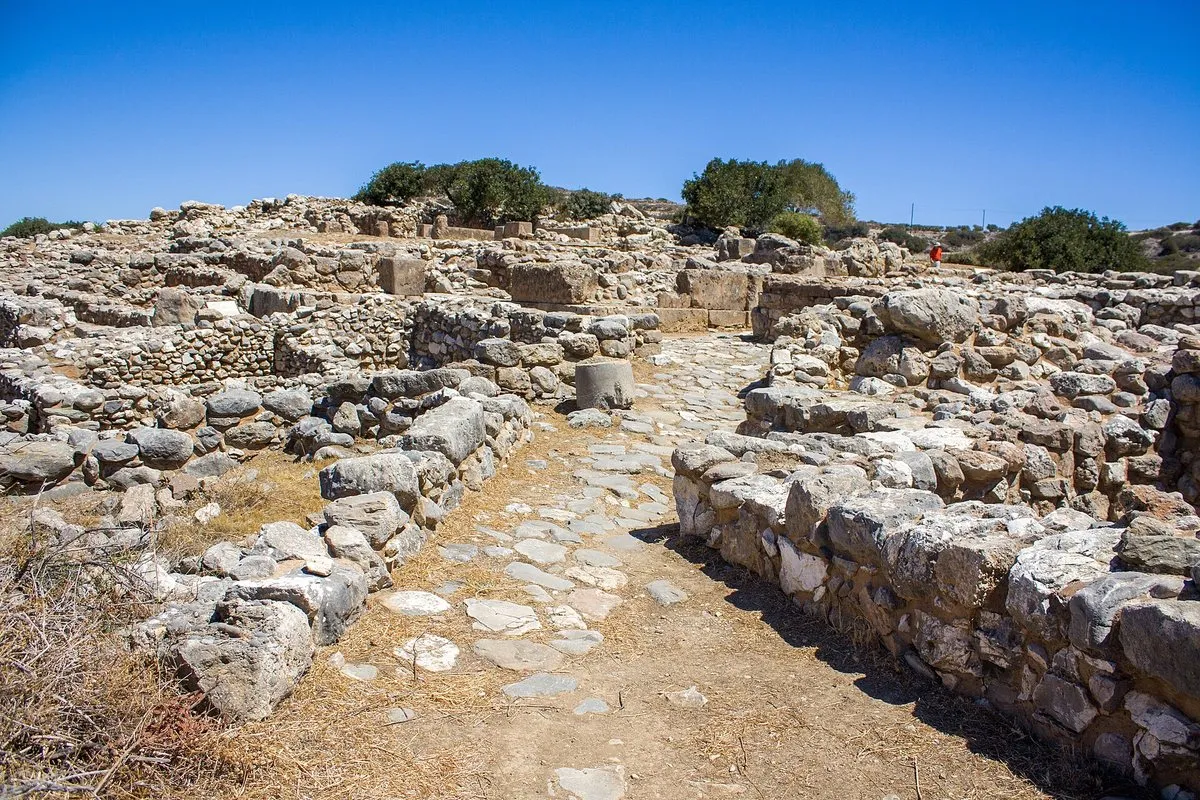
Every coach on the Sitia road passes Gournia; almost none stop — which leaves you the streets of the best-preserved Minoan town in existence essentially alone. Not a palace: a town — lanes, house thresholds, workshops, stairs — draped over a knoll above the Mirabello, with little Pacheia Ammos bay village next door doing taverna duty. It is the east’s most underrated forty minutes, and the corrective to palace-only Minoan imaginations.
The honest facts
- The site
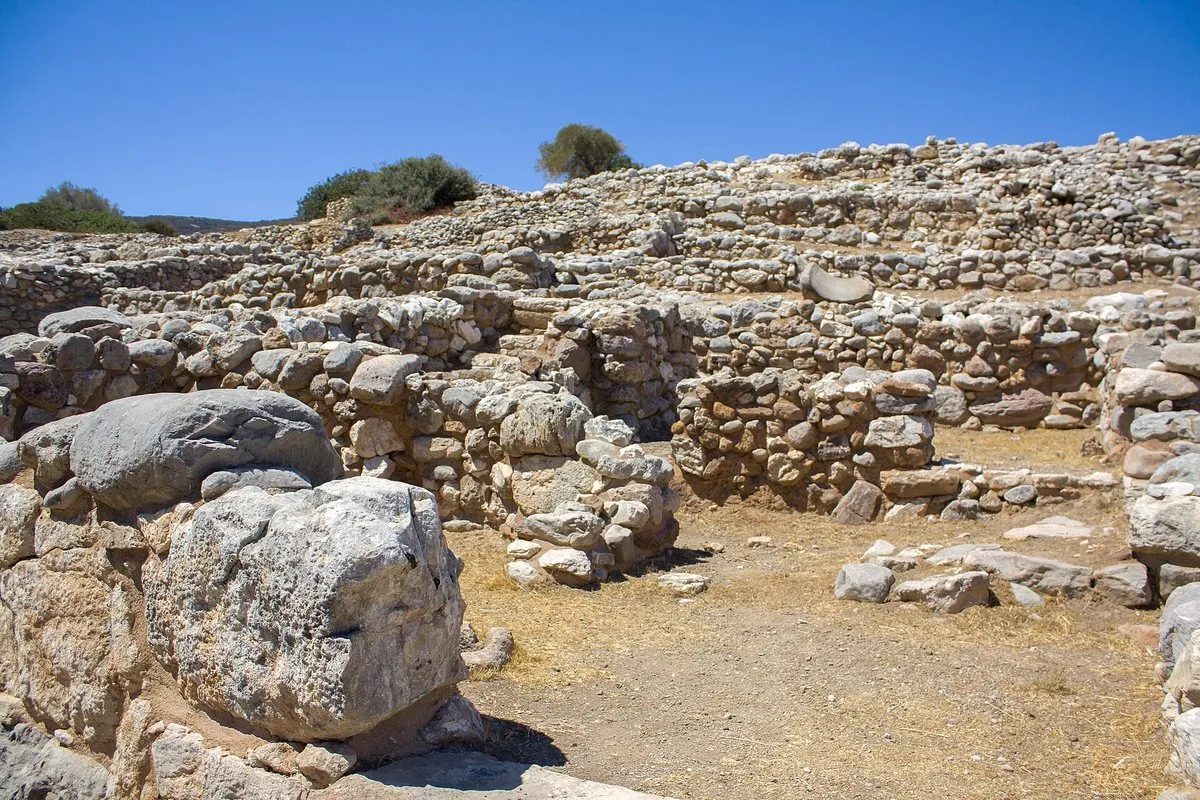
- ticketed modestly (€5 full, €3 reduced on the Ministry of Culture’s page for the site; hours listed as 08:30–15:30, closed Tuesdays, verify seasonally — mornings safest), then self-guided over the knoll: cobbled lanes contouring like a hill village’s, dozens of house plots, the small “palace” court crowning; the fabric reads instantly because it is domestic — you walk streets, not throne rooms.
- Why it matters
- Gournia is the everyday Minoan world Knossos’ grandeur hides — artisan quarters, olive presses, the middle-class Bronze Age; forty unhurried minutes here reframe the palaces entirely.
- Practicals
- exposed and shadeless — hats and water; the roadside position makes it the zero-detour culture stop of every east run.
- Pacheia Ammos
- three minutes on — a working bay village with a taverna row locals rate for fish, a serviceable town beach that meltemi days chop, and the Thripti mountains’ Ha gorge cleaving the wall behind (admired, by most, from a lunch table).
- Pairing
- Kavousi’s ancient olive five minutes east, Mochlos fifteen, Agios Nikolaos twenty west — the day assembles itself.
The honest visit
Morning ticket while the light rakes the lanes, the knoll walked ridge to shore side, ten minutes’ imagining the harbour below full of Bronze Age business — then the Pacheia Ammos fish lunch as the modern layer of the same coastal economy. History and taverna, forty minutes apart, three thousand years aligned.
What you are walking through
Harriet Boyd (later Boyd Hawes) excavated almost the entire town in three seasons, in 1901, 1903 and 1904, uncovering some sixty houses, the cemetery and the road system. The settlement was first permanently inhabited in the Early Minoan II period, roughly 2650–2100 BC, flourished in Late Minoan I until about 1470 BC, and was partly reoccupied in Late Minoan III. At its height it covered about 1.7 hectares, with more than half a kilometre of cobbled streets and a public square of around 500 square metres beside the central building — the “palace”, a label scholars still argue over. Most of the finds went to the Heraklion Archaeological Museum and the Penn Museum in Philadelphia, which is why the site itself is all architecture.
Tickets, hours and buses
The Ministry of Culture’s page for the site, checked in October 2026, gives hours of 08:30–15:30 all year, closed on Tuesdays, and tickets of €5 full and €3 reduced; secondary listings add last entry 20 minutes before closing. Toilets are listed on site. The Ministry also sets free-admission days at state sites, among them 28 October and some winter Sundays. Without a car, the site is on the main road from Agios Nikolaos: Pacheia Ammos, about 15 km north of Ierapetra, sits at the fork where the roads to Ierapetra and Sitia divide, at the start of the 12 km isthmus between the Aegean and Libyan seas, so KTEL Heraklion–Lasithi buses from Agios Nikolaos on both routes pass Gournia. Check the Agios Nikolaos station timetable (the current version dates from 11 September 2026) and ask the driver to let you off at the site.
The shore below the town
Kamini, a string of pebble coves about 600 metres north of the site, was probably Gournia’s way to the sea: the town’s necropolis lies there, and remains of rooms, walls and Minoan shipsheds survive along the shore. The coves are mostly awkward to reach and, like Pacheia Ammos, collect debris carried in by Aegean currents. The Ha gorge behind Pacheia Ammos is a technical canyon of around 1.5 km, with walls up to 300 metres and some 26 abseils — not a walk; without an equipped canyoning party, admire it from below.
The honest downside
Gournia is low walls and ground plans — visitors needing reconstructions or frescoes in situ will find knee-height eloquence instead; summer middays are anvils; and Pacheia Ammos beach serves function, not postcards.
Worth your time if: you want the Minoans at street level, to yourself. Skip it if: only painted palaces count as archaeology — Knossos holds that franchise, crowds included.
Photos on this page: both by Shadowgate (CC BY 2.0), via Wikimedia Commons, resized for the web. Everything above was checked for the date shown at the top of this guide. Nobody pays to be featured in a guide — no business, no sponsor, no paid mention, ever. Adverts, where they appear, are labelled as adverts. Sections added in October 2026 were checked against published sources rather than on a new visit.
-
Forty minutes apart
1 Gournia 2 Pacheia Ammos
Tap a name to open it in your map app. These are options, not an order — pick by the day you have.
What is Gournia?
The best-preserved Minoan town in existence - not a palace, a town. Cobbled lanes contouring like a hill village, dozens of house plots, workshops and stairs, with a small palace court crowning the knoll. Every coach on the Sitia road passes it and almost none stop.
Why visit Gournia instead of Knossos?
Not instead - as the complement. Gournia is the everyday Minoan world that Knossos grandeur hides: artisan quarters, olive presses, the middle-class Bronze Age. Forty unhurried minutes there reframe the palaces entirely.
How long do you need at Gournia?
Forty minutes covers it unhurried. It is ticketed modestly - published figures run from roughly EUR3 to EUR5 - with hours listed as 08:30-15:30 and closed on Tuesdays (verify seasonally); the visit is self-guided and completely exposed, so bring hats and water, and mornings are safest.
What is at Pacheia Ammos?
Three minutes on from Gournia: a working bay village with a taverna row locals rate for fish, a serviceable town beach that the meltemi chops up, and the Ha gorge cleaving the Thripti mountains behind - admired by most from a lunch table.
What can you combine with Gournia?
Kavousi and its ancient olive five minutes east, Mochlos fifteen, Agios Nikolaos twenty west. The zero-detour roadside position makes it the easiest culture stop on any east run.
Can you get to Gournia by bus?
Yes. Gournia stands beside the main road east of Agios Nikolaos, just before Pacheia Ammos, where the roads to Ierapetra and Sitia divide, so KTEL Heraklion-Lasithi buses from Agios Nikolaos on both routes pass it. Check the current Agios Nikolaos station timetable on ktelherlas.gr and ask the driver to stop at the site.
One email a month — only when something on this island actually changes. No spam, no partners, one-click unsubscribe. Read past issues before you decide.