Crete by Bus: The Honest Guide to KTEL
You can see most of Crete without hiring a car — but the network is a coastal spine, not a web, and Heraklion has two bus stations two kilometres apart.
The line I give people who ask whether they need a car is this: the bus will take you along the coast beautifully and will not take you into the island at all. Crete’s KTEL network is a spine with branches. If your week is Heraklion, Rethymno, Chania, the resort strips and a couple of famous day trips, you can do the whole thing on buses for less than three days of car hire. If your week includes a mountain village nobody has heard of, you are hiring a car and that is the end of it.
The one-minute version. Two operators: KTEL Heraklion–Lasithi in the centre and east, KTEL Chania–Rethymno in the west. Town tickets roughly €1.20–1.60; Heraklion–Rethymno around €8; Heraklion–Chania roughly €16–18. Buses are modern, air-conditioned, and have free luggage space underneath. Heraklion has two stations 2km apart — check which one your route leaves from before you walk anywhere. Carry cash for rural stops.
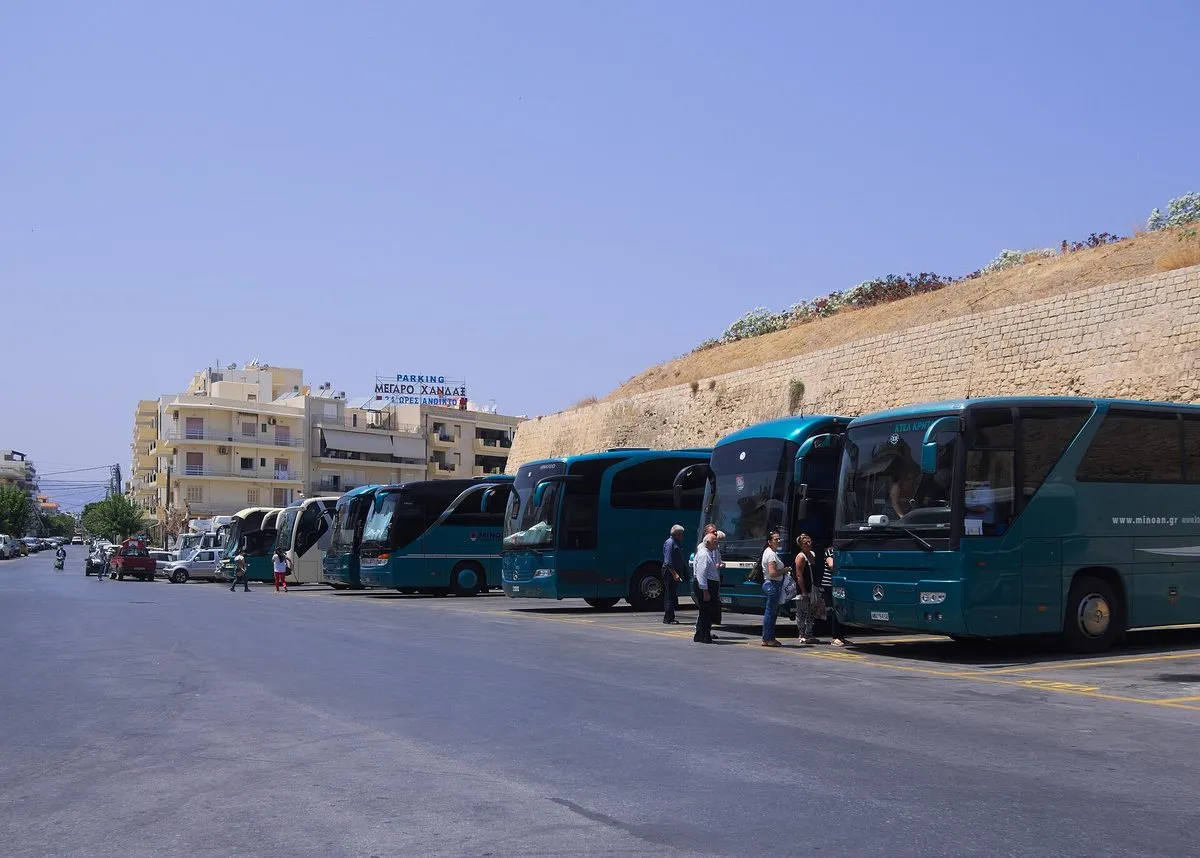
The two-station problem
Heraklion’s Station A sits near the port on Ikarou Avenue. Everything along the north coast leaves from here: west to Rethymno and Chania, east to Hersonissos, Stalis, Malia, Sissi, Agios Nikolaos, Ierapetra and Sitia. It is the station your hotel means when it says “the bus station”.
Station B is on the other side of the centre, by the Chanioporta gate under the Venetian walls. Everything heading south or inland goes from here: Matala, Mires, Agia Galini, Zaros, and the buses for Phaistos and Gortyna. Anogia goes from here too.
The two are about two kilometres apart — a half-hour walk through the middle of town with luggage, in heat, having already been told you were in the right place. Ask which station before you set off, not after. It is the most common way to lose a morning in Crete.
What the network does well
The north-coast trunk route is genuinely good. Buses between Heraklion, Rethymno and Chania run all day from early morning to late evening, take an hour and a half to three hours depending on segment and whether you catch the express, and cost a fraction of a taxi. The vehicles are modern, air-conditioned, and the luggage hold underneath is free and unfussy — this is a real alternative to a transfer if you are moving between towns mid-holiday.
The resort strips are equally well served. Along Hersonissos, Stalis and Malia the coastal service runs frequently enough that you stop checking the timetable, and it reaches the aquarium at Gournes and the Heraklion suburbs without drama. The city bus to Knossos leaves from central Heraklion and drops you at the gate.
For the airport, buses run into Heraklion town centre cheaply and often — though if you land after the last one, that is a different problem entirely.
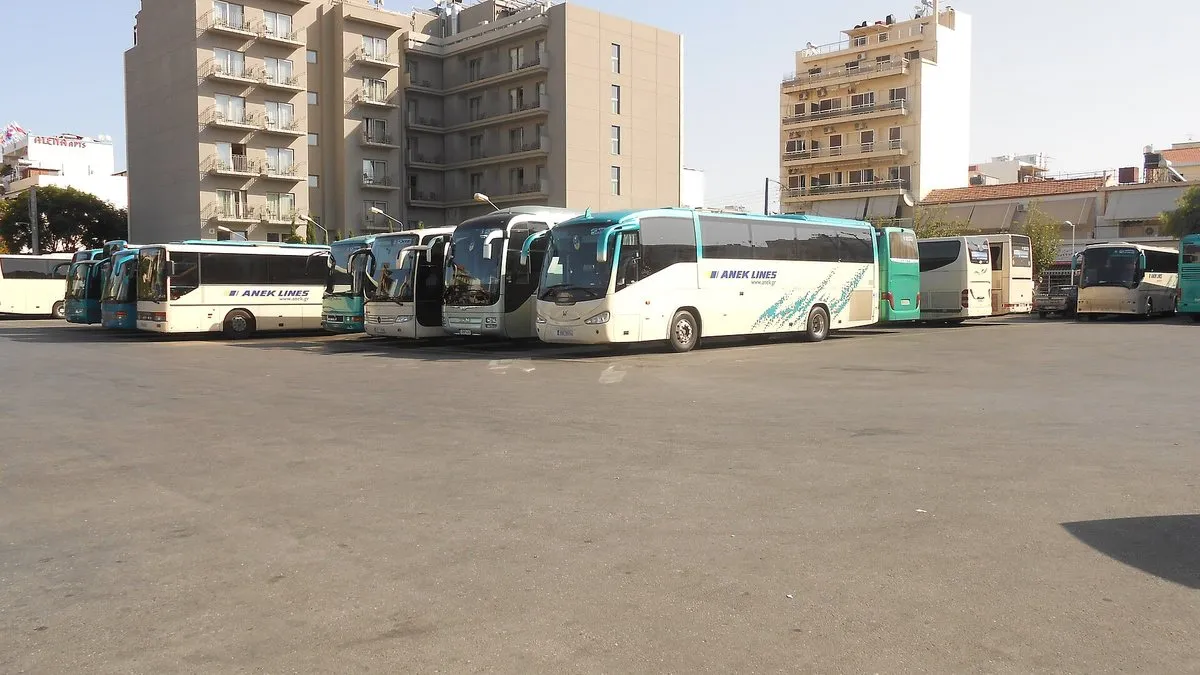
Where it stops working
Three limits, and they are the reason most people end up hiring anyway.
Seasonality. The routes that get you somewhere spectacular — Elafonisi, Omalos for Samaria, Balos, Falassarna — are summer-only. In April or October the bus you read about on a blog simply is not running.
Frequency. A village branch line might have one bus in and one bus out per day, timed for schoolchildren and shoppers rather than visitors. That is not a day trip; that is a commitment.
Geometry. Getting from a south-coast village to a different south-coast village often means going back up to the north coast and down again, because the branches connect to the spine and not to each other. Two hours by road becomes five by bus.
There is also a category of place with no bus at all — small archaeological sites, most mountain villages, and beaches at the end of a track. If your list has more than one or two of those, do the maths on renting a car for the middle days instead of the whole stay.
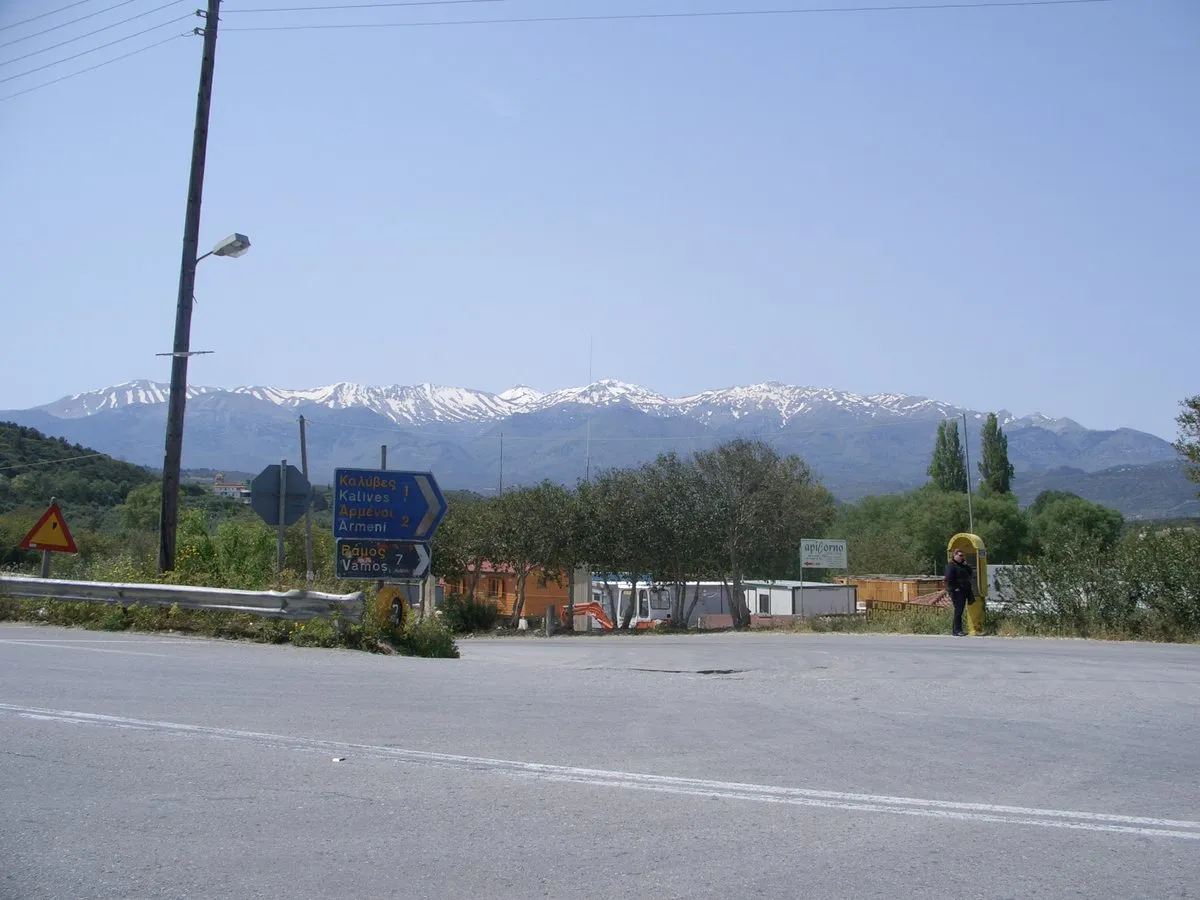
Practical things nobody tells you
Buy at the kiosk or ticket office rather than from the driver — boarding fares are higher, and on busy routes a driver with no seats left will not sell you one. Rural roadside stops are cash-only in practice; a fifty-euro note for a two-euro fare will not be welcome. Timetables shift between summer and winter schedules and the changeover dates move, so screenshot the times you need rather than relying on signal in a valley. And on the long routes, standing is not allowed — a full bus leaves without you, which matters most on the exact days you would least like it to.
If you are arriving with a vehicle rather than hiring one, the overnight ferry from Piraeus docks a fifteen-minute walk from Station A.
The two operators run separate websites, which is confusing for about ninety seconds and then fine: KTEL Heraklion–Lasithi covers everything from Rethymno eastward, KTEL Chania–Rethymno covers the west.
Worth building a holiday around if you are staying in a town or on the coastal strip and your ambitions are the other towns, the famous beaches in season, and one or two big sites. It is cheap, comfortable and far less stressful than Cretan parking. Skip the bus-only plan if your list includes mountain villages, small sites, or south-coast hopping — the network was built for Cretans getting to town, not for visitors getting to the interesting bits, and it is honest about that if you read the timetable properly.
Photos on this page: Heraklion Station B by C messier (CC BY-SA 4.0); Chania central station by Joehawkins (CC BY-SA 4.0); Kalyves bus stop by Martin Belam (CC BY-SA 2.0), via Wikimedia Commons, resized for the web. Nobody pays to be featured on this site.
Can you get around Crete without a car?
Along the north coast, yes — comfortably. Heraklion, Rethymno, Chania and Agios Nikolaos are linked by frequent, cheap, air-conditioned buses, and the resort strips have local services all day. Inland and on much of the south coast, no: the network is a spine along the coast with branches, not a web, and some branches run once a day or only in summer.
How much does the bus cost in Crete?
Town buses run roughly €1.20–1.60 a ticket, more if you buy from the driver. Heraklion to Rethymno is around €8, Chania to Rethymno around €8, and Heraklion to Chania roughly €16–18 depending on whether you get the express. Fares are distance-based and move with fuel — treat these as calibration and check current prices.
Are there two bus stations in Heraklion?
Yes, and this is the single most expensive thing to not know. Station A, near the port on Ikarou, serves the north coast — Rethymno, Chania, Hersonissos, Malia, Agios Nikolaos. Station B, by the Chanioporta under the walls, serves the south and the interior — Matala, Mires, Phaistos, Zaros, Anogia. They are about 2km apart, a half-hour walk through the centre.
Do you need to book KTEL bus tickets in advance?
For town and coastal-strip services, no — turn up and pay. For long cross-island routes in July and August, and for summer-only runs to Elafonisi, Balos or Omalos, book: these fill, and standing is not permitted on the long routes.
Can you reach the Samaria Gorge or Elafonisi by bus?
Yes, both — but only in season, and the timetable dictates your whole day rather than the other way round. The Omalos service exists specifically to put walkers at the top of Samaria early; Elafonisi runs from Chania in summer only. Check the return departure before you commit, because missing it is a taxi fare you will remember.
One email a month — only when something on this island actually changes. No spam, no partners, one-click unsubscribe. Read past issues before you decide.