Knossos Without the Crowds: An Honest Visiting Guide
When to go, what tickets to buy, whether you need a guide, and the truth about the reconstructions — from someone who lives twenty minutes from the palace.
I live a few minutes from Knossos, which means I’ve taken every visiting friend and relative there for years — in April drizzle, in August furnace heat, at opening time and an hour before closing. So here’s the guide I actually give people, including the parts the brochures skip.
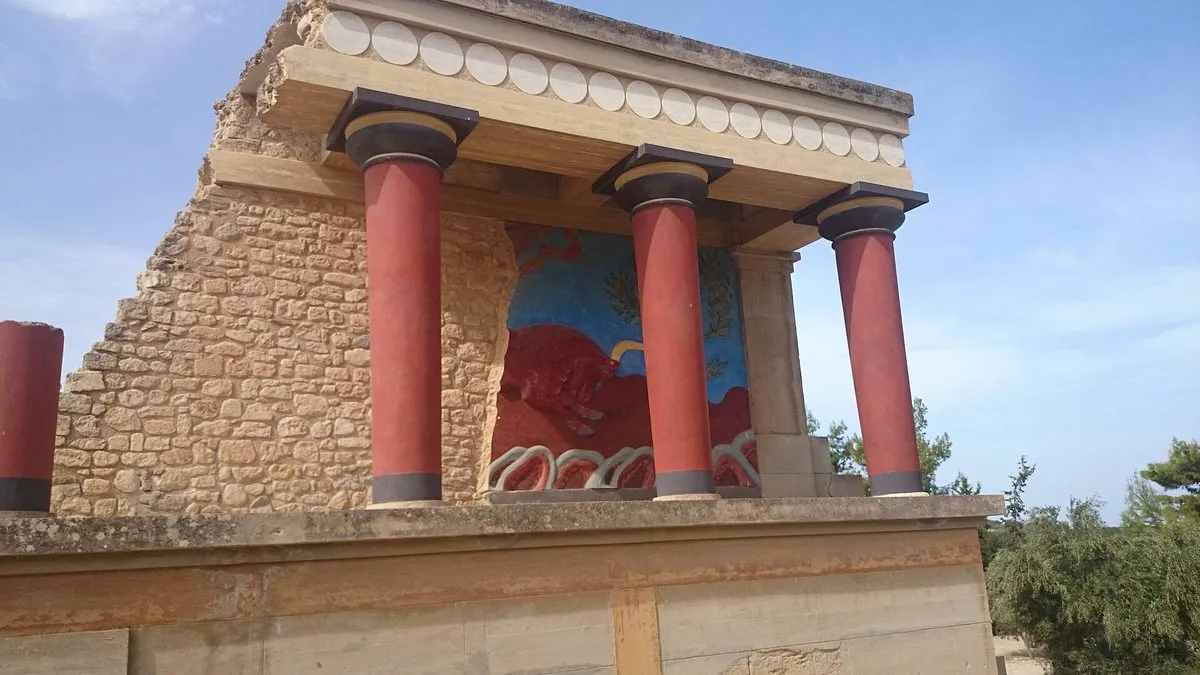
First, the expectation-setting, because this is where most disappointment starts. Knossos is the largest Bronze Age archaeological site on Crete, the centre of Minoan civilisation, and it is genuinely four thousand years old. It is also, in places, a 1920s concrete interpretation. Arthur Evans, who excavated the site, didn’t just dig — he rebuilt, in reinforced concrete, with painted columns and reproduction frescoes. Archaeologists have argued about it ever since. Some visitors find the reconstructions bring the palace to life; others find them jarring. Knowing this before you go is the difference between “fascinating, complicated place” and “why does a 4,000-year-old ruin have concrete beams?”
The one-minute version. Go at opening time or after 4pm, never mid-morning. Buy the e-ticket in advance, and buy the €20 “special package” — it covers the Heraklion Archaeological Museum too (confirmed at the ticket window), and the original treasures are in the museum, not at the site. Budget 1.5–2 hours, bring water and a hat, and expect reconstructions alongside ruins. Entry is €20 full and €10 reduced — verify current prices when you book.
The crowd problem, solved by clock
Knossos takes a double hit: it’s the number-one excursion on Crete and a standard cruise-ship shore trip. The coaches from the resorts and the port converge between roughly 10am and 1pm, and in that window the famous spots — the throne room queue especially — turn into a slow shuffle in full sun.
The fix is boring and absolute: be there at opening (8am in summer), or come after 4pm. At 8am you’ll share the site with a few dozen people and the light is kind. By late afternoon the coaches have gone and the heat breaks. Summer opening hours are long (roughly 8am to 7 or 8pm in season, shorter off-season — check the official listing for your date). Mid-morning in July or August is the single worst time to be standing on that site, and it’s when most people go.
Tickets, and the museum question
Buy the official e-ticket online before you go — it exists, it works, and it walks you past the ticket-window queue. Entry is €20 full, €10 reduced for the site, checked against the culture ministry’s own listing. The ministry’s page lists a “special ticket package” at the same €20/€10 without saying what it covers — so this guide asked at the ticket window (24 Aug 2026): it includes the Heraklion Archaeological Museum as well. Same price as the site-only ticket, so ask for the package by name; it is the single best-value ticket in the city. Greek site pricing was restructured upward in 2025, so any guide still quoting €15 is out of date.
Now the honest structural point: the best of Knossos is not at Knossos. The original frescoes — the Bull-Leapers, the Prince of the Lilies, the Dolphins — the snake goddess figurines, the Phaistos Disc, the jewellery: all of it lives in the Archaeological Museum in Heraklion city, which is one of the best museums in Greece. What you see at the site are mostly reproductions in situ. So do both, and if you can, do the museum first — the site makes far more sense when you’ve already seen what was found in it. If you only have time for one and ruins aren’t your thing, it’s genuinely defensible to pick the museum. That sentence gets me dirty looks, and I stand by it.
Do you need a guide?
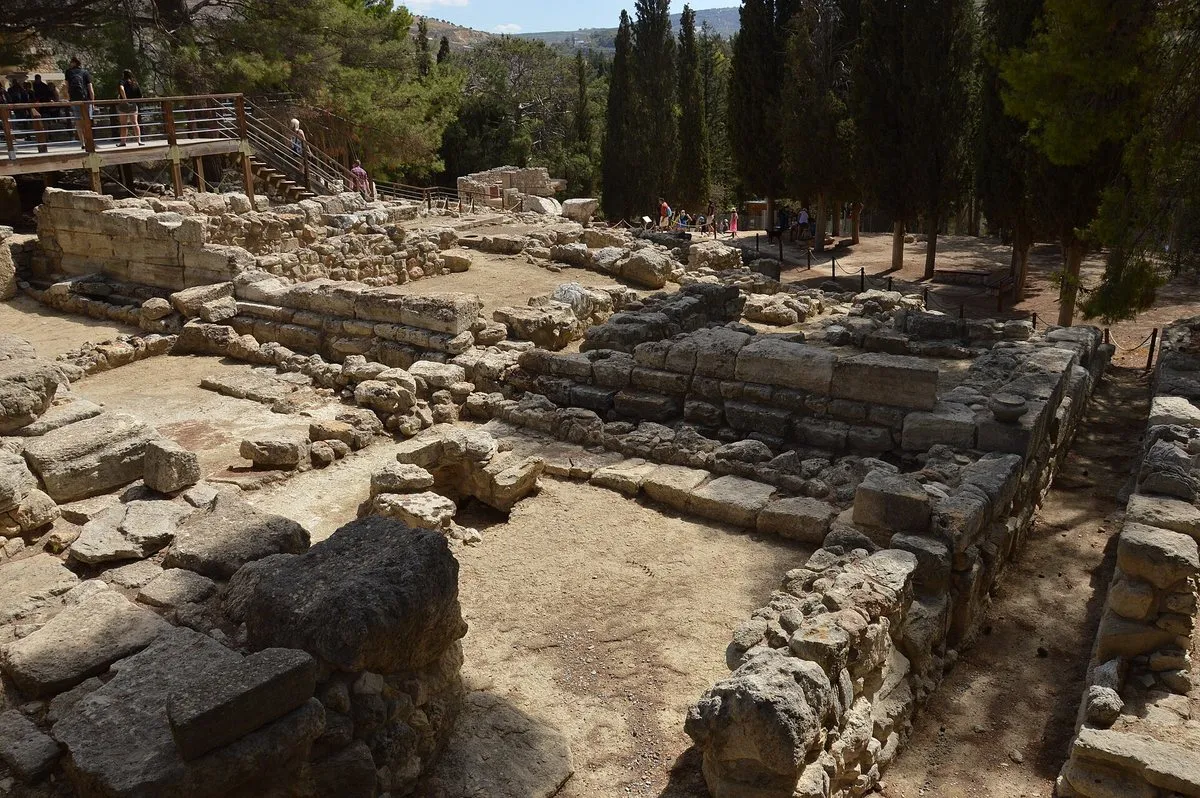
The signage at the site is thinner than a place of this importance deserves, and Knossos without context is a pleasant walk through confusing walls. You have three honest options. A licensed guide (bookable online, or the licensed guides who offer small shared tours near the entrance) is the best version — the site comes alive with someone who can point at a drain and explain Bronze Age plumbing. A good audio guide or a proper book read the night before is the budget version and beats wandering cold. Going in blind is the version most people choose, and it’s why some leave underwhelmed. If you’re coming all this way, spend the extra on context.
If the giant storage jars are the thing that stayed with you, Thrapsano east of Heraklion has been throwing them in unbroken tradition ever since.
Practicalities
Getting there: from Heraklion centre, the city bus to Knossos runs frequently and takes about twenty minutes; a taxi is a ten-to-fifteen-minute ride. From the Hersonissos–Stalis–Malia coast it’s a 30–40 minute drive, or pair the coastal bus with the city bus — I’ve covered the coastal line in the airport and transport guide. There’s parking at and around the site, paid and unofficial-free, and in peak season it fills by mid-morning — one more argument for the 8am start.
On the ground: shade is scarce, the surfaces are uneven, and summer heat radiates off the stone. Water, hat, real shoes. The site takes 1.5–2 hours at a civilised pace. There are cafés opposite the entrance for the post-visit frappé, and the village of Archanes, fifteen minutes south, makes a far better lunch stop than the tourist row at the gate — a wine village with a proper square, worth the small detour if you have a car.
Knossos is worth it — at 8am, with a ticket bought in advance, with context from a guide or a book, and ideally after you’ve seen the museum. It is not worth it at 11am in August, unguided, as a box to tick. Same stones, completely different visit. And if the concrete bothers you, remember you’re looking at two historical layers: a Bronze Age palace, and a century-old argument about how to present one.
Photos on this page: the North Entrance by CMOSPOWER and the low walls by Annatsach (both CC BY-SA 4.0), via Wikimedia Commons, resized for the web. Nobody pays to be featured on this site.
How long does a visit to Knossos take?
Ninety minutes to two hours covers the palace at a civilised pace. Add another hour and a half if you pair it with the Archaeological Museum in Heraklion — which is where most of the famous finds actually live.
Should I book Knossos tickets online?
In season, yes — the online ticket skips the ticket queue, which is the longer of the two. Then arrive at opening or after four in the afternoon to skip the crowd itself.
Is Knossos worth it without a guide?
The on-site signage is thin, so bring context: a licensed guide or audio guide earns its money, or do the museum first so the ruins have faces. Wander it cold and you will see concrete and queues; primed, you see the labyrinth.
How much does Knossos cost?
EUR20 full and EUR10 reduced per the culture ministrys own listing, with the Heraklion Archaeological Museum a separate ticket. Prices were restructured upward across Greece in 2025, so older guides quoting EUR15 are out of date.
What time should you arrive at Knossos?
At opening, before the coach fleets land, or the late-afternoon slot once they have gone. The site is largely unshaded and the middle of the day is both the busiest and the hottest part of it.
Is Knossos open every day?
Yes, unlike Malia and Aptera which close on Tuesdays. On days of extreme heat the Ephorate has closed Cretan sites over the middle of the day, typically noon to five - worth checking the night before in a July heatwave.
One email a month — only when something on this island actually changes. No spam, no partners, one-click unsubscribe. Read past issues before you decide.