The Lasithi Plateau Day Trip: Windmills, the Zeus Cave, and the Truth
The mountain plateau an hour above the north coast — what's actually left of the famous windmills, how to do the Dikteon Cave properly.
The Lasithi Plateau is the day trip I rate highest from the Hersonissos–Stalis–Malia coast — and also the one where expectations most need managing, because the thing it’s famous for barely exists anymore. Let’s do the truth first, then the trip.
The photographs that sell Lasithi show a plain filled with thousands of white-sailed windmills. Those photos are historic. The plateau really did have some ten thousand cloth-sailed wind pumps irrigating its fields in the mid-twentieth century; diesel and electric pumps retired them, and what stands today is mostly rusted metal skeletons, plus a modest number restored — some working, some for show — and the stone ruins of older mills on the passes above. If you drive up expecting the postcard, you’ll feel cheated. Drive up for what’s actually there — a startling green bowl of farmland at 850 metres, ringed by Dikti’s peaks, dotted with villages that tourism touches lightly — and it’s one of the best half-days on this side of Crete.
The one-minute version. A high farming plateau 45–60 minutes’ drive above the coast. Come for the landscape, the villages and the Dikteon Cave (Zeus’s mythical birthplace), not for fields of windmills — those are largely gone. You need a car (tours exist; the bus doesn’t meaningfully). Do the cave before 11am, lunch in Tzermiado or Agios Georgios, loop the rim road, done by mid-afternoon.
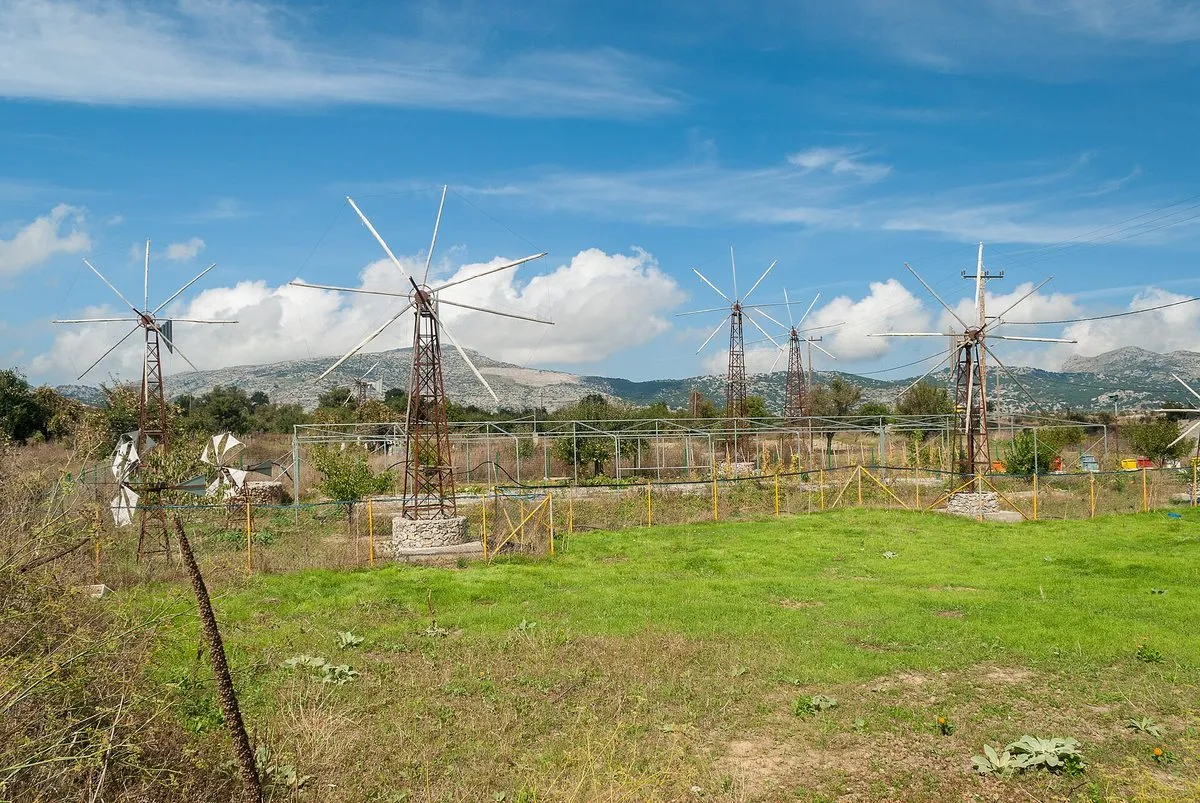
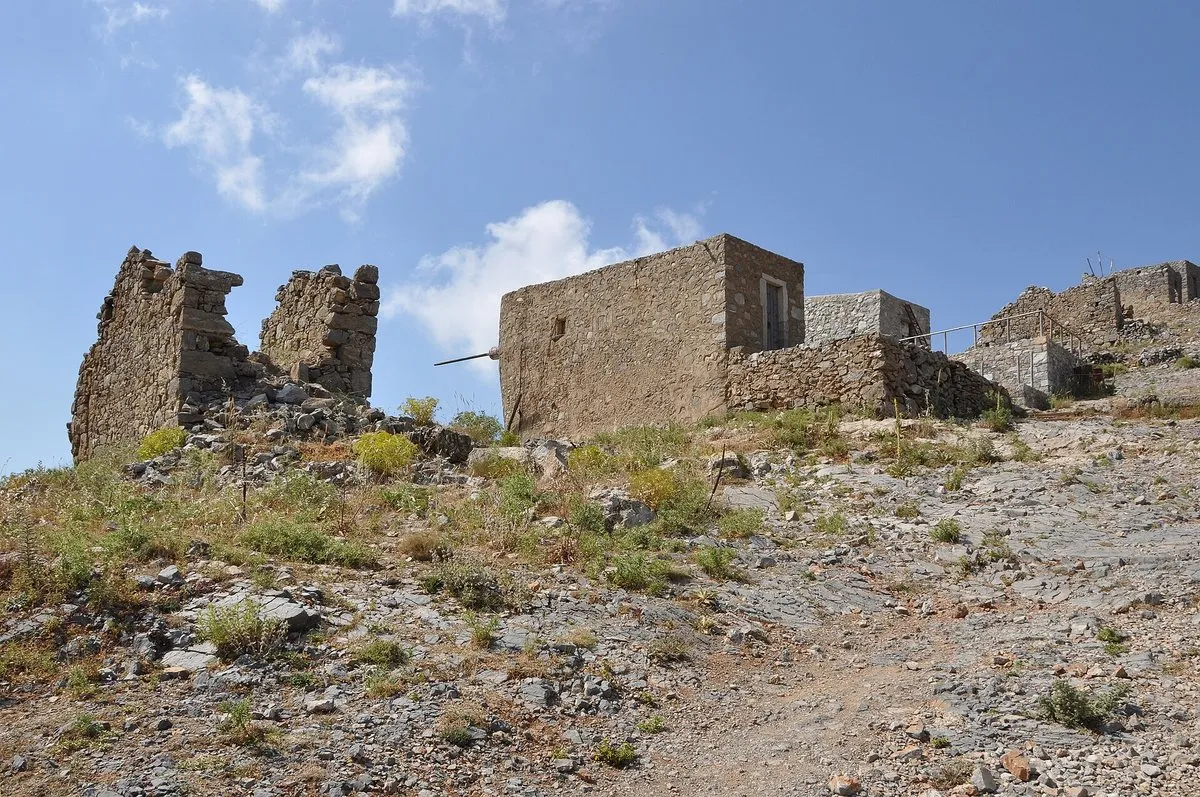
The drive up is half the trip
From the coast you climb one of two lovely roads: via Mochos (from Stalis) or via Krasi and the Kera valley (from Malia and Hersonissos), and if you’re doing a loop, go up one and down the other. Krasi is worth a stop for its enormous ancient plane tree shading the village square — the kind of tree that has watched centuries pass. As you crest into the plateau at the Ambelos pass, a line of ruined stone windmills stands along the ridge; that’s your best windmill photograph of the day, so take it there. The plateau itself is a flat green surprise after the climb — orchards, potato fields, and a rim road linking a dozen villages you can drive in about forty-five minutes without stops.
Getting there honestly requires a car — this is exactly the trip I mean in the car hire guide when I say hire for the middle days. Organised coach excursions run from every resort and are fine if driving’s off the table, but they own your clock, and the plateau rewards the freedom to stop at a pass or a kafeneio on a whim.
The Dikteon Cave, done properly
Above the village of Psychro on the plateau’s south rim is the Dikteon Cave — in myth, the cave where Rhea hid the infant Zeus from his child-swallowing father Kronos. It’s the plateau’s headline sight and it deserves its billing: you descend past curtains of stalactites into a chamber with a still, dark lake at the bottom, and even sceptics go quiet in there.
The practicalities that decide whether you enjoy it. From the car park it’s a genuinely steep ten-to-fifteen-minute climb on a cobbled path — there are donkeys for hire if needed, and proper shoes for everyone; the path and especially the steps inside the cave are worn slick and can be wet. The cave reopened on 29 May 2026 after two years of works on its paths and lighting, and the ticket is now reported at around €15 — our Dikteon Cave guide has the details; confirm at the gate. The cave is cool even in August, which is glorious, and the coach groups arrive from late morning — be on the path before 11am and you’ll have the descent close to yourself. Allow 45 minutes to an hour including the climb.
Villages and lunch
Tzermiado, the plateau’s biggest village, and Agios Georgios, with its small folklore museum, are the natural lunch stops — simple tavernas doing plateau produce: mountain greens, local potatoes that people genuinely drive up for, lamb, and honey from the slopes. This is kafeneio Crete: order simply, take your time, and expect the bill to be gentler than the coast. If a table of farmers is eating somewhere at 1pm, that’s your restaurant.
One more honest note on the loop: signs point to various minor sights — old mills, small museums, viewpoints. Follow whims freely, but don’t build the day around any single one of them except the cave. The plateau’s real exhibit is the plateau.
Go — with a car, with shoes for the cave path, and with the windmill myth already dismantled so nothing disappoints you. Leave the coast by 9, cave by 10:30, lunch in Tzermiado, down the other pass, swimming by late afternoon. Half a day, completely different Crete, and the best answer I have when someone on the beach asks “is there anything up in those mountains?” There is. It’s green, it’s quiet, and Zeus was allegedly born in it.
Photos on this page: the windpumps by Mihael Grmek (CC BY-SA 4.0) and the stone mills by Marc Ryckaert (CC BY 3.0), via Wikimedia Commons, resized for the web. Everything above was checked for the date shown at the top of this guide. Nobody pays to be featured in a guide — no business, no sponsor, no paid mention, ever. Adverts, where they appear, are labelled as adverts.
-
The day — Cave before eleven, lunch on the plateau, down the other road 1h20 driving · 44 km
1 Krasi → 32 min → 2 Dikteon Cave, Psychro → 22 min → 3 Tzermiado → 26 min → 4 Mochos
Driving times are Google's own, without traffic, checked September 2026 — the shape of the day, not a promise. Allow more on mountain roads, and more again in August.
Are there still windmills on the Lasithi Plateau?
Barely, and this is the expectation most in need of managing. The plateau really did have around ten thousand cloth-sailed wind pumps in the mid-twentieth century, but diesel and electric pumps retired them. What stands today is mostly rusted metal skeletons plus a modest number restored for show. Come for the landscape and the cave, not the photographs you have seen.
How long does the Dikteon Cave climb take?
A genuinely steep ten to fifteen minutes on a cobbled path from the car park. Donkeys are available for hire. Proper shoes matter for everyone - the path and especially the steps inside are worn slick and can be wet.
Can you visit the Lasithi Plateau without a car?
Not meaningfully. Organised coach excursions run from every resort and are fine if driving is off the table, but they own your clock, and the plateau rewards being able to stop at a pass or a kafeneio on a whim. The bus network does not serve this trip.
How long is the drive to Lasithi from the north coast?
Forty-five to sixty minutes, climbing one of two good roads: via Mochos from Stalis, or via Krasi and Kera from Malia and Hersonissos. If you are doing a loop, go up one and down the other - the drive is half the trip.
What is the best plan for a day at Lasithi?
Leave the coast by nine, cave by half ten before it fills, lunch in Tzermiado or Agios Georgios, loop the rim road, and be back down for a late-afternoon swim. Half a day, and a completely different Crete.
One email a month — only when something on this island actually changes. No spam, no partners, one-click unsubscribe. Read past issues before you decide.