Loutro & Sfakia: The Honest Guide to the Roadless South
A white-and-blue village you can only reach by boat or on foot, and the flinty coast around it.
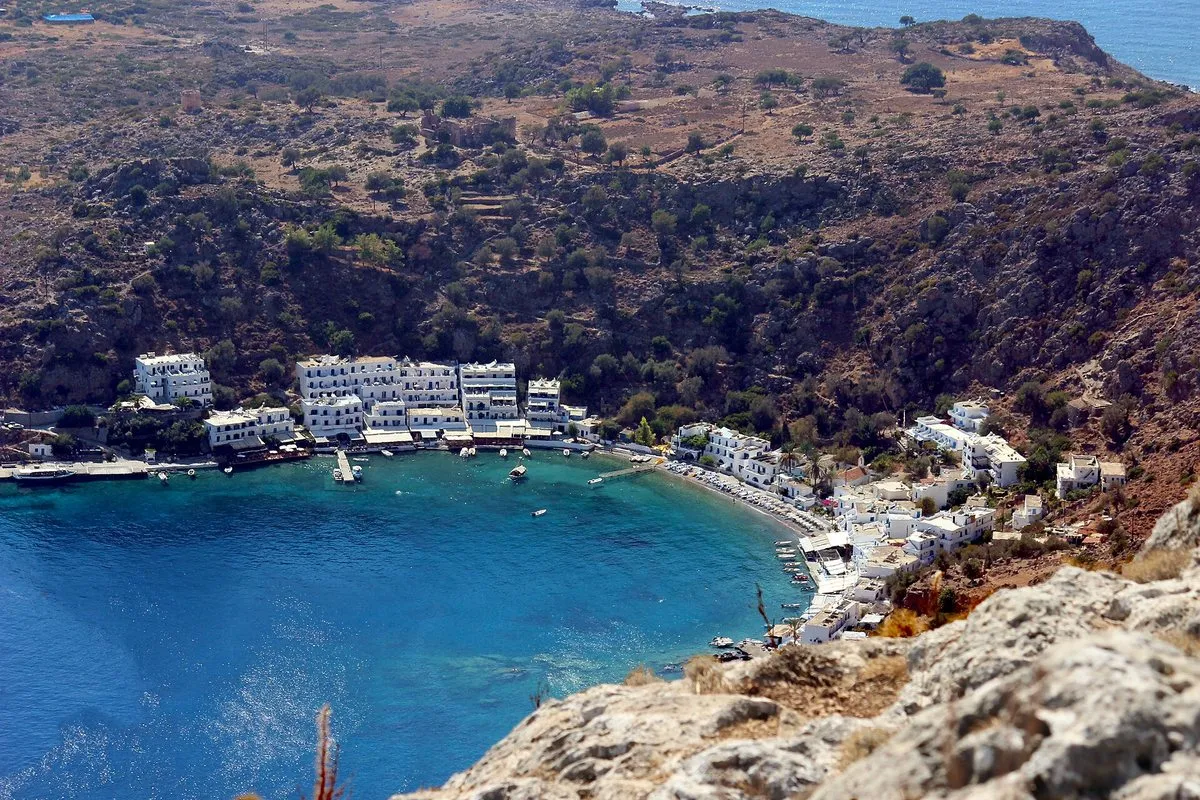
Loutro is the south coast distilled: a horseshoe of white houses and blue chairs pinned between mountains and the Libyan Sea, with no road in. You arrive by ferry from Hora Sfakion or on foot along the coastal path, and the absence of cars rearranges your nervous system within the hour. Around it, Sfakia is the proud, flinty corner of Crete — all gorges, goat bells and strong coffee.
The honest facts
- Getting there
- drive to Hora Sfakion (about 1h45 from Chania over the mountains — a spectacular road), then the small ferry to Loutro, roughly 15–20 minutes. Check the seasonal timetable the day before; departures are few and honest.
- Sleeping
- simple rooms and small pensions ring the bay; nothing fancy, everything front-row. Book ahead in July–August.
- Swimming
- the village bay is clear and calm; the path west reaches pebbly coves, and small taxi-boats or a walkable hour bring you to Marmara beach at the mouth of the Aradena gorge.
- Cash
- bring some; connectivity and card machines live a simpler life down here.
Day trip or overnight
A day trip works: ferry over, swim, long lunch, ferry back. But Loutro is a place whose entire personality appears after the last boat leaves — the evening quiet, the water going violet, dinner ten steps from your room. One night here outranks most week-long itinerary entries.
What car-free actually means
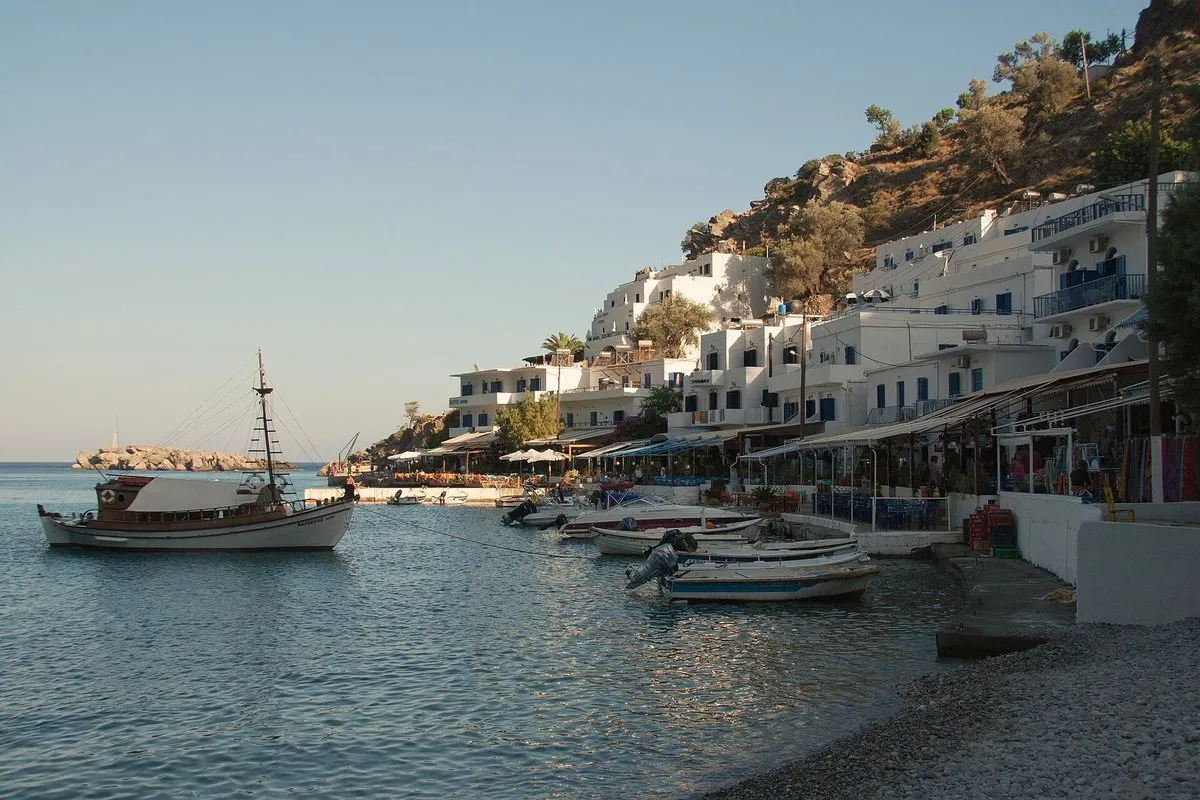
Loutro has no road. Not a bad road, not a restricted road — none at all. Everything arrives by boat: people, beer, building materials, rubbish out.
The consequences are the point of the place. No engine noise of any kind. No delivery lorries at seven. The only sound at night is the sea and whatever the tavernas are doing. People describe it as the quietest place they have stayed in Greece and they are usually right.
The consequences also cut the other way. The last ferry is the last ferry — miss it and you are staying. Prices are a little higher because everything came by boat. There is no pharmacy, no cash machine worth relying on, and no way to leave in a hurry.
Anyone who needs a car within reach of the room should not stay here.
The ferries, which run the day
The Anendyk boats connect Hora Sfakion, Loutro, Agia Roumeli and Agios Pavlos along a coast with no through road. Timetables shift between seasons and are published locally rather than reliably online.
Two things to internalise: swell cancels sailings, and the Samaria walkers fill the afternoon boats from Agia Roumeli. If you are catching a connection, build in a margin, and if you have a flight, do not make the last day the travel day.
Where to swim from Loutro
The village bay is calm, clear and shallow-shelving — fine for a dip, busy in the middle of the day.
Better: walk twenty minutes east on the coast path to Marmara, where the rock formations and the cave make the swimming worth the effort, or take the short boat west to Glyka Nera, where the cold spring water rises through the pebbles.
The walking
The coastal path east back to Hora Sfakion is 1.5–2 hours of proper scenery and honest sun — start early. West, the route to Marmara via the path is similar effort with a swim as the prize. Real shoes; the stones are Sfakian and unsentimental.
Sfakia itself
Hora Sfakion deserves an hour: a working harbour, a couple of waterfront tavernas, and the local pie — sfakiani pita, thin, cheese-filled, drizzled with honey — which alone justifies the drive.
The honest downside
Beaches here are pebble, not sand; the ferry timetable rules your day; and August afternoons on the treeless paths are legitimately hot. This corner rewards walkers and readers more than sunbed collectors.
Worth your time if: you want the version of Crete with no engine noise. Skip it if: your holiday needs sand and spontaneity — the roadless charm is also a schedule.
Photos on this page: aerial by the Loutro contributor (CC0); waterfront by C messier (CC BY-SA 4.0), via Wikimedia Commons, resized for the web. Nobody pays to be featured on this site.
-
Boat and path
1 Hora Sfakion 2 Loutro 3 Marmara beach
Tap a name to open it in your map app. These are options, not an order — pick by the day you have.
How do you get to Loutro?
There is no road. You drive to Hora Sfakion, about an hour and 45 minutes from Chania over the mountains, then take the small ferry across in roughly 15 to 20 minutes. You can also walk the coastal path. Check the seasonal timetable the day before - departures are few.
Is Loutro worth staying overnight?
More than worth it. Loutro is a place whose personality appears after the last boat leaves: the evening quiet, the water going violet, dinner ten steps from your room. A day trip works, but one night here outranks most week-long itinerary entries.
Does Loutro have sandy beaches?
No - the bay and the coves around it are pebble. The village bay is clear and calm for swimming, and the path west reaches quieter coves, but if your holiday requires sand this is the wrong corner of the island.
Do you need cash in Loutro?
Bring some. Connectivity and card machines live a simpler life down here, and being caught short in a village with no road out is an avoidable problem.
How long is the walk from Loutro to Hora Sfakion?
One and a half to two hours on the coastal path east, with proper scenery and no shade to speak of. Start early. Real shoes rather than sandals - the stones are Sfakian and unsentimental.
One email a month — only when something on this island actually changes. No spam, no partners, one-click unsubscribe. Read past issues before you decide.