Lentas & Dytikos: The Honest Guide to the Old Hippie South
A tiny village under the Lion headland with an ancient healing sanctuary and a long free-camping past.
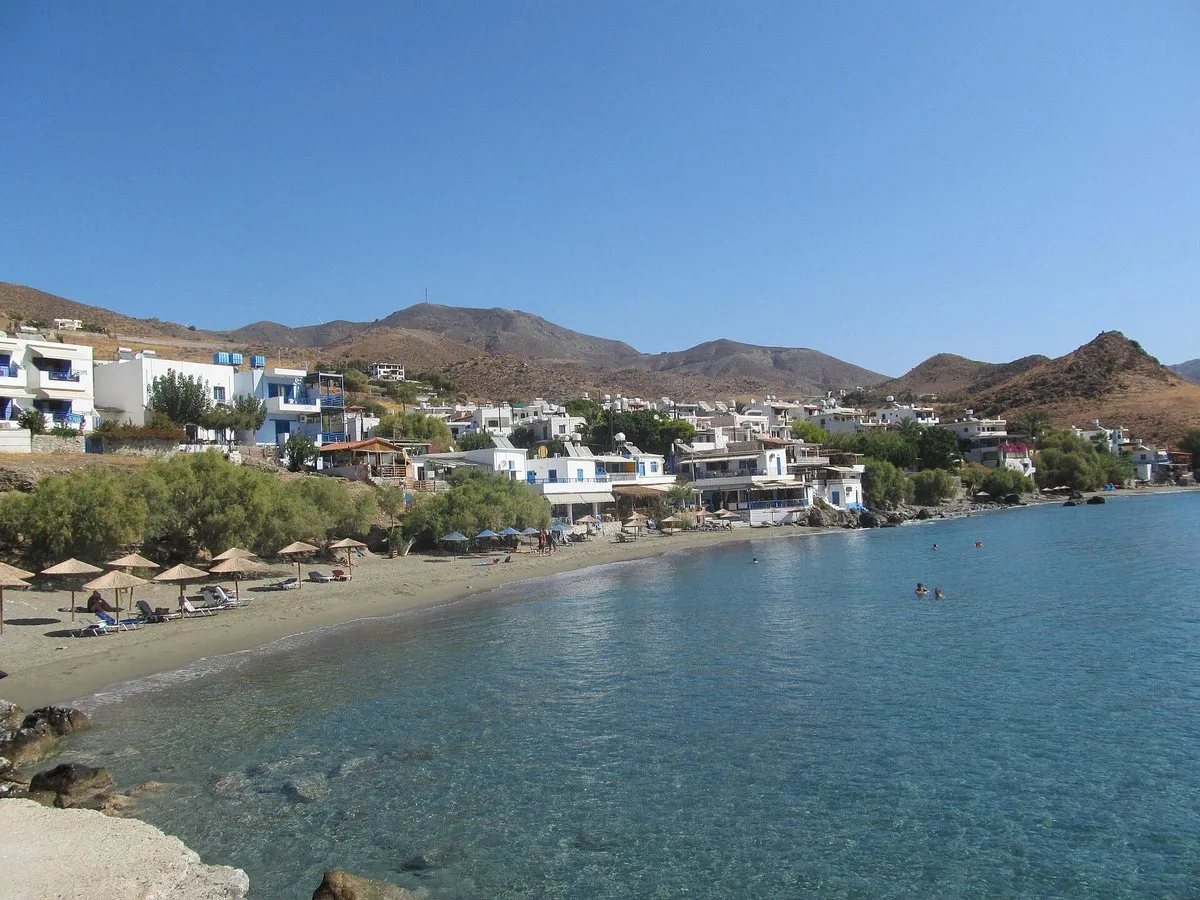
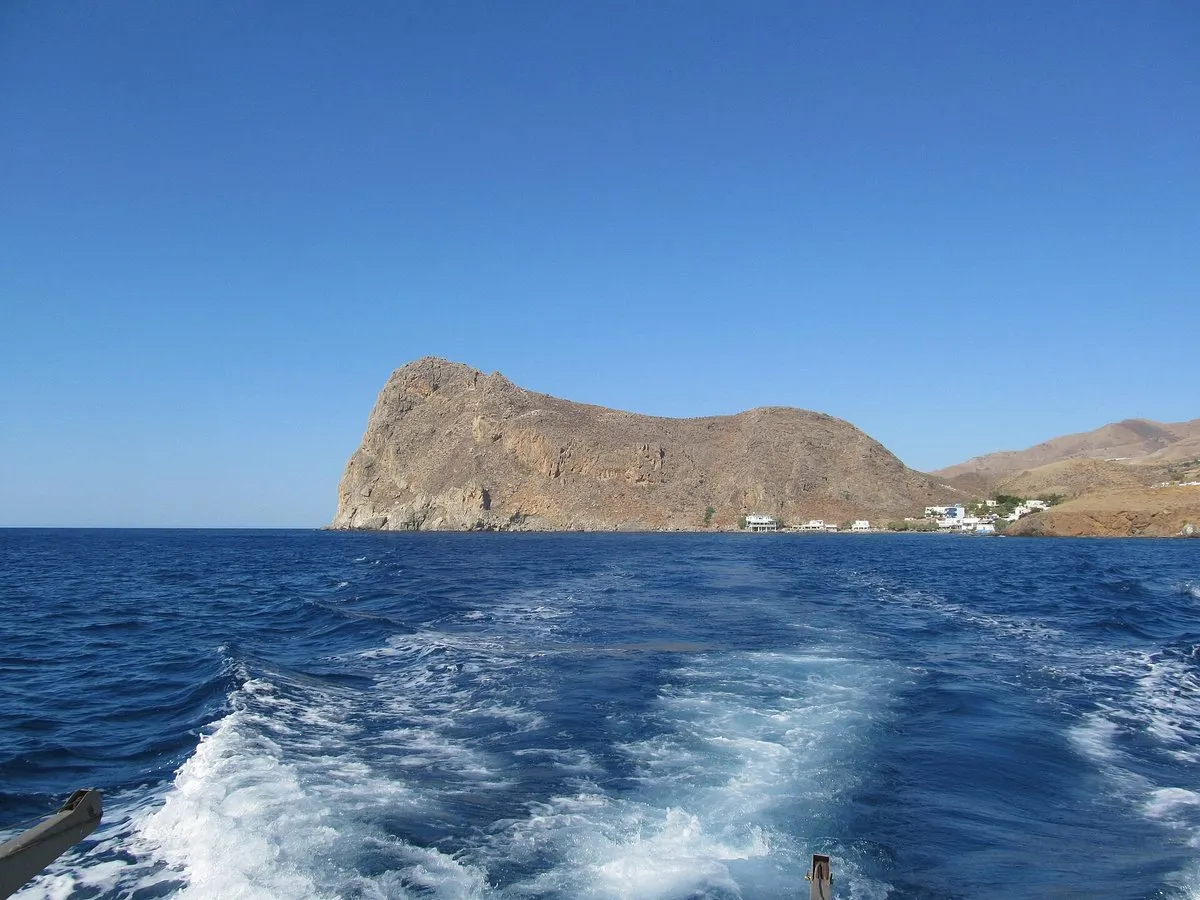
Lentas hides under a headland shaped unmistakably like a sleeping lion, at the end of a long mountain road south of Mires. Ancient Greeks came here for the healing spring of Asklepios; nineteen-seventies travellers came for the freedom and some quietly never left. What remains is a village of maybe a hundred souls, a clutch of tavernas above a pebble-sand bay, and — over the western rise at Dytikos — a longer beach where the old free-spirit tradition still breathes.
The honest facts
- Getting there
- about 1h30 from Heraklion via Mires and Miamou; the final descent is hairpinned, paved and slow. Arrive with fuel and patience.
- The village bay
- protected, clean, part-organised in season (a few sunbed sets, roughly €6–8), tavernas directly above the water.
- Dytikos
- ten minutes on foot west — wide, wilder, tamarisk clumps, a beach bar some seasons, and a long-standing naturist tradition at its far reaches; live-and-let-live is the governing law.
- The sanctuary
- the ruins of ancient Levin — Asklepios temple mosaic included — sit fenced but visible at the village edge; five unhurried minutes of deep time.
- Facilities
- two mini-markets, no bank, patchy card acceptance — carry cash.
The Lentas rhythm
Mornings swim glassy; afternoons the village collectively disappears into shade; evenings everyone re-emerges for the slowest dinners on the island, then the sky show — light pollution here is a rumour. Days are differentiated chiefly by which taverna and which book.
Who it fits
Long-stay slow travellers, couples fleeing itineraries, solo walkers (the E4 passes), and veterans of the village’s earlier eras returning with grandchildren. Wifi exists; urgency does not.
Ancient Lebena and its spring
In Hellenistic and Roman times Lentas was Lebena, a port of Gortyn, then the capital of Crete, which makes the two a natural pairing on the drive down. The sanctuary of Asklepios dates from the 4th century BC: a temple, two stoas, a treasury and the thermal spring, with a Hellenistic mosaic floor in the western stoa. The Region of Crete’s heritage portal notes that the spring was used to treat blood disorders, and wealthy Romans, many of them from North Africa, are recorded travelling here for treatment. Italian archaeologists excavated the site in the early twentieth century; Greek investigations have since added Minoan remains.
The honest footnote: the sacred spring no longer runs. A borehole drilled about 70 metres to the north in 1989, to supply the village and its visitors, stopped the flow, and measurements from 2018–2021 show early signs of seawater entering the small coastal aquifer. What you see today is the sanctuary, not a working spring.
Beyond Dytikos
The coast keeps going west. The Region of Crete’s tourism portal describes a chain of coves of fine pebble and smoothed stones, among them Trafoulas, reached through a small gorge and walled by vertical cliffs that climbing groups use all year, and Loutra, where a small anchorage serves private boats. Treat these as outings for people carrying water, sun protection and proper shoes; do not expect services. Lentas sits at the southern edge of the Asterousia range, the bare mountains you cross on the way down, and the wider range rewards a second day.
Getting there and when to go
Lentas lies about 75 km south of Heraklion, in the municipality of Gortyna; the road runs through Mires, then over the mountains via Miamou before the descent. A car is the realistic option. KTEL Heraklion–Lasithi does list Lentas among its south-coast destinations from Heraklion’s port bus station (timetable notice of September 2026), but rural services are few, so check the current timetable on ktelherlas.gr, return leg included, before planning around a bus. The Region’s portal calls Lentas a summer resort used mainly by Cretans themselves; services thin out outside the season, so verify seasonally that rooms and tavernas are open before an off-season drive.
The honest downside
Remote means remote: the drive discourages spontaneity, the beaches are pebble-forward, nightlife is a second raki, and design-hotel comfort is not sold at any price. That filter is the product.
Worth your time if: you want the south coast at its most unhurried and storied. Skip it if: one quiet evening satisfies your quota — day-trip it from a Matala base instead.
Photos on this page: the bay and the headland by Gortyna (CC BY-SA 4.0), via Wikimedia Commons, resized for the web. Everything above was checked for the date shown at the top of this guide. Sections added in October 2026 were checked against published sources rather than on a new visit. Nobody pays to be featured in a guide — no business, no sponsor, no paid mention, ever. Adverts, where they appear, are labelled as adverts.
How do you get to Lentas?
About an hour and a half from Heraklion via Mires and Miamou, with a final descent that is hairpinned, paved and slow. Arrive with fuel and patience - there is no bank in the village and card acceptance is patchy, so carry cash.
What is the difference between Lentas and Dytikos?
Lentas is the protected village bay with tavernas directly above the water and a few sunbed sets at around EUR6-8. Dytikos is ten minutes west on foot - wider, wilder, tamarisk-clumped, with a long-standing naturist tradition at its far reaches.
What are the ruins at Lentas?
Ancient Levin, including a mosaic from the temple of Asklepios, fenced but visible at the village edge. Ancient Greeks came here for the healing spring, which is the through-line of the whole place - five unhurried minutes of deep time.
Why is Lentas shaped like a lion?
The headland it sits under is unmistakably shaped like a sleeping lion, which is where the name comes from.
What is there to do in Lentas?
Very little, deliberately. Mornings swim glassy, afternoons the village disappears into shade, evenings everyone re-emerges for the slowest dinners on the island - and then the sky show, because light pollution here is a rumour.
Can you get to Lentas by bus?
KTEL Heraklion–Lasithi lists Lentas among its destinations from Heraklion's port bus station, but services on rural south-coast routes are few. Check the current timetable on ktelherlas.gr before travelling, including the return journey; for most visitors a car is the realistic option.
One email a month — only when something on this island actually changes. No spam, no partners, one-click unsubscribe. Read past issues before you decide.