Can You Drink the Tap Water in Crete? The Honest Answer, Town by Town
The Region of Crete calls tap water safe and still recommends bottled. What the water utilities of Heraklion, Chania, Rethymno and Agios Nikolaos actually publish, why the drought shows up in the salt figures, and why the tank on your roof is a separate question.
In the towns the official answer is yes, and many people still buy bottled. The Region of Crete’s own advice is a hedge: tap water is safe for consumption, bottled water is recommended. Chania’s utility calls its water excellent; Rethymno’s says it can be drunk without fear; Heraklion’s stands by its water while its salt figures rise with the drought; and whatever reaches your glass through a rooftop tank falls outside the utility’s guarantee. This guide is a check of published sources — the utilities’ own pages, data and announcements — made in October 2026.
The honest facts
- The official line
- the Region of Crete says tap water is safe to drink and recommends bottled anyway.
- The law
- EU Directive 2020/2184, applied in Greece by ministerial decision Δ1(δ)/ΓΠ οικ. 27829 (ΦΕΚ Β’ 3525/2023); compliance is measured at the tap.
- Heraklion
- 20 supply zones, monthly analysis tables (January–September 2026 online when checked); drought pushes chlorides above their indicator value.
- Chania
- springs and boreholes, 104 chlorine checkpoints, “excellent” in the utility’s own word; average hardness about 12 French degrees in town (2017 figure).
- Rethymno
- mostly boreholes and about 1,000 checks a year in the utility’s own laboratory.
- Agios Nikolaos
- the utility’s water-quality link goes straight to the national results map.
- Rooftop tanks
- outside every published figure here.
What the law guarantees, and where it stops
The EU directive sets the standard where water leaves the tap, then adds a limit that matters in Crete: a country is deemed to have met its obligations where a failure is due to the building’s own plumbing or its maintenance, apart from Legionella controls in large buildings with many users. In practice the public guarantee covers the water delivered, not what happens to it in a building’s pipes and tanks.
Heraklion: tested, uneven, salty in dry years
ΔΕΥΑΗ, the city’s utility, monitors 20 supply zones and posts monthly summary tables from an accredited laboratory. The catch is the source. Heraklion draws on the Aposelemis dam and on boreholes, and in September 2025, with the dam supplying little, the utility said every borehole it has was running, standby ones included. Its explanation of the results is frank: chlorides and conductivity are indicator parameters, periodic chloride exceedances reflect drought pressure on the aquifer, chlorides do not threaten health, and a breach of a mandatory parameter would have to be announced. It also rejected a private laboratory’s claim that the water was unfit to drink.
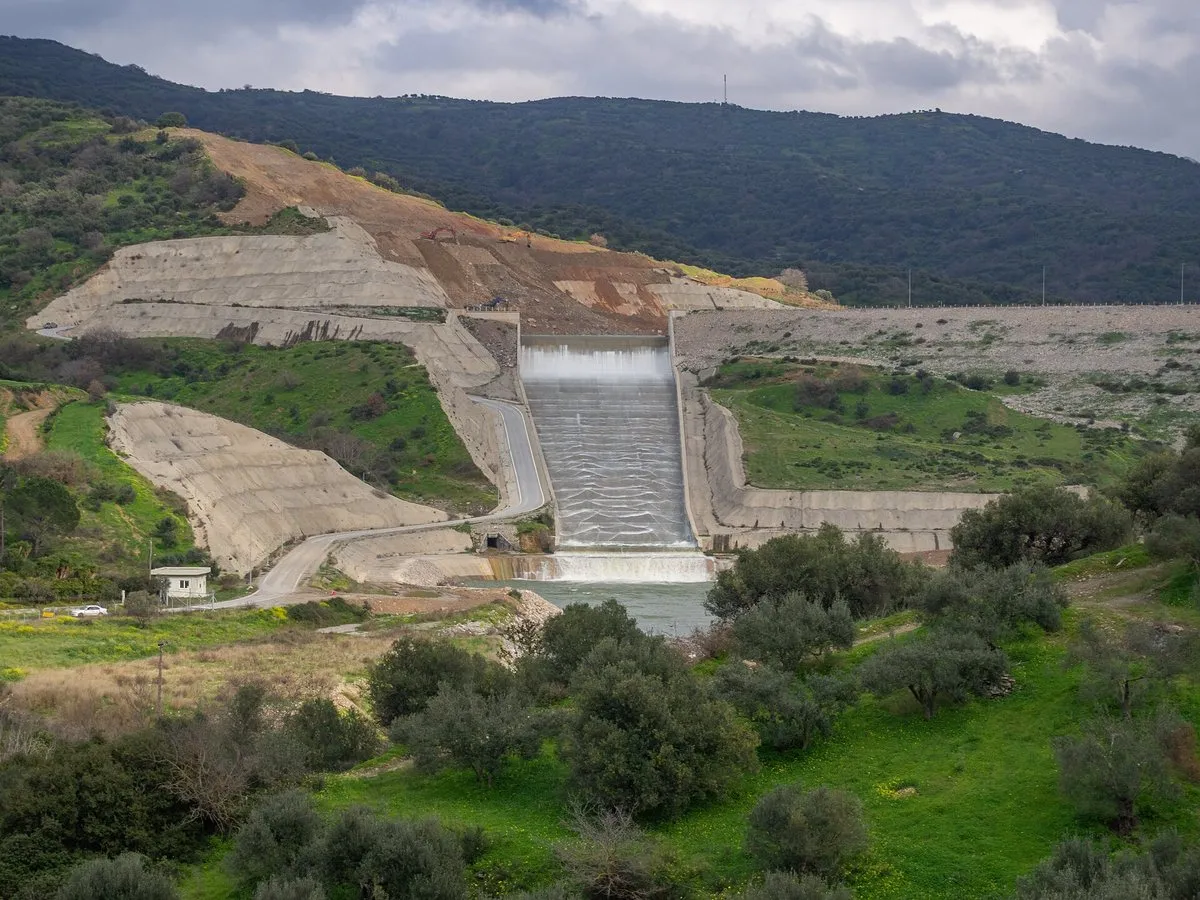
Supply is uneven too: the utility’s daily map lists, district by district, whether water is being distributed, and warns that heavy consumption lowers pressure and higher ground is supplied later. Interruptions are announced on its site; one, for Saturday 17 October 2026, was a general cut for urgent repairs at a reservoir.
Chania, Rethymno and Agios Nikolaos
Chania’s utility draws on the springs and boreholes at Agia and on the regional supply system, disinfects in 23 chlorination zones and checks residual chlorine at 104 points. It calls the quality of the city’s drinking water excellent. Hardness, which it notes is not a legally controlled parameter, averaged 12 French degrees in town and 25 at Aptera in its 2017 figures.
Rethymno’s utility takes most of its water from boreholes and states that the water is good and can be drunk without fear. In August 2026 an electrical fault at a regional facility cut supply to the central tanks at Gallou.
Agios Nikolaos’s utility links to the national results map; no plain-language verdict was on its site when checked.
Rooftop tanks are a different question
Where supply comes and goes, buildings store water in a tank on the roof or under the house, and hotels and villas are no exception. That water was tested in the network, then stored in a container nobody publishes results for. Ask your host how often the tank is cleaned. If the answer is vague, shower from the tap and drink bottled; if a stomach upset arrives anyway, see the pharmacy and EHIC guide. The packing guide makes the case for a refillable bottle.
Drought and the summer cuts
The drought eased late: after storms, Aposelemis held close to 21 million cubic metres and was near overflowing by mid-October 2026, according to the regional development organisation as reported in the Cretan press. Cuts still come, for repairs, burst mains and power failures, and utilities post them online. In a heatwave, drink more water, not less. For what scarcity means for a house, see drought and water scarcity.
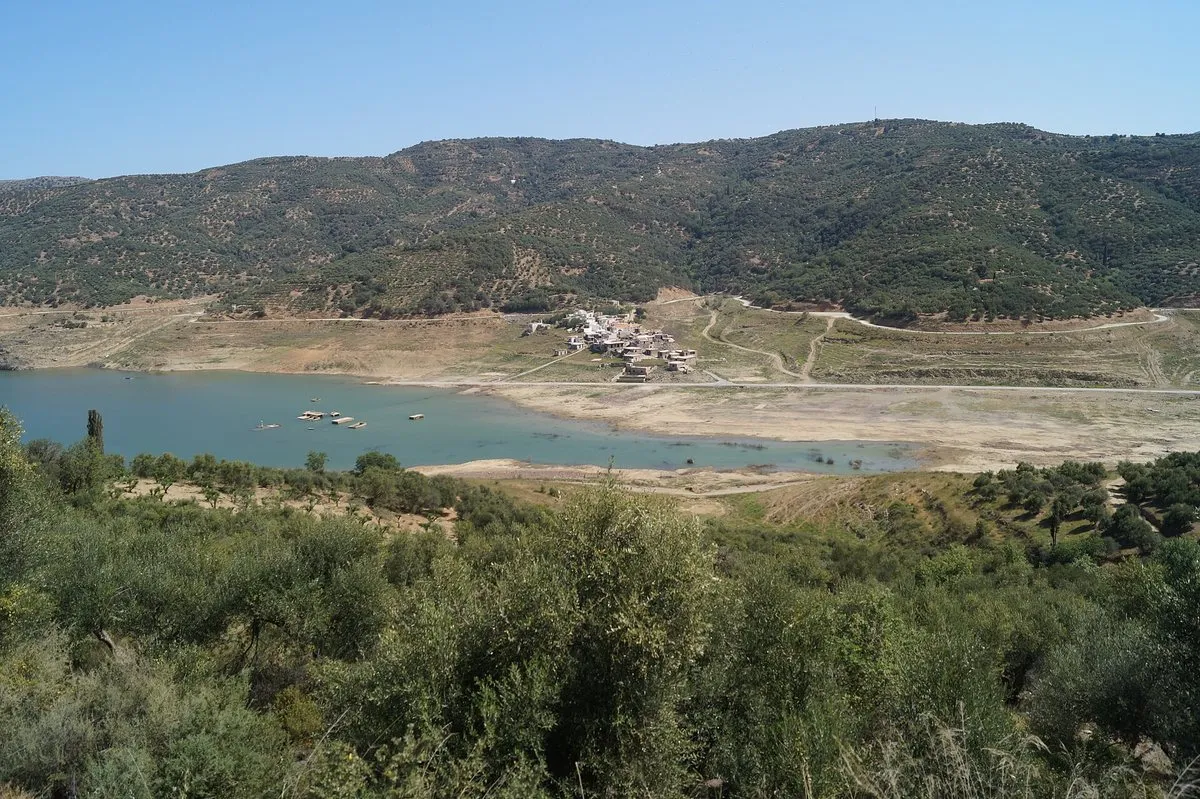
The honest downside
Every published figure describes water in a public network; none covers the tank on your roof, the pipes of an old apartment block or a villa on a private borehole. Heraklion’s monthly tables are Greek-language PDFs in technical units, and its salt figures rise in dry years.
Worth it if: you are on mains water in Chania or Rethymno, or in Heraklion and untroubled by its salt figures, and would rather fill a bottle than buy one. Skip it if: your tap runs from a tank nobody can tell you about, or a utility notice for your area says not to drink it.
Photos on this page: the reservoir at low water by Schuppi (CC BY-SA 4.0) and the spillway by C messier (CC BY-SA 4.0), via Wikimedia Commons, resized for the web. This guide is a check of published sources, not a site visit; the figures, statements and announcements were checked against the Region of Crete, the municipal water utilities of Heraklion, Chania, Rethymno and Agios Nikolaos, EU Directive 2020/2184 and regional press reports for the date shown at the top of this guide. Nobody pays to be featured in a guide — no business, no sponsor, no paid mention, ever. Adverts, where they appear, are labelled as adverts.
Can you drink the tap water in Crete?
In the towns the mains water is tested against EU drinking-water rules, and the Region of Crete's own wording is that tap water is safe for consumption but bottled water is recommended. Chania's utility calls its water excellent and Rethymno's says it can be drunk without fear. Water stored in a building's rooftop or basement tank is a separate matter that no published utility figure covers.
Is the tap water in Heraklion safe to drink?
Heraklion's utility, ΔΕΥΑΗ, monitors 20 supply zones and posts monthly analysis tables. In the drought of 2025 it said chlorides were periodically above their indicator value because of pressure on the aquifer, that chlorides do not threaten health, and that any breach of a mandatory parameter would have to be announced. Bottled water remains the Region of Crete's own recommendation.
Is Chania tap water drinkable?
Chania's utility, ΔΕΥΑΧ, describes the quality of the city's drinking water as excellent. The water comes from springs and boreholes and from the regional supply system, is disinfected with sodium hypochlorite, and residual chlorine is checked at 104 points on the network. Its published average hardness for the town, a 2017 figure, is 12 French degrees.
Is the water in a Cretan hotel or villa the same as mains water?
Not necessarily. Buildings in Crete often store water in a tank on the roof or in the basement, and the EU drinking-water directive deems the authorities to have met their obligations where a failure is caused by a building's own plumbing or its upkeep, apart from Legionella controls aimed at large buildings with many users. Ask how often the tank is cleaned; if nobody knows, drink bottled.
Does Crete have water shortages in summer?
In dry years, yes. In September 2025 Heraklion's utility said all its boreholes, standby ones included, were running because the Aposelemis dam was supplying little; after storms in October 2026 the dam was reported at close to 21 million cubic metres and near overflowing. Interruptions for repairs and faults still happen and are announced on utility websites.
One email a month — only when something on this island actually changes. No spam, no partners, one-click unsubscribe. Read past issues before you decide.