Camping and Campervans in Crete: The Wild-Camping Law, the Few Licensed Sites and Where a Van Can Sleep
Greek law bans camping outside licensed campsites, and parking a camper to stay counts. What the law says, how few licensed sites Crete has, how motorhomes manage water and waste, and the fire-season rules that close roads and forests.
Crete is not a wild-camping island, however its empty beaches seem to invite it. Greek law bans camping outside licensed campsites, and as the national campsite association reads the law, parking a camper to stay counts as camping. Licensed sites are few and lean west, the fire season closes forests and their roads on the worst days, and several of the most famous beaches have rules of their own. A campervan works here, as long as it sleeps on a campsite. This guide is a check of published sources, not a site visit, made in October 2026.
The honest facts
- The law
- camping, parking or using camping accommodation outside licensed campsites is banned (law 4403/2016, article 31, as cited by the Panhellenic Camping Association).
- Licensed sites
- seven campsites in the association’s directory: five in the Chania regional unit, one in Rethymno’s, one in Lasithi’s, none in Heraklion’s.
- Seasons
- the directory lists no opening months; check each site.
- Motorhomes
- fresh water, grey water and chemical toilets belong at a campsite’s service point.
- Fire season
- on category 4 and 5 days, the Region of Crete’s order closes named forests and protected areas to people and vehicles.
- Ferries
- vehicle space sells out first in summer; book the van before the cabin.
- Numbers
- 112 for any emergency, 199 for the fire service.
What the law says about wild camping
The Panhellenic Camping Association, which represents Greece’s licensed campsites, puts it bluntly: wild camping, parking or use of camping accommodation outside authorised campsites is forbidden, under very serious penalties, citing law 4403/2016, article 31. The wording matters for anyone with a van. The ban is not about tents alone; it covers using camping accommodation, and a motorhome is exactly that.
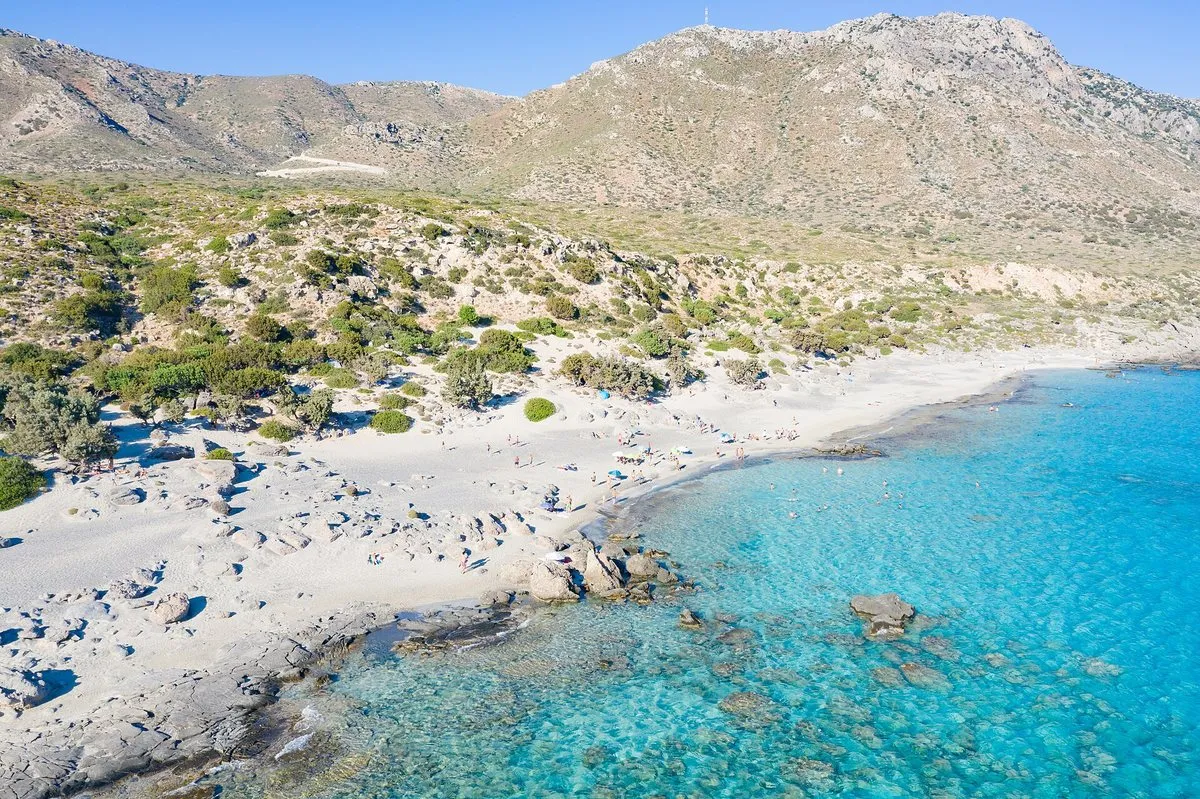
Tradition does not change it. On Gavdos, where camping under the cedars is a long tradition, it is still not legal, and the island’s guide has the latest on enforcement there. At Kedrodasos the ancient junipers die where their roots are trampled, which is why camping under them is off limits.
Licensed campsites, and how few there are
The association’s directory listed seven campsites in Crete when checked: five in the Chania regional unit, one in Rethymno’s Amari area and one in Lasithi’s, near Ierapetra. Heraklion’s regional unit had none. The association says its guides cover all legal campsites operating in Greece; the list gives no opening months. Treat every site as seasonal until it says otherwise, and check before a spring or autumn trip.
Campervans and motorhomes
The UK Foreign Office spells it out for travellers: camping in tents, and parking trailers, campervans and motorhomes, is banned at archaeological sites, seashores, beaches, the edges of public forests and public areas generally, and its advice is to use licensed campsites to avoid fines. A van that sleeps on a campsite has an easy time of it, and the directory lets you filter for motorhome service points and chemical-toilet disposal. Empty grey water and chemical toilets only at a disposal point, never into a beach car park, a stream bed or the sea. Expect roads to some of the famous beaches to stop short: Elafonisi, for one, keeps cars out of its protected zone and makes everyone park before the barrier.
Fire season, open fires and closed roads
Fire is the rule that matters most. The Foreign Office’s advice is not to light barbecues, to put cigarettes out properly and to leave no glass, and causing a wildfire is a criminal offence in Greece even if unintentional. On days rated category 4 or 5 on the national fire-risk map, the Region of Crete’s 16 June 2026 order bans passage, stay and movement of people and vehicles in named forests, NATURA areas, parks and groves, with fines enforced by the police, fire and forest services; the road to Balos lagoon and Kedrodasos are on its category 5 list. The fire season formally runs to 31 October, so this is a summer rule with a long tail. The heat and wildfire guide explains where the map is published the evening before.
Bringing a camper over by ferry
The overnight boats from Piraeus to Heraklion and Chania carry vehicles, and a motorhome is booked as one. In summer, and in August especially, car-deck space sells out before passenger tickets do, so book the van first and the people second, giving its real length and height. The ferry guide covers the gates, times and fares.
The honest downside
The law and the landscape pull in opposite directions. The association’s campsites cluster in the Chania regional unit and Heraklion’s has none, so a van tour of the whole island means long drives between few campsites, or nights in rooms. And the fire season, which runs into late October, can close a forest road on the morning you meant to drive it.
Worth it if: you plan your nights around licensed campsites, travel outside the hottest weeks, and treat the fire map as part of the route. Skip it if: the dream is waking up on an empty beach in a van or a tent, which Greek law forbids on every beach.
Photo on this page: Kedrodasos by dronepicr (CC BY 2.0), via Wikimedia Commons, resized for the web. This guide is a check of published sources, not a site visit; the law, the campsite count and the fire-season rules were checked against the Panhellenic Camping Association’s directory and traveller information, the UK Foreign Office’s travel advice for Greece and the Region of Crete’s 2026 fire-season order for the date shown at the top of this guide. No campsite is named or recommended. Nobody pays to be featured in a guide — no business, no sponsor, no paid mention, ever. Adverts, where they appear, are labelled as adverts.
Is wild camping legal in Crete?
No. Greek law bans camping outside licensed campsites, and the Panhellenic Camping Association, citing law 4403/2016, article 31, says the ban covers parking or using camping accommodation outside authorised sites, under serious penalties. The ban applies on beaches, in forests and in protected areas alike.
Can I sleep in a campervan or motorhome in Crete?
Only on a licensed campsite. The UK Foreign Office's travel advice for Greece says the parking of trailers, campervans and motorhomes is banned at archaeological sites, seashores, beaches, the edges of public forests and public areas generally, and tells travellers to use licensed campsites to avoid fines. Campsites also have the water and waste points a motorhome needs.
How many campsites are there in Crete?
Few. The Panhellenic Camping Association's directory listed seven campsites in Crete in October 2026: five in the Chania regional unit, one in Rethymno's and one in Lasithi's, with none in Heraklion's. The directory gives no opening months, so check each site's season before travelling in spring or autumn.
Can I have a campfire or barbecue in Crete?
Not in the countryside in summer. The UK Foreign Office's advice for Greece is not to light barbecues, and causing a wildfire is a criminal offence in Greece even if unintentional. On category 4 and 5 fire-risk days, the Region of Crete's 2026 order also closes named forests and protected areas to people and vehicles.
Can I take a campervan on the ferry to Crete?
Yes. The overnight ferries from Piraeus to Heraklion and Chania carry vehicles, and a motorhome travels on the vehicle deck like a car. In summer, and in August especially, vehicle space sells out before passenger tickets, so book the van first and give its real length and height.
One email a month — only when something on this island actually changes. No spam, no partners, one-click unsubscribe. Read past issues before you decide.