Jellyfish in Crete: Which Ones Sting, When They Turn Up and What Actually Helps
Several of the jellyfish that reach Cretan beaches sting mildly, but the mauve stinger stings hard. Which species occur, why they come and go, the first aid the sources agree on, the vinegar and ice they disagree on, and when a sting means calling for help.
Jellyfish are an irregular sight on Cretan beaches, and several of the species that turn up sting mildly, if at all. The one worth knowing is the mauve stinger, Pelagia noctiluca, which stings hard. The first aid is simpler than the internet makes it — seawater rather than fresh, tentacles off without bare hands, then heat — and the sources disagree only on vinegar and ice. This guide is a check of published sources, not a site visit, made in October 2026, and it is not medical advice.
The honest facts
- The one to know
- the mauve stinger, Pelagia noctiluca, a strong stinger recorded in swarms in Greek waters.
- Milder
- the barrel jellyfish (moderately venomous), the fried-egg jellyfish (not very toxic) and the moon jellyfish (usually considered harmless).
- The newcomer
- Rhopilema nomadica, an alien species recorded in Greek waters since 2006 and still listed as casual, not established.
- First aid both main sources agree on
- out of the water, seawater rinse, never fresh, tentacles off without bare hands, hot water for about 30 minutes.
- Where they disagree
- vinegar, and ice or cold packs.
- Emergencies
- 112 for anything, 108 at sea.
- Urchins and weever fish
- a different problem, covered in the beach safety guide.
The jellyfish you might meet
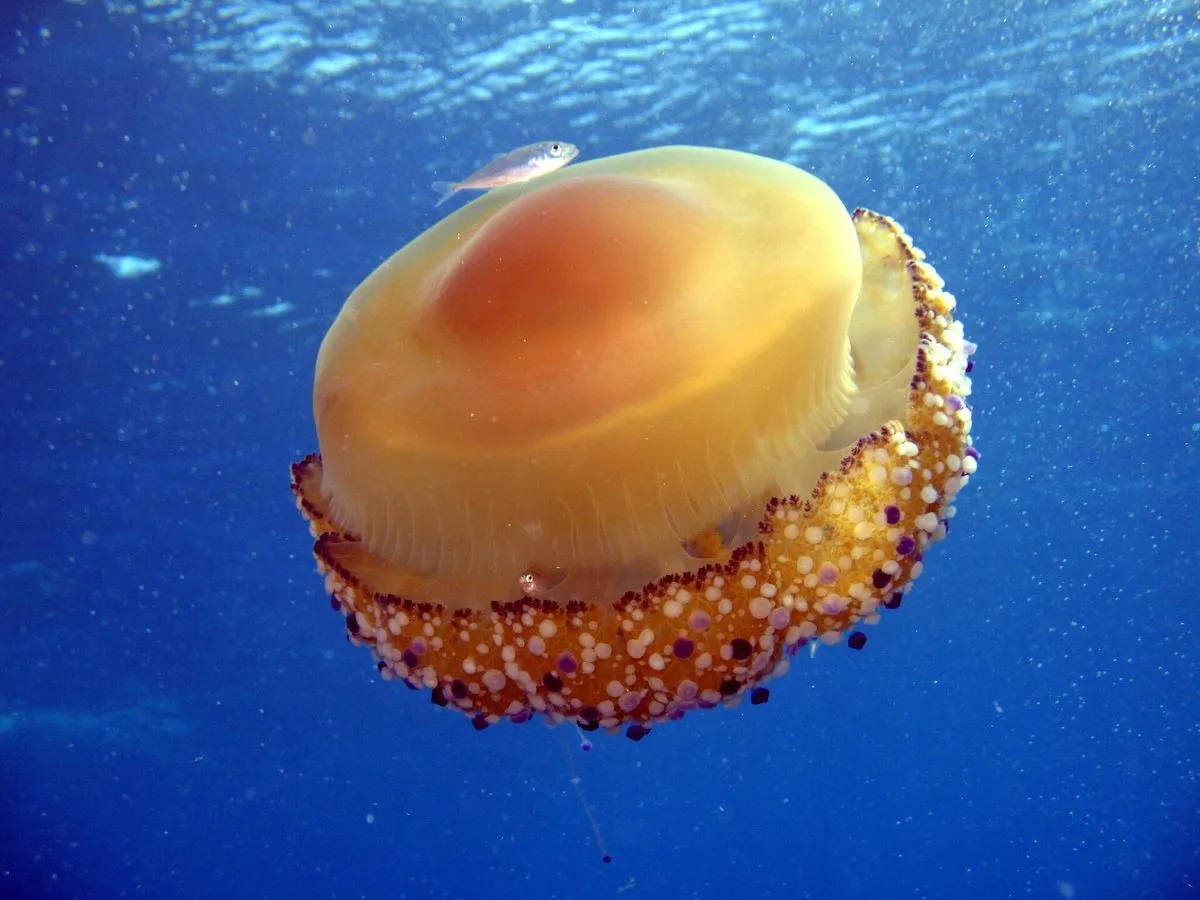
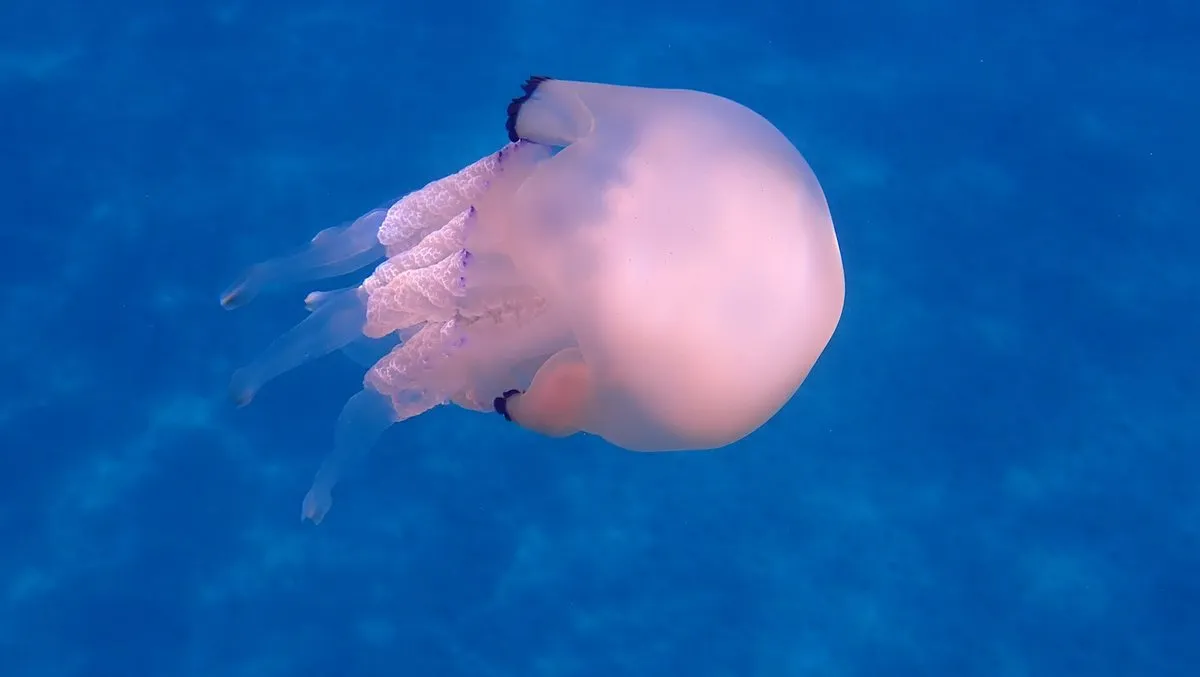
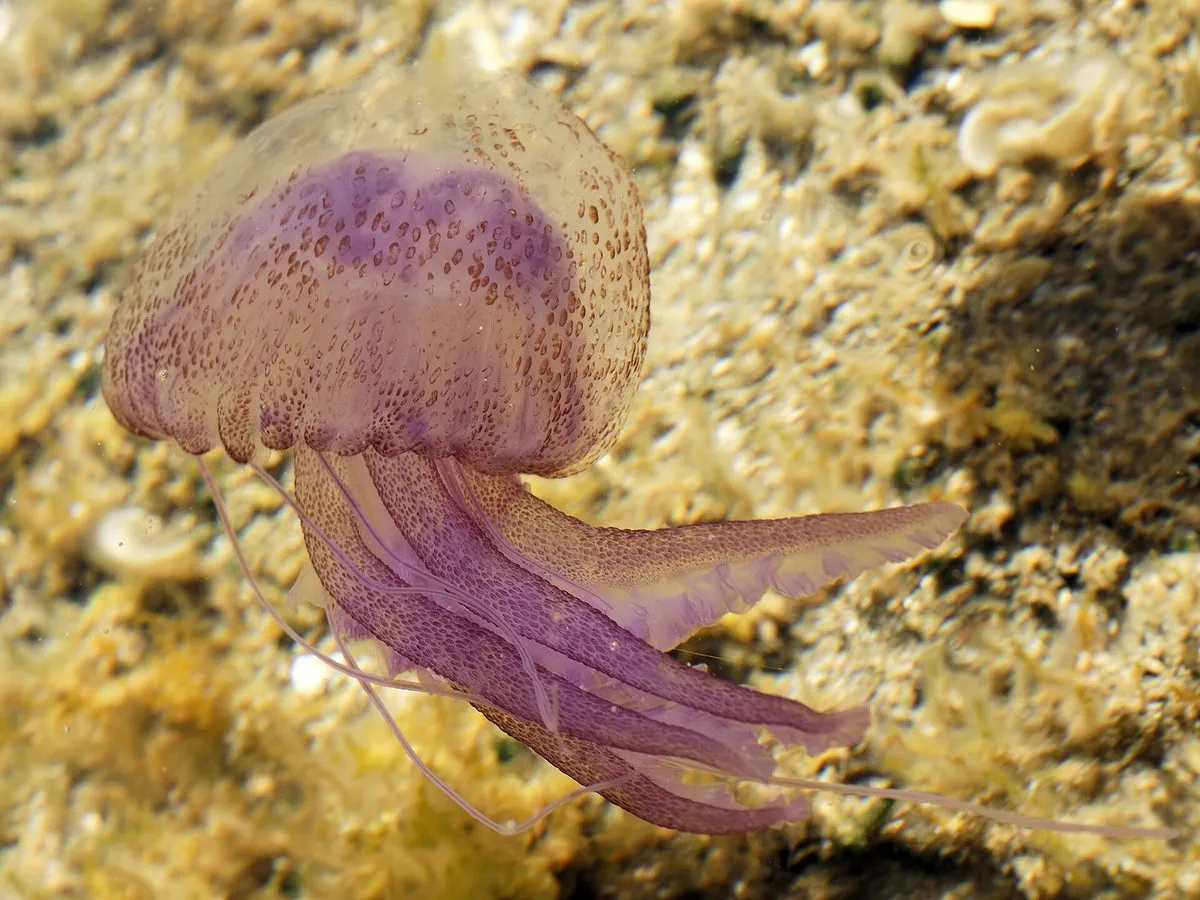
A 2010 review of Mediterranean jellyfish venoms calls the mauve stinger the most dangerous native Mediterranean jellyfish and records its swarms in Greek waters. Most of its stings cause only local effects; a minority of the cases reviewed brought dizziness, vomiting or worse. The large ones look worse than they are: the same review calls the barrel jellyfish (Rhizostoma pulmo) moderately venomous and the fried-egg jellyfish (Cotylorhiza tuberculata) not very toxic, a nuisance mainly when it comes in numbers. The moon jellyfish (Aurelia aurita) is usually considered harmless, though it can irritate sensitive skin.
The newcomer is Rhopilema nomadica, a Red Sea species that entered through the Suez Canal and, in the review’s words, is found along all the eastern Mediterranean, with painful stings. The Hellenic Centre for Marine Research’s ELNAIS network lists it in Greek waters since 2006, as casual rather than established. The Portuguese man o’ war, which a 2016 review counts among the European species whose stings can, very rarely, kill, turned up for Greek waters in none of the sources checked for this guide.
When they come inshore
No jellyfish season or forecast for Crete turned up from any Greek authority. Jellyfish drift with the water, so a bay full of them one morning can be clear the next, and the snorkelling guide puts it honestly: some weeks and not others. Look before you swim, ask the lifeguard where there is one, and if jellyfish are in the water or stranded on the sand, pick another beach that day. To see them safely, the research centre’s aquarium at Gournes keeps them behind glass.
First aid the sources agree on
Get out of the water first. Rinse the area with seawater, never fresh water, which can make clinging stinging cells fire. Lift off any tentacles without bare hands, using tweezers or the edge of a card. Then heat: the NHS says to soak the area in water as hot as can be tolerated for at least 30 minutes, and a 2016 review of European jellyfish stings recommends 42–45 °C for 30 minutes or until the pain goes. Neither recommends urine. The 45-degree ceiling matches the beach safety guide’s advice for weever fish: over-hot water burns.
Vinegar, ice and the disagreements
Vinegar is where popular advice and the evidence part company. The 2016 review found slightly more negative than positive conclusions in vinegar trials and recommends it only for two species, a box jellyfish (Carybdea marsupialis) and the compass jellyfish (Chrysaora hysoscella); the NHS page does not mention vinegar. Unless you know what stung you, seawater and heat are the safer pair. Ice is the second split: the NHS says not to apply ice or a cold pack, while the review reports cold packs helping in mild cases with no adverse effects recorded. Heat is the step both endorse.
When a sting needs help
Call 112 for difficulty breathing, chest pain, a fit, severe swelling or bleeding, vomiting, light-headedness or loss of consciousness, the warning signs the NHS lists, and do not drive yourself. At sea, 108 reaches the Coast Guard. For anything milder, a pharmacy can help with painkillers and antihistamines; the pharmacy guide explains the duty rota.
The honest downside
No jellyfish forecast for Crete and no jellyfish page from Greece’s public health agency turned up in this check, so the first aid here leans on the UK’s NHS and a scientific review, which disagree on ice. Telling species apart in the water is hard, which is why the advice is written for the stinger you cannot identify.
Worth it if: you swim or snorkel off open beaches in summer, especially with children, and want the first aid in your head before you need it. Skip it if: all your swimming is in a pool.
Photos on this page: the fried-egg jellyfish by Sarah Faulwetter (CC BY 4.0), the mauve stinger by Hans Hillewaert (CC BY-SA 4.0) and the barrel jellyfish by DipartimentoBiologiaUniPi (CC BY 4.0), via Wikimedia Commons, resized for the web. This guide is a check of published sources, not a site visit, and it is not medical advice; species, records and first aid were checked against the Hellenic Centre for Marine Research’s ELNAIS alien-species network, the NHS, and peer-reviewed reviews of Mediterranean and European jellyfish stings published in Marine Drugs in 2010 and 2016, for the date shown at the top of this guide. Nobody pays to be featured in a guide — no business, no sponsor, no paid mention, ever. Adverts, where they appear, are labelled as adverts.
Are there jellyfish in Crete?
Yes, irregularly. A peer-reviewed review records swarms of the mauve stinger in Greek waters, the barrel, fried-egg and moon jellyfish are Mediterranean species, and the alien Rhopilema nomadica has been recorded in Greece since 2006. Jellyfish drift with the water, so a beach can have them one week and none the next.
Which jellyfish in Crete sting?
The mauve stinger, Pelagia noctiluca, is the one to know: a 2010 review of Mediterranean jellyfish venoms calls it the most dangerous native Mediterranean jellyfish and a strong stinger. The alien Rhopilema nomadica also causes painful stings. The barrel jellyfish is moderately venomous, the fried-egg jellyfish is not very toxic, and the moon jellyfish is usually considered harmless but can irritate sensitive skin.
What should I do if a jellyfish stings me in Crete?
Get out of the water, rinse the area with seawater rather than fresh water, and lift off any tentacles without bare hands. Then soak the area in hot water, no hotter than about 45 °C, for around 30 minutes. The NHS and a 2016 scientific review of European jellyfish stings agree on those steps.
Should I put vinegar on a jellyfish sting?
Usually not. A 2016 review of European jellyfish stings recommends vinegar only for two species, a box jellyfish and the compass jellyfish, after trials gave mixed results, and the NHS advice does not mention vinegar at all. Unless you know what stung you, seawater and heat are the steps both sources support.
When is a jellyfish sting an emergency?
Call 112 if a sting is followed by difficulty breathing, chest pain, a fit, severe swelling or bleeding, vomiting, light-headedness or loss of consciousness, the warning signs the NHS lists. At sea, 108 reaches the Hellenic Coast Guard. Do not drive yourself to hospital.
One email a month — only when something on this island actually changes. No spam, no partners, one-click unsubscribe. Read past issues before you decide.