Agia Pelagia & Lygaria: The Honest Guide to the Western Coves
Two amphitheatre coves twenty minutes west of Heraklion — deep-blue sheltered water, taverna-backed sand, package-holiday bones.
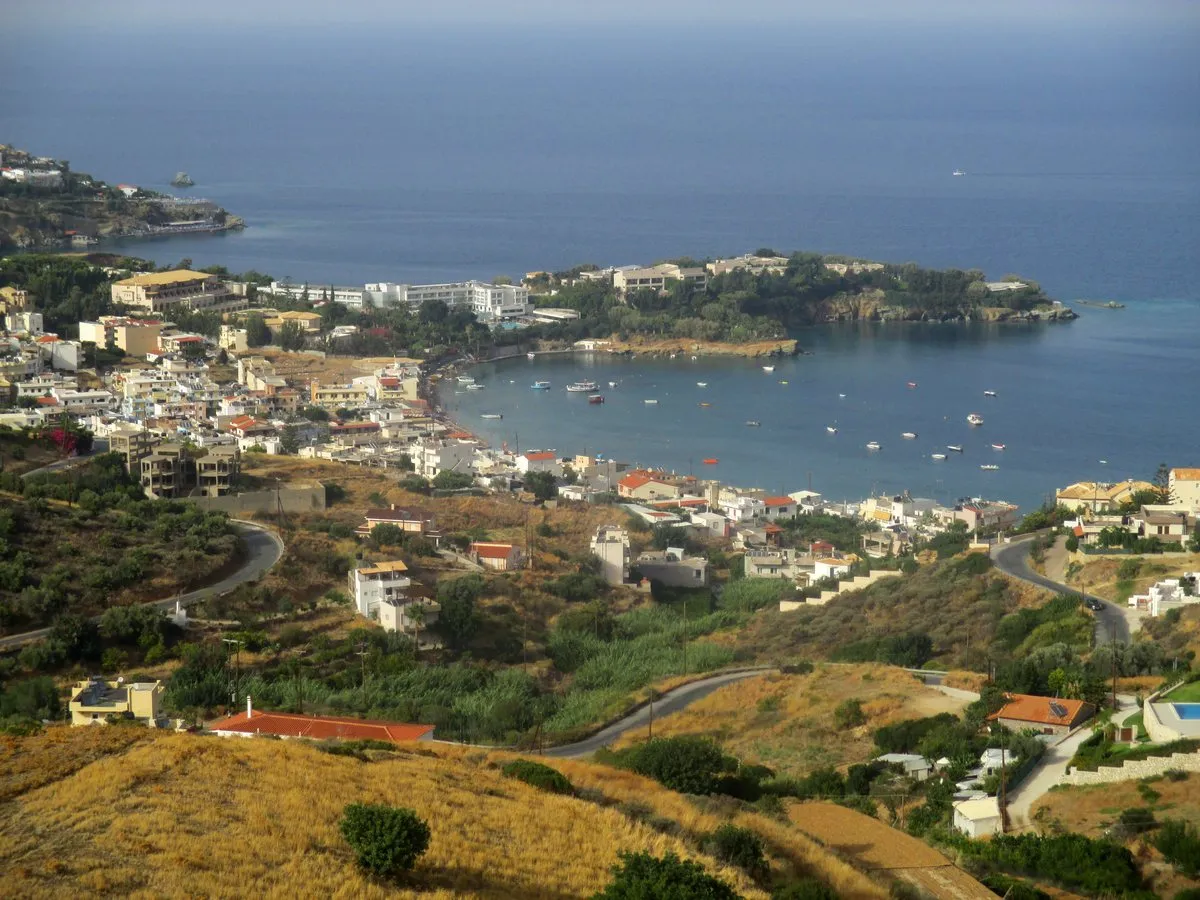
West of Heraklion the coast folds into a set of deep coves, and two of them made careers of it: Agia Pelagia, the amphitheatre resort village stacked around its bay, and quieter Lygaria next door. They are the mirror-image alternative to the Hersonissos side — same distance from the airport, opposite direction — with sheltered swimming as the core product and Heraklion’s museums twenty minutes away.
The honest facts
- Position
- ~20–25 minutes west of Heraklion airport off the highway; the descent roads into both coves are steep and parking near the sand is a competitive sport by 11:00 in season.
- Agia Pelagia bay
- sand-and-fine-pebble, densely organised (sunbeds roughly €8–14), taverna row directly behind, water usually calm when Stalis is white-capping — the headlands do real work against the meltemi.
- Lygaria
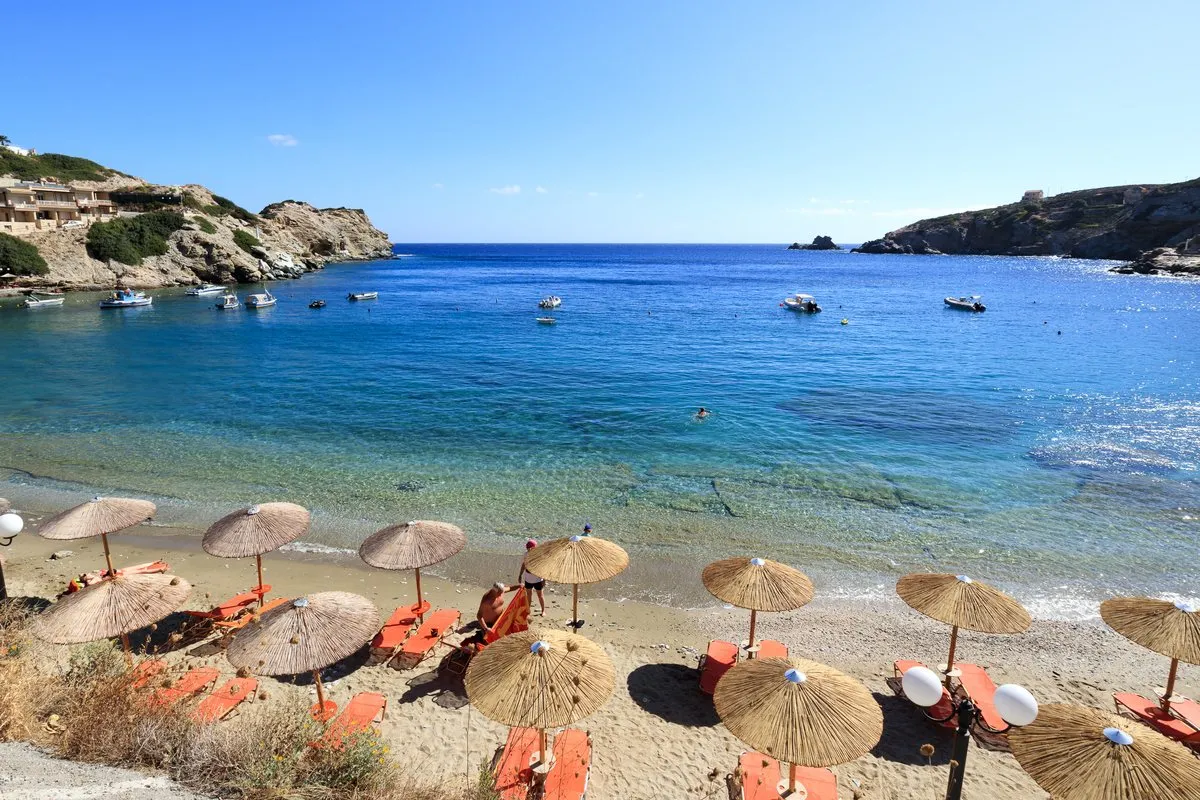
- the small sibling one cove east — same shelter, fewer businesses, more local families; arguably the better pure swim.
- Extras
- Psaromoura and Mononaftis coves flank Agia Pelagia for variety, and Fodele and its orange groves are ten minutes west; a dive school tradition exploits the clear, calm water.
- The vibe
- established package-holiday territory with a Cretan village core still visible in the upper lanes.
Who should pick this side
Travellers prioritising calm-water swimming over strip amenities; museum-minded visitors wanting Heraklion and Knossos close without sleeping in the city; and returners who found the Hersonissos corridor too much. Families do well — the shelter is genuine — provided steep-lane pushchair logistics are accepted.
The daily pattern
Morning swim before the sunbed rows saturate, lunch one street up from the front where prices calm down, the afternoon at Lygaria or Psaromoura for a change of blue, and either a village-lane dinner or the twenty-minute run into Heraklion for an urban evening — a combination the east-side resorts cannot match.
Getting there, and the parking problem
Twenty to twenty-five minutes west of Heraklion airport along the highway, then a steep descent road into either cove — a taxi from the airport is short and simple, and a hire car is the sensible call if you want Lygaria and the other coves as well as the main bay. Parking near the sand is a competitive sport by eleven in season: either arrive early, or accept the walk down from the upper lanes, which with a pushchair is the one honest argument against this side.
The coves, one by one
Agia Pelagia bay is the main event — sand and fine pebble, densely organised at roughly €8–14 the set, a taverna row directly behind, and water the headlands keep calm when Stalis is white-capping. Lygaria, one cove east, has the same shelter with fewer businesses and more local families, and is arguably the better pure swim. Psaromoura and Mononaftis flank the main bay for a change of blue, and the clear, calm water is why a dive-school tradition has grown here. Mornings everywhere; by the time the sunbed rows saturate, move one cove along.
Heraklion as your evening
This is the thing the east-side resorts cannot do. Twenty minutes puts you in the city for the Archaeological Museum, for dinner in the old town, or for the early slot at Knossos with a ticket bought in advance — and back at a sheltered bay for the afternoon swim. Fodele and its orange groves are ten minutes west for a village lunch. For anything further — Rethymno is about an hour and a quarter, the south coast similar — you are on the highway, which is fine, and not the point of being here.
The honest downside
The bay’s popularity outgrew its size: high-season density on the main sand is real, the builds climbing the amphitheatre are function-first, and nightlife is tame — deliberately so. Day-trip variety beyond Heraklion means using the highway.
Worth your time if: sheltered water plus museum access defines your trip. Skip it if: you want the walkable buzz-and-options formula — that is Hersonissos, forty minutes the other way.
Photos on this page: the bay by Tomisti (CC BY-SA 4.0) and the sunbed rows by Karel Macalík (CC BY 2.0), via Wikimedia Commons, resized for the web. Everything above was checked for the date shown at the top of this guide. Nobody pays to be featured in a guide — no business, no sponsor, no paid mention, ever. Adverts, where they appear, are labelled as adverts.
The quick scores
Agia Pelagia
- Crowds
- 4 out of 5parking near the sand is a sport by eleven
- Nightlife
- 2 out of 5tame, and deliberately so
- Organised beach
- 5 out of 5densely organised, taverna row behind
- Car needed
- 3 out of 5the highway for anything past Fodele
- Dinner on foot
- 4 out of 5a full taverna row on the sand
- Prices
- 3 out of 5sunbeds EUR 8-14
Lygaria
- Crowds
- 2 out of 5fewer businesses, more local families
- Nightlife
- 1 out of 5the swim is the evening
- Organised beach
- 3 out of 5the same shelter with less of everything
- Car needed
- 3 out of 5one cove east of the bus stop
- Dinner on foot
- 2 out of 5a handful of places, and you will repeat
- Prices
- 2 out of 5cheaper than the bay next door
More dots means more of the thing named, never “better”. What each level means. Scored August 2026 from the reporting on this page.
Is Agia Pelagia sheltered from the wind?
Yes, and it is the main argument for this side. The headlands do real work against the meltemi, so the water is usually calm when Stalis is white-capping.
Is Agia Pelagia or Lygaria better?
Agia Pelagia is the bigger, denser bay with a full taverna row and sunbeds around EUR8-14. Lygaria one cove east has the same shelter with fewer businesses and more local families - arguably the better pure swim.
How far is Agia Pelagia from Heraklion airport?
About 20 to 25 minutes west off the highway. The descent roads into both coves are steep, and parking near the sand becomes a competitive sport by 11am in season.
Who should choose the west side over Hersonissos?
Travellers prioritising calm-water swimming over strip amenities, museum-minded visitors wanting Heraklion and Knossos close without sleeping in the city, and returners who found the Hersonissos corridor too much.
Are there other coves near Agia Pelagia?
Psaromoura and Mononaftis flank the main bay and add variety. A dive school tradition here exploits the clear, calm water.
One email a month — only when something on this island actually changes. No spam, no partners, one-click unsubscribe. Read past issues before you decide.