Fodele: The Honest Guide to El Greco's Village
Orange groves, plane-shaded lanes and the painter's claimed birthplace, ten minutes off the highway west of Heraklion.
Fodele folds into a green river valley ten minutes off the Heraklion–Rethymno highway, wrapped in the orange groves that scent and fund it, and trades — with more charm than certainty — on being the birthplace of Domenikos Theotokopoulos, El Greco. Certainty aside, the village delivers: plane-shaded taverna lanes along the stream, a lovely 11th-century church across the valley, and the painter’s museum-house on the hill for the pilgrimage-minded.
The honest facts
- Getting there
- signed off the highway ~25 minutes west of Heraklion; the valley detour takes three minutes and a century off the clock.
- The El Greco house
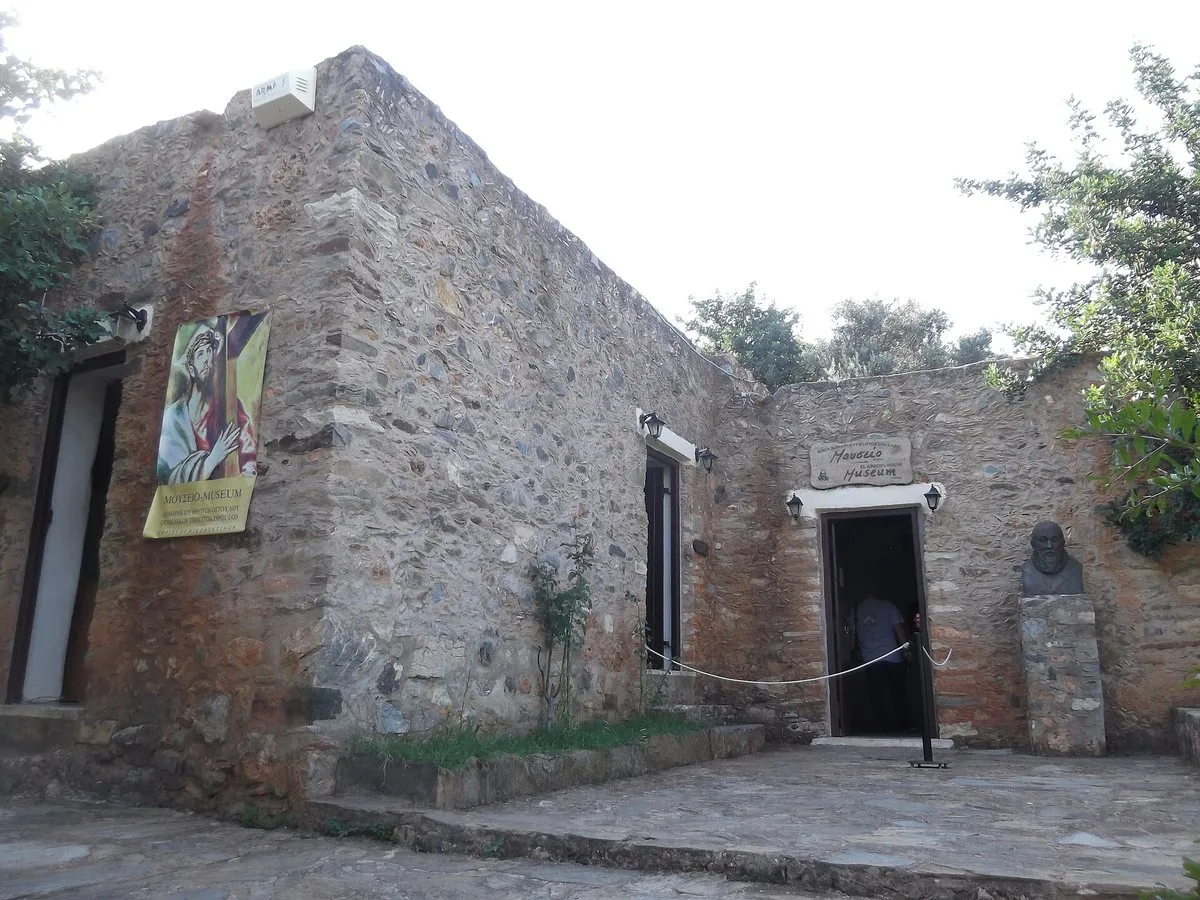
- a restored farmhouse-museum on the slope (small fee, seasonal hours — verify) holding reproductions and context rather than originals; value is atmosphere and the walk up through the groves.
- The church
- the Byzantine Panagia across the stream — cross-in-square elegance, fresco fragments, usually open mornings; five minutes that outrank the museum for many.
- The lanes
- taverna and café tables under the planes at the water’s edge — fresh-squeezed village oranges are the mandatory order; lunch for two €25–40.
- The market layer
- stalls sell orange-everything and textiles to the coach trade — cheerful, avoidable, or embraceable per taste.
The El Greco question, answered properly
Domenikos Theotokopoulos was born in 1541, almost certainly in Crete, and left for Venice in his mid-twenties. Whether he was born in Fodele or in Heraklion itself is genuinely unsettled: the Fodele tradition is long-standing and locally held, the documentary evidence points more towards Candia — the Venetian name for Heraklion — and the University of Valladolid put up the memorial stone in the village in 1934 on the strength of the tradition rather than an archive.
What this means for a visit is simple. The house on the hill is a restored Cretan farmhouse of roughly the right period, furnished as one, with reproductions of the paintings and panels explaining his career. It is not his house in any provable sense and it holds no originals. Go for the walk up through the groves and the sense of the landscape he would have known either way, not for a shrine.
If you want the paintings, the Heraklion Historical Museum holds two authenticated El Greco works — the only ones in Crete.
The church most visitors skip
Across the stream from the car park, five minutes on foot, stands the Panagia — a cross-in-square Byzantine church of the eleventh century, built over an earlier basilica whose mosaic floor is still partly visible outside. It is small, cool, usually open in the mornings, and holds fresco fragments that are considerably older than anything in the museum up the hill.
For a lot of visitors this ends up being the better ten minutes of the stop, and it is free.
Planning the stop
Fodele works as a comma, not a destination: the signed valley detour costs three minutes off the Heraklion–Rethymno highway, so fold it into any day already travelling that road — outbound to Rethymno with lunch under the planes, or the shaded pause on the drive back east. Timing decides the experience: the coach trade compresses the small centre in the middle hours, so aim for the morning — when the Byzantine Panagia is most reliably open anyway — or the late afternoon, when the stalls exhale and the stream lanes return to the village. The full circuit is honest about its size: church, the walk up through the groves to the painter’s house, an orange juice you will remember, and the road again — ninety minutes that improve whichever day they interrupt. Coming from Heraklion, the purpose-built village of Arolithos above Tylissos sits on the same old road and makes a natural first stop.
The honest visit
Ninety minutes covers it richly: church first while light angles in, the groves-and-museum climb for El Greco’s shadow, then the plane-shade table with juice or lunch as the actual centrepiece. As the leg-stretch between Heraklion and Rethymno, or paired with Agia Pelagia’s coves fifteen minutes away, it upgrades any transit day.
The honest downside
The El Greco claim is tradition more than document (Heraklion’s old town competes) — pilgrims wanting originals will find reproductions; coach-hour compresses the small centre; and beyond church, house and lunch, Fodele is one pretty valley deep.
Worth your time if: orange-scented shade and a brushstroke of art history improve your road day. Skip it if: museums must contain masterpieces — the village’s masterpiece is the setting.
Photo on this page: the museum by Jpbowen (CC BY-SA 3.0), via Wikimedia Commons, resized for the web. Everything above was checked for the date shown at the top of this guide. Nobody pays to be featured in a guide — no business, no sponsor, no paid mention, ever. Adverts, where they appear, are labelled as adverts.
Was El Greco born in Fodele?
The village trades on it with more charm than certainty. The restored farmhouse-museum on the slope holds reproductions and context rather than originals, and the value is the atmosphere and the walk up through the orange groves rather than the claim itself.
Is Fodele worth stopping at?
Ninety minutes covers it richly, and it makes an excellent leg-stretch between Heraklion and Rethymno. The Byzantine church of the Panagia across the stream - cross-in-square, fresco fragments, usually open mornings - outranks the museum for many visitors.
How far is Fodele from Heraklion?
About 25 minutes west, signed off the highway. The valley detour itself takes three minutes and takes a century off the clock.
What should you order in Fodele?
Fresh-squeezed village oranges, which is the mandatory order under the plane trees at the waters edge. Lunch for two runs EUR25-40. The market stalls selling orange-everything are cheerful, avoidable or embraceable to taste.
What is the best order to see Fodele?
Church first while the light angles in, then the groves-and-museum climb, then the plane-shade table with juice or lunch as the actual centrepiece.
One email a month — only when something on this island actually changes. No spam, no partners, one-click unsubscribe. Read past issues before you decide.