Buying Cretan Olive Oil: The Honest Guide to Labels, PDOs and Getting It Home
What 'extra virgin', 'cold extraction' and the new Crete PGI actually guarantee under EU law, how to read a label in thirty seconds, how to store it, and how to fly home with it — without naming a single brand.
Crete makes excellent olive oil and also sells plenty of ordinary oil to visitors, often in pretty bottles. The difference is not a secret; it is written on the label in terms EU law defines precisely. This guide explains those terms, the island’s protected designations and the practicalities of getting oil home, checked in September 2026 against the EU regulations themselves and the International Olive Council’s consumer guide. It names no producer, shop, mill or brand.
The honest facts
- Extra virgin
- = acidity ≤0.8%, no sensory defects, some fruitiness, mechanical extraction only (EU Regulation 2022/2104).
- “Cold extraction”
- is only allowed below 27 °C; “first cold pressing” additionally requires a traditional hydraulic press.
- Bitter and peppery are good
- the EU lists them as positive attributes.
- Crete now has an island-wide PGI
- , “Kriti” (September 2025): extra virgin, ≥90% Koroneiki/Tsounati, acidity ≤0.6%, milled within 48 hours, bottled in Crete.
- Around ten PDOs
- cover individual districts, from Sitia to Kolymvari.
- Harvest year
- on a label is optional — but if it is there, the oil must be 100% from that harvest.
- Hand luggage
- 100 ml limit. Buy big, pack it in the hold.
Reading a label in thirty seconds
Look for four things. The category — “extra virgin olive oil” — with the legal description that follows it, “superior category olive oil obtained directly from olives and solely by mechanical means”. The origin, which under EU rules must say which country the oil comes from, or that it is an EU blend, or carry a PDO or PGI name; if the olives were grown in one place and pressed in another, the label has to say so. A harvest year, which is optional but meaningful, because it can only appear if every drop is from that harvest. And the storage instruction, which is mandatory and tells you the oil is perishable.
A label that states the acidity must, by law, also show the peroxide, wax and UV-absorption figures in the same field of view. A single low acidity number on its own, used as a slogan, is a small warning sign. So is any health promise: the only olive-oil health claim the EU permits is about polyphenols protecting blood lipids, and only for oil containing at least 5 mg of hydroxytyrosol and its derivatives per 20 g.
PDOs, the new PGI and Koroneiki
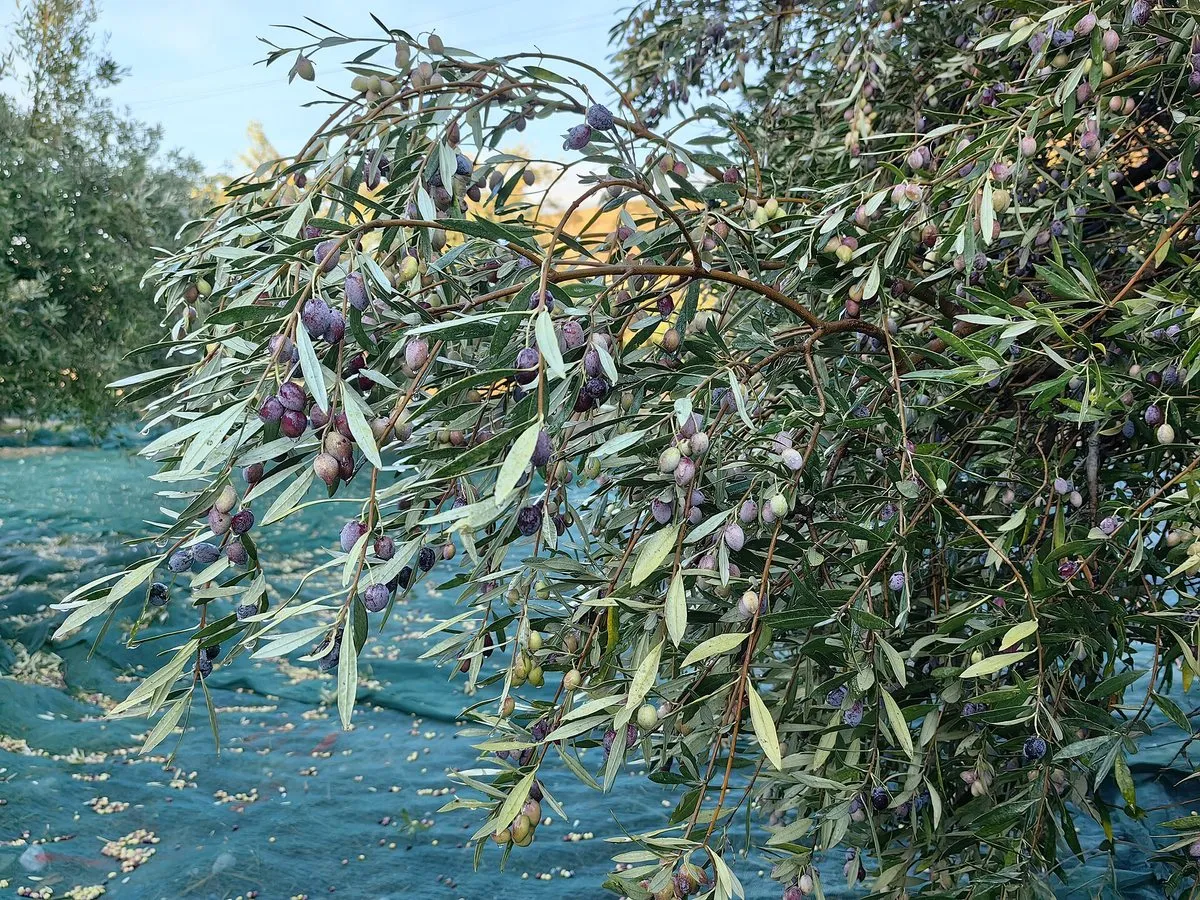
Cretan oil is closely tied to the small Koroneiki olive — the island’s protected designations are built around it — which gives a green, grassy, peppery oil. The EU register lists around ten Protected Designations of Origin on the island — among them Sitia, Kolymvari, Apokoronas, Viannos, Peza, Archanes, Messara and Selino — plus the Chania Kritis PGI and, since September 2025, the island-wide Kriti PGI. The new PGI’s specification is strict: extra virgin only, at least 90% Koroneiki or Tsounati, acidity no higher than 0.6%, olives milled within 48 hours, and packaging only within Crete. It even cites the ancient olive tree near Kavousi, estimated at over 3,000 years old.
A PDO or PGI seal is not a quality ranking, but it is a verified origin and a published rulebook, which is more than an unlabelled bottle offers.
Where the risks are
Olive oil is a regular in the EU’s food-fraud reports. The European Commission’s 2024 fraud-network report counted 130 olive oil notifications, with dilution with cheaper oils the most common problem and mislabelling and false category claims behind it. Buying on the island does not make you immune. Buying labelled oil with a clear category, origin and harvest date — from a producer, a cooperative or a shop that can tell you where and when it was pressed — is the practical defence. The harvest starts in the autumn; the Sitia PDO specification puts it “usually in November or even earlier”, which makes late-autumn Crete the time to taste new oil.
Storing it and getting it home
Light and heat are what ruin oil. The International Olive Council’s consumer guide recommends 13–25 °C, dark glass, tin or stainless steel, and keeping the air gap small; once opened, use it within one to three months, and buy no more than you will use in a year. A five-litre tin is good value only if you will finish it.
For the flight, EU security rules limit liquids in hand luggage to 100 ml containers in a one-litre bag. Anything bigger goes in the hold, sealed, bagged and wrapped in clothes. For what else Crete puts on the plate, see what to eat in Crete.
The honest downside
Labels tell you what the law requires, not whether you will like the taste, and the best Cretan oil is often sold in plain bottles or tins by people who do not do marketing. The new PGI is only a year old, so few bottles carry it yet. And the romance of buying oil at the source rarely survives a leaking bottle in a suitcase — pack it properly.
Worth it if: you cook with olive oil at home and want to bring back something genuinely better than the supermarket. Skip it if: you want a souvenir rather than a pantry staple — a small, well-labelled bottle is plenty.
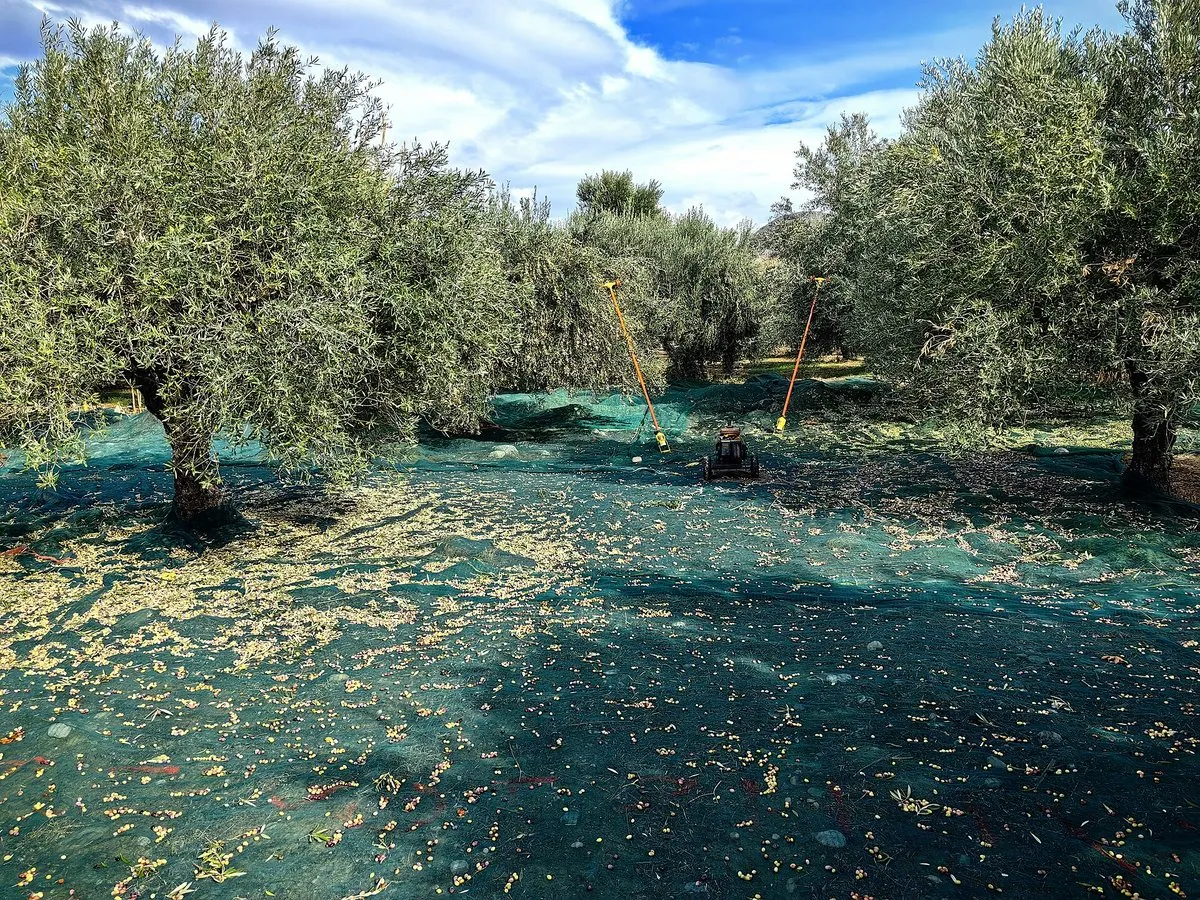
Photos on this page: the harvest nets and the Koroneiki olives by Petro Stelte (CC BY-SA 4.0), via Wikimedia Commons, resized for the web. Rules and figures were checked against EU Regulations 2022/2104, 432/2012 and 2025/1845 with the Kriti PGI specification, the EU register of protected designations, the International Olive Council’s consumer guide, the EU’s air-travel liquids rules and the European Commission’s 2024 food-fraud report, for the date shown at the top of this guide. It is a check of published sources, not a site visit. No producer, mill, cooperative, shop or brand is named or recommended. Nobody pays to be featured in a guide — no business, no sponsor, no paid mention, ever. Adverts, where they appear, are labelled as adverts.
What does extra virgin olive oil legally mean?
Under EU Regulation 2022/2104, extra virgin olive oil must have free acidity of no more than 0.8%, peroxide of no more than 20, no sensory defects and a detectable fruitiness, and be obtained directly from olives solely by mechanical means. Virgin olive oil allows up to 2.0% and minor defects; plain 'olive oil' is a blend of refined and virgin oils.
What does 'cold extraction' mean on an olive oil label?
EU rules allow 'cold extraction' only for oil obtained below 27 °C by percolation or centrifugation, and 'first cold pressing' only for oil made below 27 °C with a traditional hydraulic press. Modern mills extract by centrifuge rather than press, so 'cold extraction' is the claim you will usually see.
What is the Crete PGI for olive oil?
A Protected Geographical Indication, 'Kriti', registered by the EU in September 2025. Its specification requires extra virgin oil, at least 90% Koroneiki and/or Tsounati olives, acidity no higher than 0.6%, olives milled within 48 hours and packaging only within Crete.
Is bitter or peppery olive oil a bad sign?
No. EU rules list bitterness and pungency — the peppery catch at the back of the throat — as positive attributes of virgin oils. They come from the oil's polyphenols and are typical of fresh, early-harvest Koroneiki oil.
Can I take olive oil in my hand luggage?
Only in containers of 100 ml or less inside the one-litre clear bag, under EU security rules; sealed duty-free purchases with the receipt are the exception. Anything larger goes in checked luggage, well wrapped.
How should olive oil be stored?
Away from light and heat — the International Olive Council recommends 13–25 °C, dark glass, tin or stainless steel, and a closed container with as little air as possible. Once opened, use it within one to three months, and buy no more than you can use within a year.
One email a month — only when something on this island actually changes. No spam, no partners, one-click unsubscribe. Read past issues before you decide.