Vegetarian and Vegan Eating in Crete: Lent Food, the Dishes That Are, and the Ones That Only Look It
Crete's Orthodox fasting tradition keeps a long list of dishes with no meat, dairy or eggs, but cheese, staka, butter and meat stock hide in plenty of food that looks like vegetables. What «νηστίσιμο» really means, what to order, what to ask, and when vegan food is easiest to find.
Crete is easier for vegetarians and vegans than its lamb-and-cheese reputation suggests, because the island’s Orthodox fasting tradition has long called for dishes with no meat, dairy or eggs. The trap is the dish that looks like vegetables and is not: courgettes stuffed with cheese and baked in staka, a pilaf cooked in meat stock, stuffed vegetables finished with cream. Learn one word, nistisimo, and a few questions, and you will eat well. This guide is a check of published sources, mainly the Region of Crete’s own recipe pages and an Orthodox reference on fasting, made in October 2026; it names no restaurant.
The honest facts
- The key word
- «νηστίσιμο» (nistisimo), fasting food: no meat, dairy or eggs under the Orthodox rule.
- Not quite vegan
- fasting food can include octopus, squid, shellfish and fish roe, and Cretan sweets often use honey.
- Usually vegan
- fava, artichokes with broad beans, dolmadakia, rice-stuffed vegetables, wild greens, dakos without cheese.
- Look out for
- cheese and staka in vegetable dishes, butter and meat stock in rice, mizithra in pies.
- Best seasons
- Great Lent (Clean Monday 15 March to Easter 2 May in 2027), 15 November to 24 December, 1–14 August, Wednesdays and Fridays.
- The phrase
- «Είμαι χορτοφάγος» (EE-meh hor-to-FA-gos), I am vegetarian.
What the fast excludes, and what it allows
OrthodoxWiki, an online Orthodox reference, sets out the strict rule for Great Lent and for most Wednesdays and Fridays: no meat, defined as anything with a backbone, no dairy products or eggs, and on those strict days no olive oil or wine either. Newcomers are told to ask their priest, and the rule relaxes for travellers and the ill. Food made to that rule is what a menu calls nistisimo, and it is the nearest thing Crete has to a vegan label.
It is not one. The backbone definition leaves room for seafood without one: Greek fasting tables include shellfish, molluscs such as octopus and squid, and fish roe, the base of taramosalata. Honey goes into many Cretan sweets, from Sfakian pie to the rakomelo of the raki and kafeneia guide, and snails, a Cretan favourite, are nobody’s vegetable.
The dishes that are
The Region of Crete’s recipe pages are a good map of the island’s naturally vegan cooking. Fava, a purée of broad beans, is beans, onion, olive oil and lemon. Artichokes with broad beans are cooked in olive oil with garlic and dill, thickened with flour and vinegar rather than egg. Vine-leaf dolmadakia hold rice, potato, courgette and herbs, and the Region’s stuffed vegetables are rice, herbs and oil. Wild greens come sautéed with courgettes, potatoes and tomato, or boiled and dressed with oil and vinegar; stamnagathi, the spiny chicory explained in the what-to-eat guide, is the one to ask for. Dakos can be vegan too: the Region’s version tops the rusk with olives, fennel and lemon, and no cheese. Kalitsounia filled with greens follow the same logic, since the Region’s dough is flour, water, raki and olive oil, though baked ones may be brushed with egg.
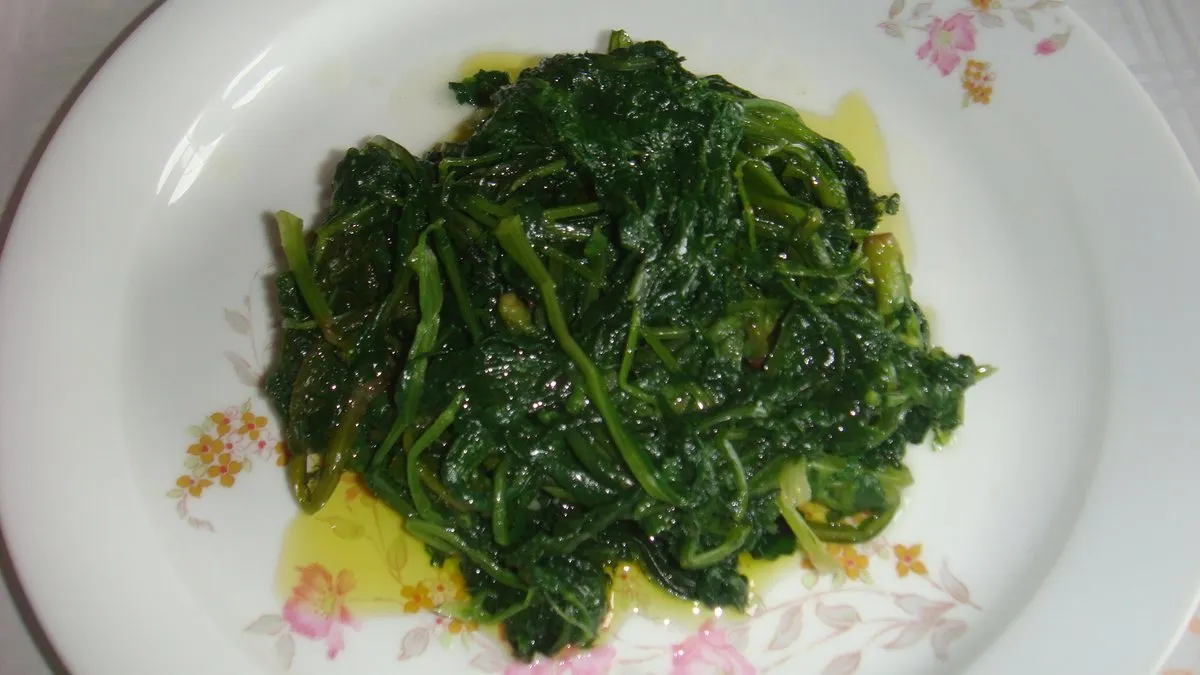
The ones that only look it
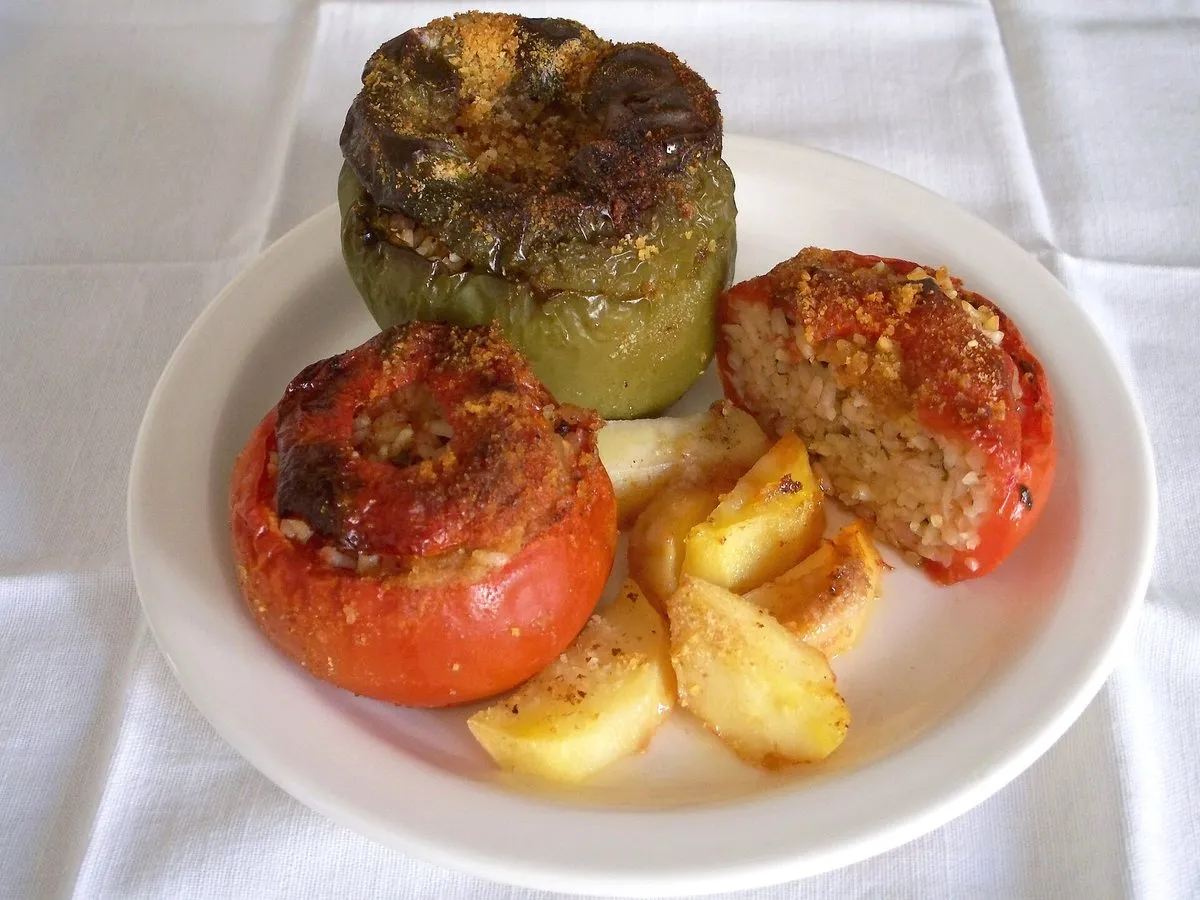
The vegetable dish to question is the one that looks most innocent. The Region’s Cretan stuffed courgettes are filled with mizithra cheese and baked with staka, the rich paste left when the cream of the milk is heated for butter, and its gemista go into the oven under cream or grated cheese. Rice is the other trap: the Region’s pilafi from Chania is cooked in the stock of boiled lamb or kid and chicken, with staka butter. Chania’s boureki layers its vegetables with mizithra, as the Chania eating guide notes, and kalitsounia come in cheese versions as well as greens ones. Some cooks add mince to stuffed vegetables or vine leaves, and some pastry is made with butter or lard. None of that shows on the plate, so ask.
Asking, in Greek
Three sentences do most of the work. «Είμαι χορτοφάγος» (EE-meh hor-to-FA-gos): I am vegetarian. «Δεν τρώω κρέας, ψάρι, γαλακτοκομικά ή αυγά» (then TRO-o KRE-as, PSA-ree, ga-lak-to-ko-mee-KA ee av-GA): I don’t eat meat, fish, dairy or eggs. «Έχει τυρί, βούτυρο ή ζωμό κρέατος;» (E-hee tee-REE, VOO-tee-ro ee zo-MO KRE-a-tos): does it have cheese, butter or meat stock? Add «Είναι νηστίσιμο;» (EE-neh nee-STEE-see-mo), is it fasting food? In village tavernas, where menus are often recited rather than printed (the mountain-taverna guide explains), asking is the menu.
When it is easiest
Fasting food is easiest to find when the people around you are fasting: Great Lent (in 2027 from Clean Monday, 15 March, to Easter Sunday, 2 May), the Nativity fast from 15 November to 24 December, the first two weeks of August, and Wednesdays and Fridays outside the fast-free weeks. On Good Friday, as the Easter guide describes, the tavernas that open serve the fasting table; for a vegan that still means checking for octopus.
The honest downside
The fasting tradition makes vegan food common, not labelled. Outside the fasts many menus lean on meat, cheese and staka; nistisimo still includes seafood; the dishes that hide cheese or meat stock look exactly like the ones that do not; and a recited menu gives you nothing to read.
Worth it if: you eat vegetarian or vegan and are happy to ask what is in a dish; Crete’s everyday cooking gives you plenty to choose from. Skip it if: you need food certified as vegan; nistisimo is a religious category, not a vegan label.
Photos on this page: the greens by Sotiria Simota (CC BY-SA 3.0) and the gemista by Badseed (CC BY-SA 3.0), via Wikimedia Commons, resized for the web. This guide is a check of published sources, not a site visit; dishes and ingredients were checked against the Region of Crete’s recipe pages and fasting rules against OrthodoxWiki, with the 2027 dates checked against the Orthodox Easter calculation, for the date shown at the top of this guide. No restaurant, producer or brand is named. Nobody pays to be featured in a guide — no business, no sponsor, no paid mention, ever. Adverts, where they appear, are labelled as adverts.
Is it easy to eat vegetarian in Crete?
Eating vegetarian in Crete is easier than the island's lamb-and-cheese reputation suggests: greens, pulses, vegetable stews and pies are everyday food, many of them cooked in olive oil. The catch is that cheese, staka and butter turn up in dishes that look like plain vegetables, and some rice dishes are cooked in meat stock. Ask what is in a dish rather than judging by its look.
What does nistisimo mean on a Greek menu?
Nistisimo (νηστίσιμο) means fasting food: dishes suitable for the Orthodox fasts, which exclude meat, dairy and eggs. Nistisimo is not the same as vegan, because Greek fasting tables include shellfish, molluscs such as octopus and squid, and fish roe, and many Cretan sweets use honey. For vegans the word is a useful first filter, not a guarantee.
Which Cretan dishes are usually vegan?
Dishes that are vegan in the Region of Crete's own recipes include fava, a bean purée; artichokes with broad beans; vine-leaf dolmadakia with rice; rice-stuffed vegetables; sautéed wild greens; and dakos topped with olives and fennel instead of cheese. Restaurant versions vary, so check for cheese, butter or a meat stock.
How do you say 'I am vegetarian' in Greek?
'I am vegetarian' in Greek is «Είμαι χορτοφάγος» (EE-meh hor-to-FA-gos). To ask for a dish without cheese, say «χωρίς τυρί» (ho-REES tee-REE), and to ask whether a dish is fasting food, «Είναι νηστίσιμο;» (EE-neh nee-STEE-see-mo). «Δεν τρώω κρέας, ψάρι, γαλακτοκομικά ή αυγά» covers the vegan version: I don't eat meat, fish, dairy or eggs.
When is vegan food easiest to find in Crete?
Vegan food is easiest to find in Crete during the Orthodox fasts: Great Lent before Easter, which in 2027 runs from Clean Monday, 15 March, to Easter Sunday, 2 May; the Nativity fast from 15 November to 24 December; the first two weeks of August; and Wednesdays and Fridays outside the fast-free weeks. On Good Friday, tavernas that open serve the fasting table.
Is dakos vegan?
Dakos can be vegan. The Region of Crete's own published recipe tops the barley rusk with olive oil, cracked green olives, fennel and lemon, with no cheese, but many tavernas crumble soft white cheese over theirs. Ask for it «χωρίς τυρί», without cheese.
One email a month — only when something on this island actually changes. No spam, no partners, one-click unsubscribe. Read past issues before you decide.