What to Eat in Crete: The Honest Guide to the Dishes Worth Ordering
Dakos, snails, antikristo lamb, Sfakian pie, boureki, staka, stamnagathi, the protected cheeses and the raki that ends every meal — what each one actually is, and which versions are the real thing.
Cretan food is simpler and more seasonal than the menus in the resorts suggest, and the dishes worth ordering are the ones built from what the island has always had: barley, olive oil, wild greens, sheep and goat, snails, cheese, honey and raki. This guide explains what each dish actually is, using the Region of Crete’s own recipe pages and the EU’s registers for protected products, checked in September 2026. It does not name restaurants, and it cannot tell you what a portion costs — prices vary too much by place and season to publish honestly.
The honest facts
- Start with dakos
- a barley rusk with grated tomato and olive oil; the cheese on top is optional, not traditional law.
- The meat dish to find
- antikristo — lamb or goat roasted on wooden skewers around a fire, not over it.
- The one people are nervous about
- snails, often boubouristi — boiled, then fried with herbs. Try them.
- Pies
- kalitsounia (greens or cheese), Sfakian pie fried dry and drenched in honey, boureki from Chania.
- Protected cheeses
- Graviera Kritis, Xynomyzithra Kritis, Pichtogalo Chanion — all EU PDO since 1996.
- Raki
- Tsikoudia of Crete, a protected grape-marc spirit, often poured free after the meal.
- Taking it home
- cheese, dairy and pork cannot go into Great Britain from the EU; honey can.
Starters and small plates
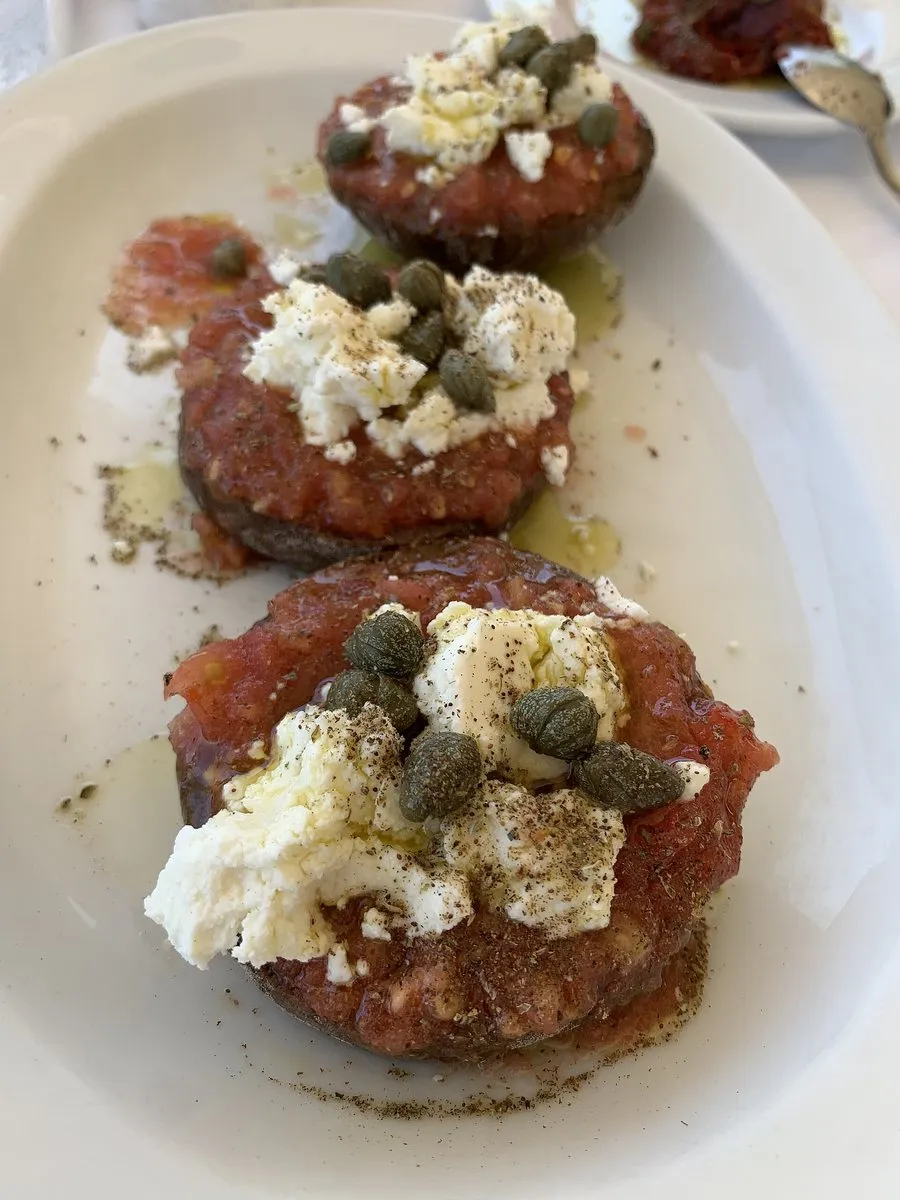
Dakos is the island on a plate: a hard barley rusk, moistened, topped with grated tomato and good olive oil. Most tavernas add a crumble of soft white cheese, and some add capers or olives; the Region of Crete’s own published recipe uses olives, fennel and lemon and no cheese at all. The honest test is the rusk — it should soften under the tomato, not shatter.
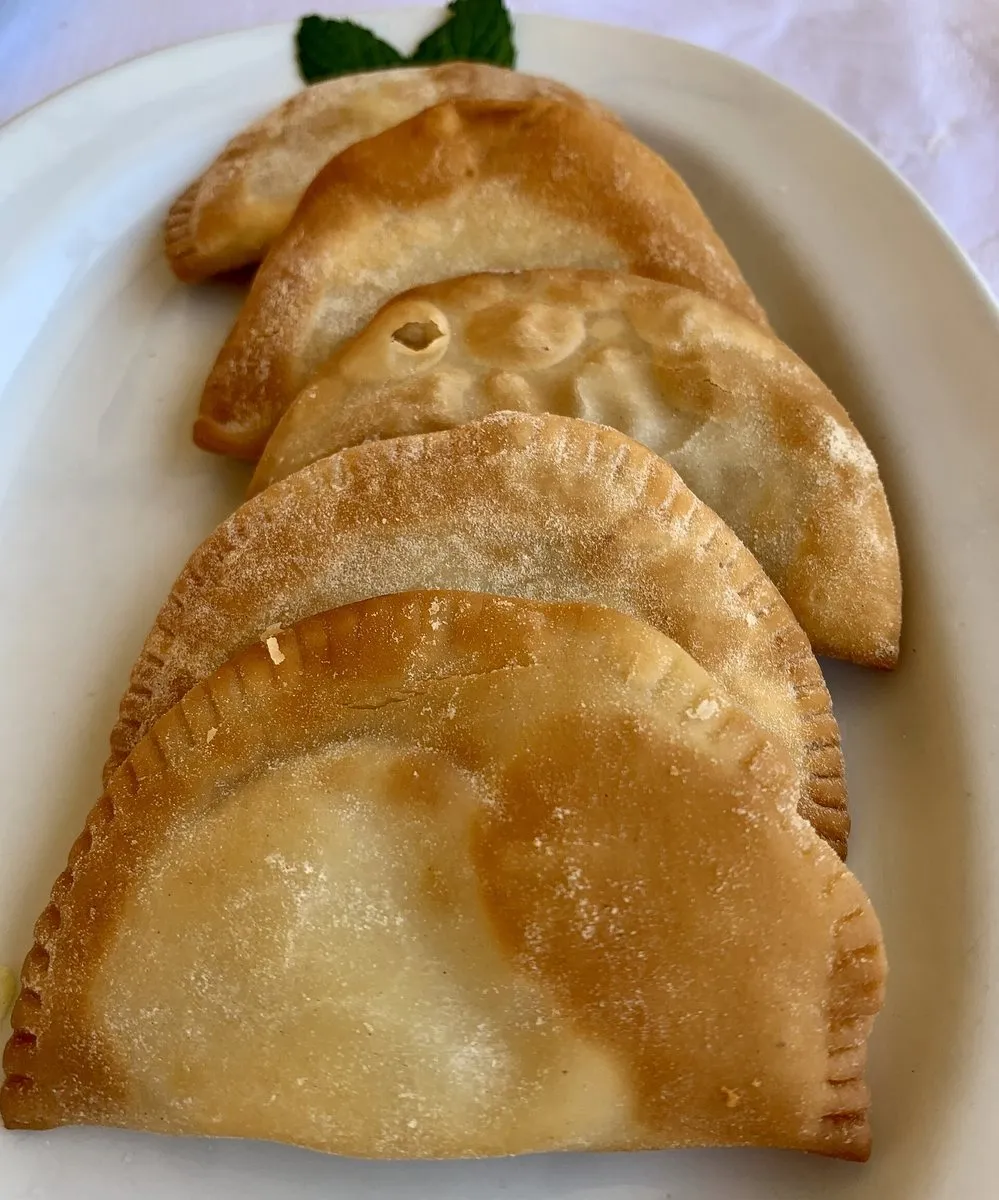
Kalitsounia are small pies, and they come in two families. The Region’s recipe from Chania is a savoury greens pie with spinach and spearmint, fried or baked; across the island you will also find cheese versions, some sweetened with honey. Stamnagathi, spiny chicory, is the wild green to order boiled with oil and lemon, and snails — the Region calls them “a very particular trademark Cretan delicacy” — are cooked as boubouristi, boiled and then fried, or stewed with wheat, courgette and potato.
Mains
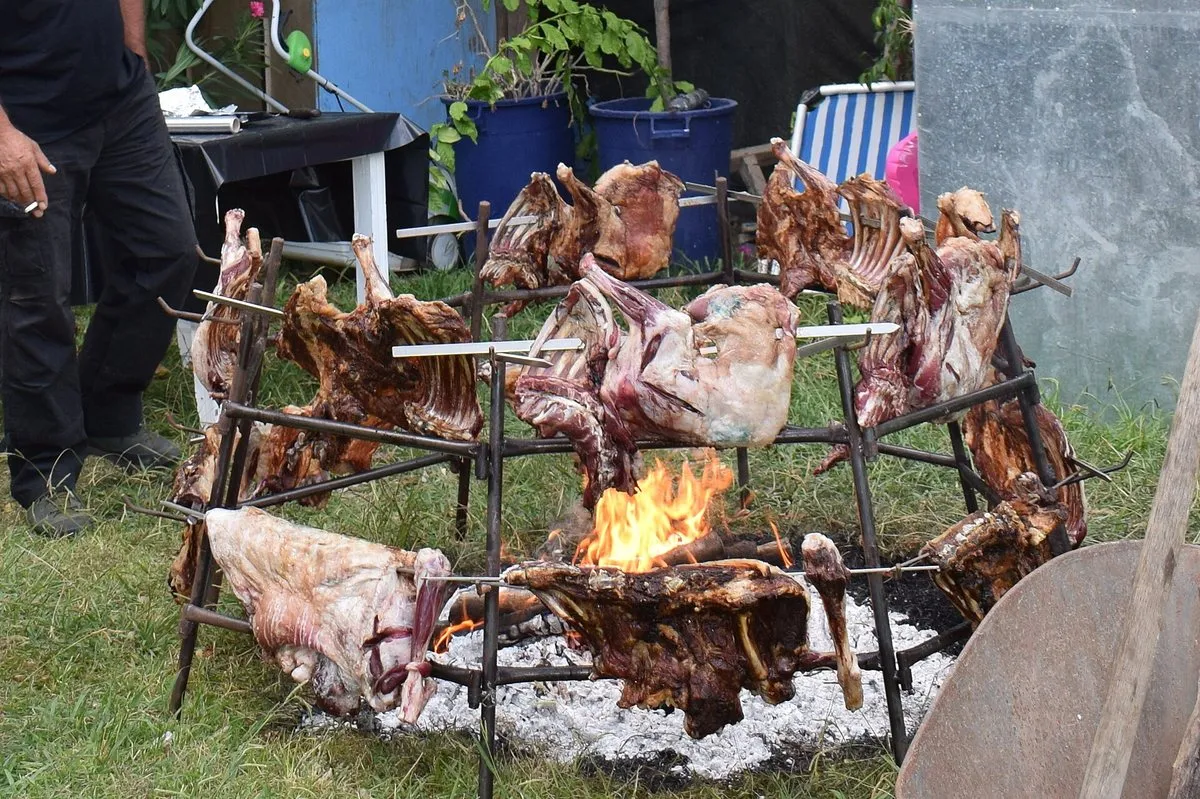
Antikristo is the shepherds’ roast of the mountains: lamb or goat cut into large pieces on wooden skewers and planted upright around a fire, facing it rather than above it, so the meat cooks slowly in the radiant heat. It is a feast dish and not always on a menu — ask. Gamopilafo, the “wedding pilaf”, is rice cooked in lamb or goat broth and finished with lemon and butter, traditionally at weddings and christenings. The butter that gives it its depth is often stakovoutyro, made by heating the cream of the milk; the rich paste left behind is staka, a dish in its own right.
Apaki is pork cured and smoked over herbs, usually served in slices or fried. From Chania comes boureki, layers of potato, courgette, mizithra cheese and mint baked into a pie, and from Sfakia the Sfakian pie: dough filled with mizithra, fried in a pan without oil and covered in honey — dessert or breakfast, depending on who is asking.
Cheese, honey and raki
Three Cretan cheeses hold EU protected status: Graviera Kritis, the hard, nutty table cheese; Xynomyzithra Kritis, a soft, tangy cheese made from the whey of graviera; and Pichtogalo Chanion, a soft, sour cheese from Chania. Crete’s pine-and-thyme honey is protected too. Good olive oil ties the whole cuisine together.
The meal ends with tsikoudia, universally called raki: a clear spirit distilled from grape pomace in the autumn, protected as Tsikoudia of Crete and very often poured free with a plate of fruit. In winter it comes warmed with honey and spices as rakomelo. The rituals around it are in our raki and kafeneia guide.
Where to eat it
The dishes above are most honestly cooked in village tavernas and in the cities, less reliably on resort strips where menus are built for everyone. Our guides to mountain-village tavernas, Cretan breakfast and bakeries and ordering in a fish taverna cover the how; this one covers the what.
The honest downside
Several of the best dishes are seasonal or special-occasion food — antikristo, gamopilafo and the wild greens especially — so a menu that offers everything all year should make you curious rather than grateful. Resort “Cretan” menus are often generic Greek with a dakos on top, and the rich, oily, cheesy side of the cuisine surprises people who expected the textbook Mediterranean diet.
Worth it if: you want to eat what Cretans eat rather than what a tourist menu assumes you want. Skip it if: you need every dish explained in advance and served the same way twice — Cretan cooking changes from village to village.
Photos on this page: dakos and kalitsounia by Benoît Prieur (CC0) and antikristo by Wagner67 (CC BY-SA 4.0), via Wikimedia Commons, resized for the web. Dish descriptions come from the Region of Crete’s recipe pages and the Municipality of Malevizi; protected-product status from the EU registration regulations and the UK register of protected names; import rules from GOV.UK; all checked for the date shown at the top of this guide. No restaurant, producer or brand is named or recommended. Nobody pays to be featured in a guide — no business, no sponsor, no paid mention, ever. Adverts, where they appear, are labelled as adverts.
What is the most typical Cretan dish?
Dakos is the one every visitor meets first: a hard barley rusk softened with grated tomato and olive oil. For a fuller picture of Cretan cooking, order snails, antikristo lamb, Sfakian pie with honey and a plate of wild greens such as stamnagathi.
What is dakos made of?
A barley rusk moistened with water, topped with grated tomato and olive oil. Most tavernas crumble soft white cheese on top; the Region of Crete's own published recipe uses olives, fennel and lemon instead, which is a reminder that there is no single correct version.
What is antikristo?
A shepherds' method of roasting lamb or goat: the meat is cut into large pieces on wooden skewers and set upright around a fire, facing it rather than above it, so it cooks slowly in the radiant heat. The Region of Crete describes each side cooking for around 45 minutes.
Which Cretan cheeses are protected?
Graviera Kritis, Xynomyzithra Kritis and Pichtogalo Chanion all hold EU Protected Designation of Origin status, registered in 1996. Graviera is the hard, nutty table cheese; xynomyzithra is a soft, tangy whey cheese; pichtogalo is a soft, sour cheese from Chania.
What is raki in Crete?
Tsikoudia, usually called raki, is a clear spirit distilled from grape pomace after the wine harvest, protected as Tsikoudia of Crete. It is poured free at the end of many meals; rakomelo is raki warmed with honey and spices, drunk mainly in winter.
Can you take Cretan cheese home to the UK?
No. UK government rules do not allow travellers to bring cheese, other dairy products or pork products from the EU into Great Britain. Honey from the EU is allowed. Travellers to other countries should check their own customs rules.
One email a month — only when something on this island actually changes. No spam, no partners, one-click unsubscribe. Read past issues before you decide.