Falassarna: The Honest Guide to the Big Easy Beach of the West
A vast golden bay with proper waves, famous sunsets and none of the Balos logistics. Which section to pick, when the wind helps.
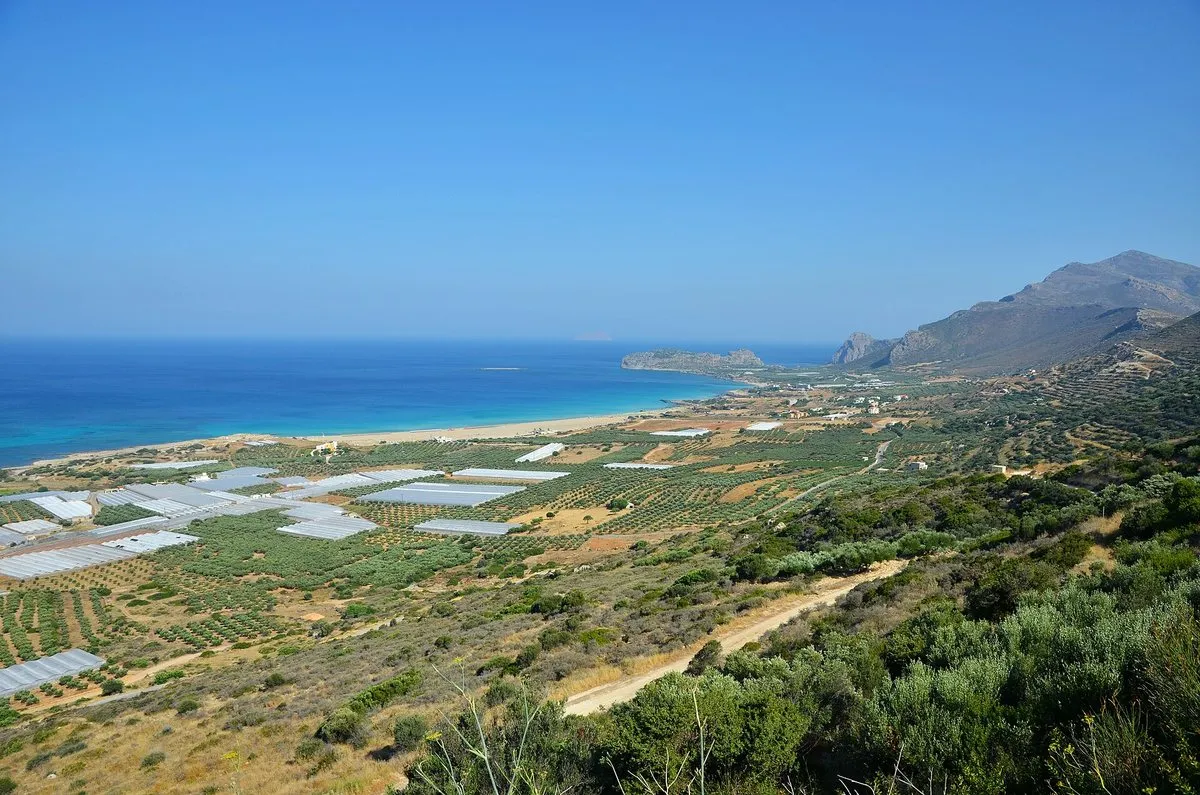
Falassarna is the sensible choice among the spectacular beaches: a kilometre-plus of pale gold sand facing due west, backed by greenhouses and vineyards, reached by ordinary tarmac. No boat, no goat path, no gate. The trade is that it is a real open-sea beach — waves that mean it, and afternoon wind on meltemi days — rather than a swimming-pool lagoon.
The honest facts
- Getting there
- 55–60 minutes from Chania on normal roads; parking areas behind the main sections, free or cheap.
- The layout
- several coves in one bay. Pachia Ammos, the big central stretch, has the organised strip; the north and south ends go wilder fast.
- Sunbeds
- roughly €8–15 the set on the organised part, with a couple of seasonal beach bars; walk five minutes and it is towels-on-sand territory.
- The sea
- gorgeous, clear and lively — on windy afternoons there are actual breakers, which delights some children and cancels others.
- Sunset
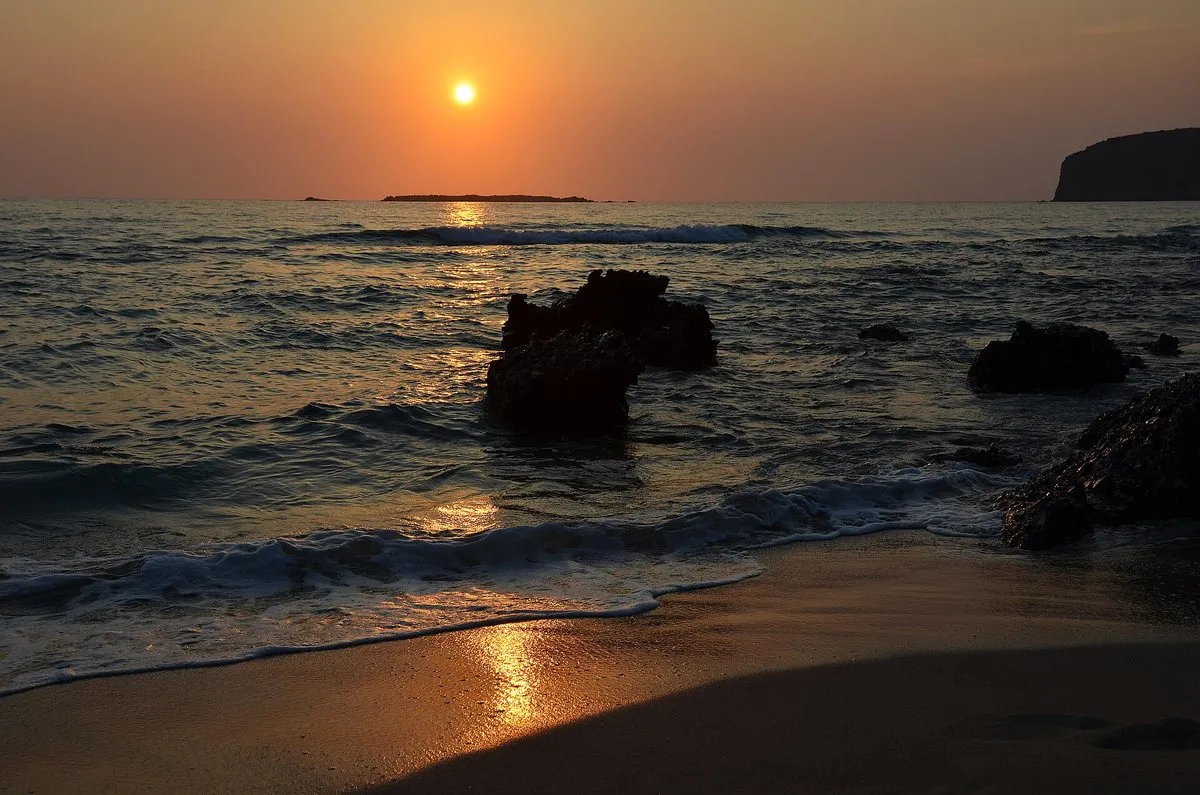
- the west-facing thing is real. People drive out just for the last hour.
Which section is yours
Families and easy days: the central organised zone, mornings, when the water is calmest. Space and quiet: keep walking north past the last umbrellas, where low dunes take over. The far south, below the ancient Falassarna ruins, is the emptiest and the least serviced — bring everything.
South of here the coast road climbs into the emptiest corridor in Crete — Sfinari and the far west coast.
The sunset, and why people plan around it
Falassarna faces due west with nothing between it and the horizon, which makes it one of the two or three genuinely reliable sunset beaches in Crete. In July and August the last hour brings a second wave of arrivals — people who spent the day elsewhere and drove out specifically for it.
That has practical consequences. The car parks thin around six and refill by eight; the tavernas behind the main section take bookings for the terrace tables; and the drive back to Chania is fifty minutes in the dark on a road with sections that deserve attention.
If you are staying in Kissamos rather than Chania, that last problem disappears, which is most of the argument for basing west.
Getting there and parking
About an hour from Chania, mostly good road, with the final descent to the beach signed off the Platanos junction. The road down is paved and steep in places but nothing demanding.
There are several parking areas serving different sections, and they are not equivalent: the main one behind Pachia Ammos fills first and is closest to the sunbeds and tavernas, while the smaller northern lots put you nearer the quieter sand and the ancient harbour. In August the main lot is full by eleven and the overflow is roadside.
Free stretches exist between the organised sections — they are not signposted, and the way to find them is to walk two minutes beyond where the sunbed rows stop.
The ruins nobody visits
At the north end sit the remains of a Hellenistic harbour town, complete with a carved stone throne, unfenced and unbothered. Ten curious minutes, zero queue, and a reminder that this coast has been prime real estate for over two thousand years.
Wind, honestly
Falassarna faces the open west, so the meltemi arrives side-on: mornings are usually kind, afternoons can blow sand at ankle height. Windy-day plan: swim early, long lunch inland, return for the sunset show when the light forgives everything.
The honest downside
The greenhouses behind the beach are agricultural Crete, not postcard Crete — keep your eyes seaward. And on big-wave days the swimming is genuinely for confident swimmers; watch the flags on the organised section.
Worth your time if: you want west-coast drama without expedition logistics — the best effort-to-wow ratio west of Chania. Skip it if: you need millpond water for toddlers; that is the Elafonisi lagoon, an hour further south.
Photos on this page: both by Pavel Špindler (CC BY 3.0), via Wikimedia Commons, resized for the web. Everything above was checked for the date shown at the top of this guide. Nobody pays to be featured in a guide — no business, no sponsor, no paid mention, ever. Adverts, where they appear, are labelled as adverts.
How do you get to Falassarna?
55–60 minutes from Chania on normal tarmac, with free or cheap parking behind the main sections. No boat, no goat path, no gate — the low-effort west-coast win.
Which part of Falassarna should you pick?
Families and easy days: the central organised zone (sunbeds roughly €8–15) in the morning, when the water is calmest. For space, keep walking north past the last umbrellas into the dunes; the far south below the ancient ruins is the emptiest and least serviced — bring everything.
Is Falassarna safe for swimming?
The water is gorgeous, clear and lively — but this is a real open-sea beach. On windy afternoons there are actual breakers, so big-wave days are for confident swimmers; watch the flags on the organised section. For millpond toddler water, that is the Elafonisi lagoon, an hour further south.
Is the Falassarna sunset worth it?
Yes — the beach faces due west and people drive out just for the last hour. The windy-day plan: swim early, long lunch inland, return for the sunset show when the light forgives everything.
One email a month — only when something on this island actually changes. No spam, no partners, one-click unsubscribe. Read past issues before you decide.