Elafonisi or Falassarna? The Honest Comparison of West Crete's Two Great Beaches
Elafonisi is the shallow pink-sand lagoon at the south-west tip, protected, car-free at the beach since 2023 and famous enough to fill; Falassarna is the long, open west-facing beach with the big sunsets and the afternoon waves. Which one suits your day, your children and the wind.
Elafonisi and Falassarna are the two beaches most people mean when they talk about the west of Crete, and they are opposites. Elafonisi, at the far south-west corner, is a shallow lagoon of warm, turquoise channels around a protected islet, with patches of pink sand — magical in the morning, crowded by midday in summer, and now reached on foot from a car park since cars were banned from the beach. Falassarna, on the west coast beyond Kissamos, is about three kilometres of open beach facing the sunset, with room for everyone and waves when the north-westerly blows. Our short answer: Elafonisi with small children or on a windy day; Falassarna for space, proper swimming and the evening. Distances, the car ban, buses and protection status come from the Municipality of Kissamos, the KTEL bus operator, the official 2026 Blue Flag list and news reports, checked in September 2026; the judgements are our own, from repeated visits to both.
The honest facts
- Elafonisi
- about 73–75 km from Chania, 1.5–2 hours by car; a Natura 2000 site (GR4340002).
- The islet
- up to 1.5 km long and 500 m wide, about 150 m offshore across a shallow channel (Municipality of Kissamos).
- Car ban
- since April 2023 cars stay out of the protected zone; parking about €5, then a walk of roughly 500–700 m.
- Visitor cap
- none in 2026; an online booking system for Balos, Elafonisi and Falassarna is planned for 2027.
- Falassarna
- about 15 km west of Kissamos, roughly an hour from Chania; about 3 km of coast; a Natura 2000 site (GR4340001).
- Wind
- Falassarna faces west and north-westerlies raise big waves; mornings are usually calmer.
- Blue Flag 2026
- neither.
- Buses (verify seasonally)
- Chania–Elafonisi 09:00, back 16:00; Falassarna via Kasteli, several a day.
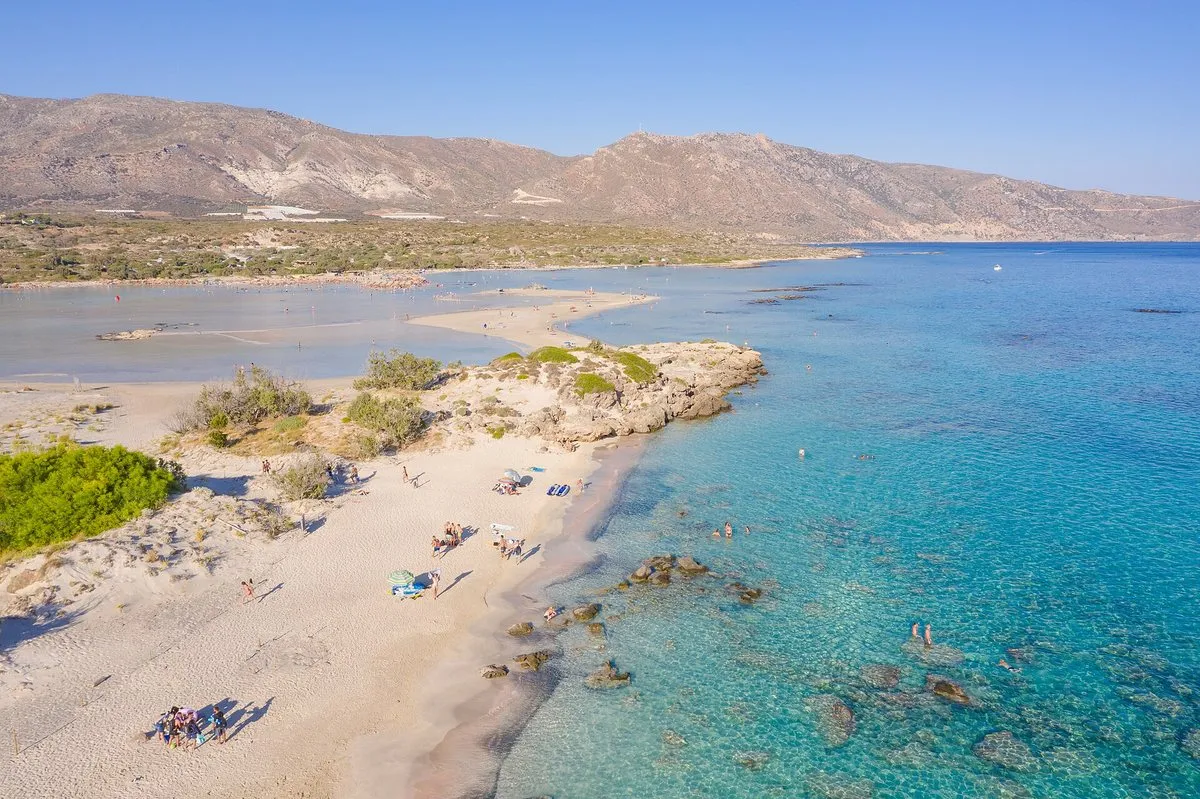
Elafonisi: the lagoon
Elafonisi is two places joined by water: a mainland beach and an islet, separated by a shallow channel you can usually wade. The water between them is warm, clear and in places only knee-deep, which is why families love it. The pink colour comes from tiny pigmented organisms washed ashore from the seagrass meadows; it shows at the water’s edge and in patches rather than everywhere.
The islet also has a darker history: in April 1824, during the Greek War of Independence, several hundred people who had taken refuge there were killed.
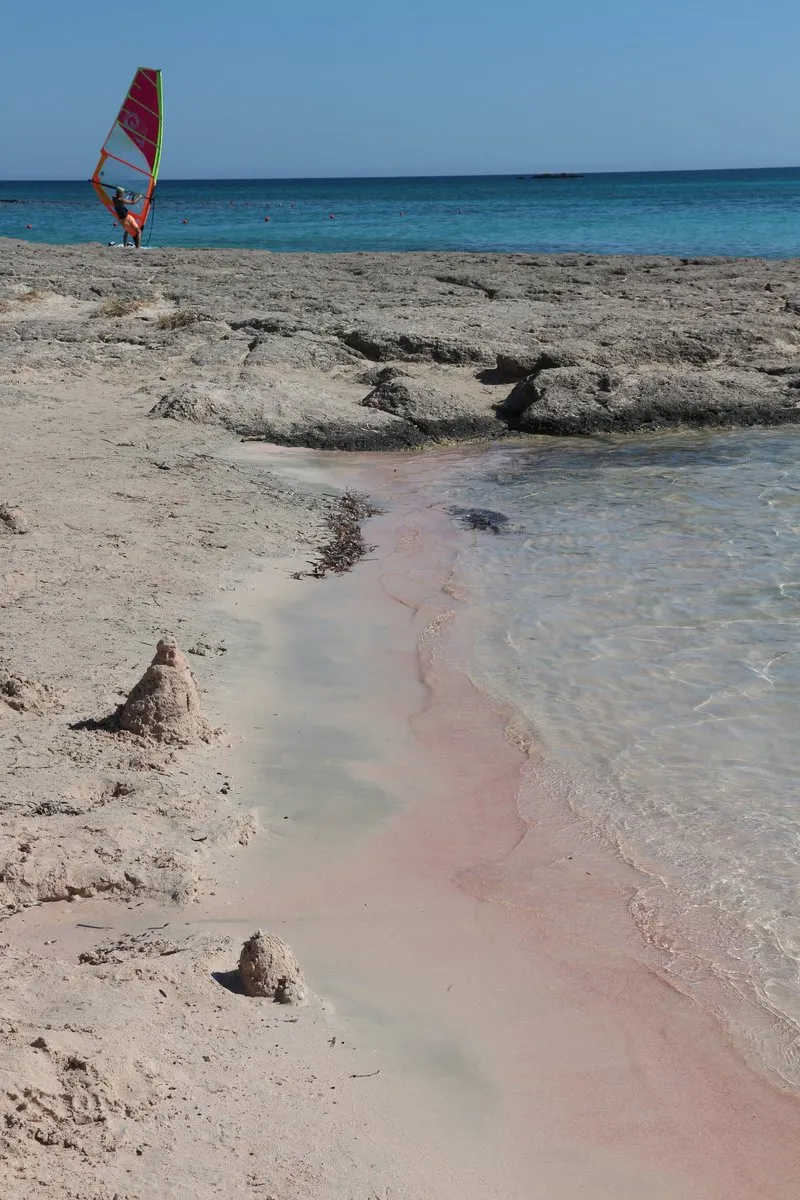
Since April 2023 cars have been kept out of the protected zone; you park a few hundred metres away — about €5 — and walk in. There is no visitor cap in 2026, but the number of sunbeds and umbrellas has been cut to about 200, and the municipality plans a booking system from 2027. In practice, Elafonisi in July and August is at its best before about ten in the morning.
Falassarna: the open beach
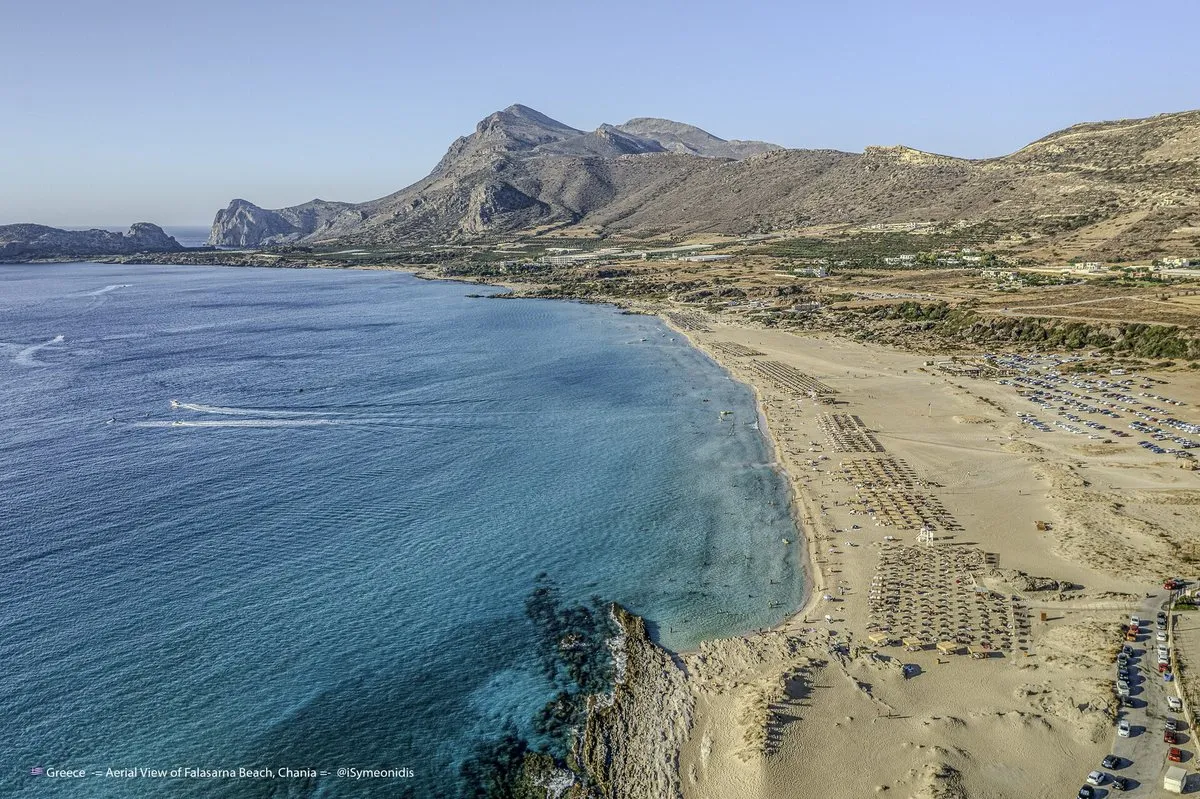
Falassarna is a different scale: roughly three kilometres of coast on the west side of the Gramvousa peninsula, with the main beach about a kilometre long and a quieter northern beach beyond. It faces west, so the sun sets straight into the sea — the main reason many people come — and the same exposure means the north-westerly wind raises real waves on many afternoons. Go in the morning for calm water; stay for the evening. There are sunbeds and a large car park, and the beach is big enough to absorb a crowd.
At the northern end lie the remains of ancient Phalasarna, a Hellenistic city with an enclosed harbour that now sits well above and away from the sea, lifted by the great earthquake of AD 365. The Romans destroyed the city in the first century BC.
How to choose
Take Elafonisi if you have small children, want warm shallow water or the wind is up on the west coast, and get there early. Take Falassarna if you want to swim properly, need space, or want the sunset — and if the forecast shows strong north-westerlies, swap them. Each has its own full guide: Elafonisi and Falassarna. Balos is the third contender, covered in Balos or Elafonisi; the drive to Elafonisi passes the Topolia gorge, and Falassarna is an easy add-on to Kissamos.
The honest downside
Elafonisi is a long drive, crowded in high season, and the car ban adds a walk each way with everything you carry. Falassarna’s afternoon waves can make it unsuitable for young children, and its facilities are spread out along a long beach. Neither is a secret, and neither has a Blue Flag.
Pick Elafonisi if: you have small children, want shallow warm water, and can arrive early in the morning. Pick Falassarna if: you want space, open-sea swimming and the sunset, on a day without strong north-westerlies. Skip both if: you want a quiet beach in August — the west has smaller coves that suit that far better.
Photos on this page: Elafonisi from the islet by dronepicr (CC BY 2.0), the pink sand by Przemek Pietrak (CC BY-SA 3.0) and Falassarna from above by Isymeoni (CC BY-SA 4.0), via Wikimedia Commons, resized for the web. The judgements are our own, from repeated visits to both beaches; distances, the car ban, parking, the 2027 booking plan, buses, protection status and the 2026 Blue Flag list were checked against the Municipality of Kissamos, the KTEL bus operator, Blue Flag Greece and news reports for the date shown at the top of this guide. Nobody pays to be featured in a guide — no business, no sponsor, no paid mention, ever. Adverts, where they appear, are labelled as adverts.
-
Elafonisi — The far south-west corner, about 73–75 km from Chania; the monastery of Chrysoskalitissa is on the way.
-
Falassarna — The west coast, about 15 km west of Kissamos.
Tap a name to open it in your map app. These are options, not an order — pick by the day you have.
Is Elafonisi or Falassarna better?
Elafonisi is better for shallow, warm, turquoise water and small children: it is a lagoon of knee-deep channels and pink-tinged sand around a protected islet. Falassarna is better for space, swimming in open sea and sunsets: about 3 km of beach facing west. On a windy day Falassarna can have big waves, while Elafonisi's lagoon usually stays calmer.
How far are Elafonisi and Falassarna from Chania?
Elafonisi is about 73–75 km from Chania, roughly 1.5–2 hours by car via the Topolia gorge road. Falassarna is about 15 km west of Kissamos, and roughly an hour from Chania by car. Both can be reached by KTEL buses from Chania, in season.
Can you drive to Elafonisi beach?
Not to the beach itself any more. Since April 2023 cars have been banned from the protected zone, and visitors park a few hundred metres away and walk; sources put the walk at roughly 500–700 metres and the parking at about €5 per car. The area is a Natura 2000 site.
Is there a visitor limit at Elafonisi in 2026?
No. There is no visitor cap or booking system at Elafonisi in 2026. The Municipality of Kissamos has announced plans for an online booking system for Balos, Elafonisi and Falassarna from 2027, with capacity set by carrying-capacity studies. Sunbed and umbrella numbers at Elafonisi have already been cut sharply, to about 200.
Why is the sand at Elafonisi pink?
The pink colour comes from the shells of tiny pigmented marine organisms that live among the seagrass and are washed onto the beach, mixed with the white sand. It is strongest at the water's edge and in patches, not across the whole beach, and signs on the beach ask visitors not to take any away.
One email a month — only when something on this island actually changes. No spam, no partners, one-click unsubscribe. Read past issues before you decide.