Balos or Elafonisi? Choosing Between Crete's Two Famous Beaches
One free day in western Crete, two postcard beaches. Boat or dirt road, lagoon depth, kids, crowds and drive times — an honest side-by-side.
If you have one day in the far west of Crete and you are choosing between the two famous beaches, here is the whole answer in two sentences: Elafonisi is the safer day, and Balos is the better photo. Everything below is about working out which of those sentences describes you. Both beaches are real, both are turquoise over white sand, and both fill solid between eleven and four in season. Where they differ is everything around the swim — how you get there, what your legs have to do on arrival, and how much the day depends on your timing.
The honest facts
- Getting there
- Elafonisi is roughly 75km of paved road from Chania, 1h30–1h45. Balos is a day boat from Kissamos (roughly €30–40, check current lines) or about 8km of washboard gravel plus a steep 20–30 minute path down.
- The water
- both have a warm, shallow lagoon. Elafonisi’s runs knee-to-waist deep for a very long way, the safest small-kid swimming in the west; Balos’s is knee-deep and safe, with proper swimming off the outer beach.
- Effort on arrival
- Elafonisi is boardwalk to sand. Balos is 25 minutes down and 35 back up, with no shade.
- Sunbeds and shade
- Elafonisi has organised rows near the entrance at roughly €8–15 the set, and nothing beyond them. Balos is your umbrella or nothing, plus a seasonal canteen you should not rely on.
- The crowd window
- the same at both — before ten or after four is the version that looks like the photo.
- From the Heraklion coast
- both are a weekend move, not a day trip.
The case for Elafonisi
The drive is the first argument. It is tarmac the whole way, through the Topolia gorge and the chestnut villages, and if you come back along the coast road through Sfinari and Kambos — slower, higher, the best west-coast views on the island, daylight only — the driving becomes the better half of the day rather than the price of it. Pairing it with a stop at Elos and the chestnut villages for a late lunch is the sensible version.
On arrival there is nothing to climb. Parking is a paid field near the entrance; by eleven in July it is full and the overflow runs back along the approach road, so either arrive early or accept a longer walk back in the afternoon heat. Then it is boardwalk, sand, lagoon.
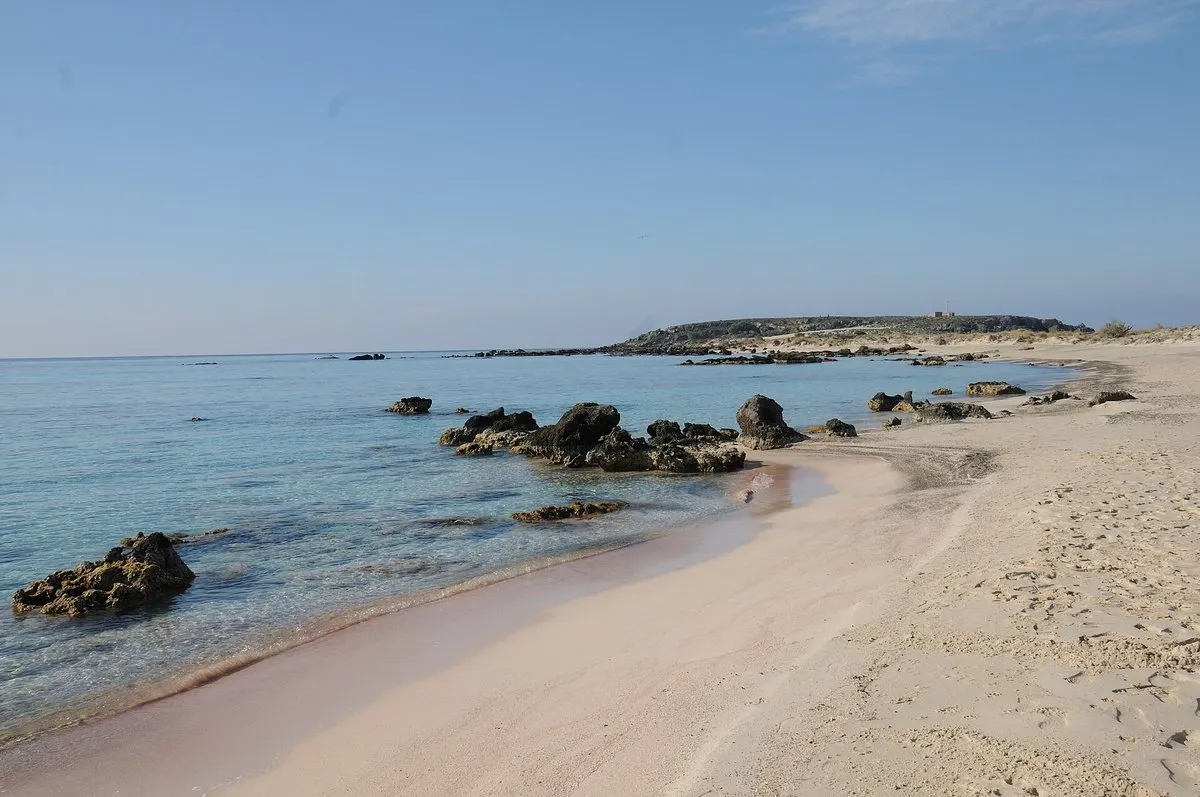
The pink sand is real and not what the photographs suggest: streaks at the waterline, strongest away from the main entry, and protected — taking it home is illegal, fined, and the reason the colour is thinner every decade. The lagoon is the point. Knee-to-waist deep for a long way, warmer than the open sea, and the reason the beach fills with families rather than boat parties. Adults who want to swim cross to the seaward side of the islet, where it shelves normally.
The crowd has an escape valve here that Balos lacks. Ninety percent of visitors stop within two hundred metres of the boardwalk. Cross the lagoon, keep walking along the islet, and the density falls off a cliff while the colours, if anything, improve.
The case for Balos
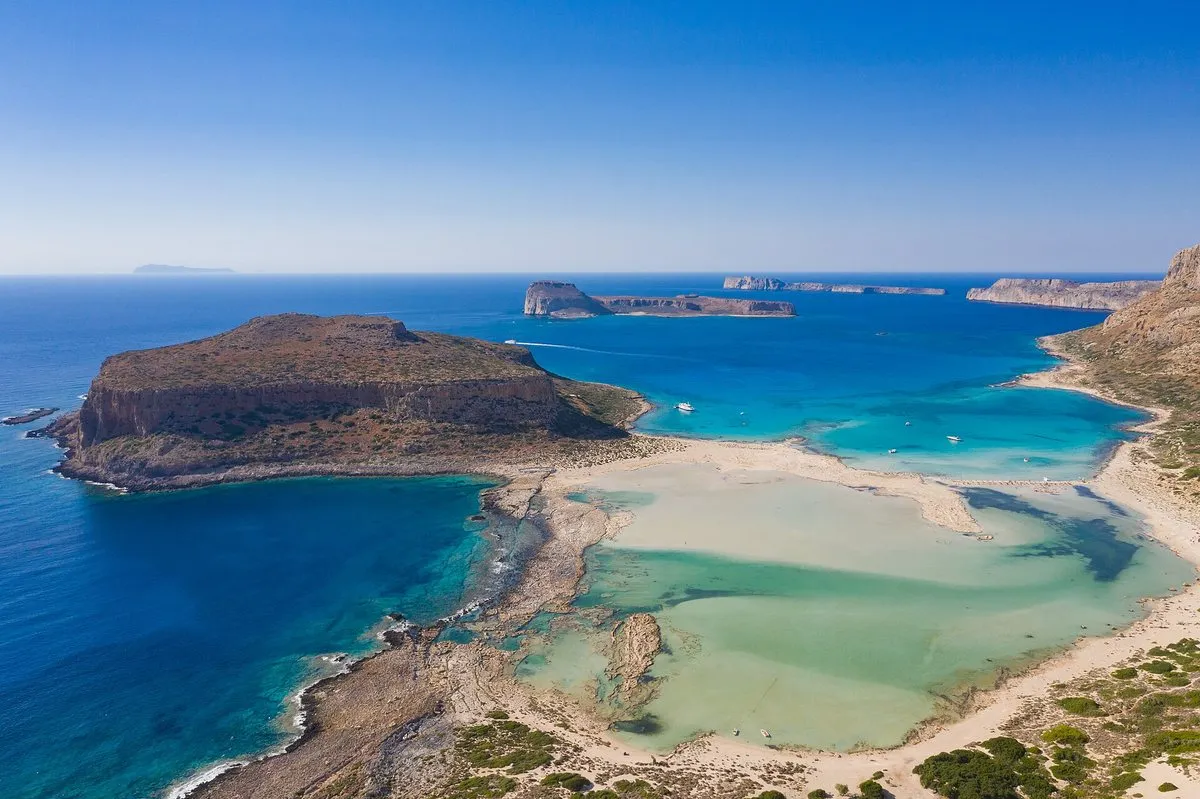
Balos is the one on the postcards — a white sandbar between lagoon and open sea with Gramvousa islet floating behind — and the postcard is honest. What it leaves out is that there are two imperfect ways in, and your whole day is decided by which one you choose.
The boat from Kissamos means zero logistics and a stop at Gramvousa, where a Venetian fortress sits on top of a steep 20-minute climb with the best view on this coast and a photogenic wreck in the bay below. That stop is the strongest argument for the boat. The weakest is timing: the fleet lands at Balos together around midday and leaves together, so you see the lagoon at its most crowded and in its flattest light.
The car means the dirt road: about 8km of washboard gravel past Kaliviani, done daily by ordinary hire cars, not technically difficult, and almost certainly excluded by your rental contract, which means any damage is on you. Drive it at 20km/h and allow 25–30 minutes. There is a small fee at the gate, a parking plateau, and then the path: 25 minutes down in trainers, genuinely pleasant, the lagoon opening below you the whole way. The climb back is 30–40 minutes with no shade, and in August it is done in full afternoon sun. Carry more water than feels reasonable.
Do the car version early — on the sand before ten — or late, arriving after four when the fleet reverses out, and Balos is a top-three Greek beach moment. Arrive at noon with one small bottle of water and you will meet a beautiful car park of humans.
Pick by who you are
- Small children: Elafonisi, without a debate.
- You want the photo and can leave Chania before eight: Balos by car.
- You hate driving and can live with the midday crowd: the Balos boat, for Gramvousa as much as the lagoon.
- Your hire contract worries you, or you simply refuse dirt roads: Elafonisi — or Falassarna, twenty minutes south of the Balos turn-off, which gives you eighty percent of the wow for five percent of the logistics.
- A strong north wind is forecast: Balos, oddly. On meltemi days its outer water chops up while the lagoon stays glassy; Elafonisi is exposed and the sand travels.
- You are choosing months, not beaches: late May, June and September suit both. Early October can be quietly perfect at Elafonisi.
Can you do both?
Not well, and not in one day. They are well over an hour of mountain road apart on either route, Balos alone costs you the walk down and up, and both are at their best in the same narrow morning and late-afternoon windows. The honest way to do both is to sleep out west — two nights in Kissamos, or one of the handful of simple rooms around Elafonisi and the Chrysoskalitissa monastery, which book out early — and take a beach a day. If you are basing yourself in Chania, pick one and do it properly.
The honest downside
Both beaches are victims of their own photographs. In high season the density between eleven and four is at odds with what you drove out there to feel, and at either one you have to walk for the postcard — across the lagoon at Elafonisi, down the hillside at Balos. Neither is close to anywhere east of Chania, and nobody should attempt either from the Heraklion coast and back in a day.
Worth your time if: you are based in western Crete and can control your arrival hour. Then Elafonisi for the family day, Balos for the day you will talk about. Skip both if: you have one free day around Hersonissos–Stalis. Voulisma and the east give you the same turquoise at a tenth of the driving.
Photos on this page: Balos by dronepicr (CC BY 2.0) and Elafonisi by Josep M. Gracia (CC BY-SA 4.0), via Wikimedia Commons, resized for the web. Every figure here is the same one in our separate Elafonisi and Balos guides, both last checked on the ground in May 2026; this page only puts them side by side. Nobody pays to be featured.
-
West Crete — Balos and Elafonisi are well over an hour of mountain road apart. Falassarna is the low-logistics fallback for both.
1 Balos lagoon 2 Elafonisi 3 Falassarna
Tap a name to open it in your map app. These are options, not an order — pick by the day you have.
Which is better for families, Balos or Elafonisi?
Elafonisi. Its lagoon runs knee-to-waist deep for a very long way and stays several degrees warmer than the open sea — the safest small-kid swimming in western Crete — and you walk from the boardwalk straight onto sand. Balos also has a warm, shallow lagoon, but reaching it means a steep 20–30 minute path down and a 30–40 minute climb back in full sun, or a boat that lands with everyone else.
Is Balos or Elafonisi easier to get to?
Elafonisi, clearly: roughly 75km of paved road from Chania through the Topolia gorge, 1h30–1h45. Balos is either a day boat from Kissamos (roughly €30–40, check current lines) or about 8km of washboard gravel that most hire contracts exclude, plus the walk down.
Can you do Balos and Elafonisi in one day?
Not well. They sit well over an hour of mountain road apart, Balos alone costs you the walk down and up, and both are at their best before ten or after four. Do one properly, or sleep in Kissamos or near Elafonisi and take a beach a day.
Which is less crowded, Balos or Elafonisi?
In high season neither is quiet between eleven and four. The difference is shape: at Balos the boats land together around midday and leave together, so early or late by car is the calm version; at Elafonisi ninety percent of people stop within two hundred metres of the boardwalk, so crossing the lagoon and walking along the islet loses most of the crowd at any hour.
Do you need a 4x4 to drive to Balos?
No. The track past Kaliviani is about 8km of washboard gravel that ordinary hire cars do daily at 20km/h or so. The catch is paperwork, not terrain: most Cretan hire agreements exclude unsurfaced roads, so any damage is on you. Drive gently, and allow 25–30 minutes for the 8km.
Which one should I pick if I'm staying near Heraklion?
Neither, as a day trip — from the Heraklion coast both are a weekend move. With one free day in the east, Voulisma and the Istron coves give you turquoise at a tenth of the driving; if you are set on the far west, stay a night in Kissamos or Chania and choose by the rules in this guide.
One email a month — only when something on this island actually changes. No spam, no partners, one-click unsubscribe. Read past issues before you decide.