Georgioupoli & Lake Kournas: The Honest Guide
The eucalyptus river-town with the chapel on the breakwater, its long grey beach, and Crete's only freshwater lake in the hills behind.
Georgioupoli grew where a river meets the sea under old eucalyptus avenues, halfway between Rethymno and Chania — a low-rise resort town whose postcard is the tiny chapel of Agios Nikolaos perched at the end of a rock breakwater. Behind it in the hills lies Kournas, the island’s only natural freshwater lake, ringed by tavernas and paddled by rentable pedalos. Together they make the softest, greenest resort package in the west.
The honest facts
- The town
- a proper square under the trees, river banks with duck-level tavernas, and enough shops and services for a full carless week; the vibe is family-and-couples calm.
- The beach
- long — kilometres east toward Kavros — grey-gold sand, organised stretches (~€8–12 the set), and a real caveat: currents and waves on windy days are notorious here; swim the lifeguarded sections and honour the flags.
- The chapel walk
- the breakwater to Agios Nikolaos is a rite — uneven rocks, mild adventure, obligatory photo; sandals over flip-flops.
- Lake Kournas
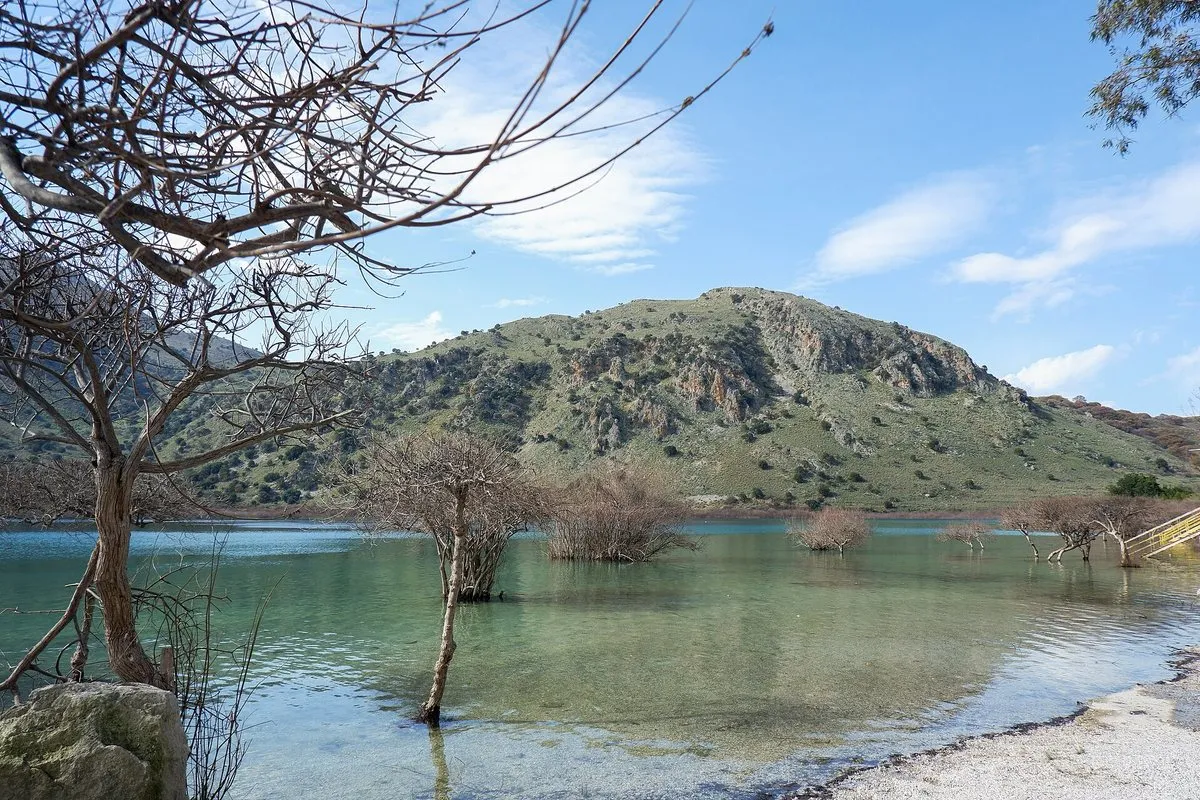
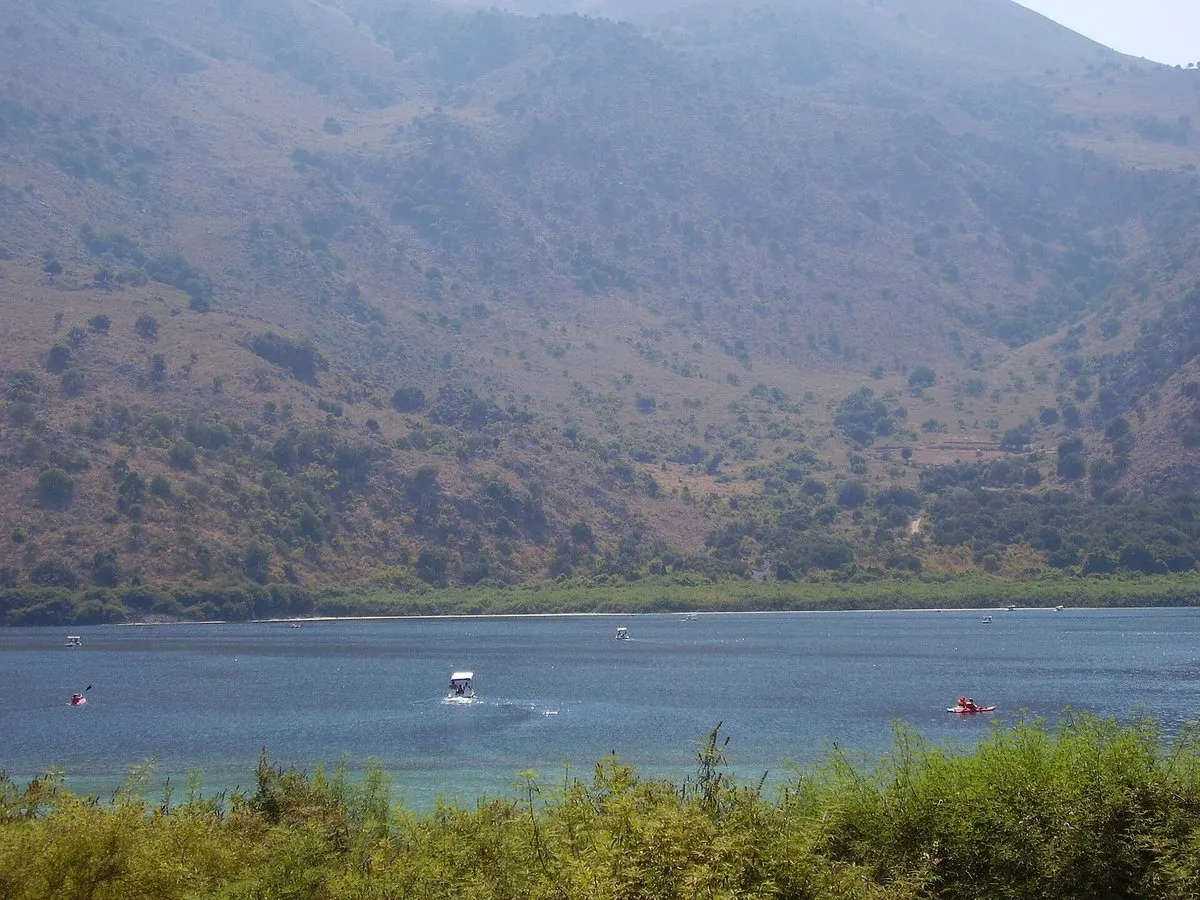
- 10 minutes up — a genuine lake mood with mountains behind, pedalos (~€10–15/hour, verify), terrapins at the shallows, taverna row above. Loveliest early or at dusk; busy at coach-noon.
- Position
- Chania and Rethymno each ~30–35 minutes; Argyroupoli’s springs 20.
The lake, and what it is actually like
Kournas is the only natural freshwater lake in Crete, sitting in a bowl of hills four kilometres inland. It changes colour through the season — deep green in spring when it is full, turquoise over the pale shallows in high summer, and noticeably smaller by September.
The pedal boats are the thing everyone does, and they are fine: an hour on the water, around €10–15 for a boat rather than per person, and the far side is quiet because most people turn back early. Terrapins live along the shallow edges and will approach a stationary boat.
Swimming is allowed and the water is cold — genuinely cold, spring-fed, and a shock after the sea. The shallow end warms up; twenty metres out it does not.
The car park fills by eleven in July and August, and the tavernas along the shore are priced for the view rather than the food. Going at nine or after six is a different lake.
The beach, honestly
Georgioupoli’s beach runs for kilometres east from the river mouth and the sand is genuinely good. Two things temper it.
The current. This is an open north-facing coast with a shelf that drops away, and there are drownings here most seasons. Swim between the flags where they exist, and take a red flag literally — a lot of people on this beach have come from the calm of the lake that morning and misjudge the sea.
The river mouth brings cold fresh water into the sea just west of the chapel, which makes that stretch several degrees colder and the sand darker.
The chapel of Agios Nikolaos on its causeway is the photograph everyone takes. Walking out to it is fine in calm weather and a genuinely bad idea in swell.
Who bases here
Families wanting flat, walkable, green, and buffered from nightlife; older travellers; and mixed groups splitting days between two cities. The river-and-lake softness is the differentiator no beach-only resort offers.
The honest downside
The sea here demands respect on wavy days — this is the guide’s bluntest warning; the beach itself is functional rather than gorgeous; and the town’s gentleness reads as sleepy to anyone under thirty by design.
Worth your time if: green calm plus two-city access is your formula. Skip it if: you want dramatic water or evening voltage — both live elsewhere.
Photos on this page by C messier (CC BY-SA 4.0), via Wikimedia Commons, resized for the web. Nobody pays to be featured on this site.
The quick scores
- Crowds
- 3 out of 5family-and-couples calm, not empty
- Nightlife
- 2 out of 5square tavernas, then bed
- Organised beach
- 3 out of 5organised stretches, currents on wavy days
- Car needed
- 2 out of 5a full carless week is possible here
- Dinner on foot
- 4 out of 5a proper square and the river banks
- Prices
- 2 out of 5sunbeds EUR 8-12, town prices
More dots means more of the thing named, never “better”. What each level means. Scored August 2026 from the reporting on this page.
Is it safe to swim at Georgioupoli?
With care. Currents and waves on windy days are notorious on this stretch - this is the bluntest warning on the site. Swim the lifeguarded sections and honour the flags. On calm days it is straightforward.
What is Lake Kournas?
The only natural freshwater lake in Crete, ten minutes up in the hills behind Georgioupoli, with mountains behind it and a row of tavernas above. Pedalos run roughly EUR10-15 an hour, terrapins gather in the shallows, and it is loveliest early or at dusk - coach-noon is busy.
Is Georgioupoli good for families?
Very. It is flat, walkable, green and buffered from nightlife, with a proper square under eucalyptus trees and a river running through it. The sea caveat is the one thing to take seriously.
Where is Georgioupoli in relation to Chania and Rethymno?
Roughly 30 to 35 minutes from each, which is the main structural argument for basing here - you can split days between two cities without committing to either. Argyroupoli and its springs are 20 minutes away.
What is the chapel on the rocks at Georgioupoli?
Agios Nikolaos, perched at the end of a rock breakwater and the town postcard. Walking out to it is a local rite - uneven rocks, mild adventure, obligatory photograph. Wear sandals rather than flip-flops.
One email a month — only when something on this island actually changes. No spam, no partners, one-click unsubscribe. Read past issues before you decide.