Argyroupoli: The Honest Guide to the Village of Springs
Ancient Lappa, a hillside of waterfalls under plane trees, and tavernas built over running water.
Crete does not have many places where the defining feature is water, which is exactly why Argyroupoli works. A hillside below the village leaks springs in a dozen places, the water runs down through plane trees into stone channels, and somebody long ago had the sense to build tavernas directly over it. On an August afternoon when the coast is unbearable — and August afternoons here are — this is where you go.
The one-minute version. Roughly 25–30 minutes from Rethymno, 40–45 from Chania. Free to visit, free parking though not much of it. Lower village for the springs and shade, upper village for ancient Lappa. Two hours is about right. Avoid 13:00–15:00 in high season unless you enjoy watching coaches reverse. Water flow is strongest in spring.
The two halves
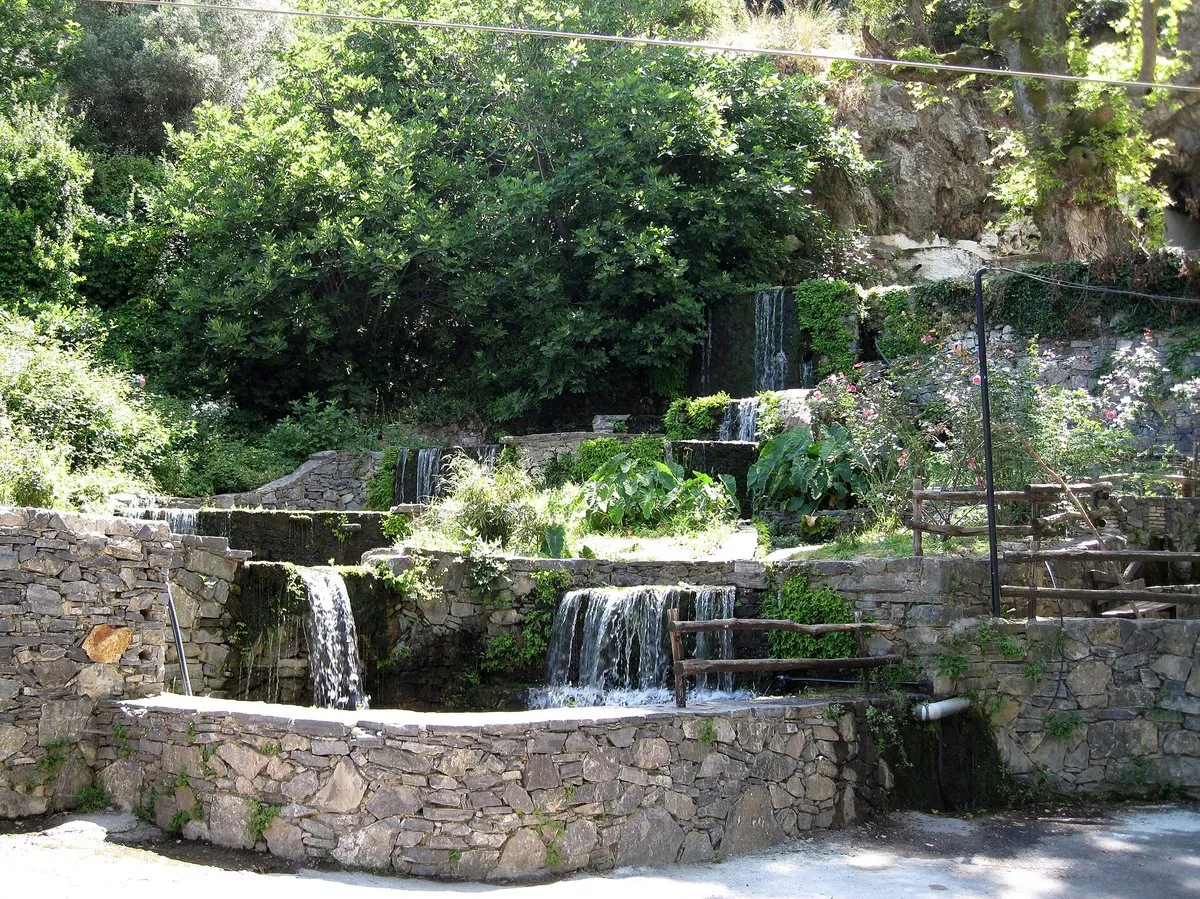
Lower Argyroupoli is the springs. Water emerges from the hillside, falls a few metres in a series of small cascades, and is channelled through moss and plane roots down to the tavernas. There are short paths, a chapel with water running under it, and a great deal of green in a landscape that is otherwise brown by July. It is not wild — it is landscaped, walked-on and commercial — but the temperature drop when you step into the shade is real, and it is the only place I know on this coast where you can hear running water in August.
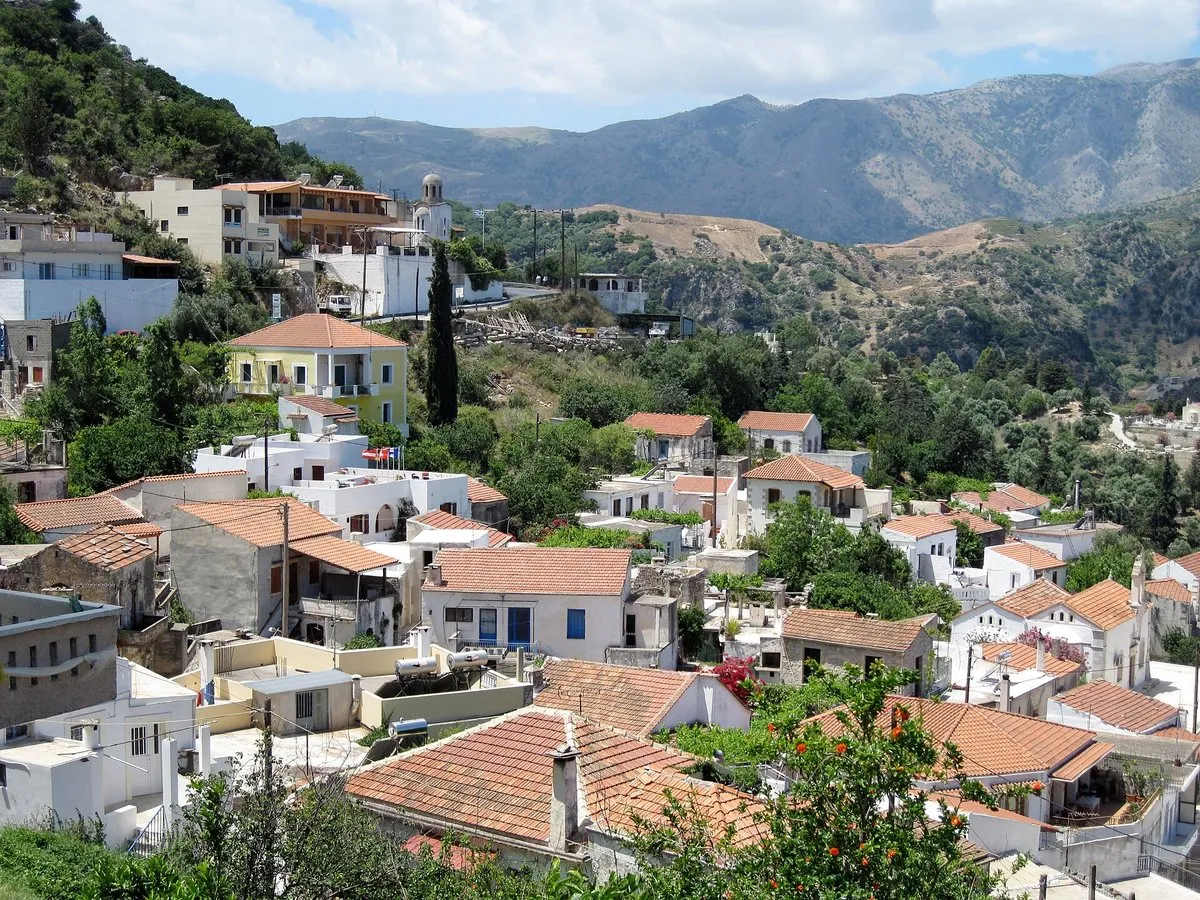
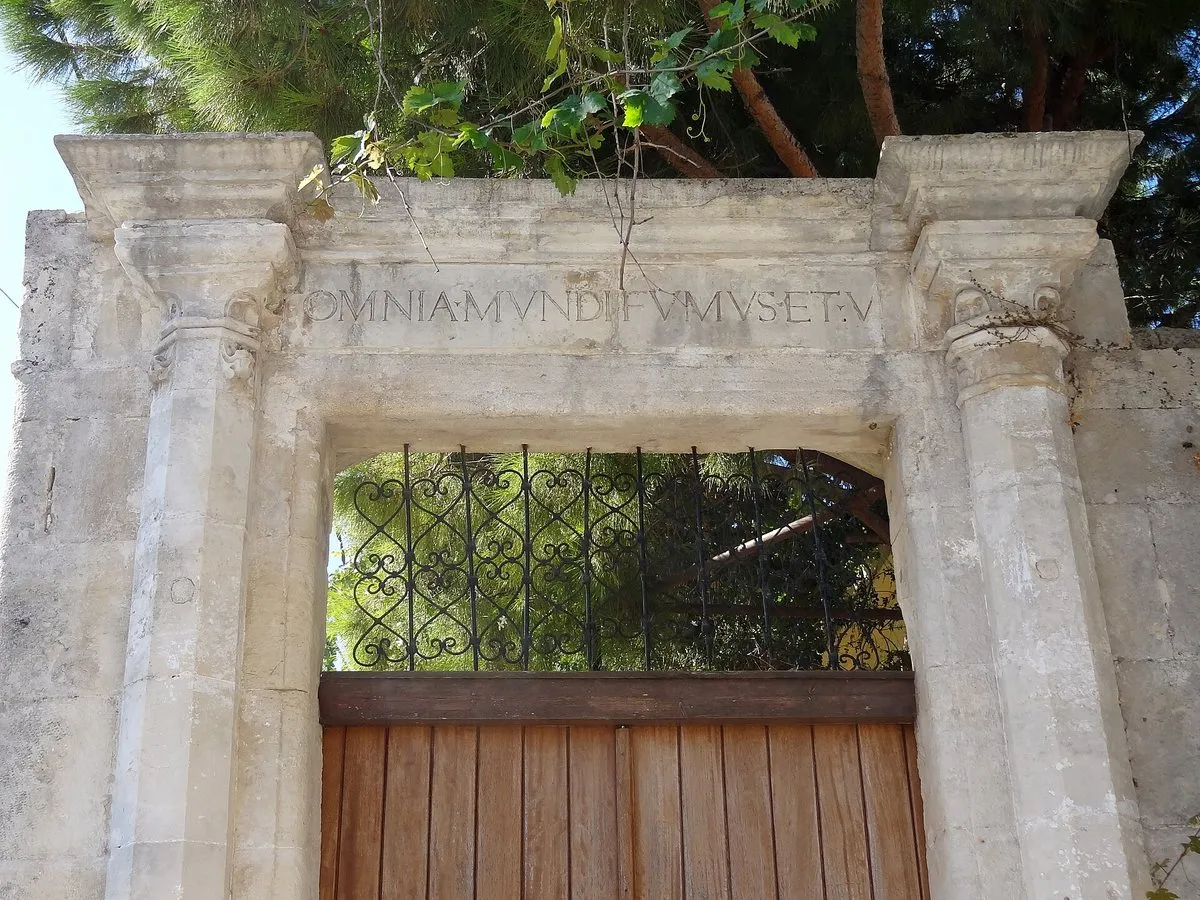
Upper Argyroupoli is the village proper, and it sits on top of ancient Lappa, a city that mattered enough for Octavian to rebuild it after the Roman civil wars. What survives is scattered rather than presented: a Roman mosaic under cover, a Venetian doorway with a Latin motto carved above it, an old olive press, and on the village edge a small necropolis of tombs cut into the rock. There are no ticket booths and very little signage, which is either charming or frustrating depending on your mood.
The honest downsides
It is not a secret. Every guide to western Crete lists it, and between one and three in July and August the taverna terraces are full and the narrow approach road becomes a slow negotiation with coaches. Come before noon or after five.
The tavernas are the business model. Nothing wrong with that — eating trout beside running water in the shade is a genuinely pleasant hour — but you are not stumbling on an undiscovered village. Prices sit slightly above what a comparable inland village charges, which is the shade tax.
The flow varies. In April and May the springs are loud and the whole hillside drips. By late August it is quieter and thinner. Still cool, still green, just less dramatic than the photographs you have seen.
The ancient city takes effort. If you want Lappa rather than lunch, you will be walking around the upper village looking for things without much help. Ask at a kafeneio; people are used to the question.
Fitting it into a day
Argyroupoli pairs naturally with the coast below it. Georgioupoli and Lake Kournas are fifteen minutes down the hill, and doing the lake in the morning and the springs in the heat of the afternoon is a better-ordered day than the reverse. The Apokoronas villages are twenty minutes west if you want more of the same quality without the coaches, and Rethymno old town is close enough for the evening.
Worth two hours on any hot day, and worth planning around if you are travelling with people who wilt in the heat — the combination of deep shade, running water and a lunch table over a stream is not something Crete offers in many places. Go outside the coach window and give the upper village half an hour rather than treating this as a lunch stop with scenery. Skip it if you want wilderness: this is a managed, popular, thoroughly discovered spot, and it is honest about that the moment you see the car park.
Photos on this page by Olaf Tausch (CC BY 3.0), via Wikimedia Commons, resized for the web. Nobody pays to be featured on this site.
Is Argyroupoli worth visiting?
For a hot afternoon, yes — the lower village is a shaded hillside of springs and small waterfalls that runs ten degrees cooler than the coast, and the upper village sits on ancient Lappa with Roman and Venetian remains scattered through it. It is a two-hour stop rather than a day.
Do you pay to see the Argyroupoli springs?
No. The springs and the paths around them are free to walk. Parking is free but limited, and in practice most people end up eating at one of the tavernas built over the water, which is the informal price of the visit.
How far is Argyroupoli from Rethymno and Chania?
Roughly 25 to 30 minutes from Rethymno and 40 to 45 from Chania, mostly on the motorway then a short inland climb. It sits just above Georgioupoli, which makes it an easy add-on to a coast day.
What is there to see in Argyroupoli besides the springs?
The upper village is built on ancient Lappa — there is a Roman mosaic floor, a carved rock necropolis on the edge of the village, an old olive press, and a Venetian doorway with a Latin inscription that people walk past without noticing. It rewards half an hour of wandering.
When is the best time to visit Argyroupoli?
Late morning or late afternoon. Between one and three the taverna terraces fill with coach groups and the lanes get tight. Spring is when the water is loudest; by late August the flow is noticeably thinner but the shade still works.
One email a month — only when something on this island actually changes. No spam, no partners, one-click unsubscribe. Read past issues before you decide.