Gavdos: The Honest Guide to Europe's Southernmost Island
The tiny island below Sfakia where roads fade, cedar beaches empty and time loosens — ferries, the Tripiti trident, camping culture.
Gavdos floats an hour-plus south of Crete’s south coast: Europe’s southernmost inhabited scrap, a low island of cedar and sand where a few dozen year-rounders host a summer population of campers, naturists, escapists and the merely curious. There are beaches of ridiculous beauty, a trident sculpture at the continent’s last rock, and almost no infrastructure between them. It is a commitment, and it repays exactly the prepared.
The honest facts
- Getting there
- ferries from Hora Sfakion (and in summer sometimes Paleochora) — roughly 1–2 hours direct, longer on sailings via Loutro and Agia Roumeli; sailings thin out sharply after summer and the weather cancels them. Check the operator’s current timetable, book ahead in August, and hold plans loosely.
- Moving around
- a couple of dirt-and-asphalt roads, a summer minibus, scooter/quad rentals at the port, and paths — many of Gavdos’ famous beaches (Agios Ioannis, Sarakiniko, Lavrakas, Potamos) end in a walk.
- The beaches
- cedar-shaded sand at Agios Ioannis and Lavrakas, big open Sarakiniko with its taverna cluster — clothing conventions relax island-wide; free camping under (not on) the cedars is a long tradition but not legal under Greek law, and in April 2026 the authorities demolished the beach shelters at Lavrakas and Agios Ioannis — check the current position locally; the stewardship rules are those of Kedrodasos: roots are sacred, rubbish leaves with you.
- Tripiti
- the southernmost point, its natural triple arch and the giant chair sculpture facing Africa — a hot, exposed walk or boat-trip target; carry water like a supply officer.
- Services
- tavernas and rooms at Sarakiniko/Karave/Agios Ioannis, limited shops, patchier power and signal — cash and self-sufficiency are the local currencies.
- Fire-risk days
- under the Region of Crete’s 2026 fire-season order, the Agios Ioannis and Korfos forests are closed to visitors on days rated category 4 or 5 on the national fire-risk map.
Is Gavdos worth it, honestly
It depends almost entirely on how long you can give it, and the honest answer disappoints day-trippers.
As a day trip you get the crossing, a couple of hours at Sarakiniko, lunch, and the crossing back. That proves the distance and shows you the light, and for some people that is enough. But the ferry timetable, not you, decides the shape of the day, and a swell can cancel the return.
With two to four nights it becomes a different proposition entirely: mornings before the heat, beaches you reach on foot and have to yourself, and a night sky with no light pollution anywhere on the island. That is what people mean when they say Gavdos changed something for them, and it is not available in six hours.
Who should not go at all: anyone on a tight schedule, anyone who needs a pharmacy within reach, and anyone who would be genuinely stressed by a cancelled boat. This is Europe’s southernmost inhabited point and it behaves like it.
The ferry, which runs the whole trip
Sailings from Hora Sfakion, in summer sometimes also from Paleochora, take roughly one to two hours direct, longer on the boats that call at Loutro and Agia Roumeli on the way. The operator publishes its timetable online, but it changes through the season and thins out sharply after summer — in October 2026 it showed three passenger sailings a week from Hora Sfakion — so check it close to your date, and book ahead for August.
The thing to internalise: the sea decides. A strong southerly can suspend sailings for a day or more, and there is no alternative route off the island. Anyone with a flight to catch should build in a buffer day rather than planning to return the morning before.
Cash matters for the same reason. Card acceptance is patchy, power is occasionally intermittent, and the nearest ATM is on Crete.
Day trip or stay
The day trip (ferry over, Sarakiniko swim-and-lunch, ferry back) samples the light and proves the distance. The island’s actual gift — mornings before heat, star fields, the unclocked days — requires nights. Two to four is the connoisseur dose; some arrive for three and leave in September.
The honest downside
Wind cancels boats and plans; comfort is rustic at every price point; shade beyond the cedars is scarce; and August compresses the tiny services. Gavdos filters by inconvenience — deliberately, and to its lasting benefit.
Worth your time if: “end of the map” is a destination category you cherish. Skip it if: your holiday needs certainty and amenities — admire it from Sfakia’s ferries and stay flexible.
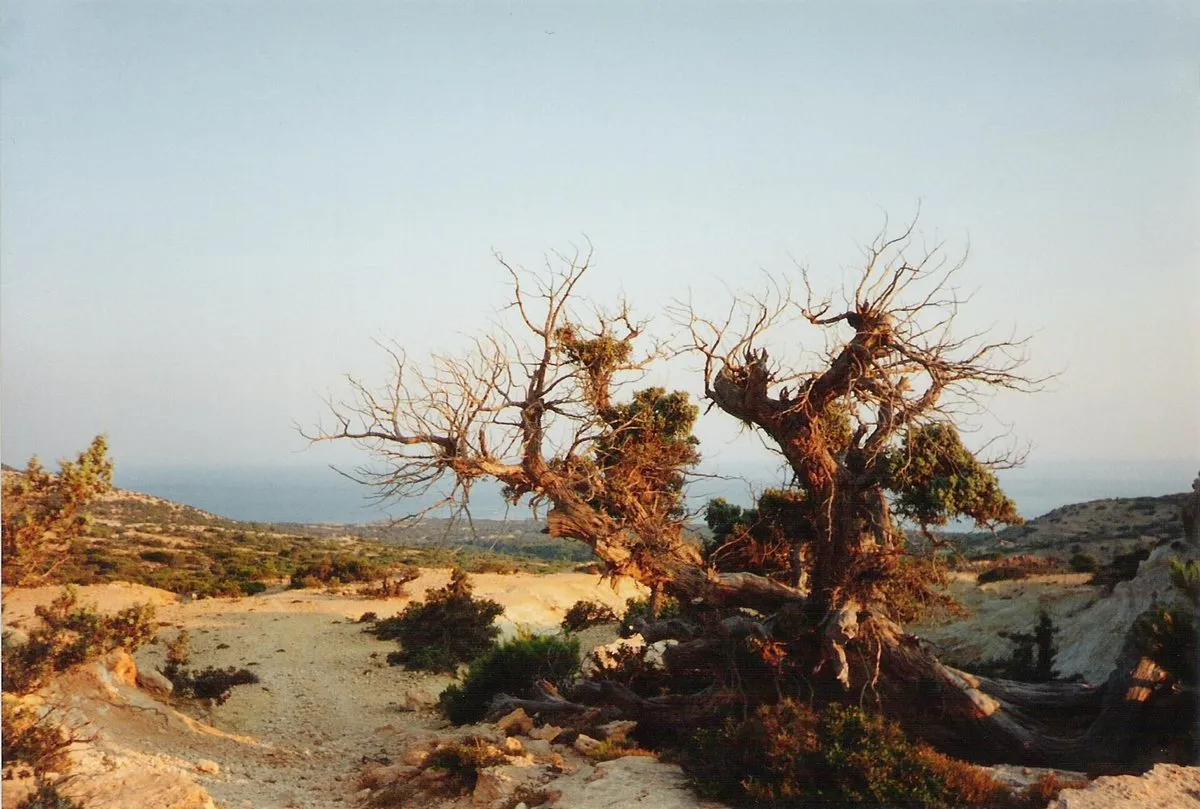
Photo on this page: the cedar by weidegruen (CC BY-SA 2.0), via Wikimedia Commons, resized for the web. Everything above was checked for the date shown at the top of this guide; the ferry timetable, the camping position and the fire-day closures were rechecked in October 2026 against the ferry operator’s published timetable, the Region of Crete’s 2026 fire-season order and national press reports. Nobody pays to be featured in a guide — no business, no sponsor, no paid mention, ever. Adverts, where they appear, are labelled as adverts.
How do you get to Gavdos?
Ferries from Hora Sfakion, and in summer sometimes from Paleochora, take roughly one to two hours direct, longer on sailings that call at Loutro and Agia Roumeli. Sailings thin out sharply after summer and the sea cancels them, so check the operator's current timetable close to your date and book ahead in August.
Is Gavdos worth a day trip?
The day trip samples the light and proves the distance, but the islands actual gift - mornings before the heat, star fields, unclocked days - requires nights. Two to four is the connoisseur dose. Some people arrive for three days and lose track.
How do you get around Gavdos?
A couple of dirt-and-asphalt roads, a summer minibus, scooter and quad rentals at the port, and paths. Many of the famous beaches - Agios Ioannis, Sarakiniko, Lavrakas, Potamos - end in a walk.
What is Tripiti on Gavdos?
The southernmost point of Europe, with a natural triple arch and a giant chair sculpture facing Africa. It is a hot, exposed walk or a boat-trip target - carry water like a supply officer.
What should you know before staying on Gavdos?
Limited shops, patchier power and signal, and tavernas and rooms concentrated at Sarakiniko, Karave and Agios Ioannis. Cash and self-sufficiency are the local currencies. Free camping under the cedars is a long tradition but is not legal under Greek law; in April 2026 the authorities demolished the beach shelters at Lavrakas and Agios Ioannis, so check the current position locally before planning to camp.
One email a month — only when something on this island actually changes. No spam, no partners, one-click unsubscribe. Read past issues before you decide.