Kourtaliotiko Gorge & Preveli Monastery: The Honest Guide
The best gorge in Crete you drive through rather than walk, a monastery that smuggled Allied soldiers to Egypt.
The road from Rethymno to the south coast drops through a limestone slot so abrupt that the first time you drive it you slow down without meaning to. That is the Kourtaliotiko, and almost everyone treats it as scenery on the way to Plakias or Preveli beach. Twenty minutes of stopping turns it into the better half of the day, and the monastery at the end of the road has a story worth more than the entrance fee.
The one-minute version. Roughly 35–40 minutes from Rethymno on the Spili road, then the descent towards Plakias. Gorge is free; park at the Agios Nikolaos chapel pull-in for the stepped path to the waterfall — steep, about 20 minutes down, longer up. Monastery typically 08:00–13:30 and 16:00–19:00 in summer with a small fee; it closes over the middle of the day. Half a day for both, a full day if you add the beach.
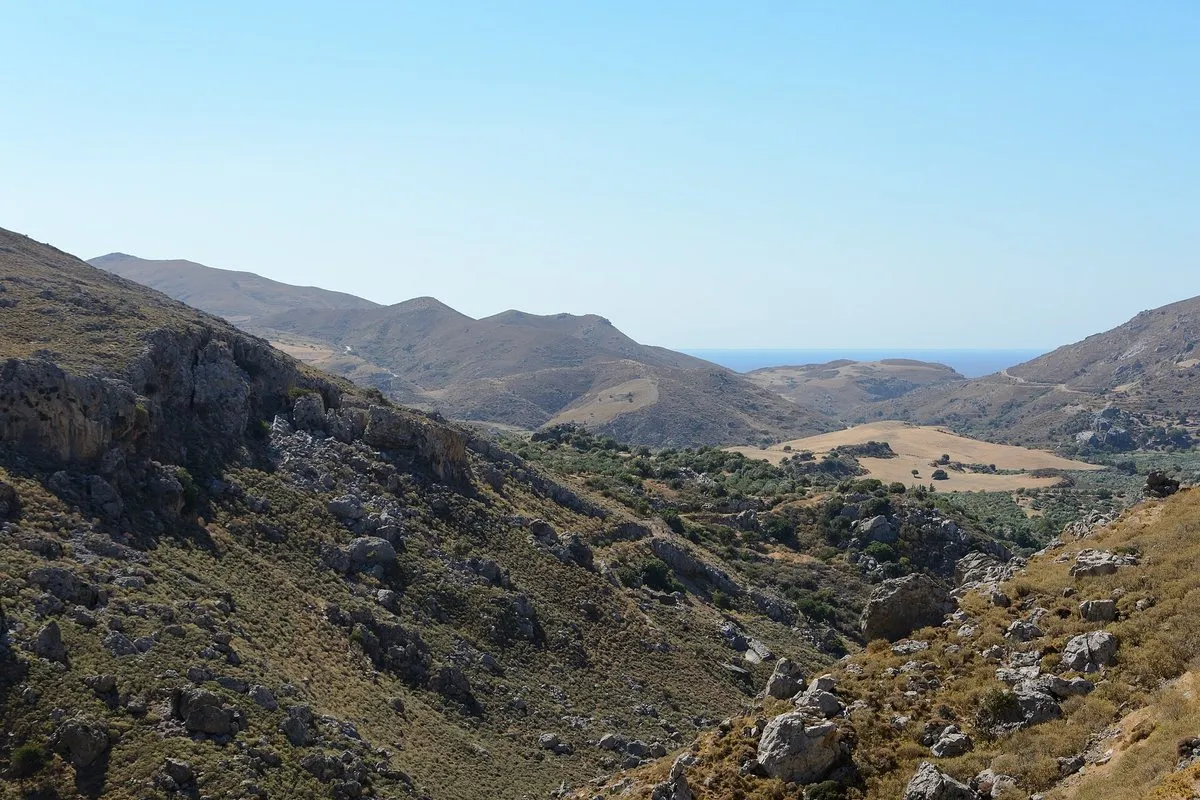
The gorge, and the bit people miss
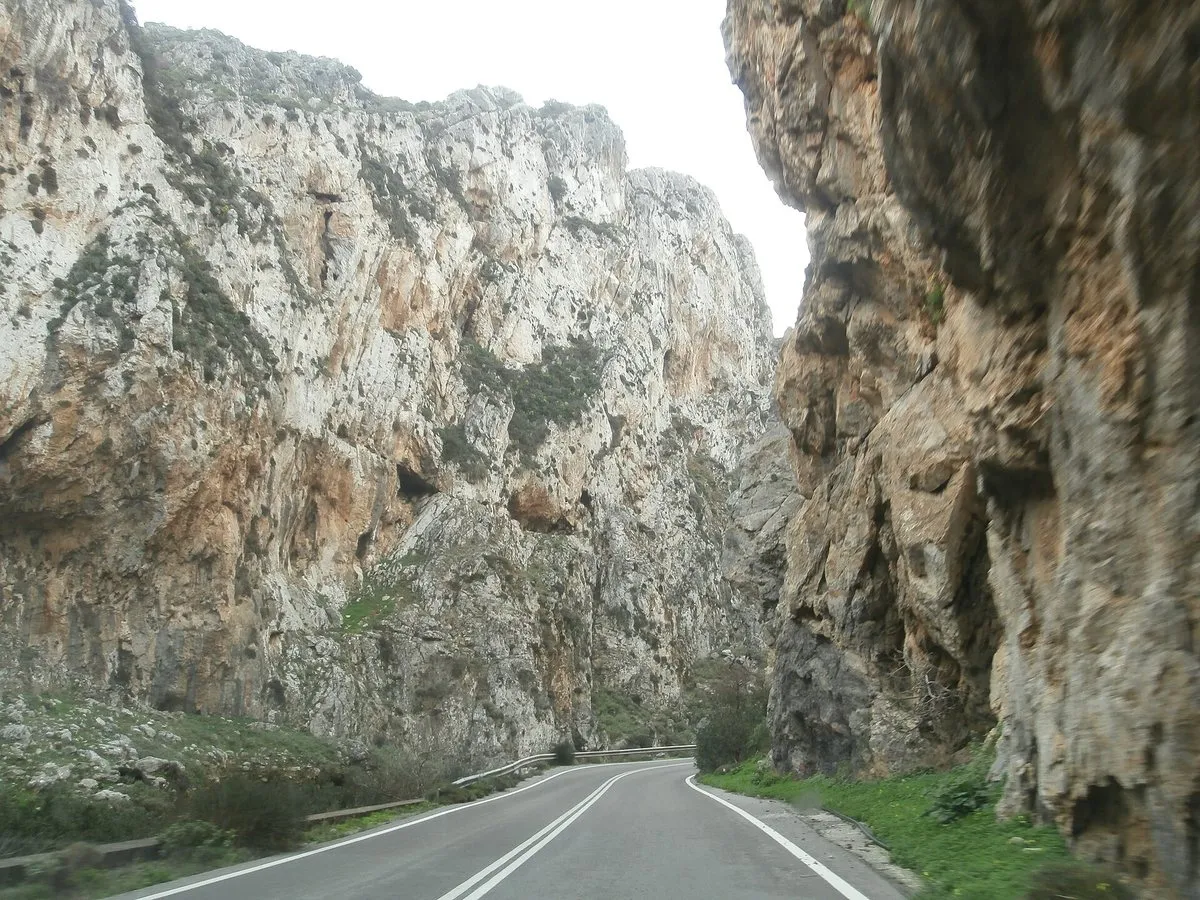
The Kourtaliotiko is short — a couple of kilometres — and dramatic in a way that does not need a hike. Sheer walls, griffon vultures riding the thermals almost every day, and the Kourtaliotis river running along the bottom year round, which in Crete is rare enough to be worth noting.
The stop that matters is the chapel of Agios Nikolaos, tucked into the rock partway down with a small car park. From there, steps descend to the river, a waterfall and a set of green pools. It is steep, uneven and quite long — allow twenty minutes down and closer to thirty back — but the pools at the bottom are cold, deep and mostly empty, and it is the only place in this gorge you can be in rather than above.
The name comes from the sound: kourtala, the clapping noise the wind makes through the rock clefts. On a windy day you will hear it and understand.
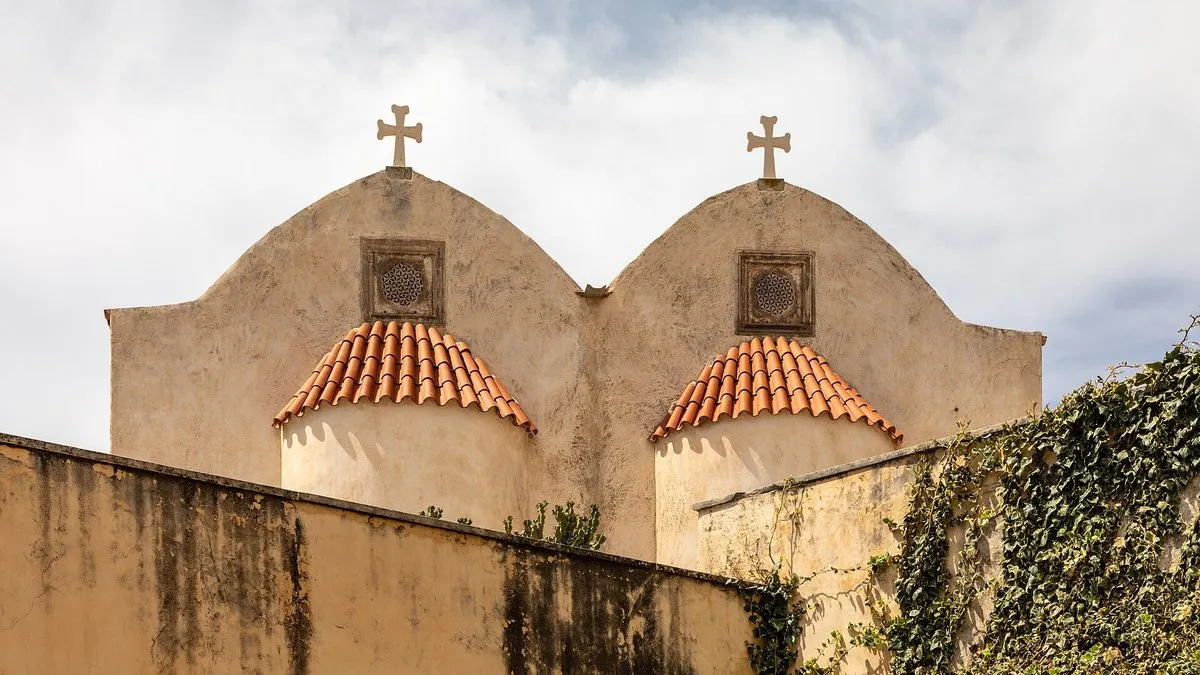
Preveli Monastery
Follow the road down and across the Megalopotamos on an Ottoman-era bridge from 1850, past the ruins of Kato Preveli, and the working monastery — properly Piso Moni Preveli — appears on the slope above the sea.
It is a handsome place, whitewashed and stepped, with a small ecclesiastical museum and a terrace looking straight out at the Libyan Sea. But the reason to come is the modern history. After the Battle of Crete in 1941, the monks sheltered Allied soldiers who had been cut off in the retreat and helped organise their evacuation by submarine from the coast below. The Germans burned and looted the monastery for it. There is a monument on the road commemorating this, and the story is told inside.
For anyone following that thread further, the Battle of Crete sites around Chania are the other half of it.
The practical trap: the monastery shuts over the middle of the day, roughly 13:30 to 16:00 in summer. People arrive at two, find it closed, and drive on annoyed. Come before one or after four.
Adding the beach, or not
Preveli beach — the palm river — is a separate car park further along the road, and then a long, steep stepped descent and re-ascent. It is worth doing, but it is not a casual add-on: allow two to three hours including the swim and the climb back. If you have already done the waterfall steps in the gorge, your legs will have opinions.
An honest alternative on a hot day: do the gorge and the monastery in the morning, then drive twenty minutes west and swim at Damnoni or Skinaria instead, where the water is just as good and you park next to it. Mirthios above Plakias is the lunch stop with the view.
Worth half a day and better than the sum of its parts — the gorge is the most dramatic piece of road in Rethymno, the waterfall steps put you somewhere genuinely quiet, and the monastery has a wartime story that most visitors to Crete never encounter. Time it around the midday closure and bring shoes you can climb steps in. Skip the beach on the same day unless you are fit and have started early: the two sets of stairs are more than most people expect, and doing both badly is worse than doing one well.
Photos on this page: gorge from above by Uoaei1 (CC BY-SA 4.0); gorge walls by C messier (CC0); Preveli Monastery by Dietmar Rabich (CC BY-SA 4.0), via Wikimedia Commons, resized for the web. Nobody pays to be featured on this site.
Can you walk the Kourtaliotiko Gorge?
Not end to end in the way you walk Samaria or Imbros — the road runs through it and the river is the floor. What you can do is park at the chapel of Agios Nikolaos and take the steep stepped path down to the waterfall and pools, which takes about twenty minutes down and rather longer back up.
Is Preveli Monastery worth visiting?
Yes, and for reasons beyond the building. It sheltered Allied soldiers after the Battle of Crete and helped evacuate them by submarine to Egypt, and the small museum and monuments tell that story. The setting above the Libyan Sea is the other half of the argument.
What are the Preveli Monastery opening hours?
In summer typically around 08:00–13:30 and 16:00–19:00, with a midday closure that catches people out. There is a small entrance fee in season. Winter access is more limited and the museum may be shut — verify seasonally before driving out.
Is Preveli Monastery the same as Preveli beach?
No, and this trips up a lot of visitors. The monastery sits high above the coast; the palm-river beach is a separate car park further along with a long stepped descent. They are close but not the same stop, and you need time for both.
How long does the Kourtaliotiko and Preveli trip take?
Half a day comfortably — an hour for the gorge and waterfall, an hour at the monastery, and the drive from Rethymno is about 35 to 40 minutes each way. Add the beach and it becomes a full day.
One email a month — only when something on this island actually changes. No spam, no partners, one-click unsubscribe. Read past issues before you decide.