The Battle of Crete: The Honest Guide to the Sites You Can Visit
Souda Bay war cemetery, Hill 107 at Maleme, and the German cemetery above it. Free, quiet, and for a certain kind of visitor the most affecting half-day.
On 20 May 1941 German paratroopers dropped on western Crete in the largest airborne operation attempted up to that point. Within ten days the island had fallen, and the cost on both sides was severe enough that Germany never again attempted an assault of that kind. What remains, eighty-odd years on, is a set of quiet places within twenty-five minutes of Chania that almost no beach holiday includes and that some visitors will find the most important thing they do here.
The one-minute version. Souda Bay Allied War Cemetery: on the bay’s southern shore, 15 minutes east of Chania, free, open daily, around 1,500 graves. German cemetery on Hill 107 above Maleme: 35 minutes west of Chania, free, around 4,500 graves, and the view over the old airfield is the reason to climb up. Half a morning for both. Dress as you would for any cemetery.
Souda Bay
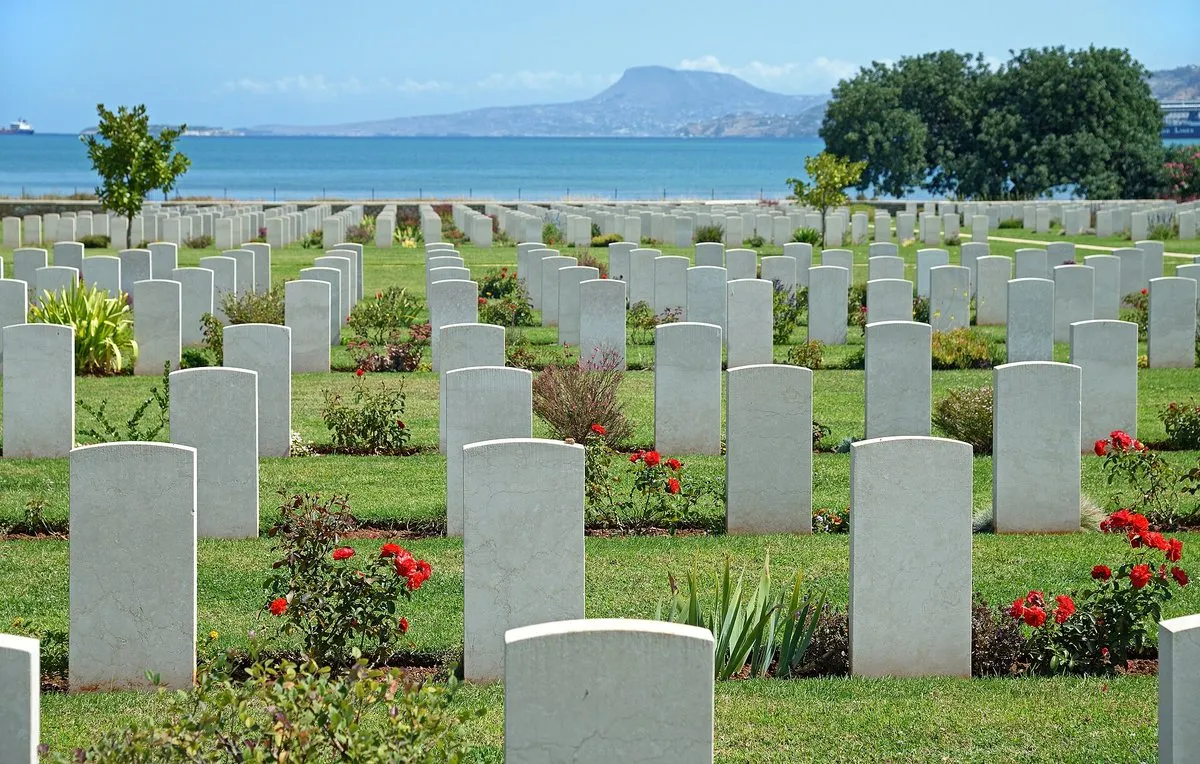
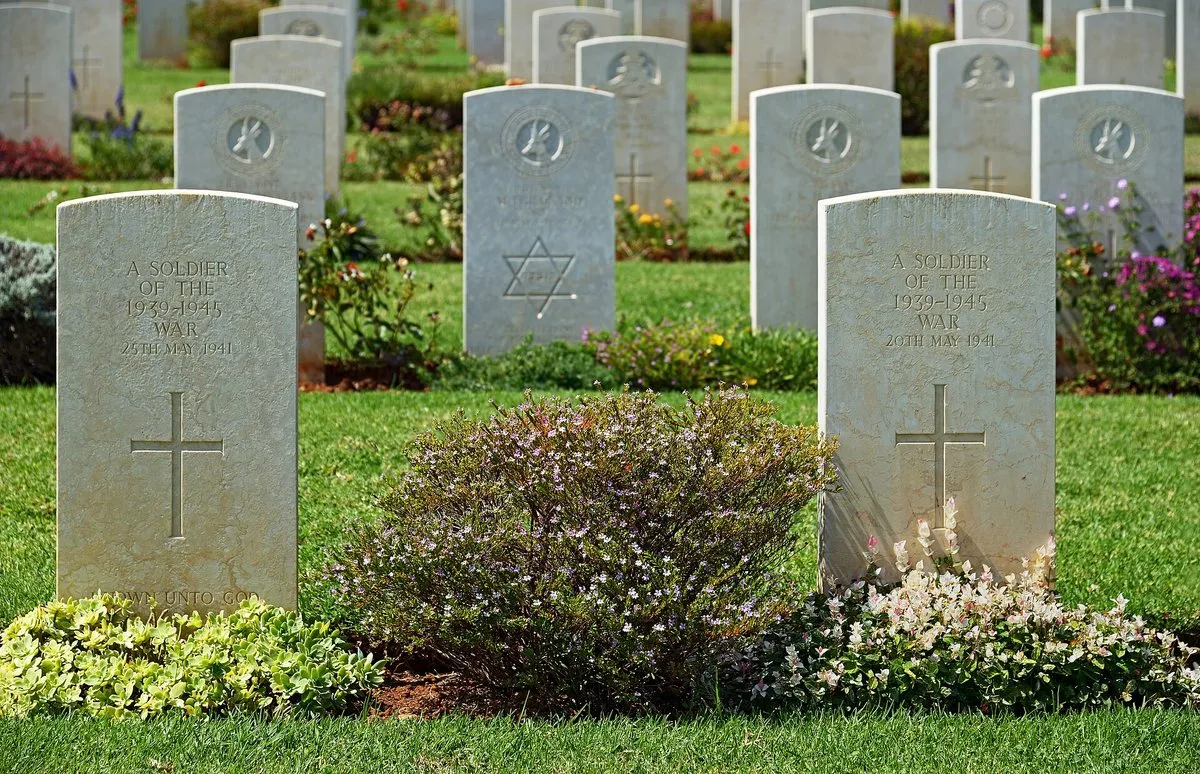
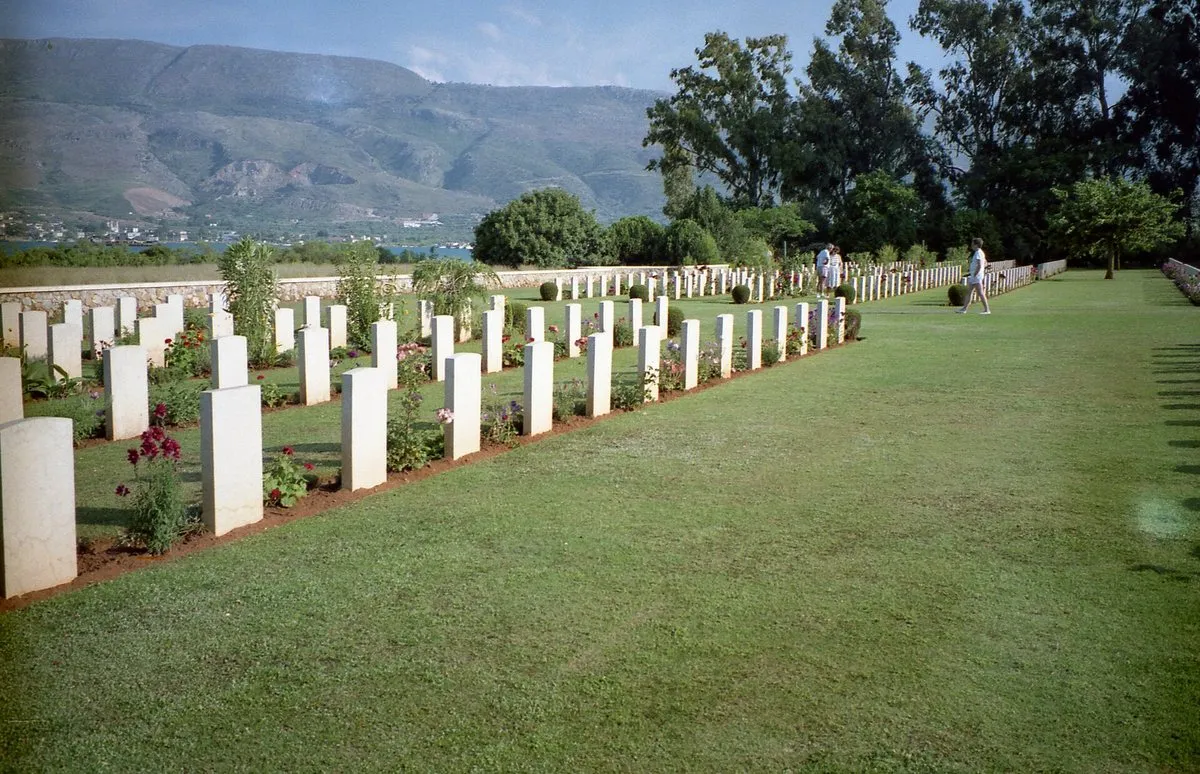
The Commonwealth cemetery sits on flat ground by the water, immaculately kept, with the bay in front and the hills behind. Around 1,500 servicemen are buried here, a large proportion of them New Zealanders and Australians who fought in the retreat across the island, along with British and Greek dead and a number of graves marked only as unknown.
It is a small, plain, beautifully maintained place, and it takes as long as you want to give it. For New Zealand and Australian visitors in particular it is often the reason they came to this part of Crete at all. There is a register at the entrance; people do find family names in it.
The bay itself is still a naval base, which gives the setting an odd continuity — the same anchorage, the same strategic logic, eighty years later.
Maleme and Hill 107
Thirty-five minutes west of Chania, the old Maleme airfield lies beside the coast road, and above it rises the low hill the maps called Point 107. Whoever held that hill controlled the airfield; whoever held the airfield could land reinforcements. On the night of 20–21 May the New Zealand battalion holding it withdrew, and the battle turned.
The German war cemetery now covers the slope: roughly 4,500 flat stone markers in ranks across the hillside, with a small information building. It is quiet, well-kept and — this is the point most people do not anticipate — the best vantage in western Crete for understanding what happened. Stand at the top, look down at the runway and out at the coast where the gliders came in, and the whole thing becomes legible in a way it never is on a page.
Some visitors are uncertain whether they should go. It is a cemetery, it is open to the public, and both sites are frequently visited by the same people on the same morning. Treat it as what it is.
The wider story
Two things distinguish the Battle of Crete from other campaigns of that year. The first is the scale of civilian involvement — Cretans fought with whatever they had, including in some accounts farm tools, and the German reprisals that followed were brutal and are still remembered in villages like Kandanos and Kondomari.
The second is the evacuation. Thousands of Allied troops walked south over the White Mountains to the coast at Hora Sfakion and were taken off by the Royal Navy; others were sheltered by monks at Preveli and evacuated by submarine to Egypt. The same valley holds an older chapter: Theriso, where Venizelos launched the 1905 revolt, is twenty minutes south of Chania. If you drive the Askifou plateau road towards Sfakia, you are on the retreat route, and there is a small private war museum at Askifou that is worth stopping for.
Practical notes
Both cemeteries are free, open and easy to park at. Souda has a small car park at the gate; Maleme has parking below and a short climb. Neither has a café, shop or facilities beyond the basics.
Go in the morning — both are exposed and the afternoon light is harsh. And if you are combining them with anything, Chania old town sits between the two and is the obvious lunch.
Worth a morning for anyone with a connection to the campaign, and worth it more broadly than most visitors assume — these are free, uncrowded, genuinely moving places within half an hour of a resort strip, and the hill at Maleme does something no museum manages by simply letting you see the ground. Go early, treat both sites as the cemeteries they are, and read a little first: the context is what turns a field of stones into the reason you came.
Photos on this page: Souda Bay cemetery views by Ввласенко and Robert Linsdell (CC BY-SA 3.0 and CC BY 2.0), via Wikimedia Commons, resized for the web. Nobody pays to be featured on this site.
-
The morning — Both cemeteries, with Chania between them for lunch 40 min driving · 25.3 km
1 Souda Bay War Cemetery → 12 min → 2 Chania old town → 28 min → 3 Maleme German cemetery, Hill 107
Driving times are Google's own, without traffic, checked September 2026 — the shape of the day, not a promise. Allow more on mountain roads, and more again in August.
Where is the Commonwealth war cemetery in Crete?
On the southern shore of Souda Bay, a few kilometres east of Chania near the village of Souda. It holds roughly 1,500 graves of Commonwealth servicemen, many of them New Zealanders and Australians, and it is maintained by the Commonwealth War Graves Commission. Entry is free.
Can you visit Hill 107 at Maleme?
Yes. The hill overlooking the old airfield west of Chania was the decisive ground of the battle in May 1941, and the German war cemetery now occupies its slope. It is open, free, and the view explains the fighting better than any book.
Is the German war cemetery at Maleme open to visitors?
It is. Around 4,500 German dead are buried on Hill 107, and it is maintained and open to the public. Visitors sometimes hesitate over whether it is appropriate to go; the site is a cemetery and is treated as one, and many people visit both it and Souda in the same morning.
When was the Battle of Crete?
It began on 20 May 1941 with the largest airborne invasion attempted to that point, and the island fell within about ten days. Cretan civilians fought alongside Allied troops in a way that shaped both the German response and the island's identity ever since.
How long do you need for the Battle of Crete sites?
Half a morning covers Souda and Maleme comfortably — they are about 50 minutes apart by road with Chania between them. Add the Preveli monastery on the south coast if you are following the evacuation story, though that is a separate day.
One email a month — only when something on this island actually changes. No spam, no partners, one-click unsubscribe. Read past issues before you decide.