Kritsa & the Katharo Plateau: The Honest Guide
The big weaving village above Agios Nikolaos, its famous frescoed church, and the wild plateau road beyond.
Kritsa hangs on the mountainside ten minutes above Agios Nikolaos — one of Crete’s largest and oldest villages, its lanes stacked with weaving and embroidery the older women still work at doorways, its approach guarded by the island’s most celebrated frescoed church. Beyond it, a mountain road corkscrews up to the Katharo plateau: a high, half-wild bowl of vineyards and summer sheepfolds that turns the half-day cultural stop into a small expedition.
The honest facts
- Panagia Kera
- just below the village among olives — three aisles wall-to-wall with 13th–14th-century frescoes, the east’s Byzantine masterpiece; small entrance fee, modest dress, no flash, 30–45 minutes of neck-craning.
- The village
- steep marble-smooth lanes, textile shops of genuinely local craft mixed with imports (the loom-in-view rule applies), balcony kafeneia, and a strong taverna handful — lunch for two €25–40.
- The plateau road
- ~30 minutes of hairpins above Kritsa to Katharo at 1,100m — vines that make defiant highland wine, seasonal tavernas, cool air and raptor skies; the road is paved, narrow and honest about its edges.
- Extras
- ancient Lato’s hilltop ruins (10 minutes toward the coast) add a superbly sited Dorian city most visitors miss.
- Timing
- coaches pulse Kera and lower Kritsa late morning — go early or after three.
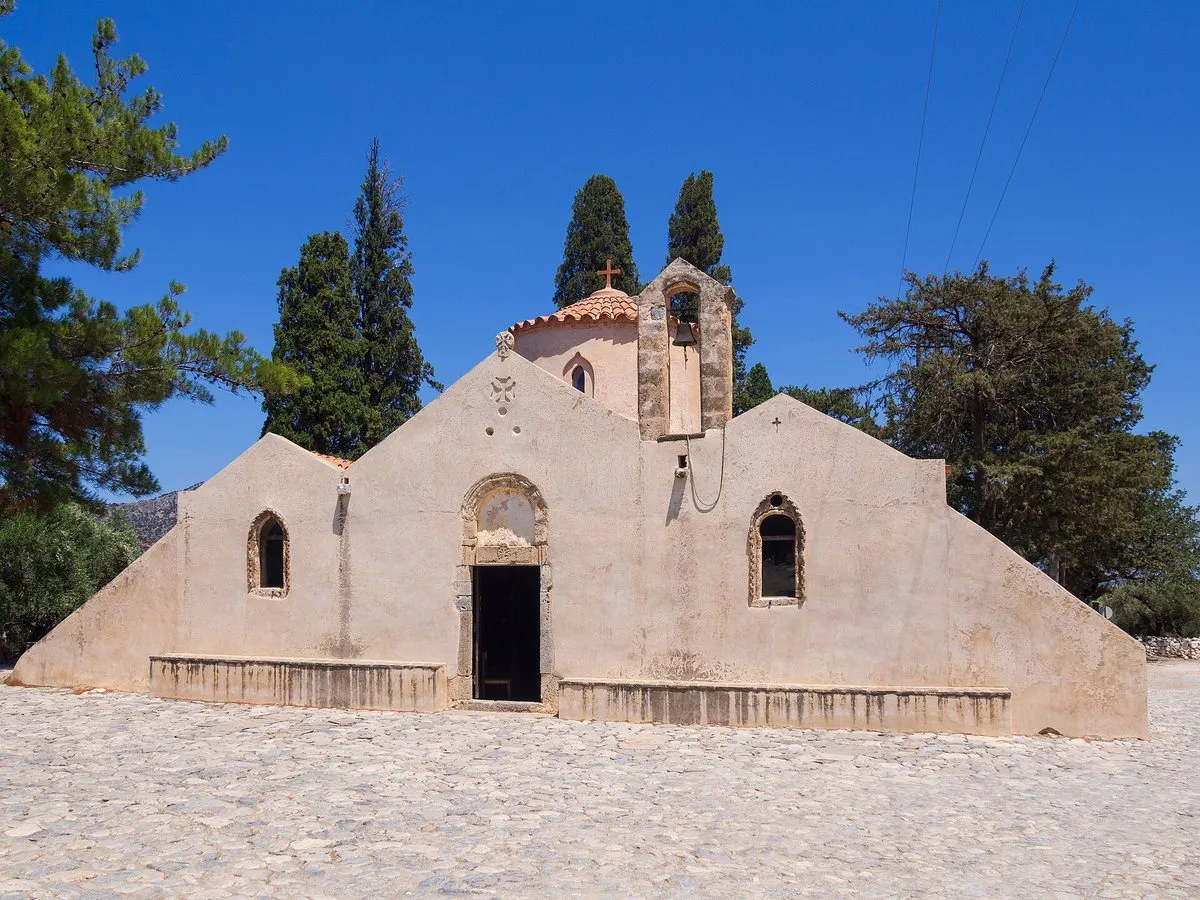
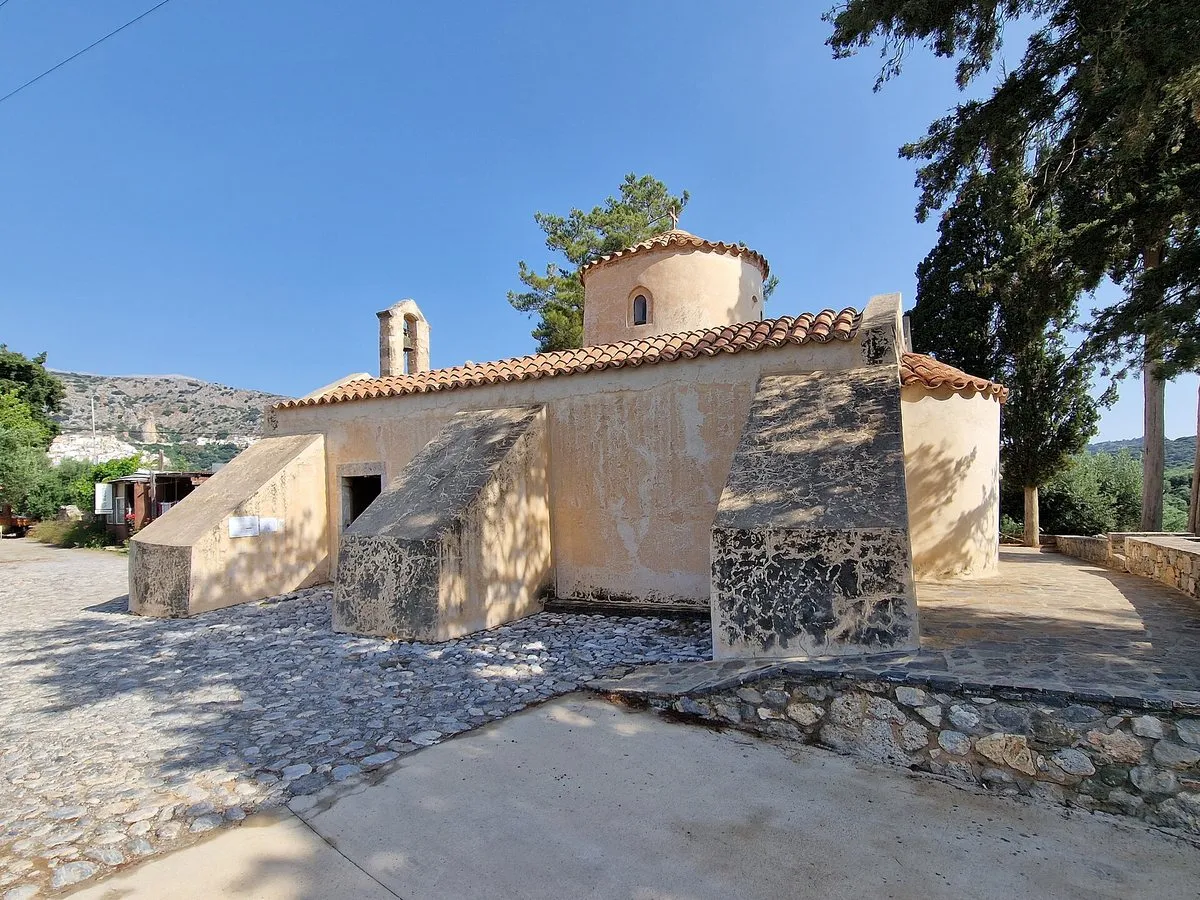
The honest half-day
Kera’s frescoes first at opening calm, Kritsa’s lanes with an honest eye for the real weavers, balcony coffee, then choose: Lato’s ruins for the view-with-history, or the Katharo climb for lunch at altitude among shepherd pickups. Either version returns you to the gulf coast by late afternoon changed in scale.
The honest downside
Kritsa’s fame set up shop — the lower lanes carry souvenir density and midday coach compression; Katharo’s tavernas keep seasonal, weather-moody hours (a call ahead or a plan B avoids a hungry plateau); and the hairpins ask a calm driver.
Worth your time if: frescoes, looms and a wild plateau sound like one correct afternoon. Skip the plateau leg if the driver dissents — Kera plus Lato already justify the mountain.
Photos on this page: Panagia Kera by C messier and Rigorius (both CC BY-SA 4.0), via Wikimedia Commons, resized for the web. Everything above was checked for the date shown at the top of this guide. Nobody pays to be featured in a guide — no business, no sponsor, no paid mention, ever. Adverts, where they appear, are labelled as adverts.
What is Panagia Kera?
The Byzantine masterpiece of eastern Crete - three aisles covered wall to wall with 13th and 14th-century frescoes, just below Kritsa among the olives. Small entrance fee, modest dress, no flash, and 30 to 45 minutes of neck-craning.
Is the weaving in Kritsa genuine?
Some of it. The older women still work at doorways and the craft is real, but imports are mixed in with local work. The loom-in-view rule applies - if you can see it being made, you know what you are buying.
What is the Katharo plateau?
A high plain at 1,100m about 30 minutes of hairpins above Kritsa, with vines that make defiant highland wine, seasonal tavernas, cool air and raptor skies. The road is paved, narrow and honest about its edges.
What is Lato?
A superbly sited Dorian city on a hilltop ten minutes toward the coast from Kritsa, and one of the ruins most visitors to this corner miss entirely.
When should you visit Kritsa?
Early or after three. Coaches pulse through Panagia Kera and lower Kritsa in the late morning, and the village is at its best either side of that.
One email a month — only when something on this island actually changes. No spam, no partners, one-click unsubscribe. Read past issues before you decide.