Myrtos: The Honest Guide to the South-East's Favourite Village
The whitewashed, bougainvillea-draped village that long-stayers refuse to leave — laid-back to a fault, with a dark wartime history worn with dignity.
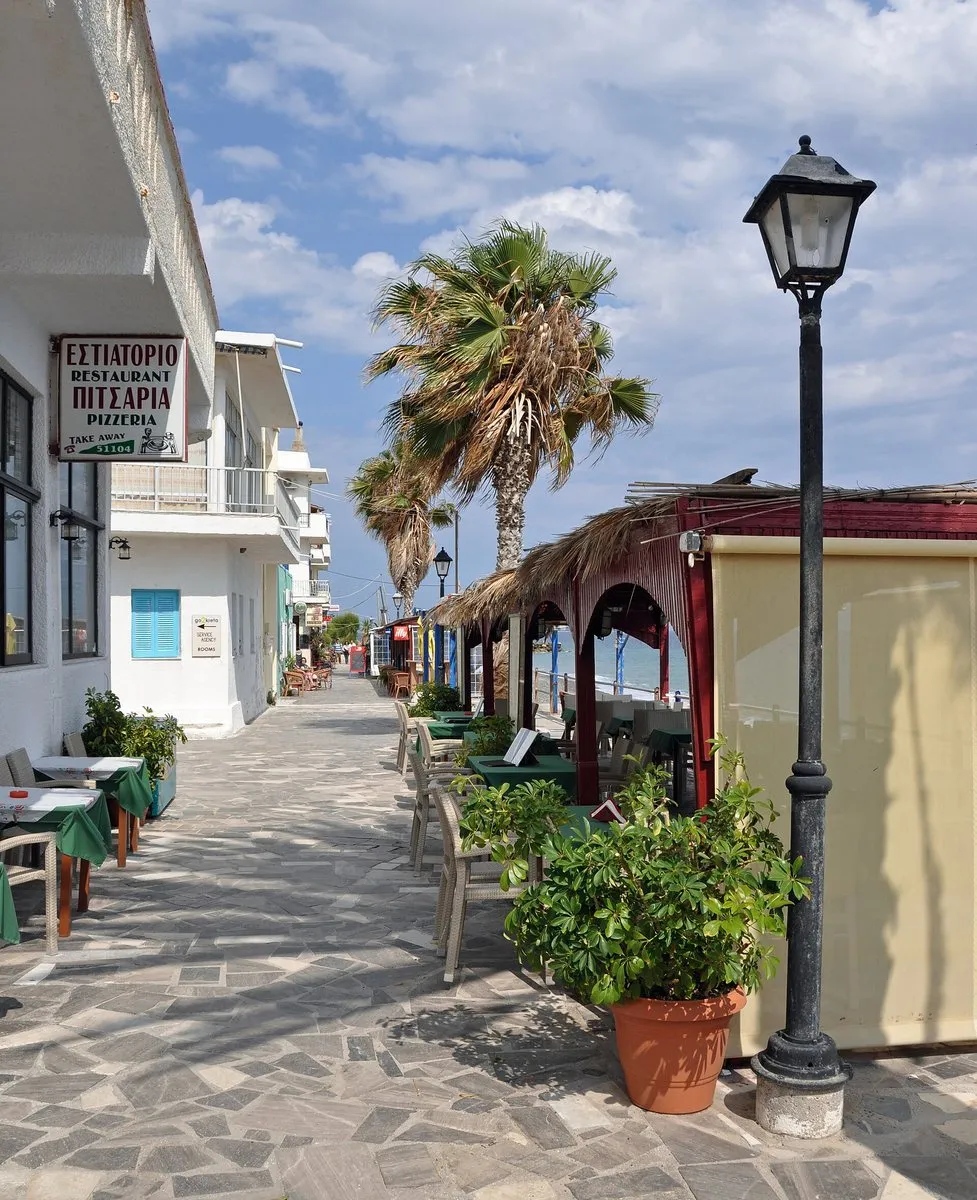
Myrtos is the south-east’s charmer: a small white village under red cliffs fifteen minutes west of Ierapetra, draped in bougainvillea, padded with little tavernas and cafés, and colonised every season by northern Europeans who came for a week years ago and now argue about which kafeneio has the better shade. Its ease is genuine; so is the history beneath it — the village was burned and its men executed by the occupiers in 1943, and the memorial holds that memory without theatrics.
The honest facts
- The beach
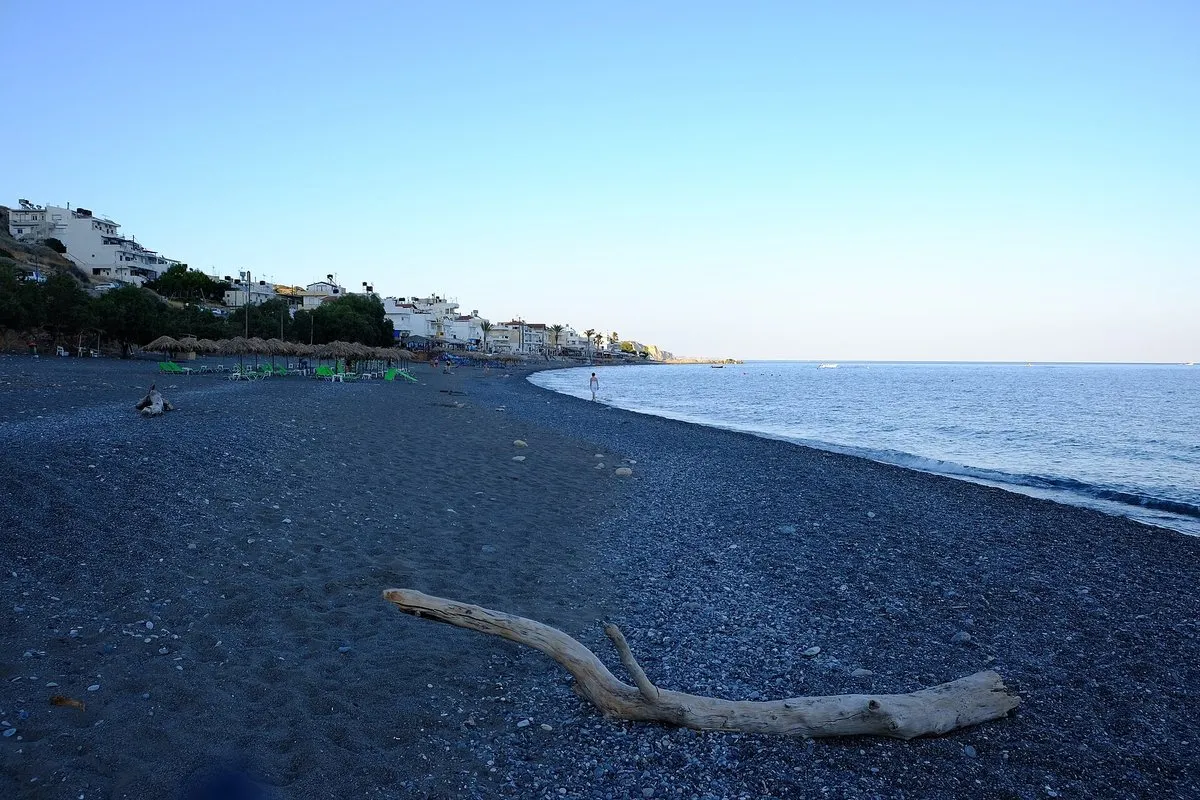
- long grey sand-and-fine-pebble directly at the village, part-organised (sunbeds around €6–9), calm in most winds — the south-side shelter is real.
- The vibe
- slow, sociable, faintly bohemian; live music evenings happen, clubs do not. Solo travellers integrate here faster than anywhere on the coast.
- Eating
- a dense, high-honesty taverna and café cluster for a village this size; farm vegetables from the greenhouse plain, fish from Ierapetra boats.
- The Minoan bonus
- two excavated sites — Fournou Korifi and Pyrgos — crown the hills either side; the tiny village museum (volunteer-run, hours flexible) is a labour of love worth a look.
- Getting there
- ~1h45 from the Hersonissos coast via Ierapetra; the approach road’s greenhouse miles end abruptly at charm.
Who Myrtos fits
Long-stayers, couples, writers-with-deadlines-they-ignore, and families whose children are portable or self-propelled. The village absorbs day-trippers politely but reveals itself to sleepers: mornings before the light hardens and evenings after the Ierapetra cars leave are the real Myrtos.
The days around it
Inland, Kalamafka is the mountain counterweight to a slow beach day — springs, a limestone tower, and about 230 steps up to a chapel in a cave.
Tsoutsouros-style emptiness west along the coast, Sarakina gorge twenty minutes away for a wet-feet canyon walk, Ierapetra for the town errands, and the mountain villages of Males and Anatoli above for the taverna-with-a-view evenings.
Getting there
Fifteen minutes west of Ierapetra along the south coast, and roughly 1h45 from the Hersonissos–Malia coast via Agios Nikolaos and the cross-island road — the last miles run between greenhouses and end abruptly in bougainvillea. By bus it is the KTEL to Agios Nikolaos, about €7.70 from Heraklion, then the connection south to Ierapetra and the local hop west; it works for the patient, and the people who come here for a fortnight are patient by definition. Parking is on the edge of the village and the lanes are for feet, which is part of the calm.
The beach, and the water
Long grey sand and fine pebble directly at the village, part-organised at around €6–9 the set and free beyond, with the south coast’s genuine shelter: calm in most winds, swimmable from spring well into autumn, and usually flat on the days the north is white-capping. It is not the turquoise of the Lasithi east — the tone is grey-blue over sand — and the people who love Myrtos stopped minding years ago. Early and late are the hours; the middle of an August day belongs to the cafés and the shade arguments.
The days around it
Inland first: the village museum, volunteer-run with flexible hours, is a labour of love and a good half hour; the two excavated Minoan sites on the hills either side — Fournou Korifi and Pyrgos — are short climbs for the view as much as the walls. Sarakina gorge, twenty minutes away, is the wet-feet canyon walk; the mountain villages of Males and Anatoli above are the terrace dinners with a view; Ierapetra is the town errand and, when the islet is open, the Chrissi boat. West along the coast the beaches empty out fast toward the Tsoutsouros kind of quiet. None of it is spectacular and all of it is pleasant, which is the Myrtos deal in a sentence.
The honest downside
Myrtos’ secret retired decades ago — peak season fills it comfortably full, and its famous mellowness can read as inertness to travellers needing stimulus. The greenhouse plastic on the approach is the region’s living; make peace on the drive in.
Worth your time if: “a village to sink into” is the actual brief. Skip it if: you need range and buzz — Ierapetra town or the north coast serve restlessness better.
Photos on this page: the lane by Marc Ryckaert (CC BY 3.0) and the beach by Quim Gil (CC0, public domain dedication), via Wikimedia Commons, resized for the web. Everything above was checked for the date shown at the top of this guide. Nobody pays to be featured in a guide — no business, no sponsor, no paid mention, ever. Adverts, where they appear, are labelled as adverts.
Is Myrtos worth staying in?
For long-stayers, couples and solo travellers, very much so. It absorbs day-trippers politely but reveals itself to people who sleep there - mornings before the light hardens and evenings after the Ierapetra cars leave are the real Myrtos.
What is the beach at Myrtos like?
Long grey sand and fine pebble directly at the village, part-organised with sunbeds around EUR6-9, and calm in most winds. The south-side shelter is real rather than a claim.
How far is Myrtos from Ierapetra?
About fifteen minutes west. From the Hersonissos coast it is roughly an hour and 45 minutes via Ierapetra, and the greenhouse miles on the approach road end abruptly at charm.
Are there Minoan sites at Myrtos?
Two excavated ones - Fournou Korifi and Pyrgos - crown the hills either side of the village. The tiny village museum is volunteer-run with flexible hours and is a labour of love worth ten minutes.
Is Myrtos good for solo travellers?
Better than anywhere else on this coast. The vibe is slow, sociable and faintly bohemian, live music evenings happen and clubs do not, and the taverna cluster is dense enough that people end up talking to each other.
One email a month — only when something on this island actually changes. No spam, no partners, one-click unsubscribe. Read past issues before you decide.