Rethymno Old Town: The Honest Guide
Smaller than Chania, less mobbed, arguably better preserved — minarets over Venetian doorways, a working student town underneath.
Rethymno’s old town is what people hope Chania will be: the same Venetian-Ottoman layer cake — minarets rising over Renaissance doorways, wooden balconies leaning across lanes — with a real town still living inside it, thanks to the university. It gets busy; it rarely gets Chania-busy. If you are choosing one old town on a west-leaning trip, this argument deserves a hearing.
The honest facts
- Scale
- you can cross the old town in fifteen unhurried minutes; a half-day covers it with a fortress and a long lunch.
- The Fortezza
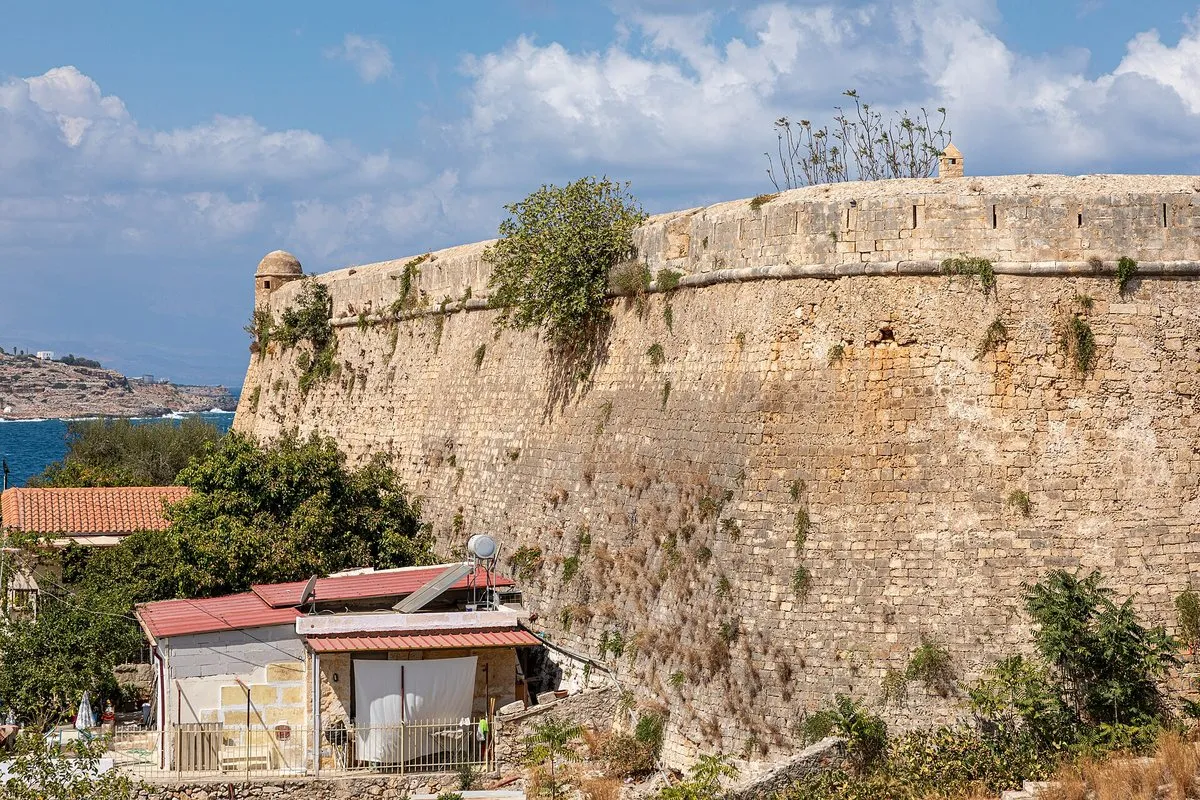
- the huge Venetian star fortress on the hill — a few euros in, sparse inside, worth it for the mosque dome and the sea walls at golden hour.
- Parking
- the marina and the lots along the western beach road; the old town itself is a no.
- The harbour
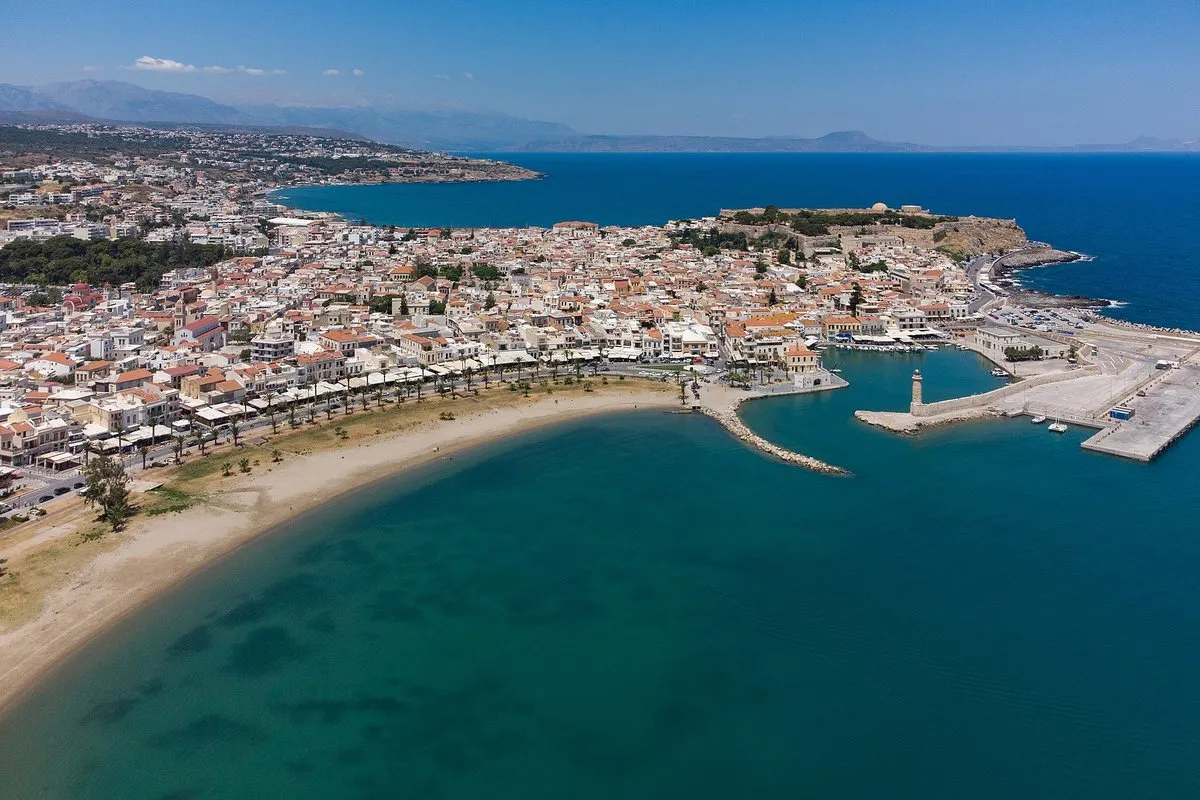
- tiny, pretty, lighthouse-tipped — and its taverna ring is the one place the tourist-trap tells apply at full strength.
Why it looks different from Chania
Both are Venetian ports with Ottoman layers. Rethymno wears the Ottoman period much more openly.
You see it in the wooden overhanging balconies on the narrow streets, in the minarets — the Neratze mosque was a Venetian church, then a mosque, and is now a music school — and in the fountains. Chania’s old town was bombed heavily in 1941 and rebuilt; Rethymno’s was not, so more of it is genuinely old rather than restored.
The practical version: Rethymno’s lanes are more intact, more residential, and less converted to hotels. People actually live here.
The Fortezza
The Venetian fortress on the headland is the largest of its kind in Crete and takes about an hour. Inside are the shell of the Ibrahim Han mosque, a small church, ramparts you can walk, and a lot of open ground.
Go late. The light on the walls in the last hour is the reason to come, and it is considerably cooler than the middle of the day when there is no shade up there at all.
Parking, and the one mistake
Do not drive into the old town. The lanes were laid out for handcarts and the ones that look passable narrow further in.
The long-stay car parks are along the seafront east of the harbour and beside the Fortezza. Both are five to ten minutes’ walk from anywhere in the old town, and both are cheaper and considerably less stressful than the alternative.
The walk
Enter by the Guora Gate off the main square, drift up Ethnikis Antistaseos past the Rimondi fountain, detour to the Neratze mosque with its outsized minaret, then let the lanes push you seawards to the little Venetian harbour. Climb to the Fortezza late, when the stone goes honey-coloured. None of this needs a map; getting mildly lost is the activity.
Eating, briefly
Same law as everywhere pretty: one street back — the full version is in the Rethymno eating guide. The harbour ring sells position; the lanes behind it and the squares toward the Porta Guora feed students and families year-round at honest prices. Rethymno’s inland villages make it a serious meat-and-cheese town — look for lamb ofto and local graviera. Full detail in the Rethymno eating guide.
Pairing the day
The town beach starts at the old town’s edge and runs east for kilometres — ordinary sand, extraordinary convenience. With a car, Arkadi monastery is half an hour inland and one of the most affecting stops on the island; the two together make a complete, unhurried day.
The honest downside
The main lanes carry the same souvenir inventory as every Greek old town, and July evenings on the harbour get properly congested. The magic here is in the side lanes and the edges, not the postcard core.
Worth your time if: you want atmosphere per square metre with room to breathe. Skip it if: you have already given Chania a full day and your trip is short — the genre repeats, beautifully but recognisably.
Photos on this page: the aerial view by C messier and the Fortezza walls by Dietmar Rabich (both CC BY-SA 4.0), via Wikimedia Commons, resized for the web. Nobody pays to be featured on this site.
Is Rethymno old town better than Chania?
If you are choosing one old town on a west-coast trip, Rethymno makes a strong case: the same Venetian-Ottoman layer cake, but with a real town still living inside it thanks to the university. It gets busy; it rarely gets Chania-busy.
Is the Fortezza in Rethymno worth it?
A few euros to enter, and sparse inside - but worth it for the mosque dome and the sea walls at golden hour. Climb late in the day when the stone goes honey-coloured rather than at midday.
Where do you park for Rethymno old town?
The marina and the lots along the western beach road. The old town itself is not a parking proposition - the lanes were not built for it and trying will cost you the mood you came for.
Where should you eat in Rethymno old town?
One street back from anything pretty. The Venetian harbour ring sells position and is where the tourist-trap tells apply at full strength; the lanes behind it and the squares toward the Porta Guora feed students and families year round. Rethymno is serious lamb and graviera country.
How long do you need in Rethymno old town?
You can cross it in fifteen unhurried minutes, and a half-day covers it properly with the Fortezza and a long lunch. With a car, pairing it with Arkadi monastery half an hour inland makes a complete unhurried day.
One email a month — only when something on this island actually changes. No spam, no partners, one-click unsubscribe. Read past issues before you decide.