Arkadi Monastery: The Honest Guide
The most important monastery in Crete — Venetian facade, 1866 tragedy, olive-grove silence.
Arkadi is not a pretty-church stop; it is the place where, in November 1866, hundreds of Cretan women, children and fighters chose to ignite the gunpowder store rather than surrender to the besieging Ottoman army. The event lit European opinion and still burns quietly in the Cretan self-image. You feel it in the courtyard even on a coach-crowded noon — and far more at nine in the morning, with only cypresses and swallows for company.
The honest facts
- Where
- about 23km / half an hour inland from Rethymno, on a good road through olive country.
- Cost & hours
- small entrance fee (a few euros); open daily, seasonal hours — verify before a special trip.
- Dress
- working monastery rules — shoulders and knees covered; wraps are usually lent at the door.
- Time needed
- 45–90 minutes covers the church, the gunpowder room, the small museum and a slow coffee opposite.
- Best hour
- opening time, or the last ninety minutes of the day. Midday belongs to the excursion buses.
What you are looking at
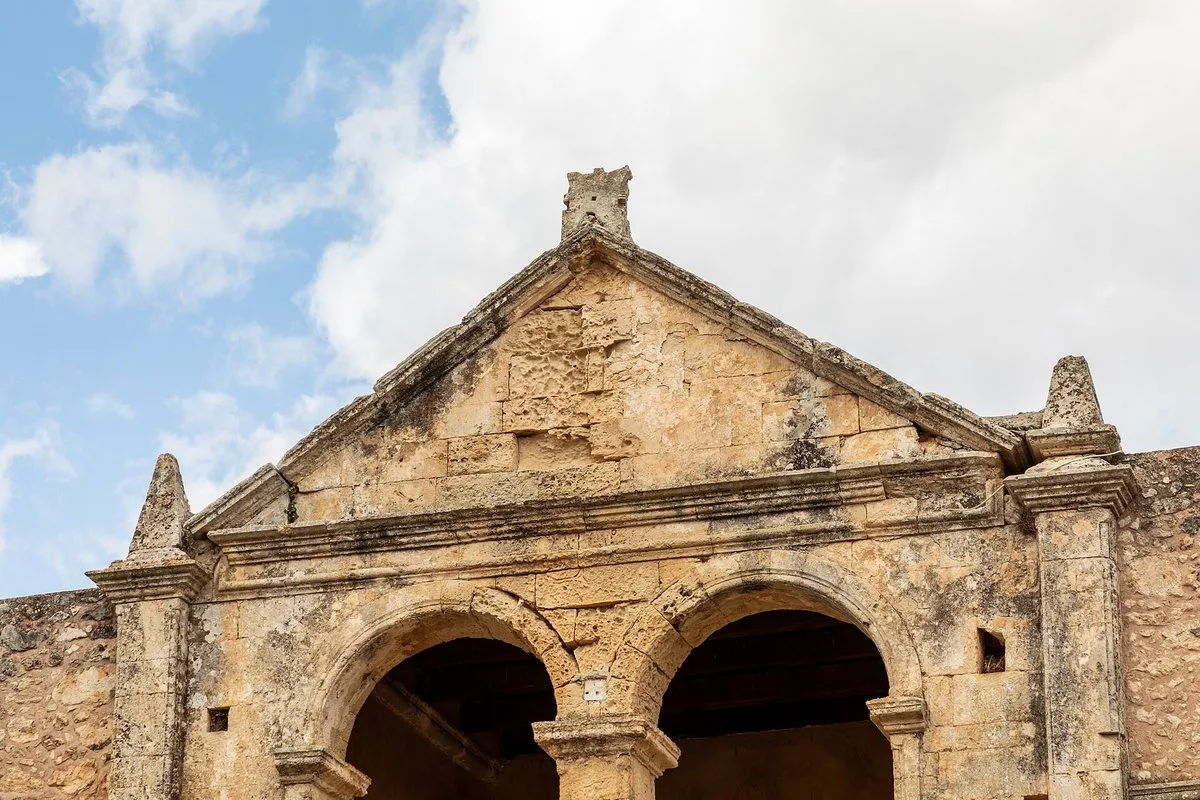
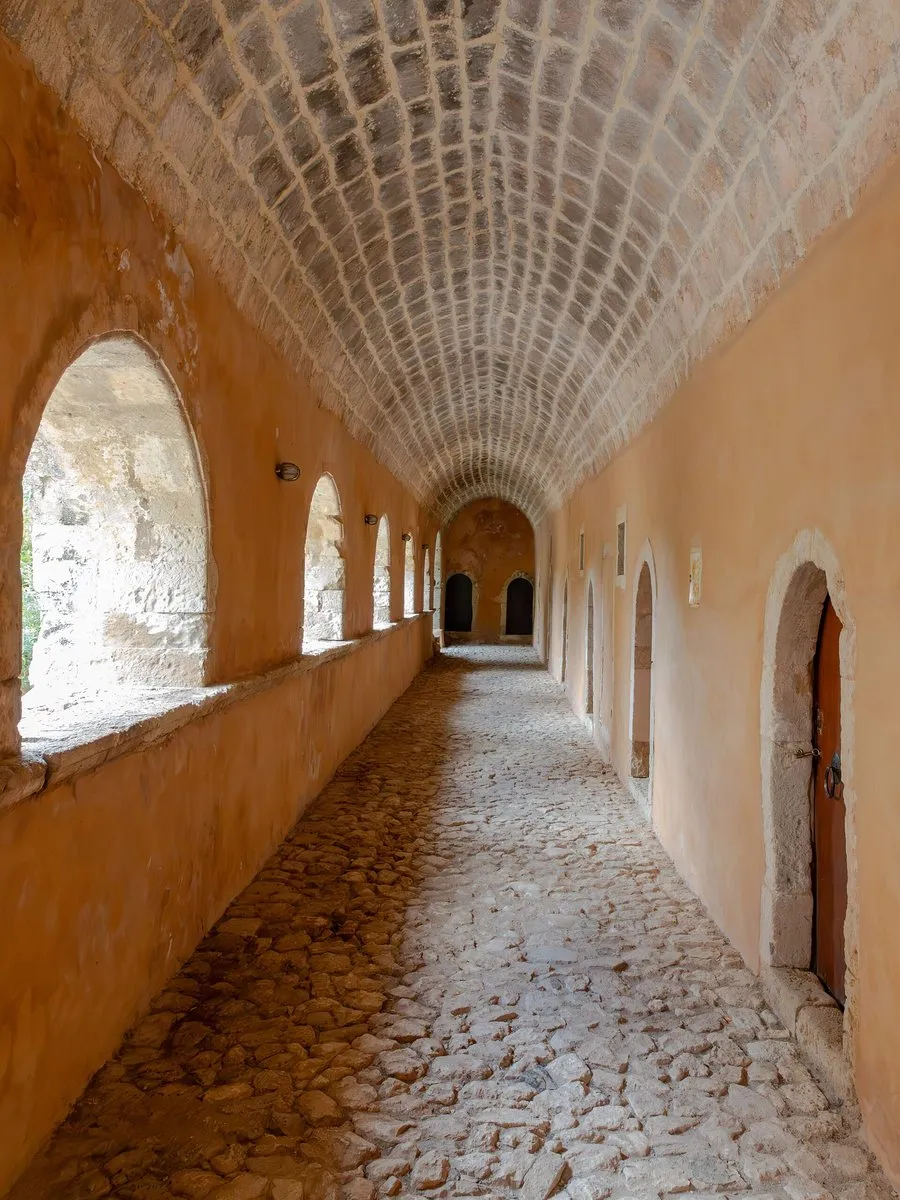
The Venetian-baroque church facade of 1587 is the postcard — one of the finest in Greece, golden in low light. But the gravity lives in the roofless gunpowder magazine at the courtyard’s corner, left as a scar, and in the ossuary just outside the walls where the skulls of the fallen are displayed without euphemism. The small museum stitches the story together in fifteen minutes.
Pairing the visit
Arkadi slots naturally with Rethymno old town for a full day, or with the Amari valley and Margarites pottery village for an inland loop that most visitors never make. The drive itself — olives, vines, the Psiloritis massif rising — is half the value.
The honest downside
Between roughly 11:00 and 15:00 in season the courtyard can hold several coach-loads at once, and the site is compact; the atmosphere that makes Arkadi extraordinary is exactly what the crowd dilutes. Time it or trade it.
Worth your time if: you want the island’s history at full voltage, one easy half-day from the coast. Skip it if: monasteries blur together for you and you cannot avoid the coach window — the story deserves better than a shuffle-through.
Photos on this page: both by Dietmar Rabich (CC BY-SA 4.0), via Wikimedia Commons, resized for the web. Nobody pays to be featured on this site.
Why is Arkadi Monastery important?
In November 1866, hundreds of Cretan women, children and fighters sheltering there chose to ignite the gunpowder store rather than surrender to the besieging Ottoman army. The event moved European opinion and still burns in the Cretan self-image. This is not a pretty-church stop.
What are the Arkadi Monastery opening hours?
Open daily with seasonal hours and a small entrance fee of a few euros. Verify before making a special trip. The best hours to be there are opening time or the last ninety minutes of the day - midday belongs to the excursion buses.
Is there a dress code at Arkadi?
Yes - working monastery rules, shoulders and knees covered. Wraps are usually lent at the door, but arriving dressed appropriately saves the negotiation.
How long do you need at Arkadi?
Forty-five to ninety minutes covers the church, the roofless gunpowder magazine, the small museum and a slow coffee opposite. The 1587 Venetian-baroque facade is the postcard; the gravity is in the magazine and the ossuary outside the walls.
How far is Arkadi from Rethymno?
About 23km, half an hour inland on a good road through olive country. It pairs naturally with Rethymno old town for a full day, or with the Amari valley and Margarites for an inland loop most visitors never make.
One email a month — only when something on this island actually changes. No spam, no partners, one-click unsubscribe. Read past issues before you decide.