The Beaches of Rethymno: An Honest Guide
Twelve kilometres of town-to-resort sand on the north side, and the famous coves of the south.
Rethymno’s beach story has two chapters. North: a twelve-kilometre ribbon of sand starting at the old town and running east through Platanias, Adele and Sfakaki — convenient, organised, occasionally wavy. South, over the mountains: the compact stars — Damnoni, Skinaria, Preveli, Triopetra — where the water goes tropical and the effort rises accordingly. Knowing which chapter your day belongs to is most of the game.
The honest facts
- Town beach
- starts at the marina; urban, busy, gently shelving, lifeguarded stretches, sunbeds roughly €8–12. Convenience is the product.
- East of town (Platanias→Sfakaki)
- wider sand, hotel-organised sections with public gaps between; the further east, the calmer the scene.
- Waves
- the north shore here catches the meltemi head-on more than the Heraklion coast — surf-school days happen; flags mean it.
- Loggerheads
- this coast is a caretta caretta nesting zone. Fenced nests appear in summer; give them space, skip beach lights at night.
- The south set
- 35–50 minutes over the gorge roads; covered guide-by-guide (Plakias, Preveli, Triopetra, Damnoni & Skinaria).
Matching beach to day
Car-free town day: the first two kilometres from the old town do everything, with lunch a towel-shake away. Family reliability: the Adele–Sfakaki hotel zone, morning hours, gentle entry. Wow-chasing: burn the fuel south — one southern cove outclasses the entire north ribbon for water colour, at the price of the drive.
The north ribbon, stretch by stretch
Twelve kilometres is not one beach and treating it as one is why people come away unimpressed.
The first two kilometres, from the marina east, are the town beach proper: urban backdrop, lifeguarded sections, sunbeds around €8–12, and the shortest walk from anywhere in the old town. Busy, functional, and the correct answer if you are staying inside the walls without a car.
Perivolia to Adele, roughly three to seven kilometres out, is where the hotel zone thickens. Wider sand, better-kept organised sections, and public gaps between the hotel frontages that most visitors walk past without realising they are free.
Adele to Sfakaki, the far end, is the quietest and the one locals use at weekends. Fewer facilities, more space, and the scene thins to families and dog-walkers by September.
Behind all of it runs the old road with tavernas that price for residents rather than sunbeds. One street back applies here as everywhere.
The turtles, which are not a detail
This is a Caretta caretta nesting coast, and it is one of the more important ones in Greece. Between roughly June and October you will see fenced-off nest markers on the sand — sometimes a dozen along one stretch.
The rules are simple and they matter: keep well clear of the marked cages, do not dig or drive stakes near them, take umbrellas out of the sand rather than leaving them overnight, and keep lights off the beach after dark. Hatchlings navigate by the brightness of the horizon over the sea, and a phone torch or a beach bar’s floodlight sends them inland to die.
If you find a hatchling in daylight, do not carry it to the water — call the local sea turtle protection line and leave it be.
Wind logic
Meltemi day: north coast lively-to-rough, so either enjoy the waves at a lifeguarded section or flip south, where the same wind often blows offshore and flattens the sea. Calm day: the north ribbon is at its best and the south is merely perfect.
The honest downside
The north stretch is functional rather than beautiful — a service beach for a lovely town — and its best sections are colonised by hotel loungers in high season. Nobody’s screensaver comes from here; plenty of good ordinary days do.
Worth your time if: you are based in or near the town — it is the easiest daily swim in west-central Crete. Skip it if: you drove an hour for scenery; keep driving thirty more minutes south.
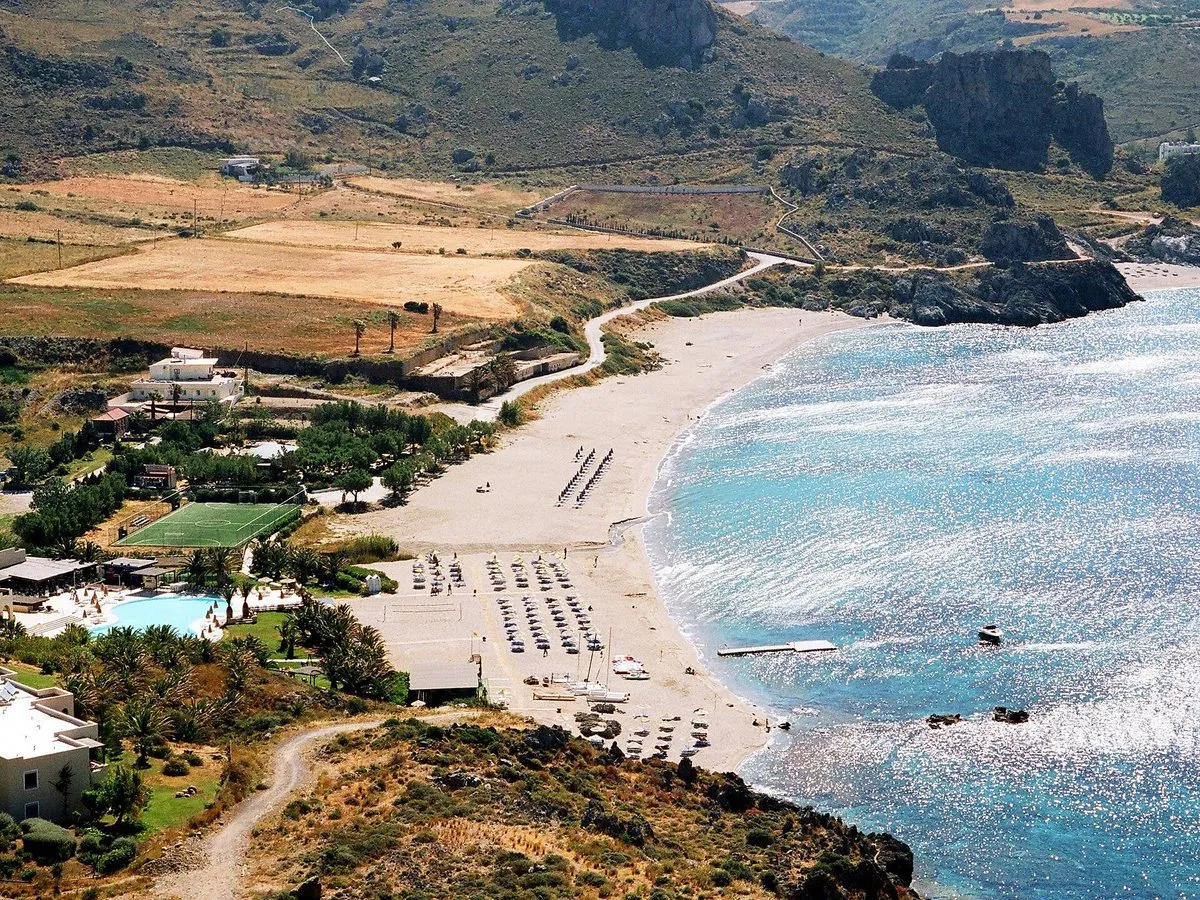
Photo on this page: Damnoni by Olaf Tausch (CC BY 3.0), via Wikimedia Commons, resized for the web. Everything above was checked for the date shown at the top of this guide. Nobody pays to be featured in a guide — no business, no sponsor, no paid mention, ever. Adverts, where they appear, are labelled as adverts.
-
The north ribbon
-
The south set
Tap a name to open it in your map app. These are options, not an order — pick by the day you have.
Which beach should you use in Rethymno town?
The first two kilometres from the old town do everything for a car-free day — urban, busy, gently shelving, with lifeguarded stretches and sunbeds at roughly €8–12. Convenience is the product; for family reliability, the Adele–Sfakaki hotel zone east of town is calmer, morning hours best.
Are Rethymno's north beaches or the south coves better?
Different jobs. The north is a convenient twelve-kilometre ribbon — functional rather than beautiful; the south set (Damnoni, Skinaria, Preveli, Triopetra) sits 35–50 minutes over the gorge roads, and one southern cove outclasses the entire north ribbon for water colour at the price of the drive.
What about wind and waves in Rethymno?
This north shore catches the meltemi head-on more than the Heraklion coast — surf-school days happen, and flags mean it. On meltemi days either enjoy the waves at a lifeguarded section or flip south, where the same wind often blows offshore and flattens the sea.
Anything to watch for on these beaches?
This coast is a caretta caretta nesting zone: fenced loggerhead nests appear in summer — give them space, and skip beach lights at night.
One email a month — only when something on this island actually changes. No spam, no partners, one-click unsubscribe. Read past issues before you decide.