Easter in Crete: The Honest Guide to the Biggest Week of the Year
Orthodox Easter is Crete at its most itself — candlelit processions, midnight fireworks, lamb over coals. What happens each day, what closes, and how to be a welcome guest.
If you can only see Crete once and you care more about the island than the beach, come at Easter. Nothing else in the calendar — not August, not the grape harvest, not even a big panigiri — shows the place so completely itself: a week of candlelight, gunpowder, fasting and feasting in which every village becomes its own small theatre and visitors are folded in without a second look. This guide is what actually happens, day by day, and how to be there without being in the way.
The date moves. Orthodox Easter follows its own calculation and lands anywhere from early April to early May — in 2027 it is Sunday 2 May, after 12 April in 2026. Check the year you are booking before anything else, because the whole island’s spring pivots on it.
The honest facts
- The date
- moves yearly — 12 April in 2026, Sunday 2 May in 2027; check it before booking anything, the whole spring pivots on it.
- The week’s spine
- Good Friday Epitaphios processions at dusk; Saturday midnight — “Christos Anesti”, fireworks, Judas bonfires; Sunday lamb over the coals from mid-morning; Monday the gentle landing.
- What closes
- Good Friday and Easter Sunday genuinely shut the island — sort fuel, cash and food a day ahead.
- Where it is best
- towns give several processions and open restaurants; villages give the fifty-candle courtyard; the resort strip is where Easter feels thinnest.
- The noise
- Saturday midnight is a genuine barrage — nervous dogs and small children have a hard hour.
- Weather and sea
- usually 18–23°C and green, occasionally biblical; the sea is still cold — bring a proper jacket for the 1am courtyard.
- Booking
- rooms in towns and famous villages go months out, and a Sunday table needs a reservation.
Holy Week, as it actually unfolds
The week builds quietly. Churches strip their decoration, bakeries stack kalitsounia — the little Cretan cheese-and-herb pastries that are this island’s answer to tsoureki — and by Holy Thursday the smell of baking and beeswax is general. Thursday night the first big services fill the churches.
Good Friday is the day that stops the island. Shops open briefly if at all, flags hang at half mast, tavernas that open serve the fasting table — octopus, beans, no oil in the strict houses — and at dusk every parish carries its Epitaphios, a flower-covered bier of Christ, around the neighbourhood with the whole congregation walking behind, candles lit, chanting. In towns like Rethymno several processions cross in the lanes; in a mountain village it is fifty people and a priest under the plane tree, and somehow more moving.
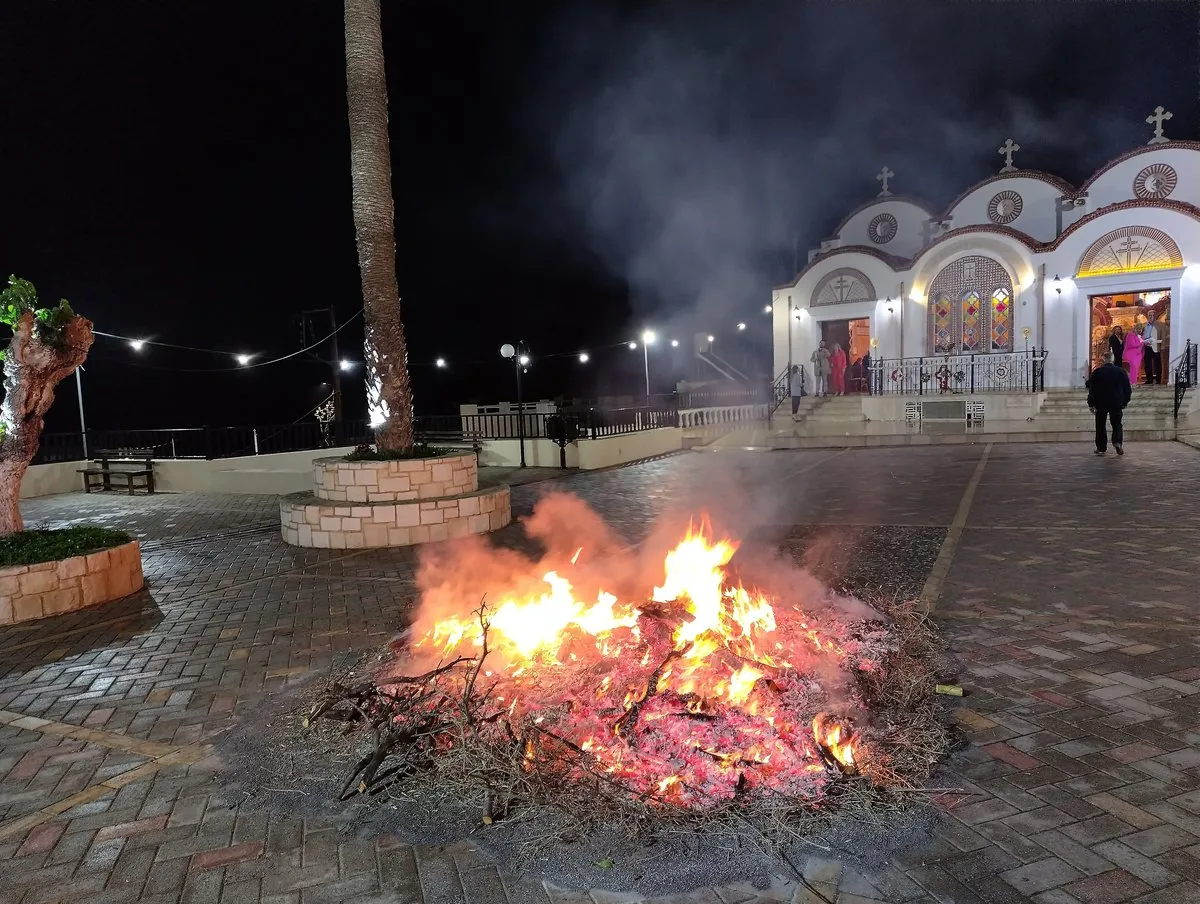
Holy Saturday flips the mood by the hour. Markets roar all morning — the lamb, the eggs dyed red, the last kalitsounia — then everything closes and the island naps before the main event. At midnight, in every church courtyard on Crete, the lights go out, the priest emerges with a single flame, “Christos Anesti” passes from candle to candle until the square is a sea of small fires — and then Crete does what Crete does: church bells, ships’ horns, and a barrage of fireworks and firecrackers that would embarrass a small war. In villages they burn an effigy of Judas on a bonfire. It is genuinely magnificent and genuinely loud; nervous dogs and small children have a hard hour.
Afterwards, families crack red eggs — last egg unbroken wins the year’s luck — and sit down at one in the morning to the resurrection soup that breaks the fast.
Easter Sunday belongs to the coals. From mid-morning the island smells of lamb: spit-roasted in the yards, or done the old shepherd way in the hills — antikristo, great cuts staked in a circle “facing the fire” for hours with nothing but salt. Tavernas that open serve one menu to full tables of four generations. By late afternoon the raki is circulating and someone has found a lyra. Monday is the gentle landing: a public holiday, tavernas open, everyone slightly slower.
Where to spend it
Anywhere, honestly — but the texture differs. A town Easter (Chania, Rethymno, Heraklion) gives you multiple processions, open restaurants and an easy walk home at 1am. A village Easter — the Amari valley, Anogia, any place with a square and a belfry — gives you the fifty-candle courtyard, the Judas bonfire and, if you have eaten in the taverna twice that week, a fair chance of being handed a plate on Sunday. The resort strip is the one place Easter feels thin: many coastal businesses are only just opening for the season, and the celebration happens in the old villages up the hill, not on the beach road.
Weather: usually lovely, occasionally biblical. Late April brings green hills, 18–23°C days and a sea still cold enough to make swimming a boast rather than a pleasure. Pack a proper jacket for the midnight service — standing in a courtyard at 1am is its own microclimate.
Being a good guest
Buy your candle at the church table and bring the flame home like everyone else — getting it to your door still lit is the game. Say “Christos Anesti” (Christ is risen) after midnight and accept “Alithos Anesti” back. Dress with shoulders covered for services, stand when the congregation stands, and keep the phone down during the liturgy — photographs of the procession outside are fine and expected. If a family waves you toward their Sunday table, the correct answer is yes; arrive with a bakery box or a bottle, and pace yourself against the raki, which will not pace itself against you.
The honest downside
Easter is a Greek holiday before it is a spectacle, and it books like one — rooms in the towns and famous villages go months out, minimum stays appear, and a Sunday table without a reservation is a long shot. The fireworks are not decorative: from Saturday midnight into the small hours the noise is real, and the strip of days around it can be smoky with bonfires. Good Friday and Easter Sunday genuinely close the island — plan fuel, cash and food a day ahead. And the sea is not yet summer: this is a trip for the island’s soul, not its swimming. If your heart is set on beach weather with your resurrection, that combination only reliably exists in the very latest Easters — like 2027’s.
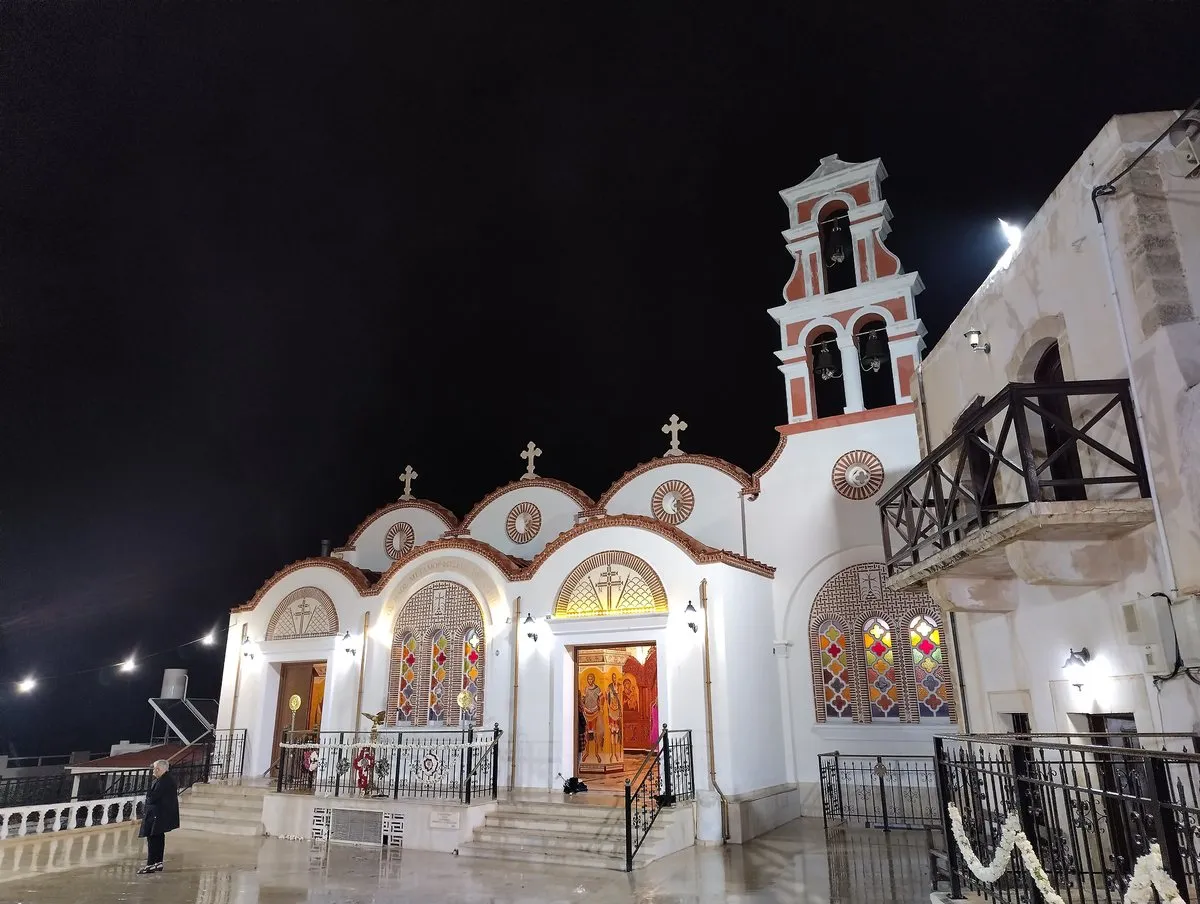
Photos on this page: the church and the bonfire at Piskopiano by Tomisti (CC BY-SA 4.0), via Wikimedia Commons, resized for the web. Dates verified against the 2027 calendar; customs described are the island-wide pattern and vary by parish and village. No church, taverna or business is named or promoted here, and nobody pays to be featured.
When is Orthodox Easter in 2027?
Easter Sunday falls on 2 May 2027, with Good Friday on 30 April and Easter Monday, a public holiday, on 3 May. The Orthodox date follows the Julian calculation and usually differs from the Western one — always check the year you are travelling.
Is Easter a good time to visit Crete?
For atmosphere, the best week of the year: the island is green, the weather is usually kind, prices are shoulder-season and you will see Crete performing for itself, not for visitors. For beach-holiday certainty it is too early — the sea is brisk and some coastal businesses are still shuttered.
What is open and closed over Greek Easter?
Good Friday: shops keep limited hours and tavernas serve fasting menus. Holy Saturday: everything open until evening. Easter Sunday: almost everything closed — this is the family day. Easter Monday: a public holiday with tavernas open and shops mostly shut. Supermarkets post their holiday hours in the window.
Can tourists go to the church services?
Yes, and you will be welcome — the courtyard crowds at the Friday Epitaphios procession and the Saturday midnight Resurrection are half the village anyway. Dress modestly, follow the crowd's lead, buy a candle from the table by the door, and don't photograph faces during prayers.
What do people eat at a Cretan Easter?
Magiritsa or, in Crete, often a lamb offal soup called gardoumia after the midnight service; red-dyed eggs cracked in a knockout contest; sweet kalitsounia cheese pastries; and on Sunday, lamb — spit-roasted or, in the mountain way, antikristo, staked around open coals for hours.
Is it hard to find a room over Easter week?
In the towns and famous villages, yes — this is a Greek holiday first, and Athenians book months ahead. Reserve accommodation and the Sunday table early, expect two-to-three-night minimums, and treat Easter Sunday lunch without a booking as optimistic.
One email a month — only when something on this island actually changes. No spam, no partners, one-click unsubscribe. Read past issues before you decide.