The Amari Valley: The Honest Guide to Rethymno's Hidden Heart
The green bowl between Psiloritis and Kedros — fresco chapels, cherry orchards, martyred villages and tavernas without menus.
The Amari valley hides in plain sight between Psiloritis and Kedros: a green bowl of orchards and some forty villages that mass tourism never found a beach in. What it offers instead is the island’s densest concentration of frescoed Byzantine chapels, cherry and walnut agriculture, wartime memory (the “martyred villages” burned in 1944), and the particular luxury of tavernas where the menu is whatever grandmother decided. It is Crete’s best aimless-driving day.
The honest facts
- Orientation
- enter from Rethymno via Prasies or from the Agia Galini side; a rough figure-eight through Thronos, Kalogerou, Meronas, Gerakari, Ano Meros and back takes a slow half-day before stops.
- The chapels
- Thronos’ Panagia (mosaic floor visible outside, frescoes within), Meronas’ church, and a dozen siblings — keys live next door, coins go in boxes, shoulders get covered; the paintings reward torch-light patience.
- Gerakari & the cherries
- the valley’s produce capital, with cherries grown on the northern slopes of Kedros — late spring/early summer roadside cherry stalls are mandatory stops; preserves travel home well.
- The memory
- Gerakari and neighbours were destroyed in the 1944 reprisal sweep; rebuilt plainly, remembered clearly at the memorials. The valley’s beauty carries this weight visibly.
- Eating
- village tavernas at Thronos, Meronas, Gerakari of the no-menu, what-we-cooked school — lunch for two roughly €25–40, hospitality included at no charge.
- Without a car
- KTEL Chania–Rethymno lists several valley villages, among them Meronas, Gerakari and Ano Meros, as destinations; check the timetable before building a day around one — realistically this is a driving day.
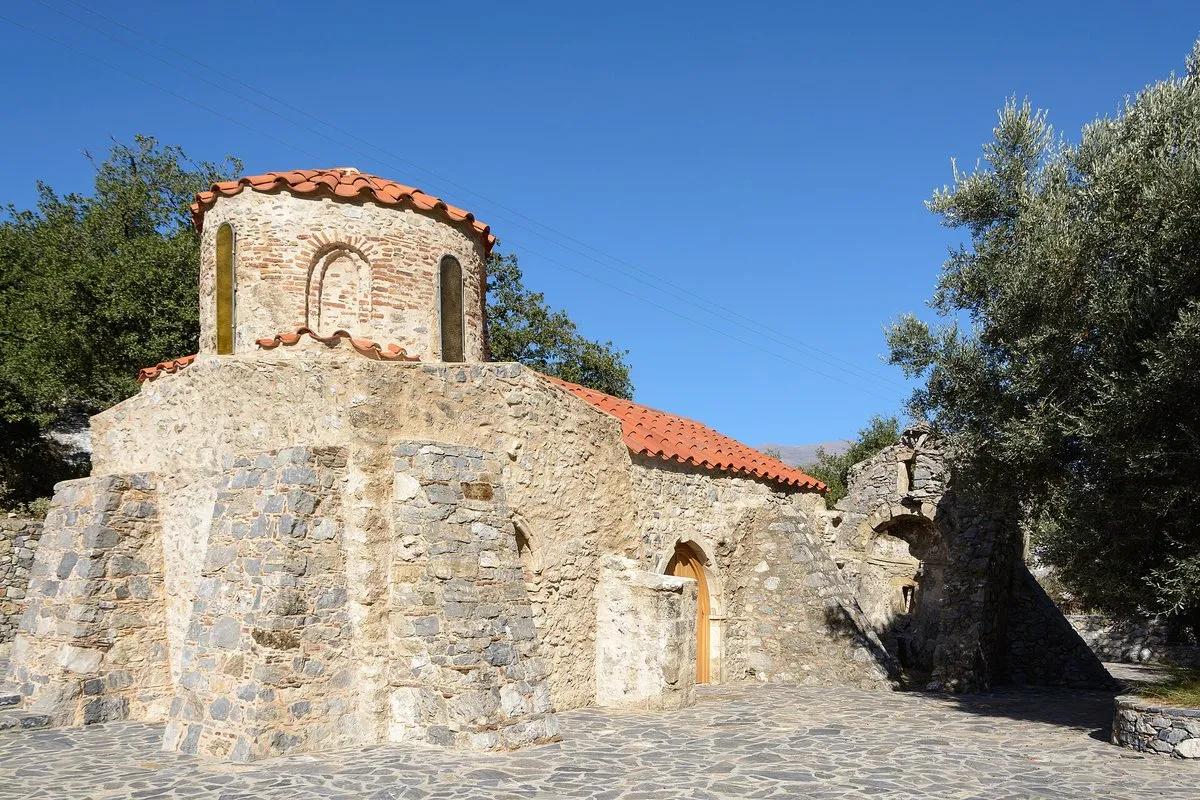
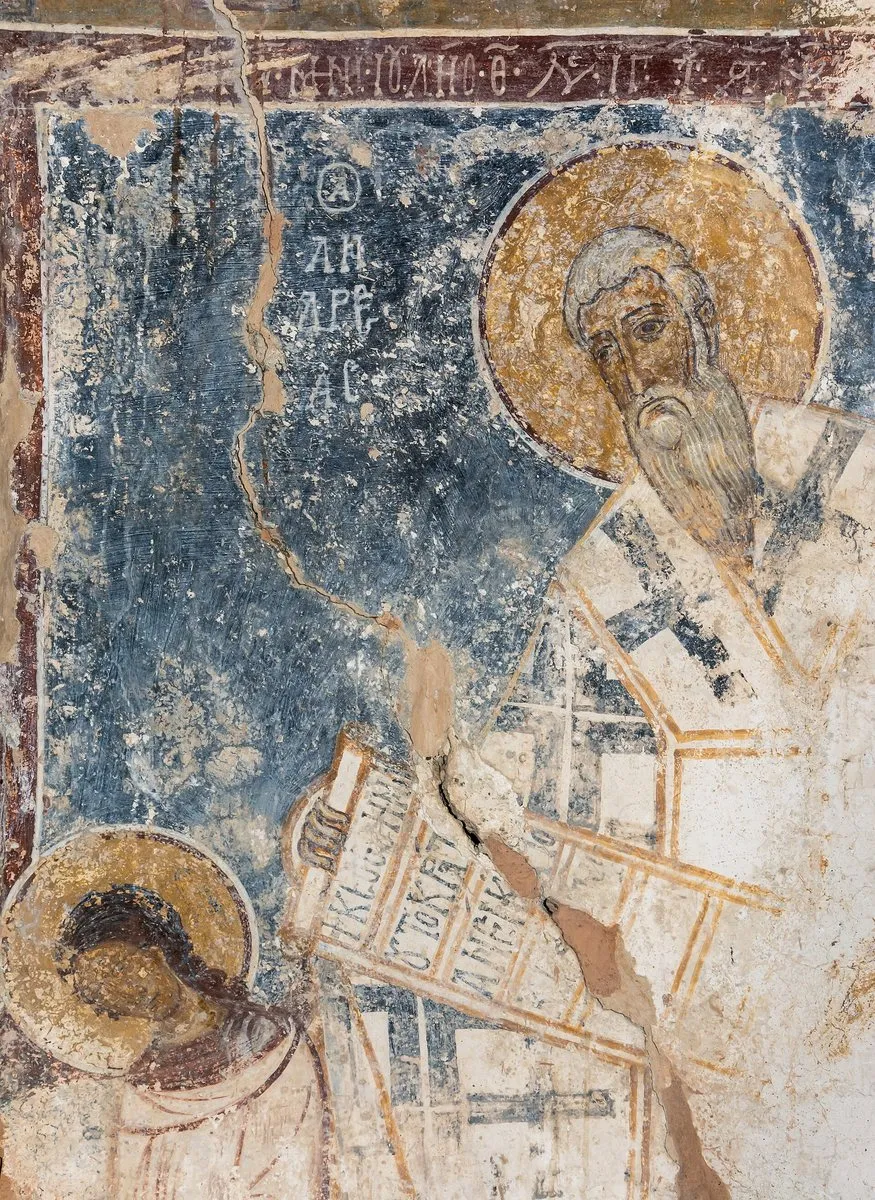
What is inside the chapels
Thronos sits on the site of ancient Sybrita. Its small single-nave church of the Panagia was built in the 14th century over the apse of a three-aisled early Christian basilica, and the mosaic floor outside belongs to that basilica, dated to the 6th century. Two painters of the early 1300s decorated the interior, one conservative, one following the Palaeologan style of Constantinople; the enthroned Virgin and Child on the south side is the image to look for.
Meronas’ Panagia is a two-aisled, barrel-vaulted church. The Kallergis family, powerful in the village in the early 15th century, left their coat of arms over the pointed doorway, and the late-14th-century frescoes include the Akathist Hymn and the Tree of Jesse. A mid-14th-century icon of the Virgin Hodegetria, of Constantinopolitan workmanship, is kept in the church. West of Vizari, the foundations of a large three-aisled basilica, about 34 by 17 metres with three apses, make a short detour.
22 August 1944
The memory has a date. On 22 August 1944 German forces burned Gerakari and executed 49 of its people; Ano Meros was destroyed the same day and 38 civilians were killed. The memorial to the executed at the entrance to Ano Meros is by the Rethymno sculptor Giannis Kanakakis. Gerakari, at 680m, was rebuilt on its own ruins; a Venetian bell with relief decoration survived and is kept in the church of the Annunciation.
The honest day
Morning entry with the light raking the olive terraces, two or three chapels while keys are findable, cherry-stall tax paid, the long no-menu lunch as the day’s hinge, one memorial given its silence, and the exit pass whichever direction glows — over to Spili’s fountains or down toward Agia Galini’s harbor completing the loop.
Outside cherry season the valley still earns a day. North of Voleones, the Potami reservoir has turned a small closed valley into an artificial wetland where wintering birds gather, among them the threatened ferruginous duck.
The honest downside
The valley’s pleasures are quiet and cumulative — no single stop headlines; chapel access depends on neighbourly luck; and navigation between look-alike villages will test the co-driver’s humour. That diffuseness is the moat that kept it whole.
Worth your time if: frescoes, orchards and unscheduled lunches are your definition of rich. Skip it if: the day requires a marquee sight — Arkadi sits on the valley’s rim for exactly that.
Photos on this page: both by Uoaei1 (CC BY-SA 4.0), via Wikimedia Commons, resized for the web. Everything above was checked for the date shown at the top of this guide. Sections added in October 2026 were checked against published sources rather than on a new visit. Nobody pays to be featured in a guide — no business, no sponsor, no paid mention, ever. Adverts, where they appear, are labelled as adverts.
Tap a name to open it in your map app. These are options, not an order — pick by the day you have.
Where is the Amari valley?
A green bowl between Psiloritis and Kedros, entered from Rethymno via Prasies or from the Agia Galini side. A slow figure-eight through Thronos, Kalogerou, Meronas, Gerakari and Ano Meros takes about half a day before you stop for anything.
Can you get into the Byzantine chapels in Amari?
Usually, with neighbourly luck. Keys live next door, coins go in the honesty box, and shoulders get covered. Thronos Panagia and the church at Meronas are the standouts among a dozen siblings, and the frescoes reward patience and a torch.
What are the martyred villages of Amari?
Gerakari and its neighbours were destroyed in the German reprisal sweep of 1944. They were rebuilt plainly and are remembered clearly at the memorials. The valleys beauty carries that weight visibly, and the memorials deserve their silence.
What should you eat in the Amari valley?
Whatever the taverna cooked. Thronos, Meronas and Gerakari run the no-menu, what-we-made school - lunch for two around EUR25-40 with hospitality included at no charge. In late spring and early summer the roadside cherry stalls at Gerakari are a mandatory stop.
Is the Amari valley worth a day?
If frescoes, orchards and unscheduled lunches are your definition of rich, yes. If the day requires a marquee sight, no - and Arkadi sits on the valleys rim for exactly that. The diffuseness is the moat that kept Amari whole.
Can you visit the Amari valley without a car?
Only with patience. KTEL Chania–Rethymno lists several valley villages, including Meronas, Gerakari and Ano Meros, as destinations from Rethymno, but the chapels, cherry stalls and memorials are spread across some forty villages. A car turns the valley into a half-day loop; by bus, check the current timetable and plan around one or two villages.
One email a month — only when something on this island actually changes. No spam, no partners, one-click unsubscribe. Read past issues before you decide.