Ammoudara: Heraklion's Town Beach, Honestly
Six kilometres of city-adjacent sand with buses every few minutes — student beach bars, meltemi waves, zero romance, maximum convenience.
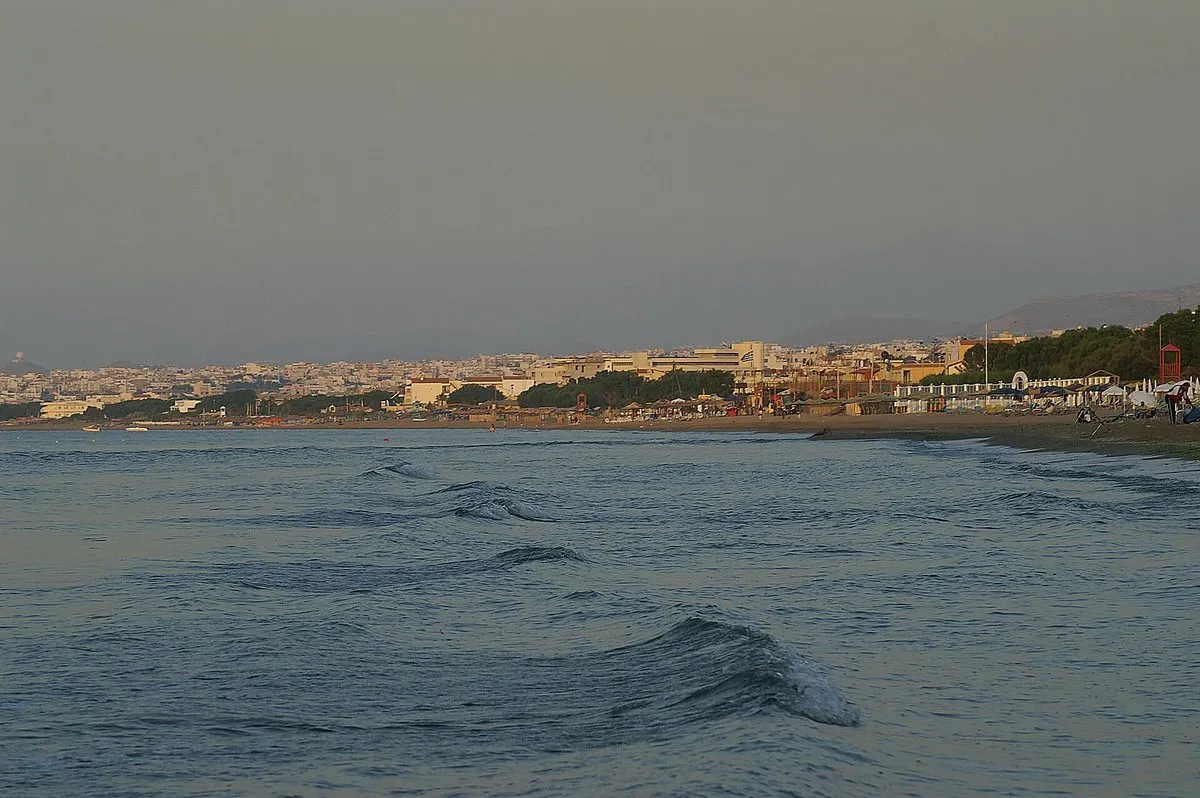
Ammoudara is Heraklion’s beach the way a city has a beach: six kilometres of sand starting just west of the port, lined with hotels, beach bars and apartment blocks, served by city buses and priced for residents. Nobody flies to Crete for it — and yet, for the right day, it is precisely correct: the pre-flight swim, the museum-day cooldown, the no-car beach fix with a freddo economy behind it.
The honest facts
- Access
- 10–15 minutes from central Heraklion; frequent city buses run the whole strip. From the airport it is the closest real beach — relevant on departure days.
- The sand
- long, wide, grey-gold, gently shelving; organised sections with sunbeds around €6–10 (student-adjacent pricing) alternating with free stretches.
- The sea
- clean for a city beach and fully meltemi-exposed — this is one of the windiest, waviest stretches of the north coast; flags and the summer surf/kite scene tell the story. Calm mornings swim beautifully; strong afternoons are for watching.
- The scene
- young, local, unpretentious — Heraklion’s students and families own it; the beach bars pulse on summer weekends.
- Behind it
- the strip road is functional-ugly; keep eyes to the sea and the Dia island silhouette.
When Ammoudara is the right answer
Last-day flights after noon: swim here, shower at a beach bar, airport in twenty minutes. Museum-and-Knossos days: this is the closing dip. Carless city stays: it is the only serious sand a bus ticket reaches. Wave-curious travellers: on meltemi afternoons this is the corridor’s honest surf classroom.
Where on the six kilometres
The strip runs west from the Heraklion port edge and it is not uniform.
The eastern end, closest to the city, is the busiest and the most built — hotels, apartment blocks and the highest density of beach bars. Convenient if you are staying in Heraklion and walking, unremarkable otherwise.
The middle is the most usable: wider sand, alternating organised and free stretches, and enough space between the bars that a towel works.
The western end, towards Linoperamata, thins out and gets scruffier, with the industrial edge of the bay becoming visible. Some locals swim here precisely because nobody else does.
If you have a car and a choice, aim for the middle. If you are on the bus, get off where the crowd does — the stops track the usable sections.
The wind, and why it built a scene
Ammoudara faces north into the meltemi with nothing in front of it, which is why the water is choppy most summer afternoons and why the beach has grown a surf, windsurf and kite culture that no other beach near Heraklion has. Boards are rentable in season and lessons run from the middle section.
For swimmers this is straightforwardly bad news after about one in the afternoon. For anyone who has ever wanted to try a board, it is the most convenient place in central Crete to do it.
A morning plan that works
Treat the wind as a timetable and the beach becomes reliable: arrive before the meltemi finds its stride, pick an organised section mid-strip where the sunbeds run €6–10 and the free stretches alternate beside them, and swim while the flags still hang. When the afternoon turns the sea to texture, the day does not end — it changes audience: the surf-and-kite scene takes the water, the beach bars take everyone else, and watching both with a freddo is a legitimately good Heraklion afternoon. Bus riders should stay with the central sections and skip the far-western industrial end entirely; drivers on a departure day should remember this is the closest real sand to the airport, and time the last swim accordingly.
When it is not
Any day you drove for scenery. The Hersonissos-corridor beaches, Agia Pelagia’s coves, or Voulisma all outrank it aesthetically within an hour — Ammoudara competes on distance, not beauty, and knows it.
The honest downside
The backdrop is urban sprawl, the wind is a personality, and the far-western sections near the industrial end are skippable. Romance is not stocked at any kiosk here.
Worth your time if: convenience is the actual brief — it wins those days outright. Skip it if: this swim is meant to be a memory; spend the extra thirty minutes elsewhere.
Photo on this page: the beach by böhringer friedrich (CC BY-SA 2.5), via Wikimedia Commons, resized for the web. Everything above was checked for the date shown at the top of this guide. Nobody pays to be featured in a guide — no business, no sponsor, no paid mention, ever. Adverts, where they appear, are labelled as adverts.
Is Ammoudara beach worth visiting?
For the right day, yes. It is Heraklions city beach - six kilometres of grey-gold sand starting west of the port, served by city buses and priced for residents. Nobody flies to Crete for it, but as a last-day swim before a flight or the closing dip after a museum morning it is the correct answer.
Is Ammoudara windy?
It is one of the windiest and waviest stretches of the north coast, fully meltemi-exposed - which is why a surf and kite scene has grown there. Calm mornings swim beautifully; strong afternoons are for watching.
How do you get to Ammoudara beach?
Ten to fifteen minutes from central Heraklion with frequent city buses running the whole strip. From the airport it is the closest real beach, which is the relevant fact on a departure day.
How much are sunbeds at Ammoudara?
Around EUR6-10, which is student-adjacent pricing, and organised sections alternate with free stretches. The crowd is young, local and unpretentious.
Is Ammoudara good for families?
It works - the sand is wide and gently shelving - but the wind is the deciding factor. On a calm morning it is fine; on a meltemi afternoon the waves make it a beach for teenagers rather than toddlers.
One email a month — only when something on this island actually changes. No spam, no partners, one-click unsubscribe. Read past issues before you decide.