Balos Lagoon: The Honest Guide to Getting That Photo
Balos is as spectacular as the photos — and harder work than they admit. Boat versus dirt road, what the walk down really involves.
Balos is the one on the postcards: a white sandbar between turquoise lagoon and open sea, with Gramvousa islet floating behind. It is real. What the postcards leave out is that everyone in western Crete is trying to reach it at the same time, by two imperfect routes. Choose your route honestly and Balos delivers; drift there at noon and you will meet a beautiful car park of humans.
The honest facts
- Two ways in
- the day boat from Kissamos port, or your own car up a rough dirt track plus a steep 20–30 minute path down.
- The boat
- easy, includes a Gramvousa fortress stop, but lands mid-day with everyone else. Roughly €30–40; check current lines.
- The road
- about 8km of washboard gravel past Kaliviani — slow but done daily by normal hire cars; some rental contracts grumble about dirt roads, so drive gently. Small entrance/parking fee at the gate, then the walk down in full sun.
- Water
- the lagoon is warm, knee-deep and safe; the outer beach has proper swimming.
- Take
- water, hat, decent shoes for the path. There is a seasonal canteen; do not rely on it.
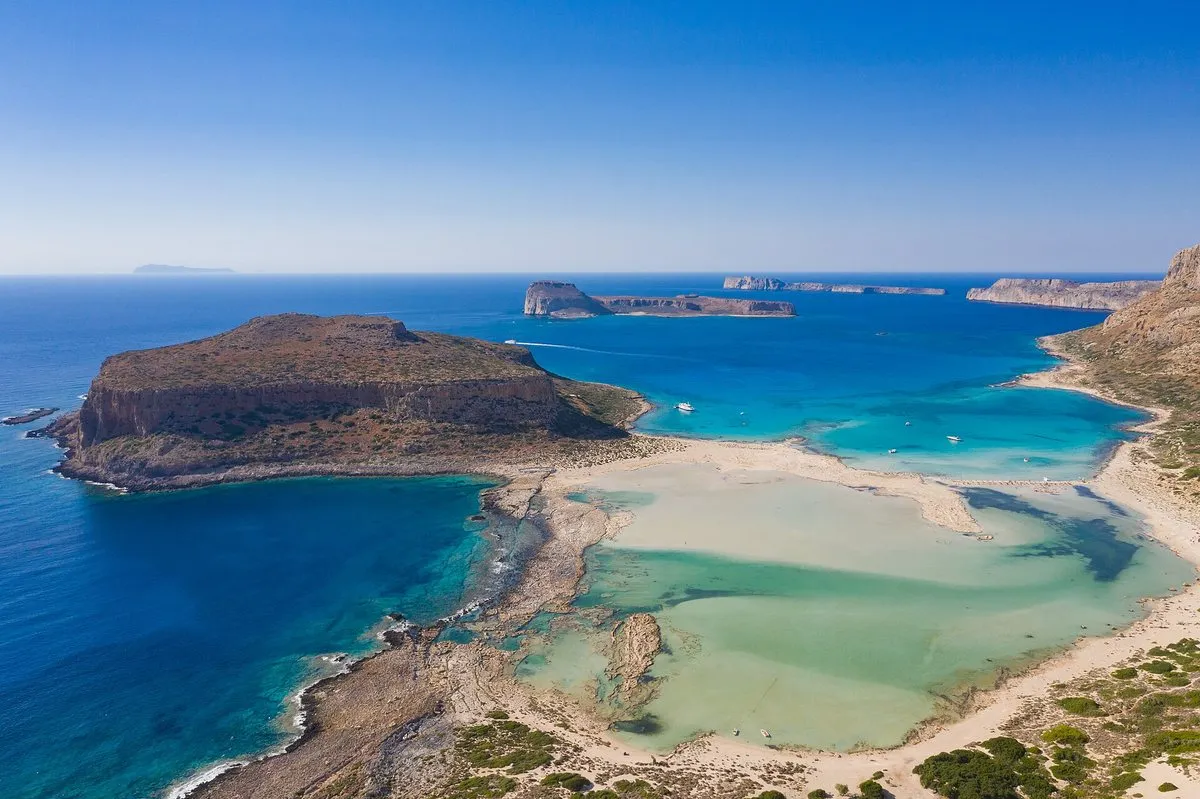
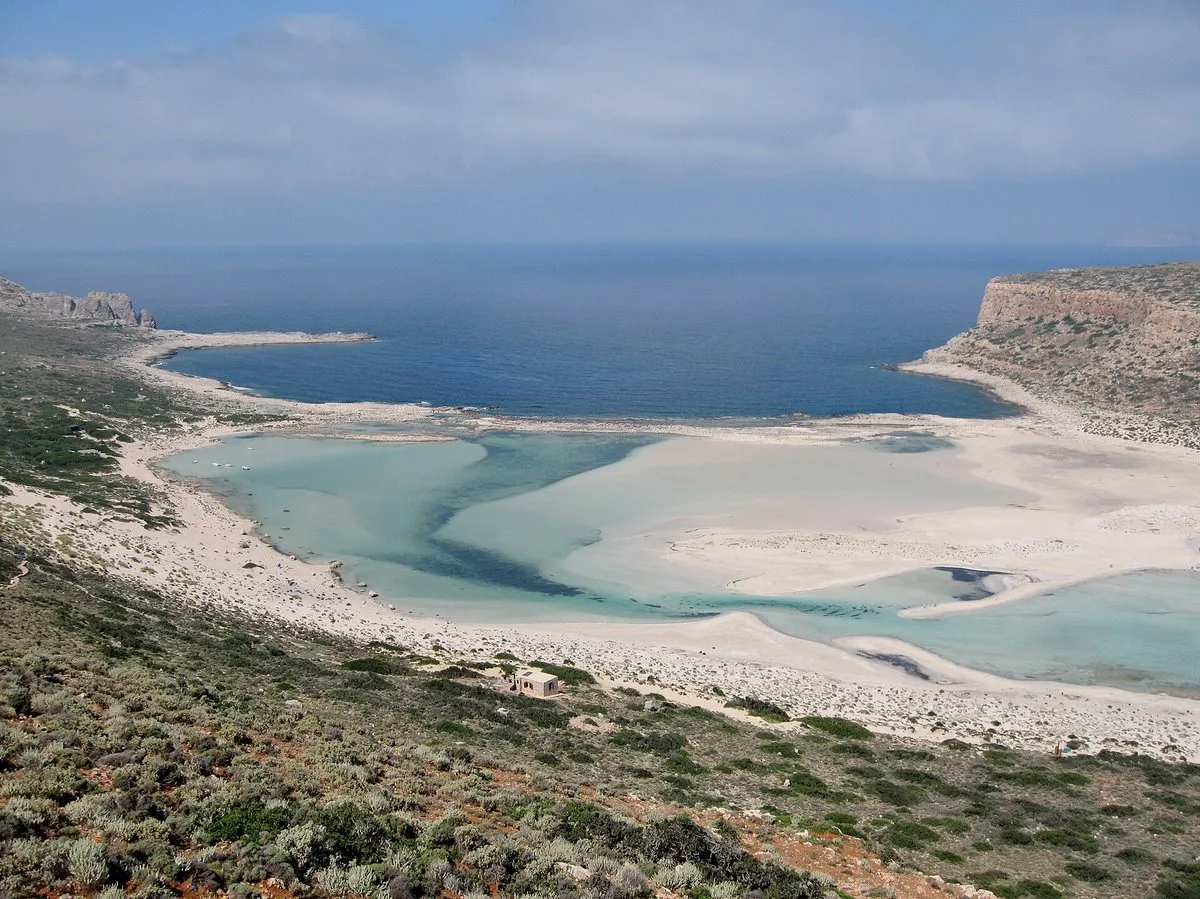
Boat or car, honestly
Take the boat if you want zero logistics, a swim stop at Gramvousa and you accept the crowd, because you will arrive with it. Take the car if you can leave early — on the sand before ten — or late, arriving after four when the fleet reverses out. The early-car option is the version that looks like the photo.
The dirt road, in detail
The track from Kaliviani is about 8km of washboard gravel with exposed rock in places. Normal hire cars do it daily and it is not technically difficult, but two things catch people out.
Your rental contract probably forbids it. Most Cretan hire agreements exclude unsurfaced roads, which means damage is on you. Not a reason to avoid it, but a reason to drive at a speed where nothing gets damaged — 20km/h, and slower over the rock.
It is slow. Allow 25 to 30 minutes for those 8km. People budget ten, arrive frustrated, and drive it too fast.
There is a small fee at the gate, then the parking plateau, then the walk.
The walk down, and the walk back up
The path drops the hillside in wide zigzags. Down is 20 to 25 minutes in trainers and genuinely pleasant, with the lagoon opening below you the whole way.
Back up is the part nobody photographs: 30 to 40 minutes of climbing, no shade, and in August it is done in full afternoon sun. This is where the day goes wrong for people who arrived at noon with one small bottle of water.
Carry more water than feels reasonable. There is a seasonal canteen at the bottom but it is not something to rely on.
Gramvousa, and whether the boat is worth it
The boat includes a stop at Gramvousa islet, where a Venetian fortress sits on top of a steep 20-minute climb. The view from up there is the best on this coast and the wreck in the bay below is genuinely photogenic.
That stop is the strongest argument for the boat. The weakest is timing: the fleet lands at Balos together, around midday, and leaves together. You will see the lagoon at its most crowded and in its flattest light.
When it is at its best
Late May, June, September: the light is right, the meltemi calmer, the fleet thinner. On strong north-wind days the outer water chops up while the lagoon stays glassy — a decent consolation.
The honest downside
Facilities are minimal by design; shade is your umbrella or nothing; and the mid-day density in high season is genuinely at odds with what you drove out there to feel.
Worth your time if: you can control your arrival hour. Balos before ten is a top-three Greek beach moment. Skip it if: you refuse dirt roads and hate boats — Falassarna, twenty minutes south, gives you eighty percent of the wow for five percent of the logistics.
Photos on this page: Balos from the air by dronepicr (CC BY 2.0) and the path view by Olaf Tausch (CC BY-SA 3.0), via Wikimedia Commons, resized for the web. Nobody pays to be featured on this site.
Should you take the boat or drive to Balos?
Take the boat from Kissamos if you want zero logistics and the Gramvousa stop, accepting that you land mid-day with everyone else (roughly €30–40; check current lines). Drive if you can control your hour — on the sand before ten, or after four when the fleet reverses out, is the version that looks like the photo.
Can a normal hire car handle the road to Balos?
Yes — about 8km of washboard gravel past Kaliviani, slow but done daily by ordinary hire cars. Some rental contracts grumble about dirt roads, so drive gently; there is a small entrance/parking fee at the gate, then the walk down.
How hard is the walk down to Balos?
From the parking plateau the path drops in wide zigzags — about 25 minutes down, fine in trainers. The return is the honest work: budget 35 minutes back up in full sun and carry more water than feels reasonable.
When is Balos at its best?
Late May, June and September — better light, calmer meltemi, thinner fleet. In high season, be there before ten or after four; the middle of the day belongs to the day-trip boats.
One email a month — only when something on this island actually changes. No spam, no partners, one-click unsubscribe. Read past issues before you decide.