Crete in Winter: The Honest Guide to December to March
Snow on the White Mountains, empty archaeological sites, city life, carnival and almond blossom — and rain, wind, closed resorts, cancelled ferries and cold houses. What a Cretan winter is actually like, and who it suits.
A Cretan winter is two different places depending on where you stand. On the coast it is mild, green, often wet and very quiet; up on the plateaus and the mountains it is snow, woodsmoke and closed roads. The resorts are shut, the cities are not, and the island’s sites are emptier than at any other time. Climate figures below are the national weather service’s long-term normals as published; everything else was checked against official and regional sources in September 2026.
The honest facts
- Heraklion
- highs of about 15–17 °C, lows of 9–11 °C from December to March.
- Rain
- January is the wettest month — about 90 mm in Heraklion, over 120 mm in Chania.
- Sea
- about 18 °C in December, 16–17 °C in January to March.
- Snow
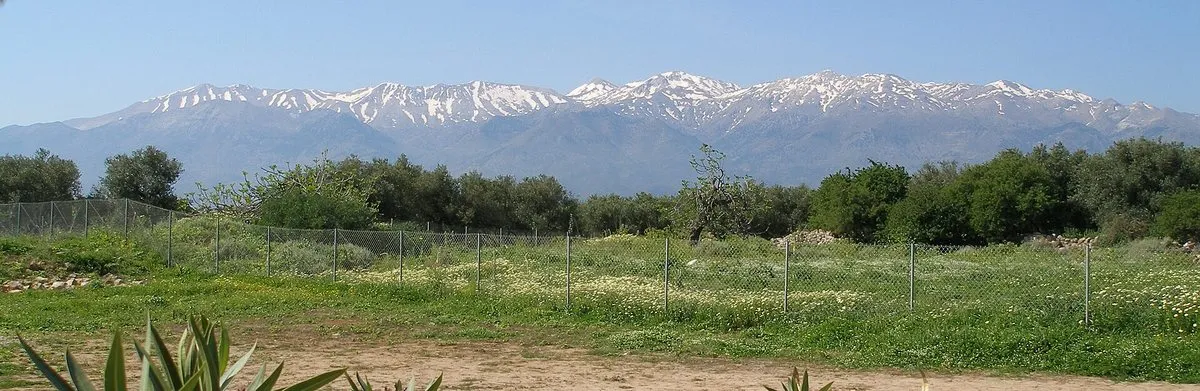
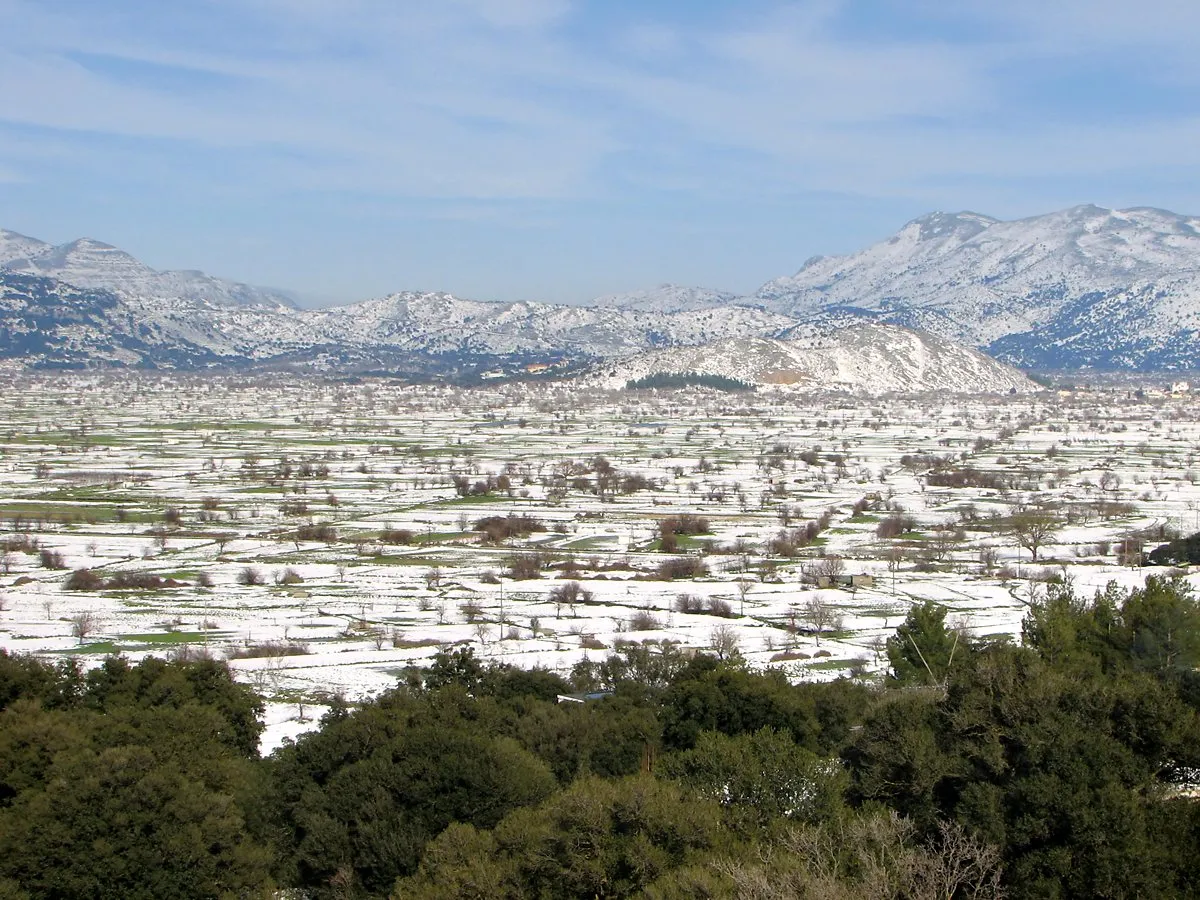
- the White Mountains and Psiloritis (both over 2,450 m) are white all winter; the Lasithi Plateau at ~840 m can be snowed in.
- Daylight
- sunset around 17:10 in December.
- Open
- the cities, their markets and museums. Closed: resorts and most small coastal villages.
- Sites
- winter hours, often ending mid-afternoon — the Heraklion museum listed 08:30–15:30 last winter. Verify seasonally.
- Ferries
- can be cancelled by storms; flights are mostly via Athens.
What winter is good for
Winter is when Crete’s cities come into their own. Heraklion, Chania, Rethymno and Agios Nikolaos are university and market towns with a life that has nothing to do with tourism, and in December and January their centres are full of locals rather than visitors. The archaeological sites and museums are quiet enough to have rooms to yourself — the Heraklion Archaeological Museum on a January weekday is a different experience from August.
The mountains are the other draw. After a storm the White Mountains and Psiloritis stand white above an island still green at sea level, and the Lasithi Plateau can be deep in snow — beautiful, and a reason to check the roads before driving up.
The calendar
Christmas and New Year are family holidays: children sing the kalanta carols from door to door on the eves of Christmas, New Year and Epiphany, and the vasilopita cake is cut at midnight on New Year’s Eve, with a coin hidden inside for luck. On 6 January, Epiphany, priests bless the waters by throwing a cross into the sea or a harbour, and swimmers race to bring it back.
Then comes carnival. Rethymno’s is the biggest on the island, organised by the municipality and building for weeks towards a Grand Parade on the Sunday before Clean Monday. In 2026 it ran from 30 January to 23 February. Clean Monday 2027 is 15 March, which points to a parade around 14 March — but the 2027 programme had not been published when this was checked. Almond trees blossom in February and March, and by March the first wildflowers are out.
The hard parts
Winter weather in Crete comes in bursts of wind and heavy rain. Storms cancel ferries: on 10 January 2026 gale-force winds cancelled a sailing serving Heraklion and Sitia, and under EU passenger rules a weather cancellation earns a refund or re-routing but no compensation. Our ferry guide covers the crossing. Flights are thinner too: almost all direct international routes are seasonal, and winter trips usually connect through Athens.
Houses and apartments are built for heat, not cold. Most are warmed by air-conditioning units run as heat pumps, some by oil heating; stone village houses can be damp and chilly. Ask how a rental is heated before you book, and expect to pay for it.
The honest downside
Beach life is over, and on a wet week the island can feel shut. Resorts are closed, village tavernas keep short hours if they open at all, the days end early, and sites close in mid-afternoon. A winter trip needs a car, a city base and a tolerance for rain; it rewards people who come for towns, food, mountains and quiet, and disappoints anyone hoping for a cheap version of summer.
Worth it if: you want Crete’s cities and sites without crowds, snow on the mountains, or carnival and the Easter run-up. Skip it if: sunbathing and swimming are the point — late spring or October is the answer.
Photos on this page: the White Mountains by Jlundqvi (CC BY 3.0) and the snowy Lasithi Plateau by Lourakis (CC BY-SA 3.0), via Wikimedia Commons, resized for the web. Climate figures are the Hellenic National Meteorological Service’s long-term normals for Heraklion and Chania as published; festival, holiday, ferry and museum details were checked against the Rethymno Carnival’s official site, official holiday calendars, EU passenger-rights rules and the Ministry of Culture’s museums site for the date shown at the top of this guide. It is a check of published sources, not a site visit. Nobody pays to be featured in a guide — no business, no sponsor, no paid mention, ever. Adverts, where they appear, are labelled as adverts.
Tap a name to open it in your map app. These are options, not an order — pick by the day you have.
What is the weather like in Crete in winter?
Mild by northern European standards but not warm. Heraklion's long-term normals give daytime highs of about 15–17 °C and lows of 9–11 °C from December to March, with January the wettest month at around 90 mm over roughly ten rainy days. The west is wetter: Chania averages over 120 mm in January.
Does it snow in Crete?
On the mountains, every winter. The White Mountains and Psiloritis both rise above 2,450 metres and hold snow into late spring, and the Lasithi Plateau at around 840 metres can be snowed in. Snow at sea level on the north coast is rare.
Is anything open in Crete in winter?
The cities are. Heraklion, Chania, Rethymno and Agios Nikolaos are working towns with year-round restaurants, markets and museums. The beach resorts and small coastal villages are largely closed from November to April.
Can you swim in Crete in winter?
Some people do. The sea off Heraklion averages about 17 °C in January and 16 °C in February — cold, but warmer than the air on a windy day. Beaches have no lifeguards or facilities in winter.
When is the Rethymno Carnival?
It builds over the weeks before Clean Monday, the start of Orthodox Lent, with the Grand Parade on the Sunday before it. In 2026 the carnival ran from 30 January to 23 February; Clean Monday 2027 falls on 15 March, so the 2027 parade should fall around 14 March, but the dates had not been published when this was checked.
Do ferries to Crete run in winter?
Yes, but storms cancel sailings: in January 2026 Beaufort 8 winds cancelled a sailing serving Heraklion and Sitia. Under EU passenger rules a weather cancellation gives a refund or re-routing, not compensation.
One email a month — only when something on this island actually changes. No spam, no partners, one-click unsubscribe. Read past issues before you decide.