Crete With Kids: The Honest Island-Wide Guide
Which coast, which beaches, which big days out actually work with children — from toddler shallows to teenagers who've seen it all. Field-checked, no hype.
Crete is one of the easiest islands in Europe to bring children to, and one of the easiest to get slightly wrong. The island is big, the famous sights are hot, and the difference between a good family day and a meltdown is usually a decision made the night before. This guide is the island-wide version of that decision — where to base, which beaches behave, and which big days out earn their cost — built from the individual guides on this site, each checked on the ground.
The honest facts
- First-timer base
- the north coast east of Heraklion — Stalis the family pick: shallow sand, lifeguards in season, everything in pushchair range.
- The upgrades
- Rethymno for a real town on a real beach; the south (Plakias, Makrigialos, Myrtos) for June and September.
- Beach rule
- shallow, sandy, lifeguarded — with a wind plan on the north coast; inflatables stay in the bag on windy days.
- Big days out
- the aquarium at €15 adults is the best heat-or-rain card; water parks roughly €30 adult / €20 child, kids from about twelve priced as adults; Knossos on the first slot with a ninety-minute limit.
- The season
- June and September beat August in every way that matters with children.
- The sun
- the island’s only genuinely dangerous thing for a child — the 12–4 shade siesta is the operating manual, not an affectation.
Which coast, honestly
For a first family trip, the case for the north coast east of Heraklion is boringly strong, and the dedicated Hersonissos-with-kids guide makes it in detail: twenty-five minutes from the airport, kilometres of shallow sand, lifeguards in season, and everything — pharmacy, playground, pool, bus — within a pushchair’s radius. Stalis is the pick of the strip for families; the water deepens so slowly a four-year-old can own it.
Rethymno is the upgrade for families who want a real town attached to a real beach — sixteen kilometres of sand running east, a Venetian old town for the evening wander, and day trips in three directions. The south coast — Plakias, Makrigialos, Myrtos — is the June-and-September answer: calmer, cheaper, warmer seas into October, but with longer transfers and fewer wet-weather fallbacks. Chania’s postcard lanes are wonderful and, with a buggy at 7pm in August, a contact sport; base outside and visit.
Beaches that behave
The pattern to trust: with small children you want shallow, sandy and lifeguarded, and on the north coast you want a plan for the afternoon wind, which flies sand and pushes inflatables seaward on the open strands. The strip’s beach-by-beach ranking does the fine grain; further afield, Georgioupoli’s long sand, Voulisma’s sheltered turquoise in the east and Plakias in the south are the family bankers. Inflatables stay in the bag on windy days — every summer the coastguard collects unicorns.
The big days out, ranked by honesty
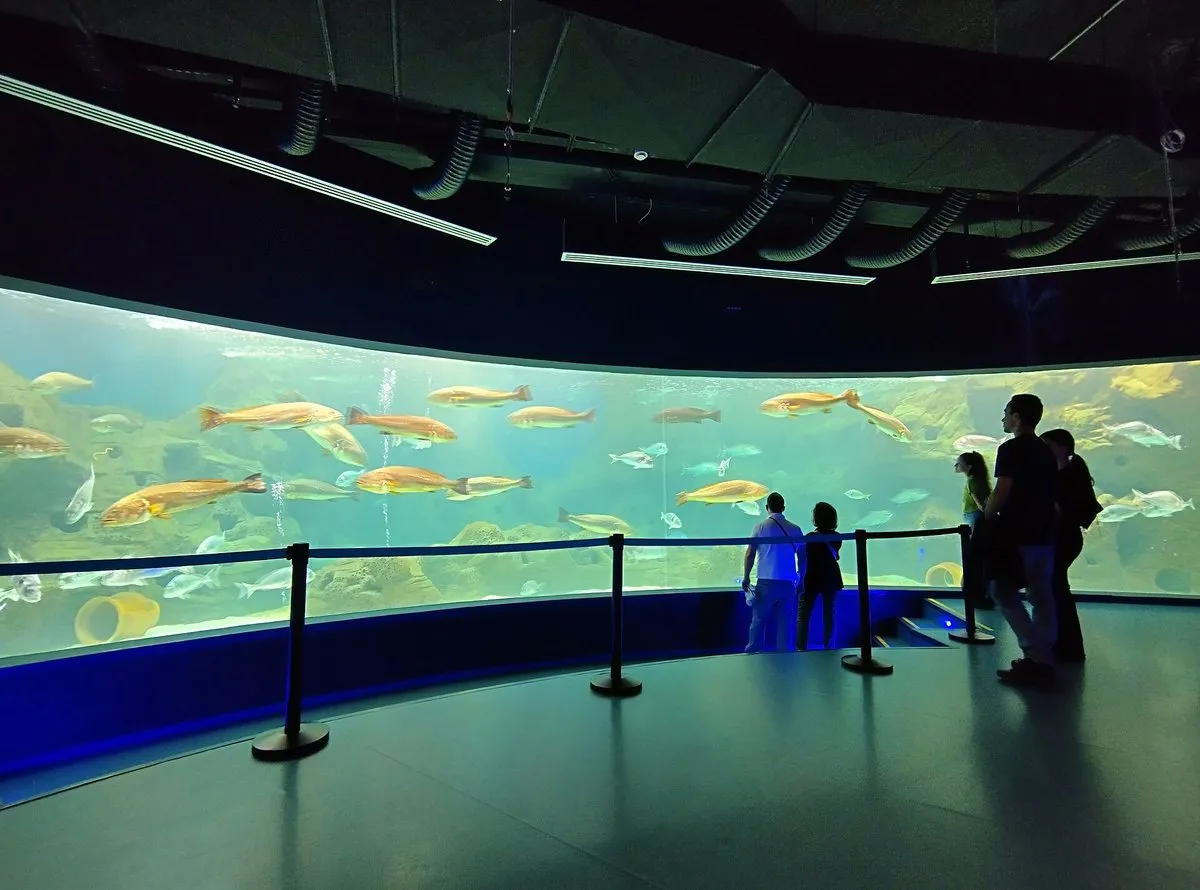
The aquarium at Gournes is the best wet-weather and too-hot card on the island: €15 adults in summer, reduced for children, ninety minutes of genuinely good tanks, air-conditioning throughout — the full guide covers the queue-skipping. The water parks deliver exactly what they promise at a price that deserves eyes-open budgeting: roughly €30 adult / €20 child for 2026, kids from about twelve priced as adults; the comparison guide separates the true parks from the beach club with slides. Knossos works with the first slot of the morning, the labyrinth story and a ninety-minute limit — and free entry for EU under-25s makes it the cheapest myth on the island. Boat trips are age-gated by patience: the short Agios Nikolaos–Spinalonga hop suits small kids far better than the long day cruises.
Mountain villages are the sleeper hit: a plateia with a plane tree is a natural playground with taverna service, and grandparents at the next table will adopt your children before the mains arrive.
The parent logistics
Pharmacies (look for the green cross) are superb and everywhere; formula, nappies and familiar brands fill every supermarket; tavernas produce plain pasta and grilled chicken without being asked twice, and nobody anywhere minds a crying baby — this is a culture that brings children to dinner at eleven. Car seats: book with the car, in writing. The sun is the only genuinely dangerous thing on the island for a child; the 12–4 shade siesta is not a tourist affectation, it is the operating manual.
The honest downside
August. The month most families must travel is the month the island is hottest, fullest and windiest, and no amount of planning makes a 39-degree queue fun for a six-year-old. If school terms allow any flexibility at all, June and September are the same island with the difficulty turned down. Distances are the other trap — Elafonisi or Balos from the strip is a five-hour round trip in a hot car for a swim the local beach would have given you; save the far ends for a trip when the children are older, or base west and make them local.
Photo on this page: the main tank by Tomisti (CC BY-SA 4.0), via Wikimedia Commons, resized for the web. Assembled from guides that were each checked on the ground — the links carry their dates. Prices are the 2026 season’s and hedged on purpose; verify before you commit a family budget to them. Nobody pays to be featured here.
-
Beaches and big days
1 Stalis beach 2 Potamos, Malia west 3 Georgioupoli 4 Voulisma beach 5 Plakias 6 Makrigialos 7 Cretaquarium, Gournes 8 Knossos
Tap a name to open it in your map app. These are options, not an order — pick by the day you have.
Which part of Crete is best for a family holiday?
For first-timers with young children, the north coast east of Heraklion: shallow sandy beaches, short transfers, every service within reach. Families who have done resorts before often prefer Rethymno for the town-plus-beach mix, or the gentler south-coast bays in June and September.
Which Crete beaches are safest for toddlers?
Long shallow sand with lifeguards in season: Stalis, the west Malia sands, Georgioupoli, Rethymno's town beach, Voulisma in the east. Avoid the exposed north sands on windy afternoons — flags matter — and check each beach guide for the honest detail.
Is Knossos worth it with children?
With a strategy, yes: first entry slot, ninety minutes maximum, treat it as a story about a labyrinth rather than an archaeology lesson, ice cream after. Without a strategy it is hot queues and shadeless stone. Under-25s from the EU enter free; the myth does the heavy lifting.
What does a family water-park day cost?
For the 2026 season, adult entry sits around €30 at the two true parks and children roughly €20 — with kids from about twelve priced as adults. Online and afternoon tickets are cheaper; a family of four should budget €90–100 plus the extras. Verify before you go.
Do we need a hire car with kids in Crete?
On the resort strip, genuinely no — beach, pools, buses and the aquarium fill a week. Everywhere else, or for a second visit, a car changes the trip: village lunches, quiet coves and the flexibility naps demand. Book child seats when you book the car, not at the desk.
Is Crete good with a baby?
Yes, with the season chosen honestly: June or September beat the furnace of August. Pharmacies are everywhere and excellent, supermarkets stock everything familiar, tavernas welcome babies as a matter of culture, and the only real enemies are midday sun and optimistic sightseeing plans.
One email a month — only when something on this island actually changes. No spam, no partners, one-click unsubscribe. Read past issues before you decide.