Where to Stay in Chania: An Honest Neighbourhood Guide
Crete's most beautiful city, quarter by quarter — where the noise actually is, what the harbour restaurants don't tell you.
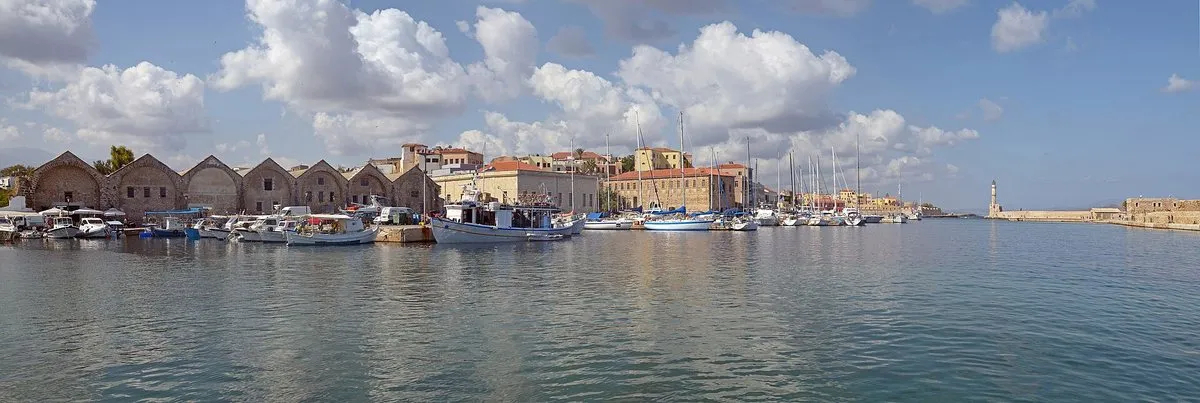
Chania is the most beautiful city in Crete. As a Heraklion local I’m supposed to resist writing that sentence, but there’s no honest way around it: the Venetian harbour with its Egyptian lighthouse and domed mosque, the layered old town of Venetian mansions and Ottoman fountains and neoclassical facades — it’s the postcard, and the postcard is real.
Which is exactly the problem. Because the postcard is real, everyone comes, and Chania in peak season is the most crowded, most touristed, most expensive city on the island, with the highest concentration of waiter-touts and menu-with-photos restaurants in Crete lining its most famous waterfront. The city rewards people who book the right hundred metres and punishes people who book the wrong ones — same price, completely different holiday. So this guide does one job: the neighbourhoods, honestly, including where the noise actually is.
Chania in one minute. Western Crete’s capital and the island’s showpiece city. Airport (CHQ) 14 km away on the Akrotiri peninsula: flat-rate taxi about €25 by day (€30ish at night), or the bus at about €2.50, 30 minutes — last checked August 2026. Ferries from Piraeus dock at Souda, 7 km east. Small town beach in the city (Nea Chora); the resort beaches run west through Agioi Apostoloi to Platanias. Base for Samaria Gorge, Balos, Elafonisi and Falassarna. Best for atmosphere-first travellers; hardest work for light sleepers and drivers.
First, the one warning that outranks the rest
Old-town Chania has a nightlife core, and it’s compact but loud: roughly the inner harbour around Sarpidona street and the lanes where the harbour bends towards the old port entrance, plus a couple of bar streets pushing into Splantzia. Bars there run until 2–3am in season, and stone lanes carry sound beautifully. Every summer, couples pay boutique prices for a romantic room fifty metres from a cocktail bar’s speaker and spend a week discovering that fact nightly. Before you book anything in the old town, ask the owner one direct question: “Can I hear bar music from the room at 1am?” A good owner answers honestly; a vague answer is an answer too.
The harbour front — look, don’t sleep, choose where you eat
The curve from the mosque of Küçük Hasan round to the lighthouse is the most photographed hundred metres in Crete, and you should absolutely walk it — early morning, when it belongs to fishermen and joggers, is when it’s magic. But as a rule I’d neither sleep on it (noise, premium-for-the-view pricing) nor eat your main meals on it. The front-row restaurants with the greeters and the laminated photo menus exist because they never need a repeat customer. The good eating is one to three lanes back, and in Splantzia and towards the market, where places live on locals. The simple test works everywhere in Chania: the further a table is from the water, the better the food tends to be for the price.
The old town, quarter by quarter
Topanas — the western old town, around Theotokopoulou street, behind the Firkas fortress. Restored Venetian and Ottoman houses, galleries, the pretty lanes without the bar cores. This is the classic “boutique Chania” address: atmospheric, walkable to everything, and quieter at night than the harbour bend — though never silent; nowhere in the old town is. If it’s your first time and your budget stretches, start your search here.
The old Jewish quarter (Evraiki) — the small grid just in from the outer harbour, around the Etz Hayyim synagogue. Similar character to Topanas, slightly closer to the noise; judge each listing street by street.
Splantzia — the eastern old town around Plateia 1821, where the minaret stands next to the bell tower of Agios Nikolaos church. Ten years ago this was the “local’s tip”; it has since become the city’s creative-bar-and-bistro quarter, which means it’s now both the most interesting food-and-drink neighbourhood in Chania and no longer reliably quiet. Perfect for travellers who want the evening scene at their doorstep; light sleepers should ask the 1am question with extra intent.
Kastelli — the low hill between harbour and Splantzia, the oldest inhabited ground in the city (the Minoan town of Kydonia is being excavated up here). Oddly, it’s one of the quietest pockets of the old town — residential lanes, a handful of guesthouses, thirty seconds from everything but slightly above it. My pick for people who want old-town immersion and sleep.
Koum Kapi — just outside the eastern walls, a seafront strip of café-bars popular with students and young locals. You trade Venetian lanes for a seafront promenade with a less touristy crowd and slightly kinder prices. Good compromise territory.
Halepa — the elegant 19th-century quarter further east: consulates-era mansions, the Venizelos house, and below it the hauntingly beautiful old tanneries of Tabakaria. A completely different Chania — neoclassical, calm, local — fifteen to twenty minutes’ walk from the harbour. Suits second-time visitors and anyone allergic to crowds; the trade is that you’ll walk or drive to the old town rather than fall out of bed into it.
Nea Chora — west of the old town, ten minutes’ walk: the city’s own beach, a strip of fish tavernas on the sand, and ordinary apartment-Chania behind it. Not glamorous, genuinely practical: beach mornings, old-town evenings, no car needed, fairer prices. Families and budget-conscious couples should look here before dismissing the city as too expensive.
The western beach suburbs and Platanias/Agia Marina — from Agioi Apostoloi’s pine-backed coves out to the full resort strip at Platanias, this is Chania’s version of a beach-resort holiday: bigger hotels, long sand, nightlife of its own out west. It’s a fine product, but be clear-eyed: from Platanias you will visit Chania a few evenings, not live in it. If the old town is why you’re coming, stay within walking distance of it.
Prices, seasons, booking
Chania carries the highest room prices on the island. Rough bands for a double in the old town, to set expectations rather than quote: €80–120 in the shoulder months, €110–180 in high summer for the good boutique places, and well beyond that for the view suites — with Nea Chora and Koum Kapi running meaningfully cheaper than the Venetian-lane addresses. The good small places sell out earliest of any city in Crete; for July–August, book by early spring. May, June, September and especially October are Chania at its best anyway — the light is softer, the lanes breathe, and the sea is warmest in early autumn.
One driving note, because it decides bookings: the old town is essentially car-free and the streets around it are permit-and-chaos. If you’re hiring a car, either book a place that names a real parking arrangement or plan on the paid lots and free-ish areas outside the walls (the marina/Koum Kapi side and beyond the western edge) and a five-to-fifteen-minute walk. Collecting the hire car on the day you leave the city, rather than keeping it parked all week, is the move most people work out one holiday too late.
The day-trip catch
Chania is the natural base for the west’s greatest hits — Samaria Gorge, Balos lagoon, Elafonisi, Falassarna, Seitan Limania — but here’s the honest catch: none of them is close. Elafonisi and Balos are each a solid 1.5–2 hours’ drive one way (the Balos approach ends in a famously brutal dirt track — many hire-car contracts exclude it, which is why the boat from Kissamos exists), and Samaria is a full pre-dawn-to-dusk commitment. They’re all worth it. Just don’t book Chania imagining them as casual afternoon hops, and don’t try to do all of them in one week with beach days too. Pick two. For the gentler days between, Rethymno is under an hour east — I’ve written that base up separately.
Looking at Chania as a place to own rather than visit? The buying section covers the process, the costs on top of the price and the things that go wrong — before you talk to anyone who sells.
Chania is Crete’s beauty queen and knows it: the finest old town, the best-looking harbour, the highest prices, the biggest crowds, and noise exactly where the postcards are shot. The whole game is the hundred metres you book. First visit, budget willing: Topanas or Kastelli. Evening-scene people: Splantzia, eyes open. Sleep-and-beach value: Nea Chora or Koum Kapi. Crowd-allergic: Halepa. Eat one street back from the water, book peak season by March, visit in June or October if you can, and treat Balos and Elafonisi as the expeditions they are. Do that, and the postcard delivers.
Photo on this page: the harbour front by Vvlasenko (CC BY-SA 3.0), via Wikimedia Commons, resized for the web. Everything above was checked for the date shown at the top of this guide. Nobody pays to be featured in a guide — no business, no sponsor, no paid mention, ever. Adverts, where they appear, are labelled as adverts.
The quick scores
- Crowds
- 5 out of 5the island's showpiece, and it shows
- Nightlife
- 4 out of 5the harbour ring, most of the year
- Organised beach
- 2 out of 5Nea Chora is small - the sand is west
- Car needed
- 1 out of 5the old town is a walking town
- Dinner on foot
- 5 out of 5the widest choice in Crete
- Prices
- 4 out of 5old-town rooms carry a premium
More dots means more of the thing named, never “better”. What each level means. Scored August 2026 from the reporting on this page.
Is Chania worth staying in?
It is the most beautiful city in Crete - Venetian harbour, Egyptian lighthouse, domed mosque, layered old town. It is also the most crowded, most touristed and most expensive city on the island in peak season, with the highest concentration of waiter-touts.
Where should you avoid staying in Chania old town?
The nightlife core is compact but loud - roughly the inner harbour around Sarpidona street, the lanes where the harbour bends toward the old port entrance, and a couple of bar streets pushing into Splantzia. Bars there run late.
How do you get from Chania airport to town?
The airport is 14km away on the Akrotiri peninsula. A flat-rate taxi is about EUR25 by day and around EUR30 at night, or the bus at roughly EUR2.50 takes 30 minutes. Checked August 2026.
Should you eat on the Chania harbour front?
Look, do not eat. The harbour front sells the view and charges for it, with the islands densest concentration of photo menus. One or two lanes back is where the cooking improves and the bill halves.
Which part of Chania should you stay in?
Splantzia and the quieter old-town lanes for atmosphere without the noise, the Halepa side for calm and residential character, or the beach suburbs west for sand. The harbour front itself is for walking rather than sleeping.
One email a month — only when something on this island actually changes. No spam, no partners, one-click unsubscribe. Read past issues before you decide.