Grammeno and Krios: The Honest Guide to the Beaches West of Paleochora
Five kilometres west of Paleochora, a small cape with a pebble beach on one side, a sandy cove on the other and a colony of protected junipers in between; five more, and the long pebble shore of Krios, where the road runs out and the E4 path begins. What each is like, and the rules that matter.
West of Paleochora the road keeps going along the coast for another ten kilometres, and it passes two of the best beaches in this corner of Crete. Grammeno, five kilometres out, is a small cape with a pebble beach on one side, a sandy cove on the other and a grove of protected junipers between them — the easy choice, with a Blue Flag and a bus. Krios, at the end of the road, is a long, bare shore of pebbles and coarse sand under the cliffs of the cape it is named after, where the E4 path sets off west. Both are quiet by north-coast standards; neither has much shade beyond what you bring. Distances, facilities and rules come from the local Paleochora tourism site, the official 2026 Blue Flag list, the Region of Crete and Greek camping law, checked in September 2026; the beaches are described from our own visits.
The honest facts
- Grammeno
- about 5 km west of Paleochora on a paved road (some websites wrongly say east).
- Two sides
- a pebble beach of about 500 m on the east side, organised but exposed; a sandier, sheltered cove on the west side.
- The junipers
- a protected colony on the cape; they grow about 1 cm a year — use the umbrellas, not the trees.
- Blue Flag 2026
- Grammeno yes, Krios no.
- Krios
- about 10 km west of Paleochora; roughly 1 km of fine pebbles and coarse sand; partly organised; little shade.
- The E4
- starts at Krios; the next beach west is 20–30 minutes on foot. The Krios–Elafonisi stretch is closed on category 4 fire-risk days (Region of Crete, 2026).
- Camping
- free camping on beaches is banned — €300 fine per person or unit.
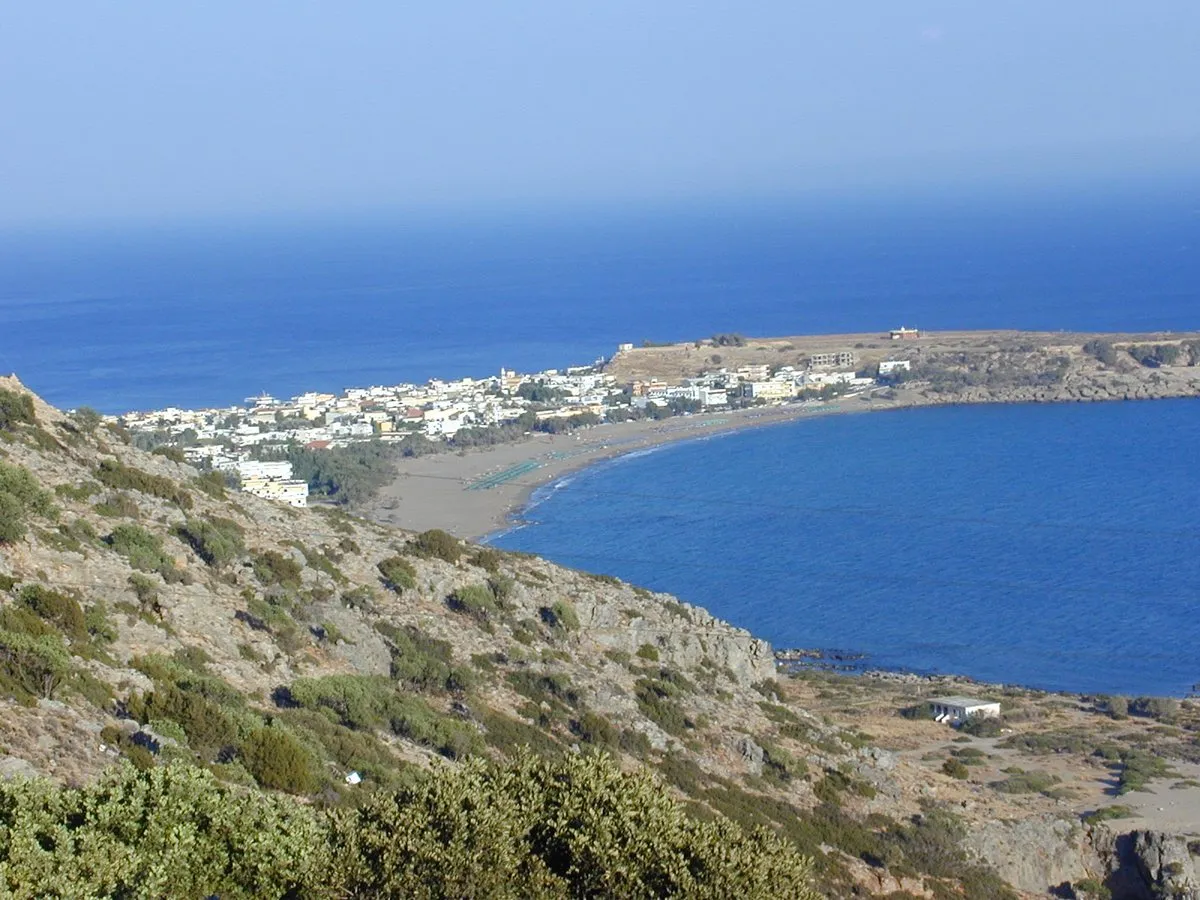
Grammeno
The road west from Paleochora runs past Pachia Ammos before the low cape of Grammeno appears. The east side is the main beach: fine and coarse pebbles, sunbeds and umbrellas, clear water, and nothing to stop the wind or the waves when they come from the south or east. The west side is smaller and sandier, faces west, and is noticeably calmer; a few tamarisks give some shade. The local tourism site’s own summary is honest: it is often windy, and the western part is the protected one.
Between the two, on the tip of the cape, grows the reason Grammeno feels different from other beaches: a colony of protected junipers, gnarled, low and very old. The long-standing advice is simple — use the umbrellas provided, do not climb, cut or tie things to the trees, and do not pitch anything under them. There is an organised campsite nearby; the beach itself is not a campsite, and Greek law fines free camping on shorelines €300 per person or per unit, with heavier penalties where protected nature is damaged.
Krios
Five more kilometres of paved road bring you to the end of the line at Krios, on the eastern flank of the cape of the same name. The beach runs for roughly a kilometre in two or three coves of fine pebbles and coarse sand. The central and eastern part has umbrellas, sunbeds, showers, a canteen and parking; the western part is unorganised, rockier and quieter. Shade is scarce — a few rock hollows, not much more — and the first bay is open to southerly winds, so on those days it can be choppy.
Krios is also where the E4 long-distance path leaves the road and heads west along the coast. Walking sources put the next beach at 20–30 minutes on foot, which makes a short, rewarding walk before a swim. The Krios–Elafonisi section of the E4 is on the Region of Crete’s 2026 list of paths closed to walkers on days rated category 4 on the national fire-risk map, between 1 May and 31 October, so check the map the evening before. West of the cape, the coast towards Chrysoskalitissa and Elafonisi is a Natura 2000 area, according to the Region of Crete.
Making it work
Grammeno is a short drive or a bus ride from Paleochora; Krios needs a car, a bike or a taxi. Bring shade and water to Krios in summer. On a windy day, go to Grammeno’s west side. If you are staying in Sougia or Paleochora, these are your nearest easy beaches west of town; walkers can read our note on the E4 in Crete, and drivers heading on can continue to Elafonisi by the inland roads.
The honest downside
Both beaches are exposed to the wind that funnels along this coast, and neither has much natural shade — Krios almost none. At Grammeno the obvious shade — the junipers — is off limits by design. And Krios is, quite literally, the end of the road: there is little there beyond the beach itself.
Worth it if: you are in Paleochora and want clear water, a quiet day and — at Krios — the start of a coastal walk. Skip it if: you need reliable shade, sand rather than pebbles along the whole beach, or a calm sea on a windy day at Krios.
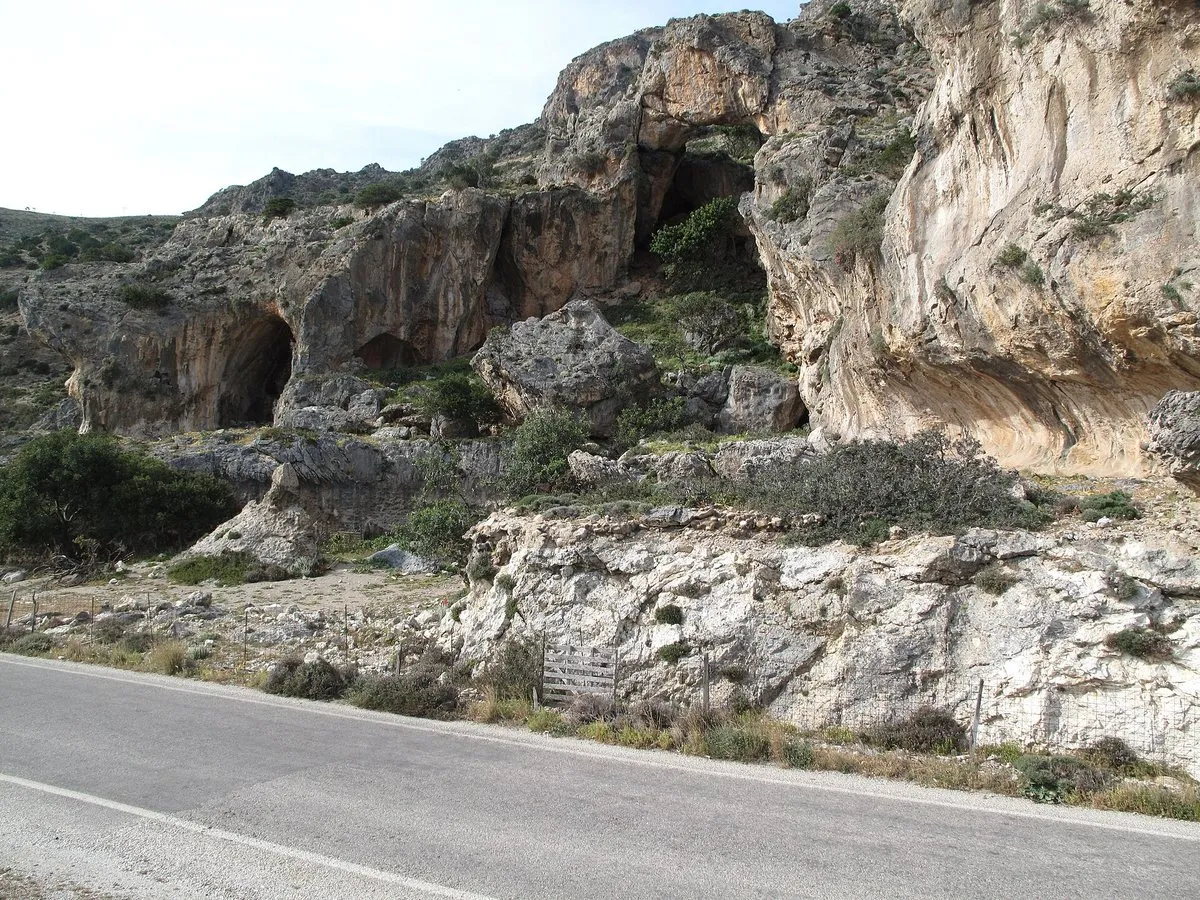
Photos on this page: Paleochora from the west by Fabrice Perotto (CC BY 1.0) and the coast road west of Paleochora by Mikenorton (CC BY-SA 3.0), via Wikimedia Commons, resized for the web. The beaches are described from our own visits; distances, facilities, the junipers, the 2026 Blue Flag list, the Natura 2000 designation and the camping fines were checked against the Paleochora tourism site, Blue Flag Greece, the Region of Crete and Greek legal sources for the date shown at the top of this guide. Nobody pays to be featured in a guide — no business, no sponsor, no paid mention, ever. Adverts, where they appear, are labelled as adverts.
-
The coast road west — Paved all the way; Grammeno is about 5 km from Paleochora and Krios about 10 km.
1 Paleochora → 2 Grammeno beach → 3 Krios beach
Driving times are Google's own, without traffic, checked September 2026 — the shape of the day, not a promise. Allow more on mountain roads, and more again in August.
Where is Grammeno beach?
Grammeno is about 5 km west of Paleochora, on a small cape reached by the paved road that runs west from the town past Pachia Ammos towards Koundoura. Some websites place it east of Paleochora; that is wrong. The local tourism site lists a public bus from Paleochora towards Koundoura.
Is Grammeno beach sandy or pebbly?
Both, depending on the side of the cape. The east side is a pebble beach of about 500 metres, organised but exposed to waves; the west side has a smaller, sandier cove that is better protected, with some tamarisk shade. On a windy day, cross the cape to the west side.
Why are there no sunbeds under the trees at Grammeno?
Because the trees are protected junipers. The cape has an important colony of them, and they grow extremely slowly — about a centimetre a year, according to one long-standing beach guide. Visitors are asked to use the umbrellas provided and to avoid climbing on, cutting or camping under the trees.
Can you camp on the beach at Grammeno or Krios?
No. Free camping on Greek beaches and shorelines is banned, with an administrative fine of €300 per person or per tent, van or other unit, and harsher penalties where protected nature is harmed. There is an organised campsite at Grammeno for anyone who wants to sleep by the sea.
What is Krios beach like?
Krios is about 10 km west of Paleochora: roughly a kilometre of fine pebbles and coarse sand in two or three coves, with a small organised section, little natural shade and exposure to south winds. The E4 long-distance path starts here and reaches the next beach west in 20–30 minutes on foot; the Krios–Elafonisi section closes on category 4 fire-risk days in summer.
One email a month — only when something on this island actually changes. No spam, no partners, one-click unsubscribe. Read past issues before you decide.