Frangokastello: The Honest Guide to the Castle on the Sand
A Venetian fortress standing alone on a shallow turquoise bay, with the Drosoulites ghost legend attached.
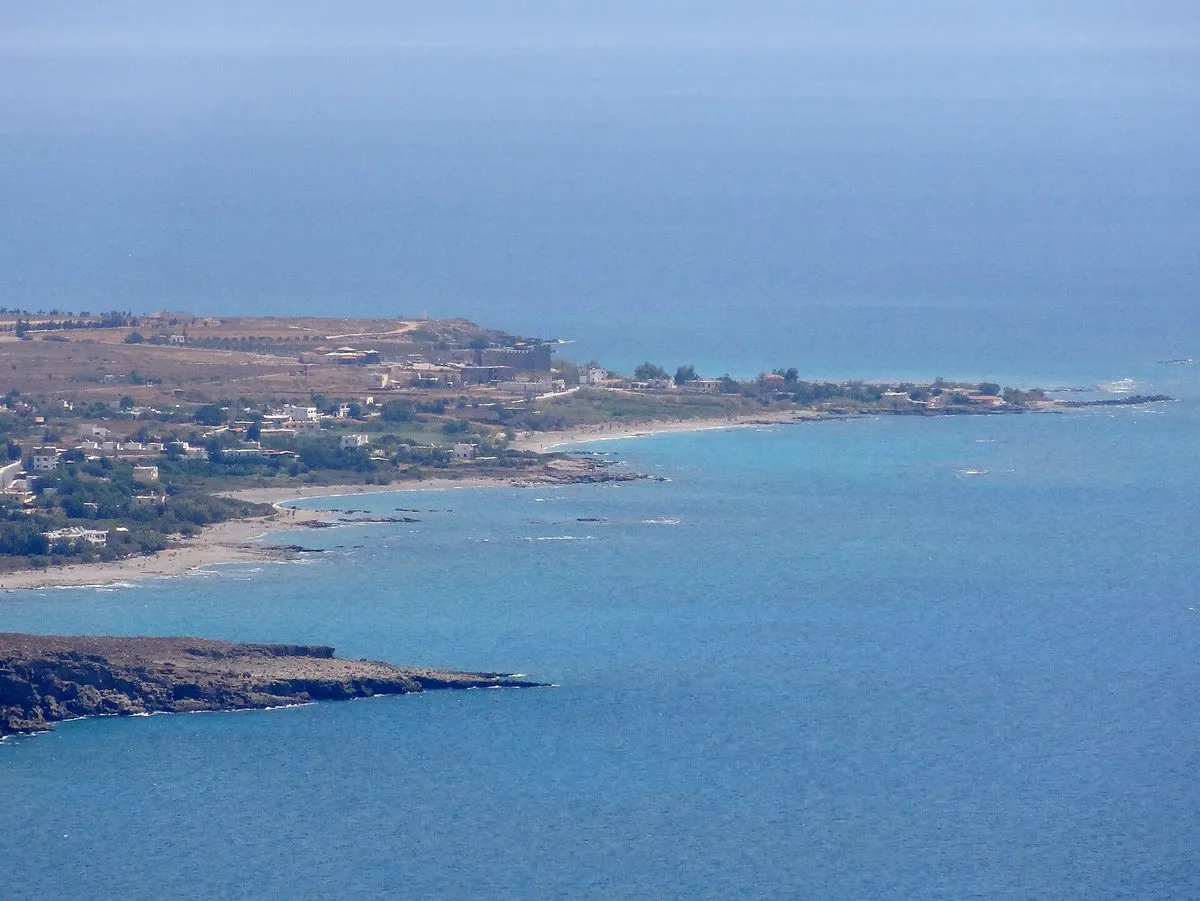
Frangokastello is the south coast’s most photogenic non-sequitur: a four-square Venetian fortress (1371) planted alone on a plain by the sea, fronting a shallow bay whose sandbars run tropical-turquoise on calm days. Around it, a scatter of tavernas and rooms — and a legend: the Drosoulites, dew-shadows of the 1828 battle’s dead, said to march at dawn on certain late-May days. Meteorology offers mirage explanations; Sfakia offers you the story straight.
The honest facts
- The castle
- an empty, evocative shell — walls, towers, the arms of Venice over the gate; small seasonal entrance fee, twenty–forty minutes of visit, golden at day’s ends.
- The main bay
- shallow for tens of metres over pale sand — small-child heaven, part-organised (~€7–10 the set), warmest water on this stretch.
- Orthi Ammos
- just east, the “standing sand” beach below low dunes — wilder, freer, wind-sculpted; the connoisseur’s half of the visit.
- Getting there
- ~1h15 from Chania over the Imbros road (itself worth the trip), 15 minutes east of Hora Sfakion; buses sparse — this is car country.
- Eating & sleeping
- taverna-and-rooms scatter at honest Sfakian prices; evenings are quiet enough to hear the legend breathing.
The fortress, and what to expect from it
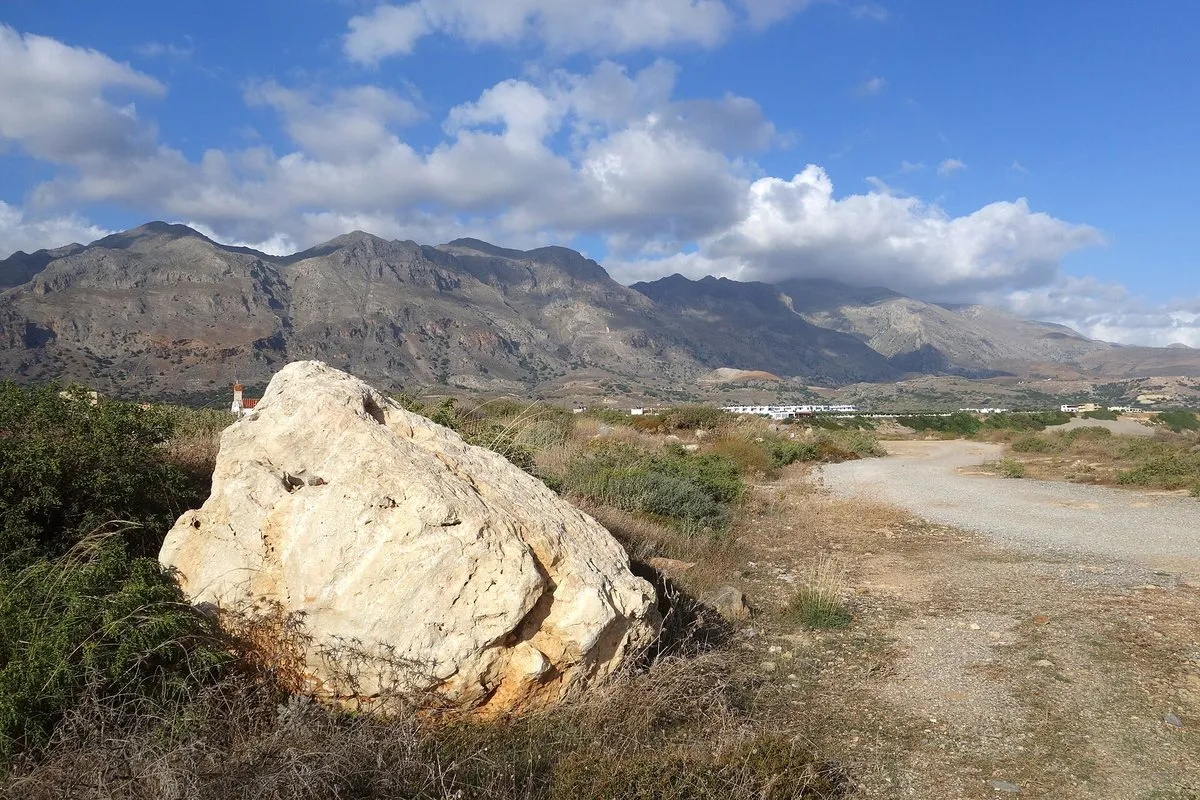
The Venetians built it in 1371 to control a coast they never really controlled. It is a rectangle of honey-coloured stone with towers at the corners, standing alone on a flat plain with the White Mountains directly behind — and that setting is most of why it photographs the way it does.
Inside there is very little. Walls, the shell of the interior, some information boards. Entry is a small fee and half an hour covers it comfortably.
What it has instead of exhibits is position. Stand on the seaward side in late afternoon and you understand the whole strategic point of the place in about four seconds.
The Drosoulites
The local legend is unusually specific. In May 1828 a Cretan force under Hatzimichalis Dalianis was destroyed here by Ottoman troops, and since then — the story goes — the shapes of armed men are seen at dawn in late May, moving from the church toward the sea.
The name means dew-men. There are enough sober accounts across two centuries that the phenomenon is generally explained as a mirage carried from the Libyan coast in particular humidity conditions.
Whether or not you go looking, the fact that the story is dated, located and attached to a real battle is what makes it worth knowing rather than folklore filler.
The beach and the water
Shallow, sandy, and unusually warm — the water here shelves so gradually that it heats through in a way the north coast never does. For small children it is one of the safest swims in south Crete.
There are a handful of tavernas and rooms, no resort infrastructure, and no shade to speak of beyond what you bring. The village empties completely out of season.
The honest day
Imbros gorge walk in the morning for the energetic (taxi shuttle logistics apply), castle-and-swim through midday’s shallows, long taverna lunch, Orthi Ammos as the light lowers, and either the Sfakion sfakiani-pita stop or the mountain drive home in gold. As an overnight, it buys the empty-castle dawn — Drosoulites optional.
The honest downside
The plain’s scatter of low buildings dilutes the lone-castle romance the photos promise; wind days strip the bay’s turquoise trick; and beyond castle, beaches and legend, entertainment is your book. Sfakia’s austerity applies, softened by sand.
Worth your time if: castle-plus-shallow-turquoise is a combination you will drive for. Skip it if: you need the full-service beach day — this coast issues sunshine and stories, not infrastructure.
Photos on this page by Ввласенко (CC BY 3.0) and by the Frangokastello contributor (CC BY 3.0), via Wikimedia Commons, resized for the web. Nobody pays to be featured on this site.
What is the Frangokastello castle?
A four-square Venetian fortress of 1371 planted alone on a plain by the sea, with the arms of Venice still over the gate. It is an empty, evocative shell - a small seasonal entrance fee and twenty to forty minutes of visit, best at either end of the day.
Is Frangokastello good for small children?
Exceptionally. The main bay is shallow for tens of metres over pale sand, part-organised at around EUR7-10 a set, and holds the warmest water on this stretch of coast.
What are the Drosoulites?
A local legend of ghostly figures said to appear over the plain at dawn in late May - the shades of fighters killed at the castle. Whatever you make of it, the story is part of why evenings here feel the way they do.
What is Orthi Ammos?
The standing sand beach just east of the castle, below low dunes - wilder, freer and wind-sculpted. It is the connoisseurs half of the visit and the better option once the light lowers.
How do you get to Frangokastello?
About an hour and a quarter from Chania over the Imbros road, which is worth the trip in itself, and fifteen minutes east of Hora Sfakion. Buses are sparse - this is car country.
One email a month — only when something on this island actually changes. No spam, no partners, one-click unsubscribe. Read past issues before you decide.