Heraklion in Half a Day: What's Worth It When Time Is Short
Crete's capital is a working city, not a postcard — but give it four honest hours and it repays them.
Let me say the thing visitors whisper and locals already know: Heraklion is not a pretty city. It was bombed flat in 1941, rebuilt in a hurry, and it wears the concrete to prove it. People arrive expecting Chania’s Venetian harbour romance and leave calling my city an airport with traffic.
They’re wrong — but only by half a day. Heraklion is a working city with superb bones: massive Venetian walls, a fortress on the harbour, one of the best museums in Europe, and an eating-and-coffee culture that exists for the 150,000 people who live here, not for cruise passengers. Give it four focused hours — an arrival evening, a departure morning, a break from the beach — and it repays exactly that. Here’s the half-day I actually walk people through.
The one-minute version. The walk: Venetian harbour and Koules fortress → 25 Avgoustou street → Lions Square (bougatsa stop) → the 1866 market street → Agios Minas cathedral. The heavyweight: the Archaeological Museum — if you do one indoor thing on Crete, this is it (around €12; combined ticket with Knossos about €20 — verify current). Eat where the streets narrow, not where the harbour glitters. Skippable on a short visit: almost everything else.
The walk, in order
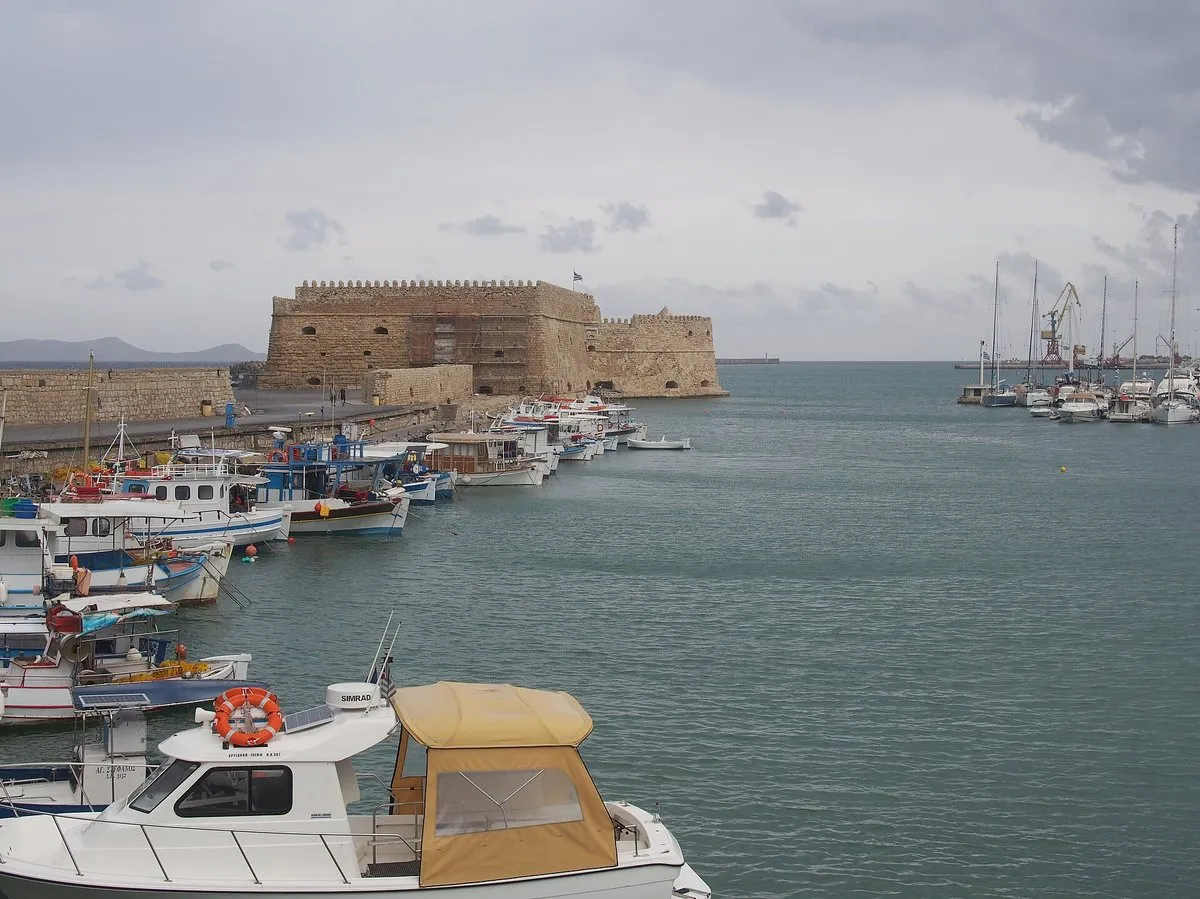
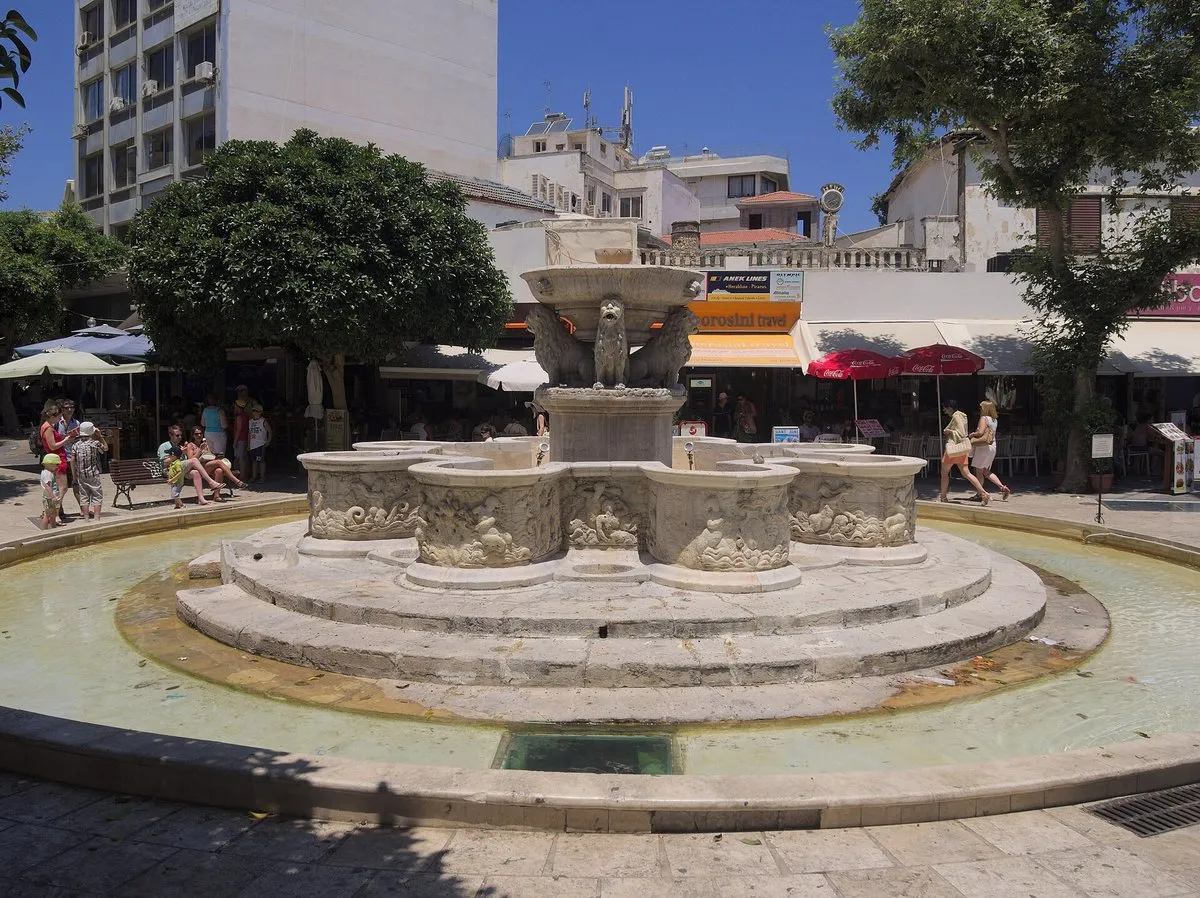
Start at the Venetian harbour, where the Koules fortress squats over the water like it’s still expecting trouble. The walk out along the breakwater to the fortress is free and catches the best sea light; going inside (small entry fee) is worthwhile for the ramparts view back over the city. From the harbour, head up 25 Avgoustou street — the old grand avenue, now pedestrian-friendly, past the Venetian loggia and Agios Titos church — to Lions Square, whose Morosini fountain has been the city’s meeting point for four hundred years.
Here, the mandatory stop: bougatsa. The custard-or-cheese filo pastry, served warm, dusted with sugar and cinnamon, is Heraklion’s breakfast religion, and Kirkor on Lions Square has been the institution for generations — sit, order, watch the square work. From there, dive into the 1866 market street: herbs, cheese, knives, tourist tat and real shopping tangled together, with the lanes around it hiding the little raki-and-meze joints where the market feeds itself. Finish at Agios Minas cathedral, one of Greece’s largest, and — if your legs have another kilometre — walk a stretch of the Venetian walls to the tomb of Kazantzakis, where the author of Zorba lies under his own epitaph: I hope for nothing. I fear nothing. I am free. Best view over the city, best sentence in it.
The museum question, answered plainly
The Heraklion Archaeological Museum holds essentially everything the Minoan world left behind — the true frescoes from Knossos, the snake goddesses, the Phaistos Disc, gold jewellery that would embarrass a modern atelier. I’ve made the argument in the Knossos guide and I’ll repeat it flatly: the museum is the essential half; the palace is the context. If your half-day includes ninety indoor minutes, spend them here (entry around €12, combined Knossos ticket about €20 — verify current; mornings and late afternoons are calmest, cruise-crowd middays are not). If museums genuinely aren’t your thing, the walk above still justifies the trip.
Eating and coffee, like the city does
The rule of thumb: the harbourfront charges for the view, the back streets charge for the food. For lunch, the lanes off the market street do workers’ tavernas and mezedopoleia where the raki arrives without being ordered. For dinner, the city’s serious Cretan-produce restaurants — Peskesi is the famous flagship of that movement, book ahead — and the revived Lakkos quarter’s casual spots show what the city eats when it’s showing off. And Heraklion runs on coffee at a standard that surprises visitors: proper specialty cafés everywhere, and the freddo espresso as civic infrastructure. A café stop on Korai or around the squares isn’t a break from the itinerary; locals would tell you it is the itinerary.
What to skip when time is short, said with love: the Natural History Museum (good, but not at the Archaeological’s expense), shopping streets that exist in every European city, and any harbour-front restaurant with a photo menu and a man outside inviting you in — that rule doesn’t take days off.
Heraklion is a half-day city that too many people give zero hours or, worse, a full guilty day. Do the harbour-to-cathedral walk, eat one bougatsa, give the museum its ninety minutes, drink one unhurried coffee — and leave liking a real city that never asked to be a postcard. Coming from the beach strip, the coastal bus drops you a short walk from the harbour (transport details here); with an evening flight, this half-day is the perfect last move before the airport, fifteen minutes away. With a car and a spare afternoon, the purpose-built village of Arolithos is twenty minutes west.
Photos on this page: both by C messier (the Koules CC0, the fountain CC BY-SA 4.0), via Wikimedia Commons, resized for the web. Everything above was checked for the date shown at the top of this guide. Nobody pays to be featured in a guide — no business, no sponsor, no paid mention, ever. Adverts, where they appear, are labelled as adverts.
What should you do in Heraklion with only half a day?
The walk: Venetian harbour and Koules fortress, up 25 Avgoustou to Lions Square for a bougatsa, into the 1866 market street, finishing at Agios Minas cathedral — with ninety minutes for the Archaeological Museum if you do one indoor thing on Crete.
Is the Heraklion Archaeological Museum worth it?
It is the essential half of the Minoan story — the true Knossos frescoes, the snake goddesses, the Phaistos Disc — and the palace is the context. Mornings and late afternoons are calmest; cruise-crowd middays are not. Verify current ticket prices before you go.
What is bougatsa and where do you try it?
The custard-or-cheese filo pastry served warm with sugar and cinnamon — Heraklion's breakfast religion. Kirkor on Lions Square has been the institution for generations: sit, order, watch the square work.
Where should you eat on a short Heraklion visit?
The harbourfront charges for the view, the back streets charge for the food: the lanes off the market street do workers' tavernas and mezedopoleia where the raki arrives without being ordered. And treat one unhurried coffee as part of the itinerary — locals would tell you it is the itinerary.
One email a month — only when something on this island actually changes. No spam, no partners, one-click unsubscribe. Read past issues before you decide.