Snorkelling in Crete: The Honest Guide to Where It's Actually Good
Crete's water is gin-clear but not an aquarium. Where rock, reef and calm meet — seven checked spots — what you'll really see, and the flag rule that keeps you legal.
The first thing to say about snorkelling in Crete is the honest one: this is not the Red Sea, and anyone selling you rainbow reefs is selling you postcards. What the island actually offers is some of the clearest water in the Mediterranean — twenty-metre visibility on a calm morning is normal — over a seascape of rock, seagrass and sand where the pleasure is in looking properly: an octopus changing its mind about being a rock, a wall of damselfish over a boulder field, the white flash of a bream school. Set for that, a €15 mask buys as much joy per euro as anything on the island.
This guide is where that looking is actually good, from beaches this site has already checked on foot.
The honest facts
- The method
- rock beats sand, shelter beats everything, morning beats all — a rippled surface halves what you can see.
- The water
- twenty-metre visibility on a calm morning is normal; the life is Mediterranean, not tropical — octopus, bream, damselfish, seagrass, the odd turtle.
- The seven
- Kolokytha with sunken Olous, Voulisma and the Istron headlands, Skinaria, Glyka Nera, Seitan Limania on calm mornings only, Xerokampos, Stavros.
- Kit
- a mask that seals (€10–20 starter sets are fine), reef shoes non-negotiable — urchins carpet the rocks — a rash vest, and a float flag where boats run.
- The law
- taking anything from the seabed is prohibited, antiquities doubly and seriously so; a red flag on the beach applies to snorkellers too.
- Boats
- mid-summer afternoons bring rental speedboats into exactly these clear coves — the third argument in this guide for finishing before eleven.
The rule that picks the spot
Rock beats sand, and shelter beats everything. Long sandy strands — the resort strip, Falassarna’s expanse — are lovely swims and empty snorkels; life gathers where there is structure to hide in. And a rippled surface halves what you can see, so on a windy day choose from the sheltered-water guide first and snorkel second. Morning, calm, rocky edge: that is the whole method.
Seven checked spots, honestly ranked
The Kolokytha side of the Elounda peninsula is the island’s most interesting easy snorkel: sheltered, shallow, rocky — and by the causeway you can float over the traced walls of sunken Olous, an ancient town a metre under your mask. The full guide covers the walk in. Voulisma and the Istron coves pair white sand with proper headlands at each end — swim the rocks, not the middle — in water the colour brochures overpromise elsewhere and this bay actually delivers (guide).
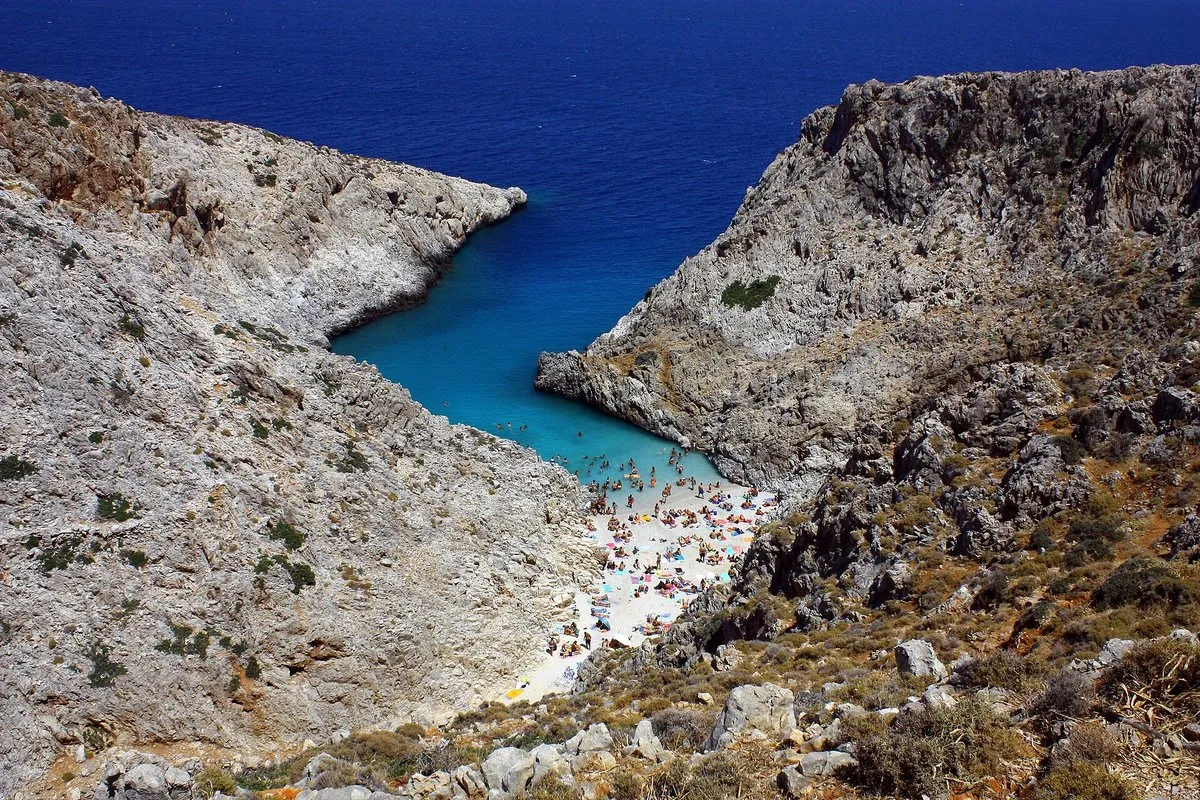
Skinaria, the small cove past Damnoni near Plakias, is where the local dive schools take beginners, which tells you everything: deep clear water close in, boulders full of life, occasionally a turtle. Glyka Nera adds drama — cliff walls dropping straight into blue, freshwater springs shimmering the water cold in patches. Seitan Limania’s narrow fjord is a natural aquarium on a calm morning and a washing machine otherwise; go early or not at all, and mind the goats own the beach.
Far east, Xerokampos has reefy shallows off its southern coves with the fewest fellow humans of anywhere on this list. And on Akrotiri, Stavros’s round bay — Zorba’s mountain looming over it — is the calm-water family option, sandy in the middle, rocky and fishy around the rim.
What you’ll actually see
Octopus (dawn and dusk, look for the midden of shells outside a hole), moray eels in crevices, wrasse in a dozen paint jobs, saddled and white bream, damselfish clouds, the odd grouper where spearfishers haven’t been, flying gurnards over sand, and seagrass meadows — Posidonia — which look dull and are the nursery everything else depends on. Urchins carpet the rocks: this is a reef-shoes island. If you’re lucky: a turtle off the south coast, a ray gliding over sand.
Kit and law, quickly
A mask that seals beats everything else you can buy; €10–20 beach-shop sets are fine to start, foggy by day three. Reef shoes are non-negotiable, a rash vest out-sunscreens sunscreen, and a cheap float flag is smart where boats run close — inflatables and rental speedboats share several of these bays. Legal lines that matter: taking anything from the seabed is prohibited, antiquities doubly and seriously so; spearfishing has its own licence rules and is banned near swimmers; and a red flag on the beach applies to snorkellers too.
The honest downside
Crete rewards the patient snorkeller and bores the checklist one. If your reference point is the tropics, the first look will read as empty — brown rock, green grass, silver fish — and the good stuff only appears at slow speed. Several of the best entries are over urchin-carpeted rock that punishes bare feet and low attention; a couple (Seitan, Glyka Nera) involve real walks or sketchy parking that their own guides describe bluntly. And boats: mid-summer afternoons bring rental speedboats close to swimmers in exactly the clear coves you want, which is another argument — the third in this guide — for doing everything before eleven.
Photo on this page: Seitan Limania by Ellibah (CC BY-SA 4.0), via Wikimedia Commons, resized for the web. Built on beach guides that were each checked on the ground — links carry their dates. Sea life listed is what these coasts typically show, not a promise for your particular Tuesday. Nobody pays to be featured here.
-
Where the looking is good
1 Kolokytha cove 2 Voulisma beach 3 Skinaria 4 Glyka Nera (Sweetwater) 5 Seitan Limania 6 Xerokampos 7 Stavros
Tap a name to open it in your map app. These are options, not an order — pick by the day you have.
Is Crete good for snorkelling?
Good, with expectations set honestly: visibility is superb — often 20 metres — but the Mediterranean here is not tropical. Expect rocky reef, seagrass meadows, octopus if you look slowly, wrasse, bream, damselfish and sea urchins everywhere, not coral and clouds of colour.
Where is the best snorkelling in Crete?
Rocky coves beat long sands every time. The checked favourites in this guide: the Elounda–Kolokytha peninsula, Voulisma's headlands, the Skinaria cove near Plakias, Glyka Nera's cliff edges, Seitan Limania's walls, Xerokampos in the far east and Stavros bay on Akrotiri.
Do I need to bring my own snorkel gear?
Bring your own mask if you care about the seal — beach-shop sets from roughly €10–20 are fine for casual days but fog and leak. Supermarkets and beach shops everywhere sell them; fins matter less than reef shoes on Crete's rocky entries.
Are there dangerous sea creatures in Crete?
Sea urchins are the real hazard — black pincushions on every rock, which is what the shoes are for. Weever fish hide in sand shallows, jellyfish arrive some weeks and not others, and moray eels bite only fingers poked into holes. Nothing here hunts you.
Can I snorkel near archaeological sites or wrecks?
You can swim over the sunken city at Olous by Elounda where the shallow wall traces show, but disturbing or removing anything from the seabed is illegal in Greece, antiquities doubly so. Look, photograph, take nothing — the fines are serious and enforced.
When is the water best for snorkelling?
June to October for warmth, with September the sweet spot: 25-degree sea, summer's calm mornings, thinner crowds. Always snorkel the sheltered side on a meltemi day — chop kills visibility faster than anything — and mornings beat afternoons almost everywhere.
One email a month — only when something on this island actually changes. No spam, no partners, one-click unsubscribe. Read past issues before you decide.