The Minoan Palace of Malia: The Honest Guide
Crete's third palace sits three kilometres from the loudest strip on the island — flat, unreconstructed, and almost empty.
The palace at Malia is the third-largest Minoan palace on Crete, it sits three kilometres from a strip better known for happy hour, and on most mornings you can walk the whole thing with more lizards than people for company. That is the pitch and the warning in one sentence: this is a genuinely important site with almost none of the theatre that makes Knossos work for casual visitors.
The one-minute version. Around €10 full admission, roughly €5 reduced. Closed Tuesdays — this is the detail that ruins people’s plans. Three kilometres east of Malia town, signposted off the old coast road, free parking on site. Flat, unshaded, forty-five minutes to an hour. Best before 10am or after 5pm in summer; the ministry has closed it during extreme afternoon heat.
What you actually see
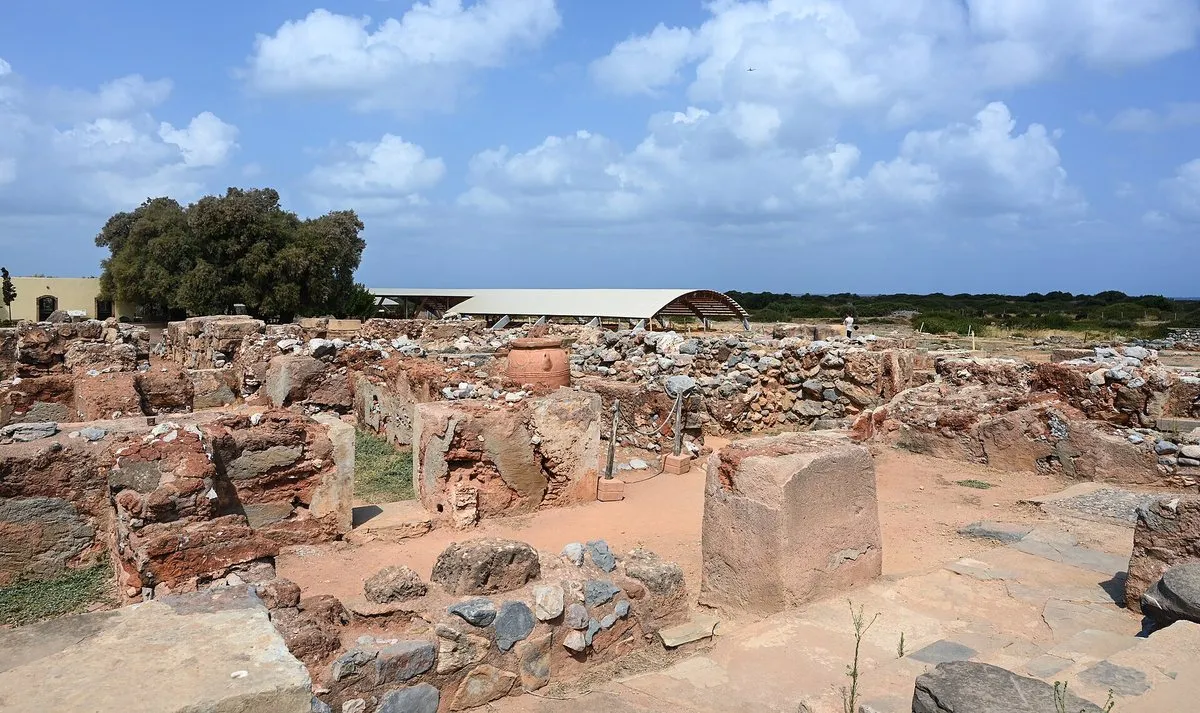
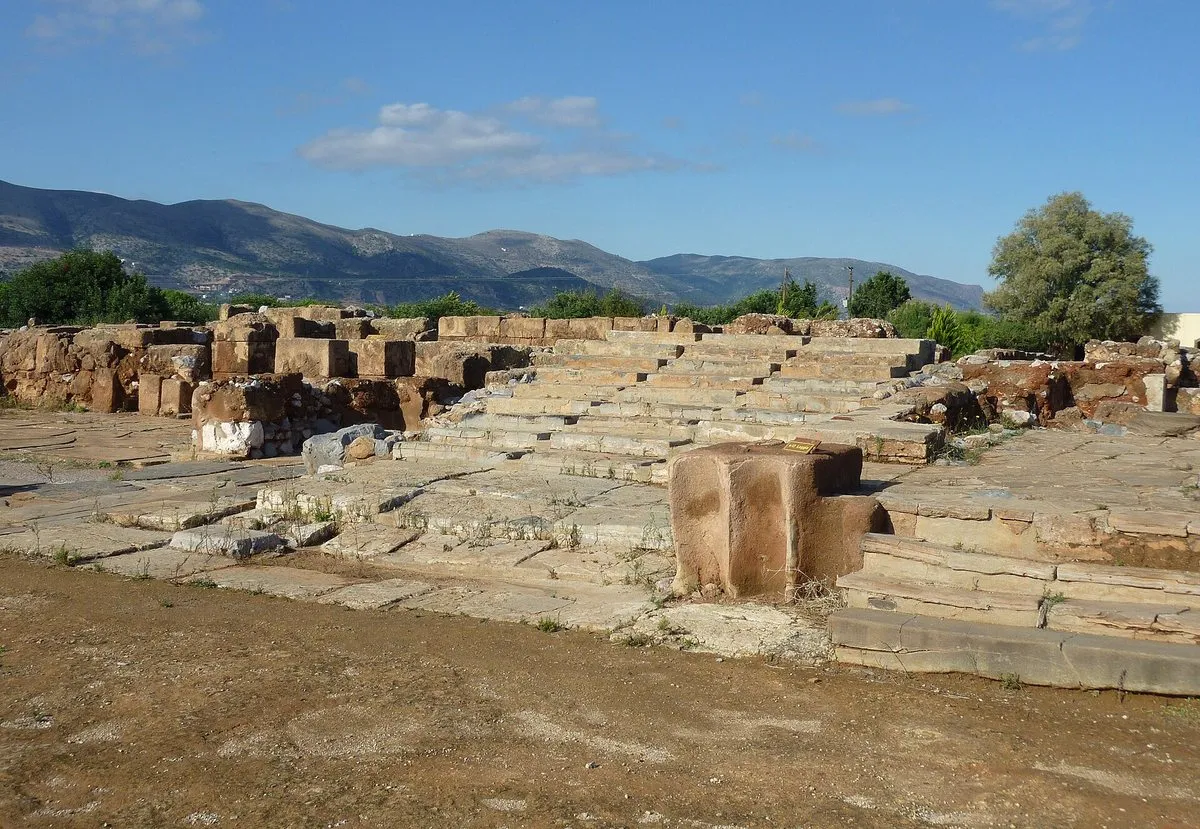
A ground plan, mostly knee-high, spread across a flat coastal plain with the Lasithi mountains behind and the sea a field away. No reconstructed columns, no repainted frescoes, no Evans. What survives dates largely from after 1700 BC, built on top of an older palace, and the layout is legible in a way Knossos never quite is: central court, west wing, storerooms with their pithoi still in place, the grand staircase, the workshops.
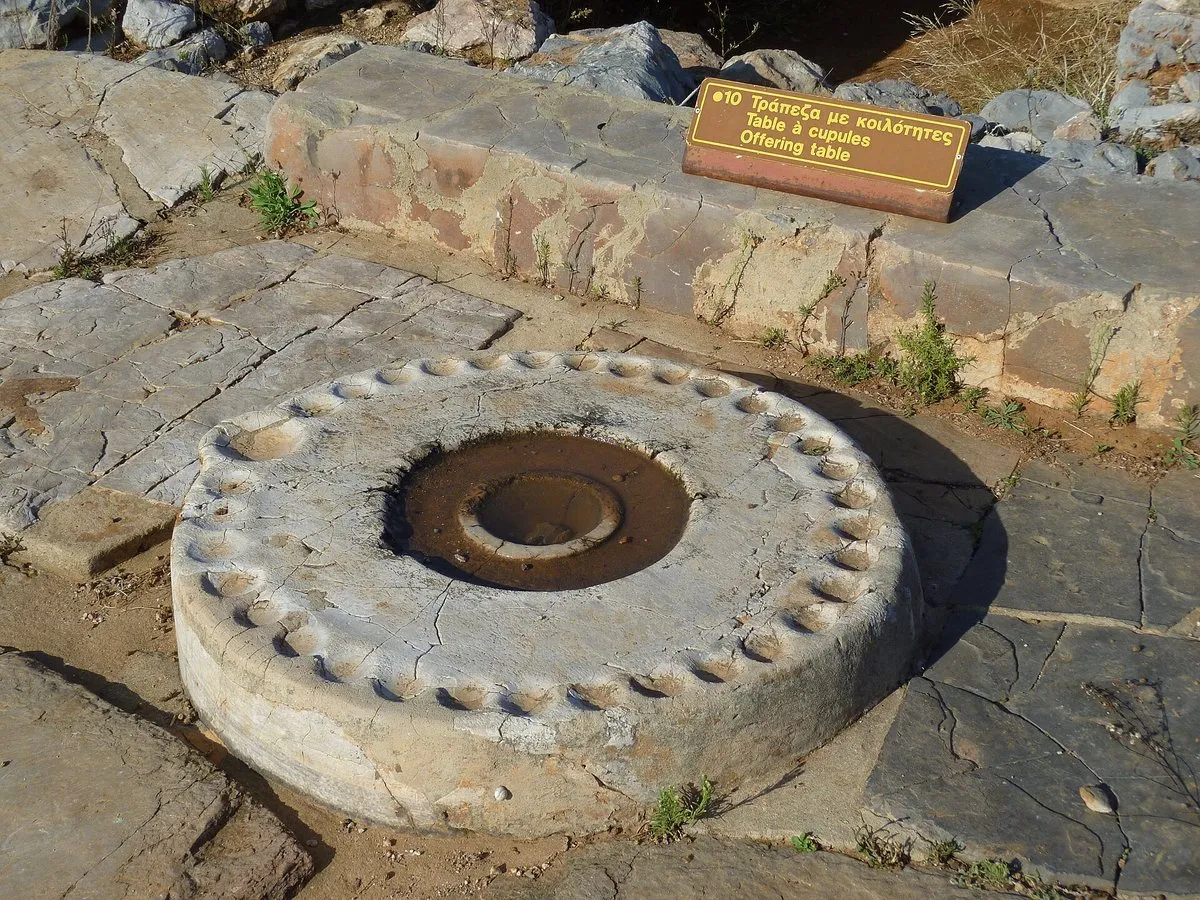
The two things people photograph are the kernos — a round stone table with a ring of small hollows, probably for offerings, sitting where it has always sat — and the west storerooms, where the great storage jars give you the only real sense of scale on site. The gold bee pendant everyone associates with Malia is not here; it is in the Heraklion Archaeological Museum, along with most of the good finds, which is worth knowing before you arrive expecting treasure.
The Tuesday problem, and the other closures
Malia closes on Tuesdays. Knossos and Phaistos do not. Every summer a steady stream of people drive out here on a Tuesday, find a locked gate, and photograph the fence.
Two more things worth checking rather than assuming. The site was closed entirely from mid-October 2025 to the end of March 2026 for conservation work, which means some older reviews and blog posts describe a visit that wasn’t possible for half a year. And on days of extreme heat the Ephorate has closed Cretan sites in the middle of the day, typically noon to five. Both are the kind of thing that appears on the ministry’s page and nowhere else — check it the night before, not the morning of.
Getting there and when to go
Three kilometres east of Malia old town, clearly signed off the old road, with a free car park at the gate. From Hersonissos it is ten to fifteen minutes; from Heraklion around forty. There is no shade on the site and very little at the entrance, so the practical window in July and August is early morning or the last two hours before closing, when the light is better anyway and the stone stops radiating heat.
If you are staying anywhere on this stretch of coast, it pairs naturally with a swim afterwards — Potamos is a few minutes west and the wetland walk between the two is the quietest thing in Malia.
Worth an hour if you like reading a floor plan and standing somewhere important without queueing for it — and if you are already based between Hersonissos and Malia, the effort is nearly zero. Skip it if your idea of an archaeological site involves reconstructed rooms and painted bulls, because you will walk around low walls in the sun for thirty minutes and wonder what you paid €10 for. Whatever you decide, check the day: it closes on Tuesdays, and that is the mistake almost everyone makes.
Photos on this page are used under Creative Commons licences: site overview by Cayambe (CC BY-SA 4.0); grand staircase and kernos by Bernard Gagnon (CC BY-SA 4.0), all via Wikimedia Commons, resized for the web. Nobody pays to be featured on this site.
How much does the Palace of Malia cost?
Full admission is around €10, reduced roughly €5, per the culture ministry's own listing. Verify before you go — Greek site pricing was restructured in 2025 and the numbers moved a lot.
Is the Palace of Malia closed on Tuesdays?
Yes. Malia is one of the Cretan sites that closes on Tuesdays, unlike Knossos and Phaistos, which open daily. It is the single most common wasted drive here, and it catches people every week.
How long do you need at the Palace of Malia?
Forty-five minutes to an hour if you read the panels and walk the full circuit. Half an hour if you don't. It is a flat, compact site — there is no version of this that takes a morning.
Is Malia better than Knossos?
Different, not better. Knossos gives you reconstructed colour, crowds and a sense of scale; Malia gives you an unreconstructed ground plan you can read like a map, and often near-solitude. If you have time for one and want the famous thing, go to Knossos. If you have time for both, do Malia second — it makes more sense once you've seen what a palace is supposed to look like.
Can you walk to the Palace of Malia from Malia town?
You can — it's about 3km east along the old road, roughly 40 minutes — but it's an unshaded walk beside traffic and nobody enjoys it in July. Drive, cycle, or take a taxi for a few euros.
One email a month — only when something on this island actually changes. No spam, no partners, one-click unsubscribe. Read past issues before you decide.