Phaistos and Gortyna: The Honest Guide to the Messara's Two Big Sites
The second Minoan palace and the Roman capital of Crete, twenty minutes apart on the Messara plain.
Two sites, twenty minutes apart on the Messara plain, and most visitors do neither because they are busy at Knossos. Phaistos is the second Minoan palace and now, since 2025, part of a UNESCO listing alongside Knossos. Gortyna was the Roman capital of Crete, and it contains a stone wall of laws that predates almost everything else you will read about here. Between them they make one of the better day trips out of the north coast — provided you know what the tickets now cost.
The one-minute version. Phaistos: around €15 full, roughly €8 reduced, open daily, roughly an hour and a half on site. Gortyna: around €10 full, roughly €5 reduced, open daily, an hour is plenty. Both are about 60km from Heraklion, an hour on good road via the Agia Varvara climb. Do Phaistos first for the light, Gortyna second for the shade.
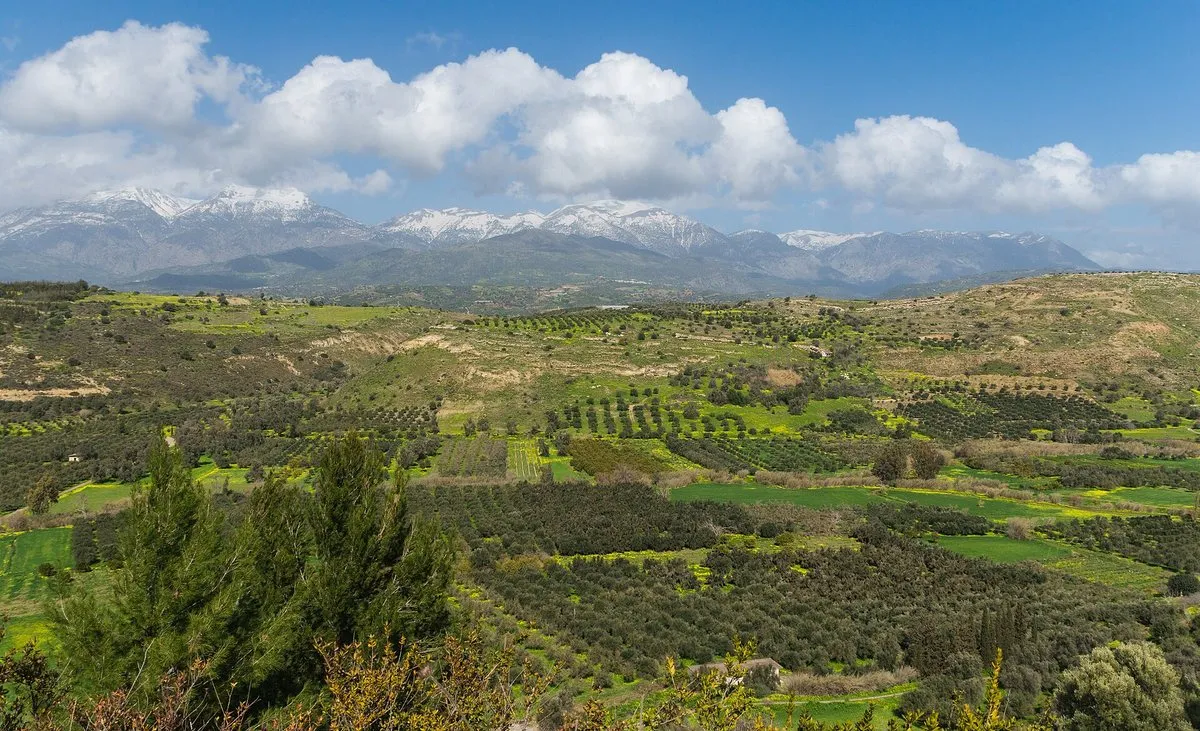
Phaistos: the site with the view
The palace sits on a low ridge with the whole Messara laid out below and Psiloritis across the north. Whoever chose the spot was not being subtle. What survives is a large, unreconstructed complex — the great staircase, the theatral area, the central court, storerooms, and a set of terraces that make the layout easier to read from above than at ground level.
The famous Phaistos Disc, the fired clay spiral of stamped symbols nobody has convincingly deciphered, was found here in 1908 and lives in the Heraklion Archaeological Museum. So do the good frescoes. What you get on site is architecture, position, and quiet — even in August it does not feel besieged.
Allow an hour and a half. There is a café at the entrance with a terrace and the same view, which is a reasonable place to sit out the worst of the afternoon.
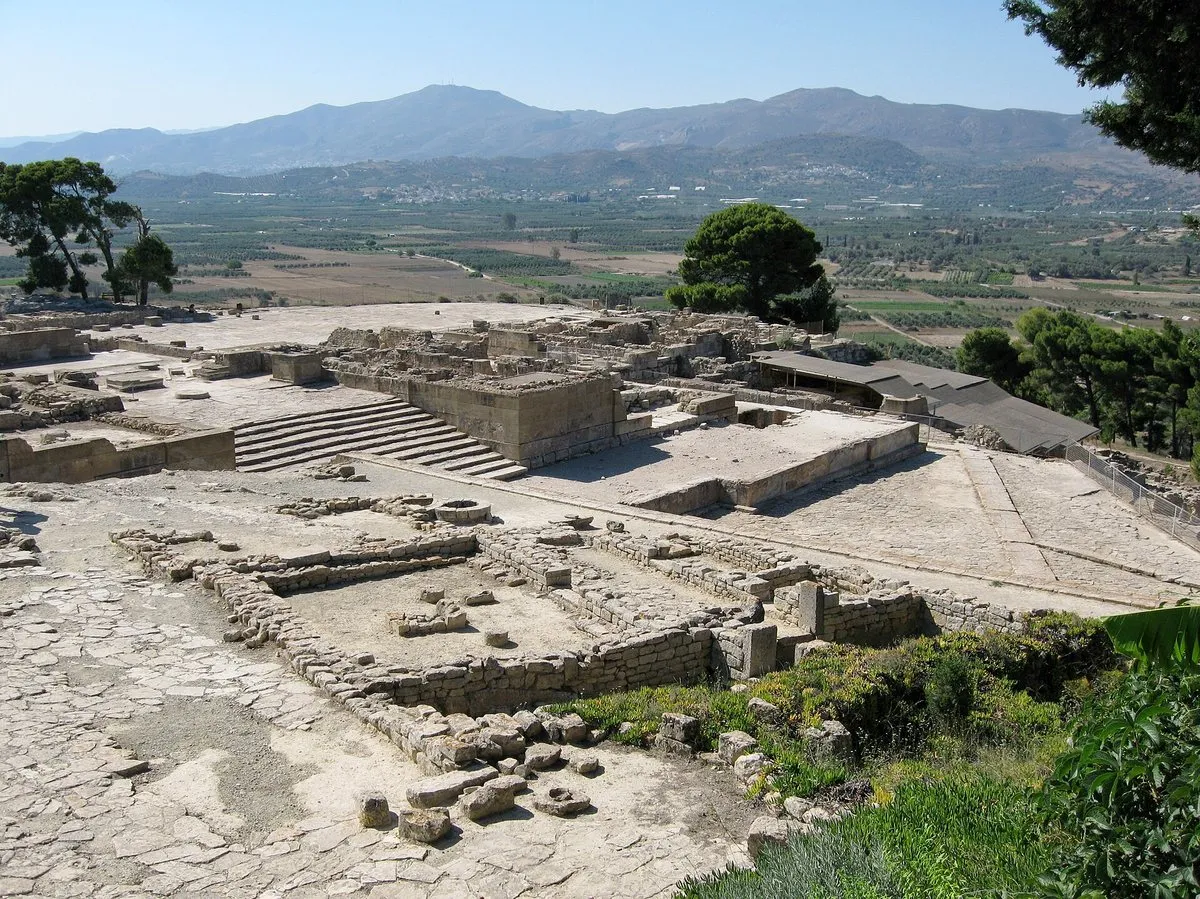
Gortyna: the one people skip
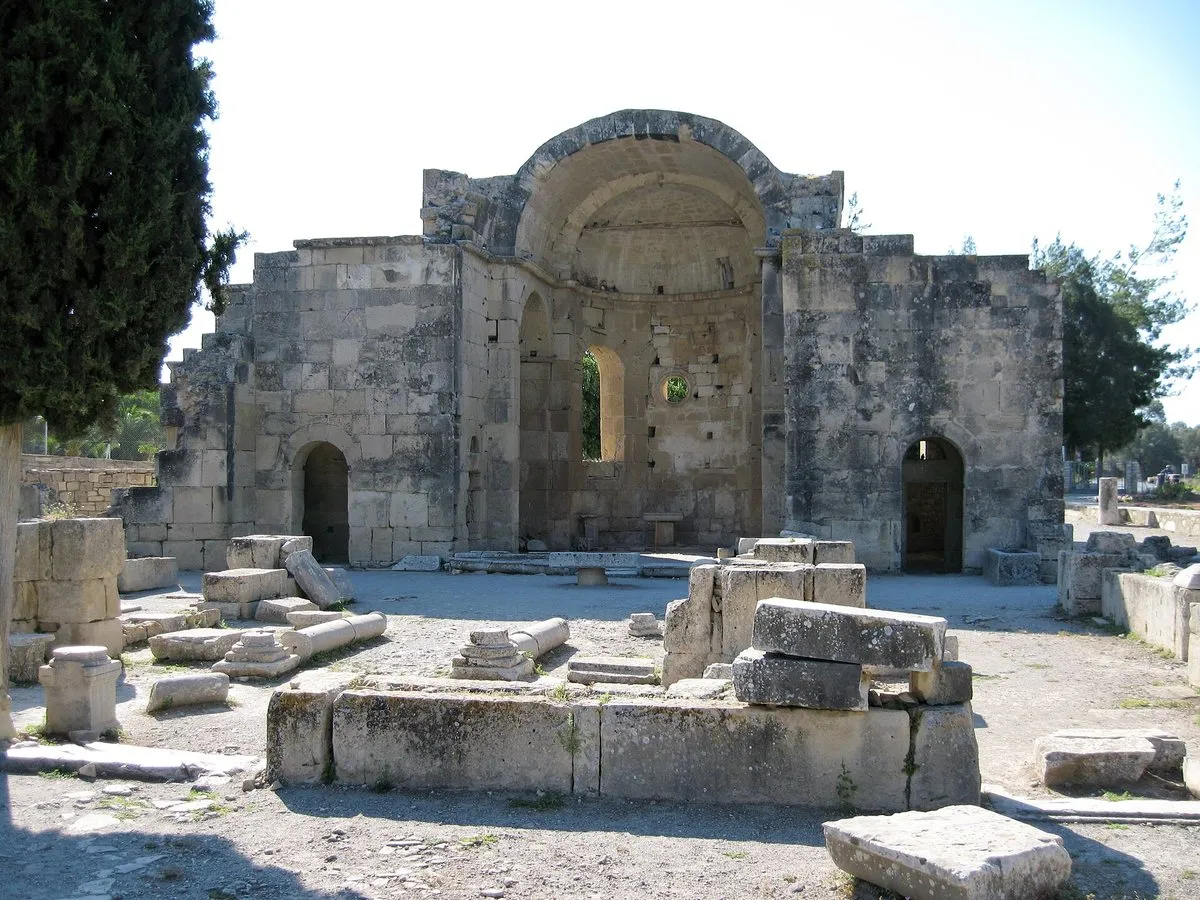
Twenty minutes east, right on the main road, Gortyna is the opposite kind of visit: flat, shaded, sprawling, and half-abandoned in the good sense. The fenced section holds the odeon, the ruined basilica of Agios Titos — sixth or seventh century, roofless, and the most photographed thing here — and the law code itself, a wall of inscribed blocks under cover.
The code is worth standing in front of for a minute rather than photographing and moving on. It is fifth-century BC, written in boustrophedon, and it covers property, inheritance, marriage and the legal status of different classes of person in a way that is uncomfortably specific. It is the oldest substantial body of law surviving in Europe.
A great deal more of Gortyna lies unfenced across the road and through the olive groves — temples, a praetorium, a theatre on the acropolis slope — free to wander and almost never visited. If you have an extra hour and decent shoes, that part is the better half.
Doing both in a day
From the north coast the drive is about an hour and a quarter each way via Agia Varvara — a good road, a steady climb, and one of the more pleasant drives on the island. A sensible shape: leave by eight, Phaistos by half nine, Gortyna by half eleven, and be swimming at Kommos or eating late lunch near Pitsidia by one. Matala is fifteen minutes further if you want the caves and the crowd.
If the archaeology is the point rather than the swim, Vori and its ethnographic museum is five minutes from Phaistos and one of the best small museums in Crete.
Phaistos earns its €15 for the setting more than the stones — go for the ridge, the plain and the mountain, and treat the palace as the reason you are standing somewhere that beautiful. Gortyna is the better value and the more surprising visit, especially the free half across the road. Skip both if you need reconstruction and interpretation to bring a site alive, and skip the middle of the day in July regardless: there is a reason the ministry sometimes shuts these sites from noon to five.
Photos on this page: Messara plain from Phaistos by Jebulon (CC0, public domain dedication); Phaistos terraces and Agios Titos at Gortyna by Olaf Tausch (CC BY-SA 3.0), via Wikimedia Commons, resized for the web. Nobody pays to be featured on this site.
-
The day — Phaistos first for the light, Gortyna second for the shade 49 min driving · 39.3 km
1 Phaistos → 20 min → 2 Gortyna → 29 min → 3 Kommos beach
Driving times are Google's own, without traffic, checked September 2026 — the shape of the day, not a promise. Allow more on mountain roads, and more again in August.
How much do Phaistos and Gortyna cost?
Phaistos is around €15 full and roughly €8 reduced; Gortyna around €10 full and roughly €5 reduced. Both were repriced upward in 2025, so older guides quoting €8 and €6 are out of date. Verify before you go.
Is Phaistos worth it if you've already seen Knossos?
Yes, and arguably more so. Phaistos is unreconstructed, set on a ridge over the Messara plain with Psiloritis filling the horizon, and quiet by comparison. What it does not have is Evans's painted reconstruction — no red columns, no restored frescoes. You are reading stone and imagining the rest.
Can you visit Phaistos and Gortyna in one day?
Easily. They are about twenty minutes apart on the same road. Two to three hours covers both properly, which leaves the afternoon for the coast at Matala or Kommos.
What is the Gortyn law code?
A fifth-century BC legal text carved into stone in boustrophedon — alternate lines running left to right, then right to left — and the longest surviving Greek legal inscription. It sits under a shelter beside the odeon, free to look at from a few metres away, and it is genuinely the reason to come.
Is there shade at Phaistos?
Some, in patches, plus a café at the entrance with a terrace. Gortyna has considerably more — plane trees and olives across much of the site. Neither is a midday proposition in high summer without a hat and water.
One email a month — only when something on this island actually changes. No spam, no partners, one-click unsubscribe. Read past issues before you decide.