Marathi and Loutraki: The Honest Guide to Chania's Sheltered Souda Bay Beaches
Two small sandy beaches on the Souda Bay side of the Akrotiri peninsula, 16–17 km from Chania, facing south and out of the summer north wind. Marathi is organised and has a Blue Flag; Loutraki is the locals' free alternative next door. What each is like, and the Minoan harbour under the water.
Marathi is the beach people in Chania drive to when the north wind is blowing. It sits on the far side of the Akrotiri peninsula, on the sheltered shore of Souda Bay, and it faces south — so on a meltemi day, when the town beaches are churning, the water here is flat, shallow and clear. It is small, organised and busy at weekends; Loutraki, a few minutes away, is the free, grassier version that the town’s young crowd prefers. Neither is wild and neither is empty, but for a calm swim within half an hour of Chania they are hard to beat. Distances, facilities and the Blue Flag status come from the Municipality of Chania’s tourism site and the official 2026 Blue Flag list, checked in September 2026; the beaches are described from our own visits.
The honest facts
- Where
- the south-east shore of the Akrotiri peninsula, on Souda Bay — Marathi about 17 km and Loutraki about 16 km from Chania (municipal tourism site).
- Marathi
- two small sandy coves either side of a pier used by fishing boats; shallow, calm water.
- Loutraki
- fine sand, clear shallow water, a lawn behind the beach and a large car park under eucalyptus trees; reached by car only.
- Wind
- both face south, so they are sheltered from the summer north wind.
- Blue Flag 2026
- Marathi yes, Loutraki no.
- Facilities at Marathi
- sunbeds, umbrellas, showers, lifeguard, disabled access with a Seatrac chair.
- Bus
- unconfirmed — no current city-bus line lists either beach.
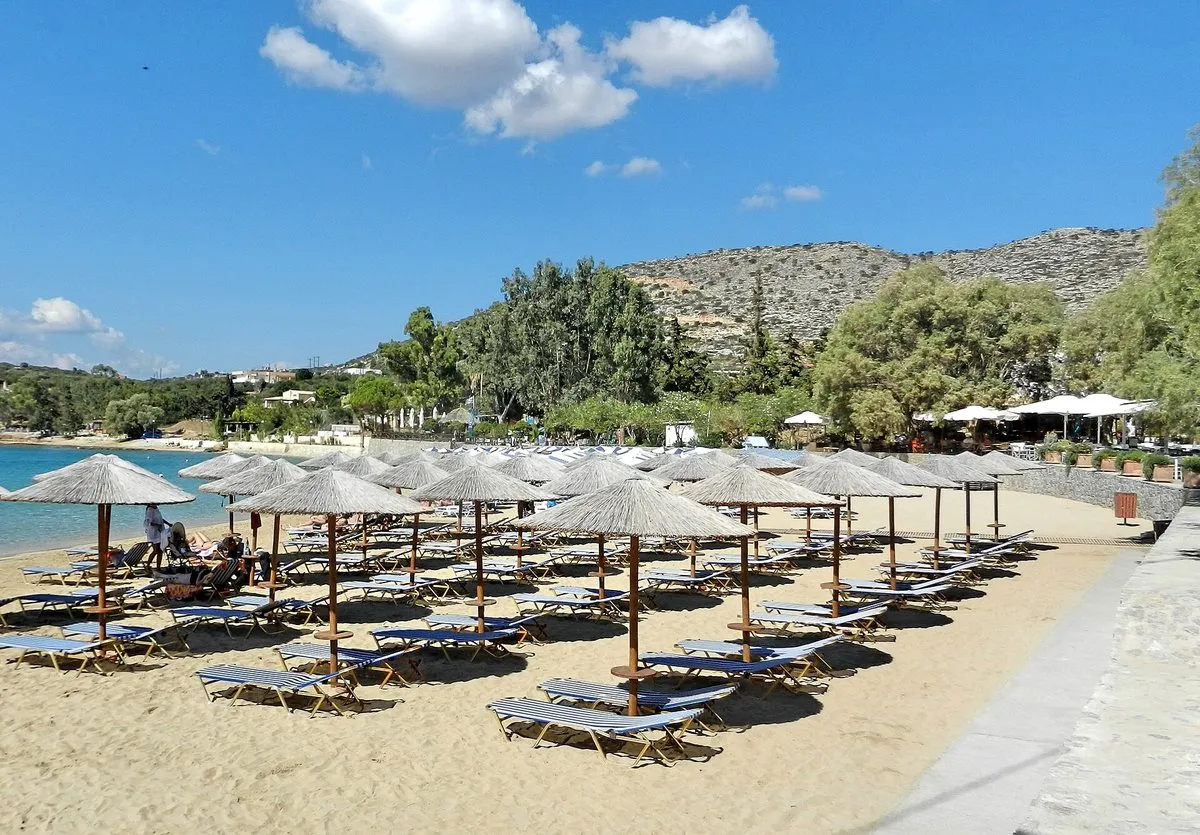
Marathi
Marathi is two coves split by a small harbour pier, with the hamlet’s handful of houses and tavernas along the road behind. The sand is fine, the water deepens gently, and in the middle of the bay, about 500 metres out, sits the small islet of Palia Souda. One side is organised with sunbeds and umbrellas; the municipality lists showers, a lifeguard and facilities for disabled visitors, and a Seatrac system that lets wheelchair users into the sea — rare on this coast.
Parking is free along the road, and at weekends it fills up, because Marathi is where Chania itself goes to swim. On weekdays and outside July and August it is a different, quieter place. Water sports and loud music are not the point here; long lunches are.
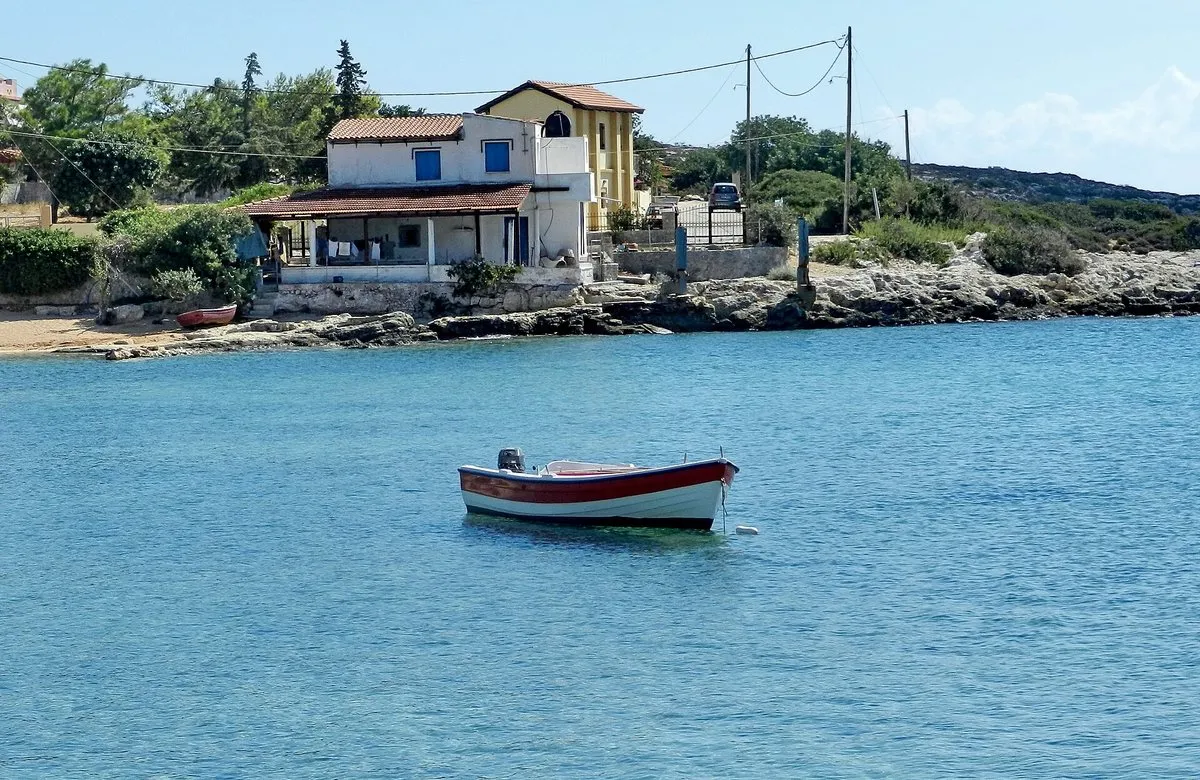
Loutraki
Loutraki is just west along the same shore. It is a single stretch of fine sand with clear, shallow water, a grassy area behind it and a big shaded car park under tall eucalyptus trees. There is a beach bar with loungers on the lawn, but the beach itself is free, and it is especially popular with young people from Chania. Expect it to be crowded on summer afternoons, and do not come without a car: the municipal site says it is reachable by private vehicle only.
The harbour under the water
Just east of Marathi’s pier lie the remains of ancient Minoa, which is thought to have served as a port for the city of Aptera across the bay. According to a 2011 survey in the Chania press, storm waves uncovered a quay about 60 metres long, built of boulders up to a metre and a half across, in 1939; above it are the remains of a Roman building with a private bathhouse and a round cistern about 4.5 metres wide. There is nothing ticketed or fenced — it is simply there, under your feet and just offshore, if you know to look.
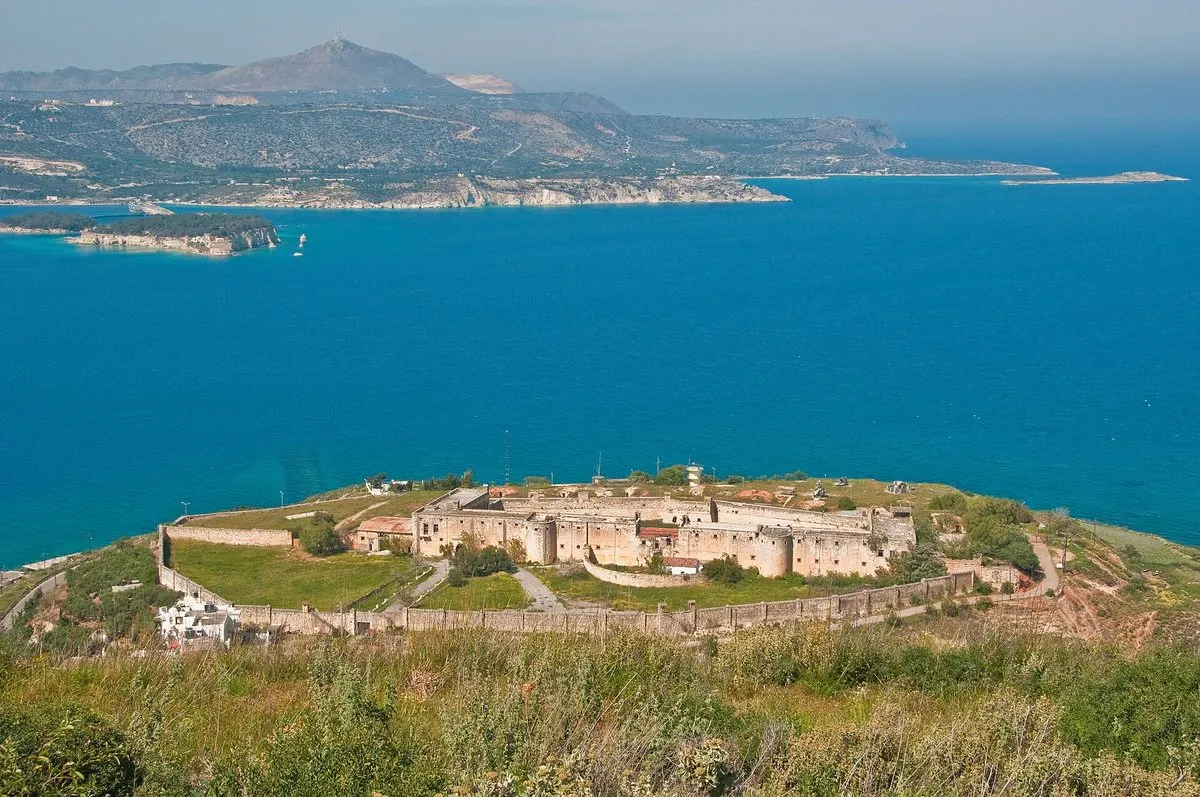
Making it work
Drive, or take a taxi — the bus question has no reliable answer. Come on a weekday if you can, or early on a weekend morning. Souda Bay is also home to a naval base about five kilometres to the west, so grey ships in the bay are normal. If you are staying in Chania, Marathi pairs naturally with the other Akrotiri beaches and is one of the best answers to the question of where to swim when the meltemi blows.
The honest downside
These are small beaches that the whole of Chania knows about, and on summer weekends there is not much sand left by late morning. Neither is dramatic: the view is a working bay rather than open sea. And without a car they are awkward to reach, because the public-transport picture is contradictory.
Worth it if: you are based in or near Chania and want calm, shallow water on a windy day — especially with children. Skip it if: you want a wild beach, open-sea views or solitude on a summer weekend, or you are relying on the bus.
Photos on this page: the two Marathi coves by Tanya Dedyukhina (CC BY 3.0) and Souda Bay from Aptera by Graeme Churchard (CC BY 2.0), via Wikimedia Commons, resized for the web. The beaches are described from our own visits; distances, facilities, bus information, the 2026 Blue Flag list and the history of ancient Minoa were checked against the Municipality of Chania’s tourism site, the Chania urban bus itineraries, Blue Flag Greece and the Chania press for the date shown at the top of this guide. Nobody pays to be featured in a guide — no business, no sponsor, no paid mention, ever. Adverts, where they appear, are labelled as adverts.
-
Two beaches, a few minutes apart — Both face south across Souda Bay, which is why they stay calm when the north coast is rough.
1 Loutraki beach 2 Marathi beach 3 Marathi islet (Palia Souda)
Tap a name to open it in your map app. These are options, not an order — pick by the day you have.
How far is Marathi beach from Chania?
Marathi is about 17 km east of Chania town, according to the Municipality of Chania's tourism site, on the south-east shore of the Akrotiri peninsula facing Souda Bay. Loutraki, its neighbour, is about 16 km from town. Allow roughly 25–30 minutes by car.
Is Marathi beach good when the meltemi is blowing?
Yes — that is its main advantage. Marathi and Loutraki face south into the enclosed Souda Bay, so the summer north wind that raises waves along Chania's north-facing beaches reaches them much weaker. The water is shallow and usually calm, which also makes both good for children.
Can you get to Marathi beach by bus?
Sources disagree, and we could not confirm a current line. The municipal tourism site mentions the city bus, but the Chania urban bus company's published itineraries do not name Marathi or Loutraki, and several guides say there is no public transport. Plan on a car or a taxi.
Does Marathi beach have a Blue Flag?
Yes. Marathi is on the official Blue Flag list for 2026 under the Municipality of Chania; Loutraki is not. Marathi is organised, with sunbeds, umbrellas, showers, a lifeguard and access facilities for disabled visitors, including a Seatrac system for getting into the water.
What is the ancient harbour at Marathi?
Just east of the modern fishing pier are the remains of the harbour of ancient Minoa, probably a port of the city of Aptera. Storm waves exposed a quay about 60 metres long, built of large boulders, in 1939, and the remains of a Roman building with its own bathhouse and a round cistern survive above it.
One email a month — only when something on this island actually changes. No spam, no partners, one-click unsubscribe. Read past issues before you decide.