Loutro or Sougia? The Honest Comparison of Two Quiet South-Coast Bases
Two small villages on the Chania south coast for people who want nothing to happen: Loutro, a bay with no road where the ferry runs your days, and Sougia, a long beach at the end of a mountain road with Lissos and the Agia Irini gorge on foot. Getting there, swimming, walking, what closes in November, and who each suits.
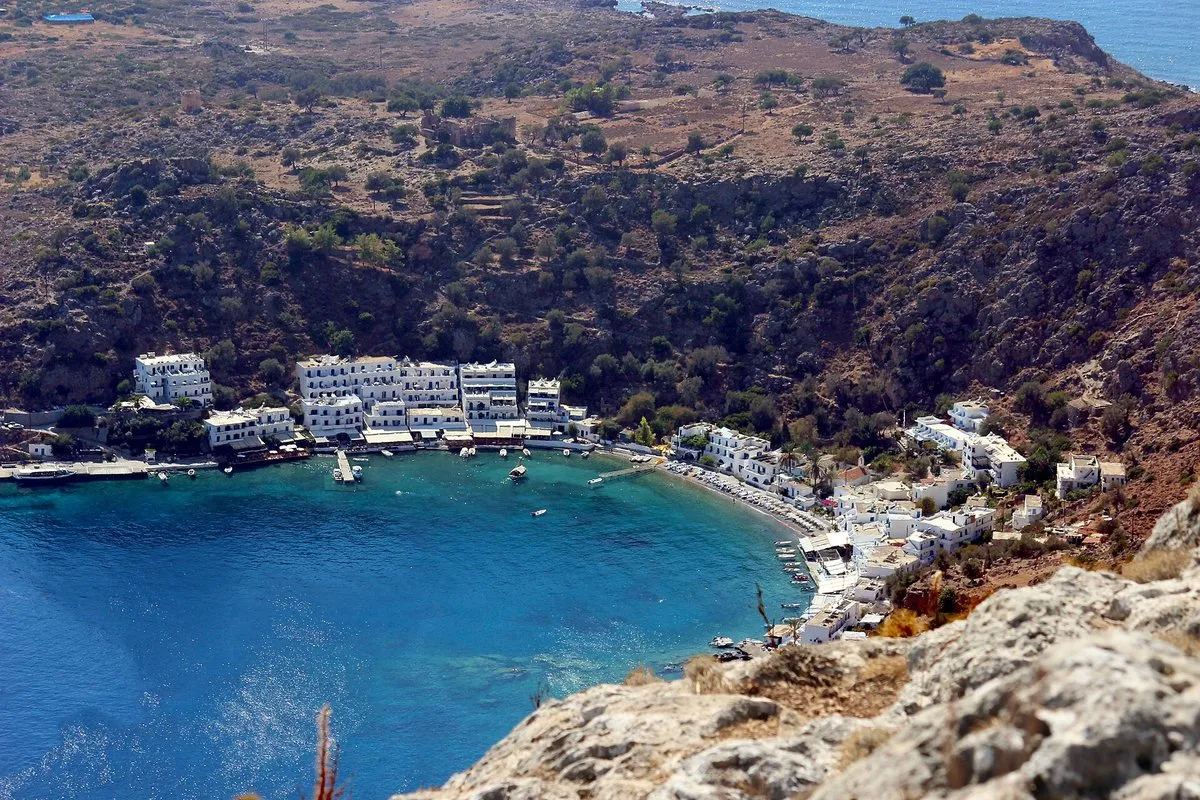
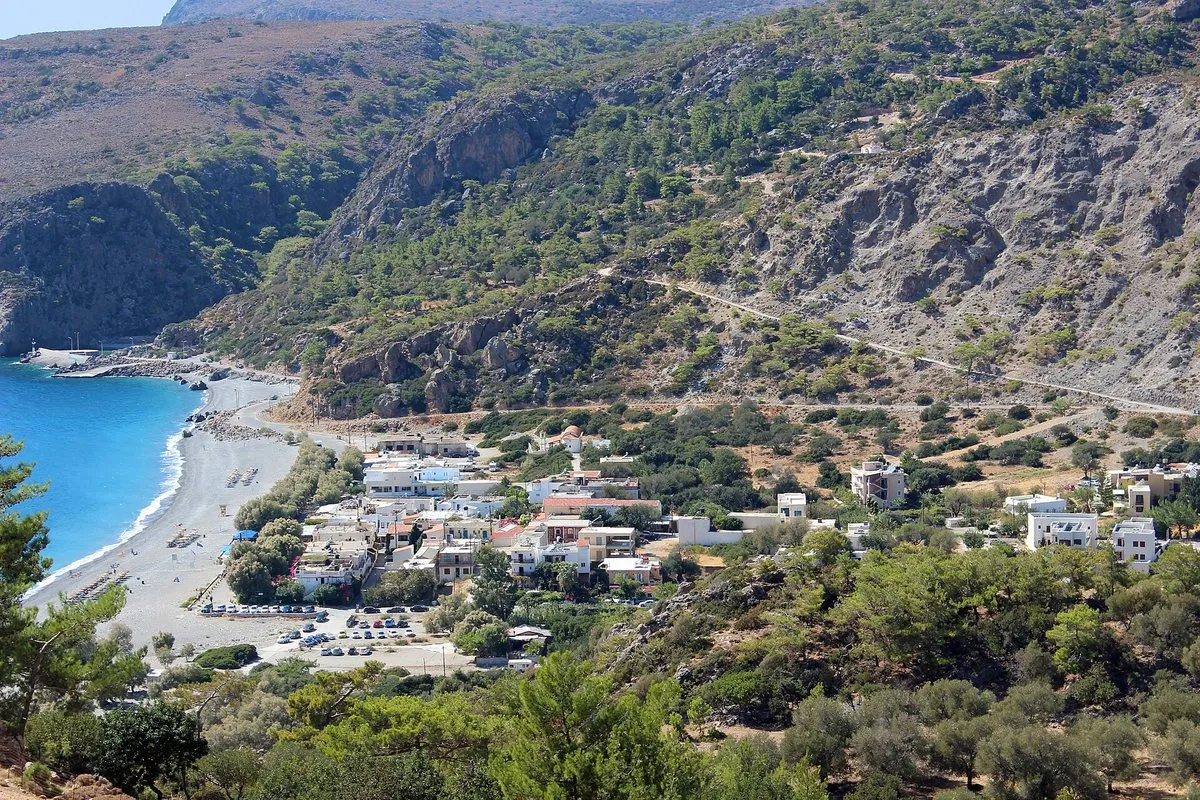
Loutro and Sougia are where people go on the Chania south coast for nothing to happen, and they deliver it differently. Loutro is a small bay of white houses with no road: the ferry from Chora Sfakion, or a coastal path, is the only way in, and your days run to its timetable. Sougia, further west, sits at the end of a mountain road from Chania, with a long beach of coarse sand and pebbles and the walk to ancient Lissos on its doorstep. Our answer: Loutro for two or three car-free summer nights; Sougia for a longer stay, for walkers, and for a road out. Described from our own visits; distances, prices, hours and rules are a check of published sources, November 2026.
The honest facts
- Loutro
- no road; ferry or footpath only, as the ferry’s Loutro page says; roughly €11 one way from Chora Sfakion.
- Sougia
- a village of 95 people at the 2021 census, about 70–75 km from Chania by road (sources differ), with a daily KTEL bus.
- The beaches
- Loutro’s bay is small and calm; Sougia’s is long, coarse sand and pebble, and deep.
- Walks from Loutro
- Marmara about an hour west and Chora Sfakion about two hours east, by the Region’s figures.
- Walks from Sougia
- Lissos about 90 minutes each way; the Agia Irini gorge, 7.5 km, ends about 45 minutes’ walk from the village by the Region’s figure.
- November
- the ferry calls at Loutro on two days a week; both villages largely close for winter.
Getting there: a ferry or a road
Loutro starts with the bus or a drive to Chora Sfakion. A published listing of KTEL times, updated in August 2026, puts the bus from Chania at about 1 hour 50 minutes and roughly €8.30; check KTEL’s winter timetable, which could not be read for this guide. The ferry then takes about 20 minutes, by published accounts.
That ferry is the catch. The ferry’s published timetable for November and December 2026 shows one boat each way on two days a week: 09:00 from Chora Sfakion and 16:05 back from Loutro, Thursday and Friday until 8 November, then Monday and Tuesday to 31 December. On 28 October bad weather cancelled one ship’s sailings all day. Our Loutro guide has the rest.
Sougia is simpler: a road. The same listing gives the bus from Chania about 1 hour 45 minutes, daily (Sougia’s visitor site says about two hours); our KTEL guide explains the system. The ferry calls on the Paleochora line two days a week in November, with no direct Loutro–Sougia sailing.
Swimming: a bay, or a long beach
Loutro’s own water is the bay in front of the houses: sheltered, clear and calm, pebble rather than sand — the shelter that once made it Sfakia’s winter harbour. For more room, walk an hour west past the coves of Lykos and Phoenix to Marmara at the mouth of the Aradena gorge, or take a boat in season to Glyka Nera, where cold springs rise through the pebbles.
Sougia has the long beach, coarse sand and pebbles shelving into deep, clear water; the Region of Crete lists it as a nudist beach. It is the better beach for a day of swimming; Loutro is the prettier water.
Walking: path from the door, or a gorge and a ruin
Both are walkers’ bases. From Loutro the E4 coastal path runs both ways: an hour west to Marmara, and east to Chora Sfakion in about two hours by the Region’s figure, one and a half to two by our Loutro guide, with little shade on either.
From Sougia the classic half-day is the walk to Lissos, about 90 minutes each way west over a bare plateau to a sanctuary of Asclepius with a mosaic floor. The bigger day is the Agia Irini gorge: 7.5 km and about three hours by the Region of Crete’s figure, then about 45 minutes on foot to Sougia by the Region’s account; other sources say 5 to 7 km by road. Whether the bus stops at the gorge entrance is not published; ask the driver.
November: what is still open
Not much. A travel guide published in February 2026 says most of Loutro’s accommodation and restaurants close completely from November to March. Sougia’s visitor site says the village is open from late March to early November, after which most hotels and restaurants close. Ask your room whether it is open and whether anyone serves food; Sougia’s road at least lets you leave if the answer is no.
The honest downside
Loutro depends on the boat: two sailings a week in winter, a swell that cancels them in any season, and no road if something goes wrong. Sougia’s beach is not soft sand, the village is one street, and the mountain drive eats most of a morning each way. In November both are closer to closed than open.
Pick Loutro if: you want two or three car-free nights between May and October, the evenings matter more than the beach, and a ferry timetable may decide when you leave. Pick Sougia if: you want a longer stay with a road and a daily bus, a long beach, and Lissos and the Agia Irini gorge on foot. Skip both if: you travel in November without a confirmed room, need sand and nightlife, or have a flight the morning after a boat.
Photos on this page: Loutro from above by the Loutro contributor (CC0) and Sougia by Maesi64 (CC0, public domain dedication), via Wikimedia Commons, resized for the web. Described from our own visits; distances, access, rules and any figures were checked against the ferry’s published timetable, price list, notices and Loutro page, the Region of Crete’s pages on the Aradena and Agia Irini gorges and Sougia, Sougia’s visitor site, a published listing of KTEL times, a regional beach guide, a travel guide to Loutro and encyclopaedia figures for the date shown at the top of this guide. Nobody pays to be featured in a guide — no business, no sponsor, no paid mention, ever. Adverts, where they appear, are labelled as adverts.
Tap a name to open it in your map app. These are options, not an order — pick by the day you have.
Is Loutro or Sougia better as a base?
Loutro is better for a car-free stay where the evenings are the point: a small bay with no road, coastal walks in both directions and a ferry to Chora Sfakion. Sougia is better for a longer stay with more freedom: a road and a daily bus to Chania, a long beach, and the walk to ancient Lissos and the Agia Irini gorge close by. Walkers who want to come and go choose Sougia; people who want to stop moving choose Loutro.
How do you get to Loutro without a car?
Loutro has no road. Take the KTEL bus from Chania to Chora Sfakion, then the south-coast ferry, a crossing of about 20 minutes by published accounts, or walk the coastal path, about two hours by the Region of Crete's figure. On the November–December 2026 timetable the ferry from Chora Sfakion to Loutro sails only two mornings a week, so check before you plan.
Is Loutro or Sougia open in November?
Only partly. A travel guide to Loutro published in February 2026 says most of its accommodation and restaurants close completely from November to March, and Sougia's own visitor site says the village is open from late March to early November before most hotels and restaurants close. Confirm a room and a meal before travelling in November.
Can you get from Loutro to Sougia by boat?
Not directly in winter. The ferry's published timetable for November and December 2026 shows no direct sailing between Loutro and Sougia, and the two lines call at Agia Roumeli on different days, so the connection is not possible in one day. Summer timetables differ, so check the ferry's published timetable for the season you are travelling in.
How long is the walk from Loutro to Marmara beach?
About an hour west along the coastal path, by the Region of Crete's figure, past the small beaches of Lykos and Phoenix. Marmara sits at the mouth of the Aradena gorge and has no road; the Region's page mentions a small boat to Loutro, but do not count on it out of season. Wear proper shoes and carry water, because the path has little shade.
One email a month — only when something on this island actually changes. No spam, no partners, one-click unsubscribe. Read past issues before you decide.