Kommos & Red Beach: The Wilder Sands Beside Matala, Honestly
Two escapes from the Matala scene — the long Minoan-harbour beach at Kommos and the over-the-headland cove of Red Beach.
Matala draws the coaches; its neighbours absorb the connoisseurs. North over the ridge lies Kommos — a huge, dune-backed sweep beside the ruins of the Minoan harbour that once served Phaistos — and south over the cliff path hides Red Beach, the ochre-sand cove that kept Matala’s old free spirit when the town professionalised. Both reward mild effort with major atmosphere.
The honest facts
- Kommos access
- drive to the signed parking above Pitsidia side and walk down (10 minutes), or walk the beach north from Matala’s edge; the southern end has a seasonal taverna and some sunbeds (~€8–12), the long middle and north are gloriously unserviced.
- Kommos rules
- the archaeological site behind the south end is fenced — view it from the path; the beach is a prime loggerhead nesting shore: marked nests are sacrosanct, night lights and beach furniture near them are not okay.
- Red Beach access
- from Matala’s upper lanes a marked cliff path crosses the headland — 20–25 honest minutes each way, steep and stony in stretches; proper footwear, water, and no sufferers of vertigo on the exposed bit. Small boats from Matala run in season as the lazy alternative.
- Conventions
- both, by long tradition, are clothing-optional the further you settle from the entrances — established, relaxed, and easily coexisted with.
- Facilities at Red Beach
- a rudimentary seasonal canteen at best; assume self-sufficiency.
- By bus
- KTEL Heraklion–Lasithi buses run from Heraklion to Matala via Mires (roughly 60–66 km, roughly 2 hours, roughly €8; check the current timetable), then walk or take a short taxi to Kommos.
- Turtle season
- nesting roughly mid-May to mid-August, hatching mid-July to late September (ARCHELON); for an injured turtle, ARCHELON’s 24-hour line is +30 6941 511 511.
Getting there and parking
Kommos beach runs from Kalamaki in the north to just short of Matala; published guides give its length as anything from about 2 to 5 km. The usual way in is the side road off the Matala road, signposted near Pitsidia. It ends at an informal parking area beside the archaeological site, about 1.5 km from the village. The northern end, known locally as Potamos, is closer to Kalamaki, and published guides consistently describe it as the naturist stretch. Red Beach, about 800 m south of Matala’s bay, needs no car: the path starts in the village, and published walking times range from about 15 to 25 minutes each way.
The Minoan harbour and the turtles
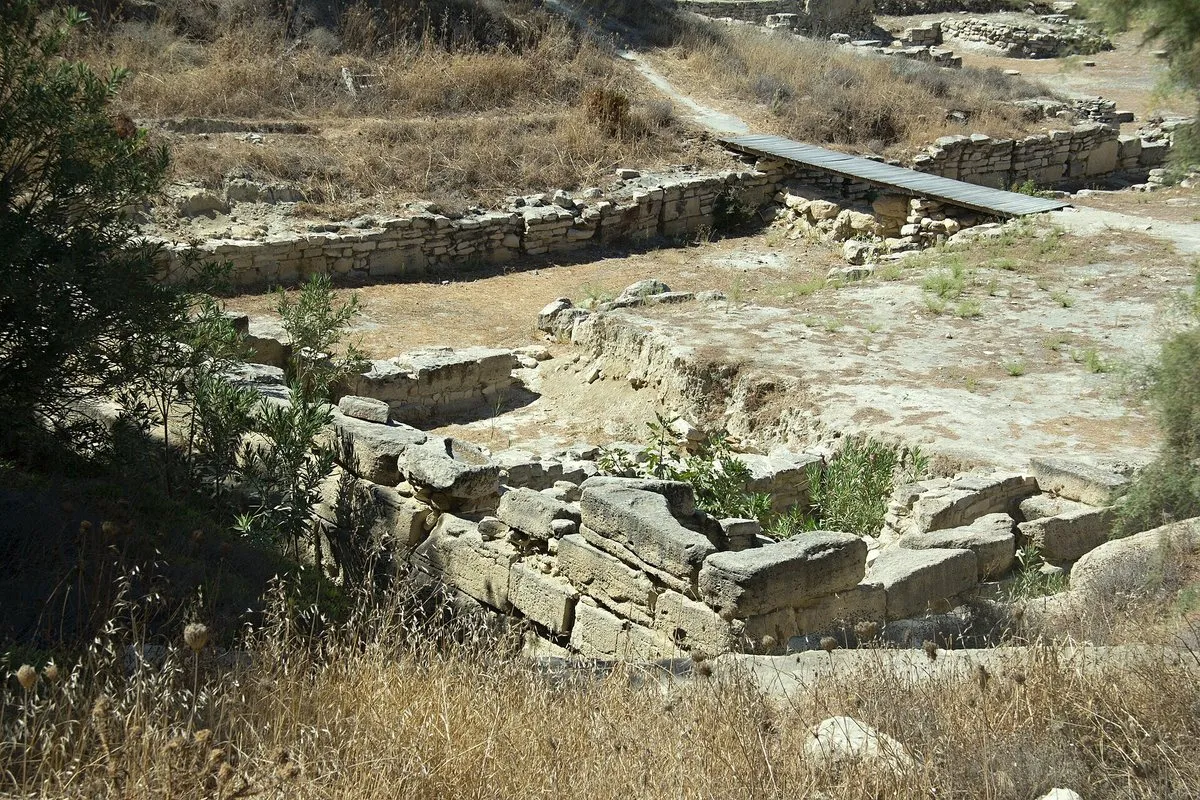
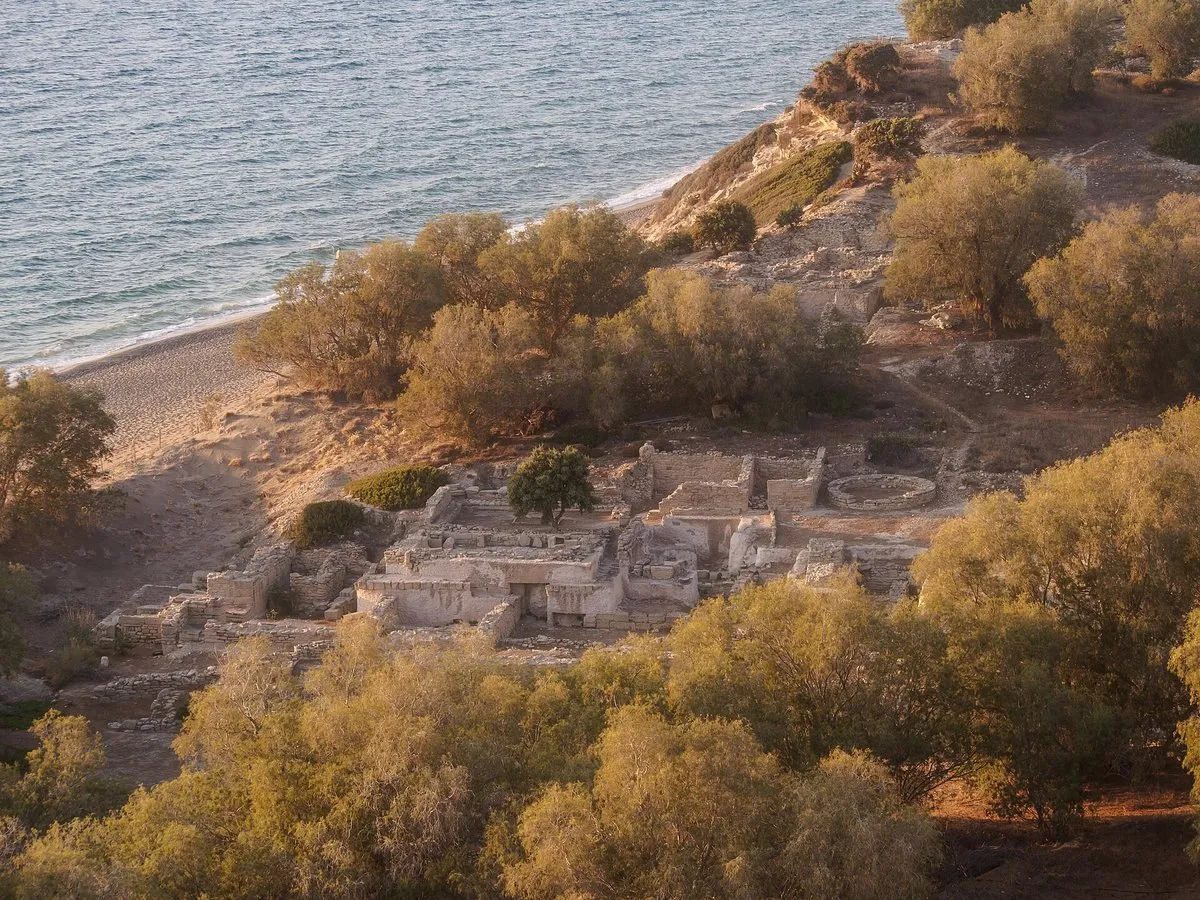
The site behind the south end is ancient Kommos, the harbour town of Phaistos and Agia Triada, excavated by the University of Toronto under Joseph Shaw between 1976 and 1995. Its best-known structure is a Late Minoan building read as a ship shed, with six long galleries open to the sea. The site is closed and fenced, but the consolidated walls are visible from the beach. The excavation director has written that access can sometimes be arranged through the guards at Phaistos, and plans to open the site have no date; neither is worth planning around.
The sand belongs to ARCHELON’s Messara Bay project: about 8 km of nesting beach averaging roughly 115 loggerhead nests a year, the third-largest nesting area on Crete, with a seasonal information station in Matala. The coast lies within the stretch covered by the Natura 2000 site GR4310004, “Western Asterousia (from Agiofarango to Kokkinos Pyrgos)”. ARCHELON asks visitors to remove umbrellas and loungers after sunset, keep lights off the beach at night, light no fires, and never touch a nest, its marker or its cage; nests, eggs and hatchlings are protected by Greek law.
Choosing between them
Kommos is the space play: kilometre-scale sand, room for every philosophy of beach day, the Minoan stones adding weight, sunsets aimed straight down the Libyan Sea. Red Beach is the cove play: enclosed, ochre-glowing, earned by the walk, best owned for two or three unhurried hours. Energetic days do both around a Matala lunch.
Seasons and what to pair it with
Both beaches face west across the Gulf of Messara, and westerly winds can raise big waves at Kommos; on those days watch the flags at the organised south end and read how beach flags work in Crete. The sunbeds, canteen and lifeguard there are seasonal (verify seasonally); outside summer, assume nothing is open. Phaistos lies a short drive inland, so a morning at the palace and an afternoon on the Kommos sand pair naturally.
The honest downside
Kommos offers little shade past the tamarisk line and real shore-break on wavy days; Red Beach’s path genuinely deters flip-flop optimists and turns hot by noon. Neither suits the full-service beach model — that is Matala’s own bay, one guide over.
Worth your time if: Matala’s crowd sent you looking for the original feeling — it moved next door. Skip Red Beach if the path description raised doubts — Kommos gives eighty percent of the escape for a tenth of the scramble.
Photos on this page: the galleries by Zde and the tamarisks by C messier (both CC BY-SA 4.0), via Wikimedia Commons, resized for the web. Everything above was checked for the date shown at the top of this guide. Sections added in October 2026 were checked against published sources rather than on a new visit. Nobody pays to be featured in a guide — no business, no sponsor, no paid mention, ever. Adverts, where they appear, are labelled as adverts.
-
The three sands
1 Kommos beach 2 Matala 3 Red Beach
Tap a name to open it in your map app. These are options, not an order — pick by the day you have.
How do you get to Kommos beach?
Drive to the signed parking on the Pitsidia side and walk down ten minutes, or walk the beach north from Matala's edge. The southern end has a seasonal taverna and sunbeds at roughly €8–12; the long middle and north are gloriously unserviced.
How hard is the walk to Red Beach?
A marked cliff path from Matala's upper lanes crosses the headland — 20–25 honest minutes each way, steep and stony in stretches. Proper footwear, water, and no vertigo sufferers on the exposed bit; small boats from Matala run in season as the lazy alternative.
Are Kommos and Red Beach nudist?
Both are, by long tradition, clothing-optional the further you settle from the entrances — established, relaxed, and easily coexisted with.
What are the rules at Kommos?
The archaeological site behind the south end is fenced — view the Minoan harbour stones from the path. The beach is a prime loggerhead nesting shore: marked nests are sacrosanct, and night lights or beach furniture near them are not okay.
Can you visit the Minoan site at Kommos?
The Minoan harbour site at Kommos is fenced and not open to visitors, but its consolidated walls, including the ship-shed galleries, are visible from the beach and the perimeter fence. The excavation director has written that access can occasionally be arranged through the guards at Phaistos, so do not plan a day around it.
When do sea turtles nest at Kommos?
Loggerhead turtles nest on the Messara Bay beaches, Kommos among them, from about mid-May to mid-August, and hatchlings emerge from about mid-July to late September, according to ARCHELON. In that period remove beach furniture at sunset, keep lights off the sand at night and leave marked nests and cages alone.
One email a month — only when something on this island actually changes. No spam, no partners, one-click unsubscribe. Read past issues before you decide.